
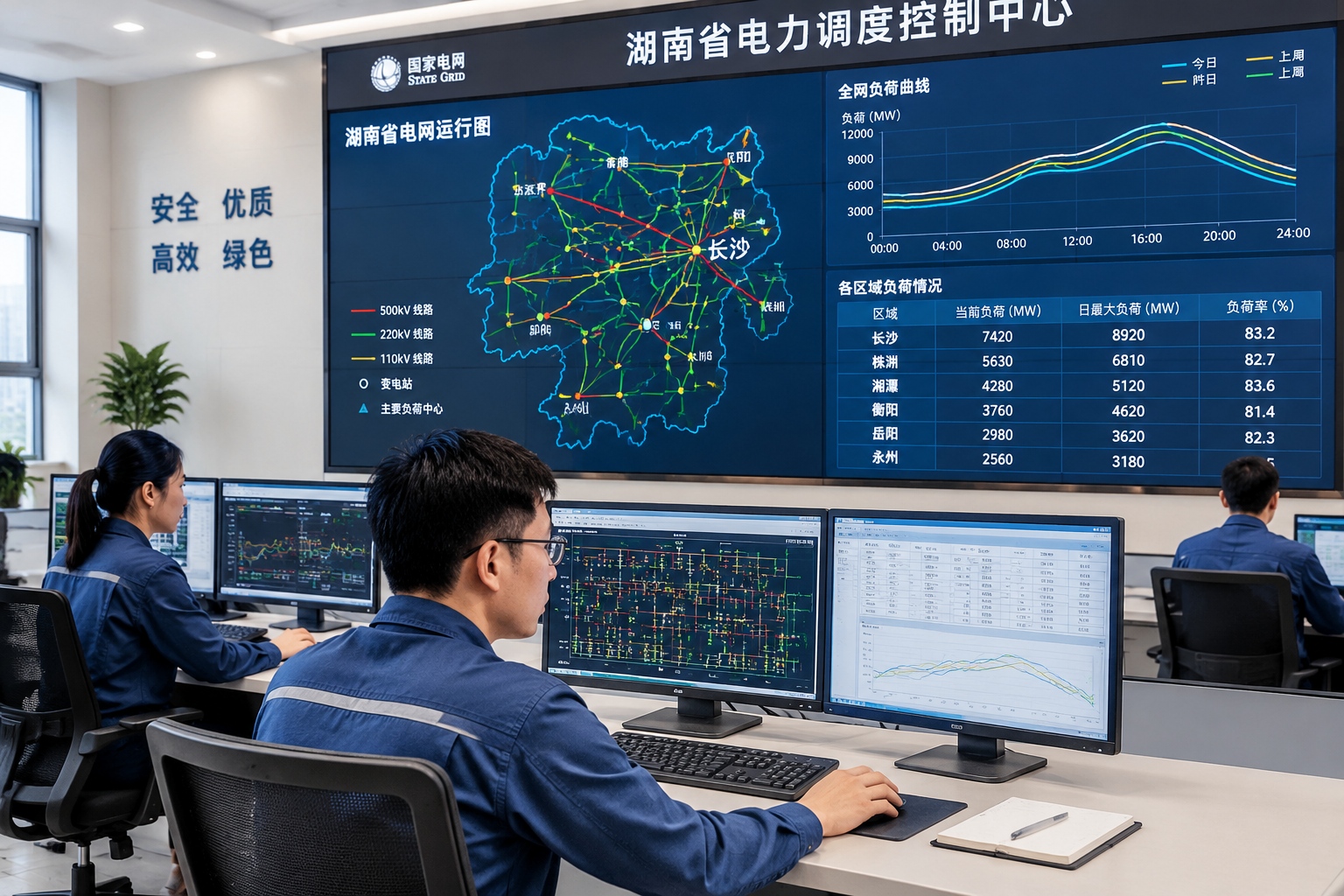

A control room where nothing looks dramatic
At 8:30 on a summer morning, a provincial grid dispatch center in eastern China is already busy. An engineer sits in front of four screens. One shows a map of transmission lines. Another shows a table of coal, hydro, wind and solar output. A third shows a colorful stack of constraints. She types a command. A model starts calculating how to meet the next day’s demand at the lowest cost without overloading a line or leaving a city short of power. The calculation finishes in minutes. Nobody claps. That is the point.
She is not watching a chatbot or a trading screen. She is watching a solver do its work inside the software stack that keeps the grid balanced. The solver is one of those pieces of technology that becomes important precisely because it is designed to disappear.
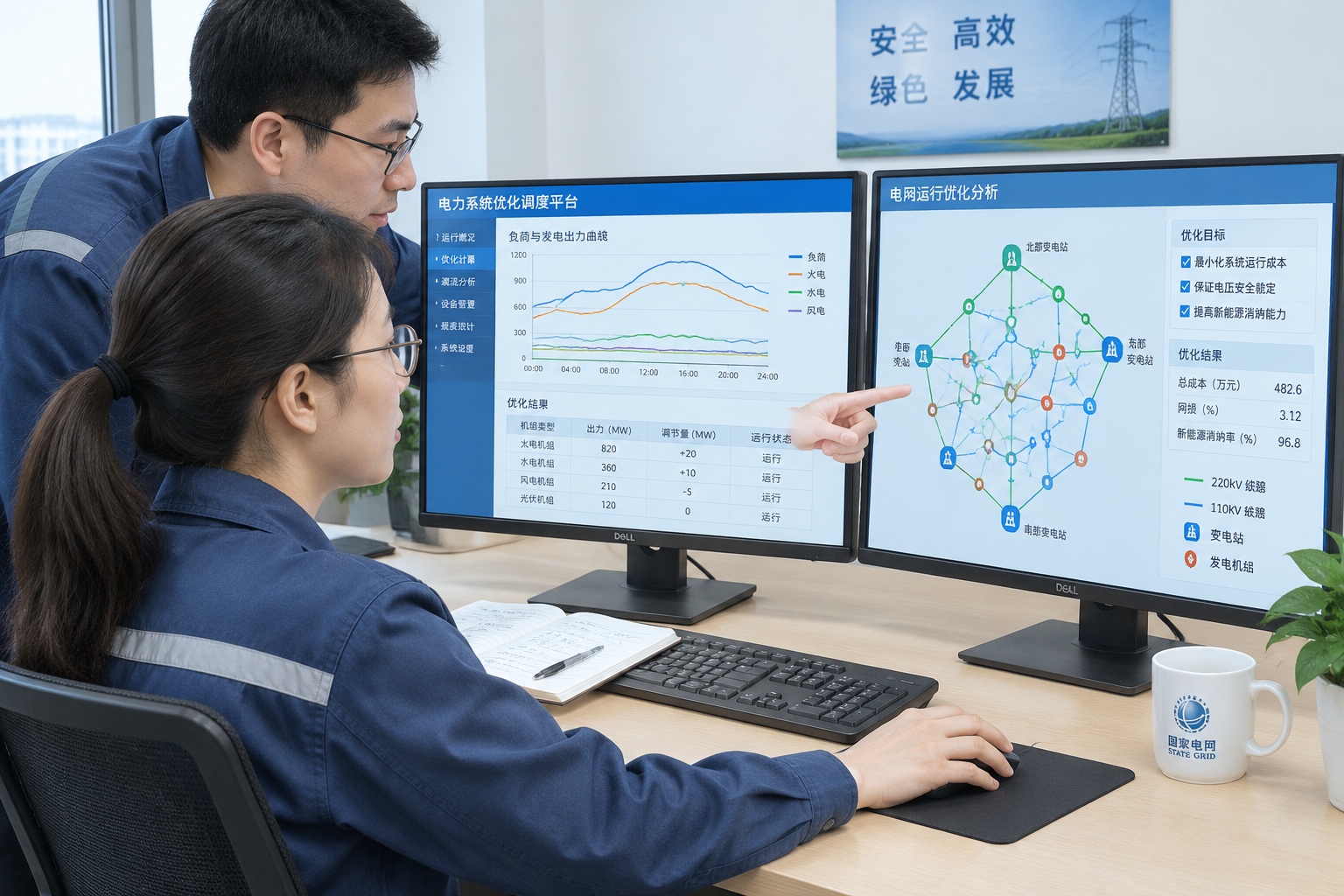
That is also why the arrival of a domestic solver is easy to misread. It sounds like a software release. In practice, it is closer to a piece of public infrastructure—quiet, technical, and judged by whether it works at 2 a.m. during a typhoon.
Why a grid needs a solver
A grid is not a tank of electricity. It is a live machine. Supply and demand must match second by second, and power flows according to physics, not according to a manager’s spreadsheet. A big provincial grid can include thousands of generating units, tens of thousands of network nodes, and millions of variables and constraints once you model ramp rates, reserve margins, voltage limits and contingency rules.
The solver’s job is to search through a vast set of possible operating plans and find one that is feasible, safe and cheap. In day-ahead planning, it helps decide which power plants should start up and which should stay off. In real-time dispatch, it helps allocate output among running units. In planning studies, it tests where new lines or storage might be needed. In contingency analysis, it asks what happens if a line trips or a generator fails.
These problems have names that sound technical—unit commitment, economic dispatch, optimal power flow, security-constrained optimal power flow. The common thread is that the grid is too complex for manual tuning. Engineers need a mathematical engine that can respect hundreds of thousands of physical and safety constraints at once.
China’s grid makes this harder in specific ways. The country operates one of the world’s largest and most interconnected power systems, with ultra-high-voltage lines moving electricity across provinces and a rapidly growing share of wind and solar. Weather-dependent generation means more scenarios, more uncertainty and more need for fast computation. The solver is not the whole answer, but it is part of the arithmetic.
What Tianquan actually is
Tianquan is described by its developers as China’s first homegrown, controllable power-system solver, designed for grid optimization and simulation. “Homegrown” means the core optimization engine is developed domestically. “Controllable” means the code and licensing can be maintained and adapted inside China’s own software ecosystem, rather than depending entirely on a foreign vendor.
It is not a consumer product. There is no app to download, no subscription for households, no interface that shows a green leaf when you save energy. It is an industrial engine embedded in the software used by grid operators, research institutes and power-system planners. Think of it as a database engine rather than a mobile app: most people never see it, but a lot of other software depends on it.
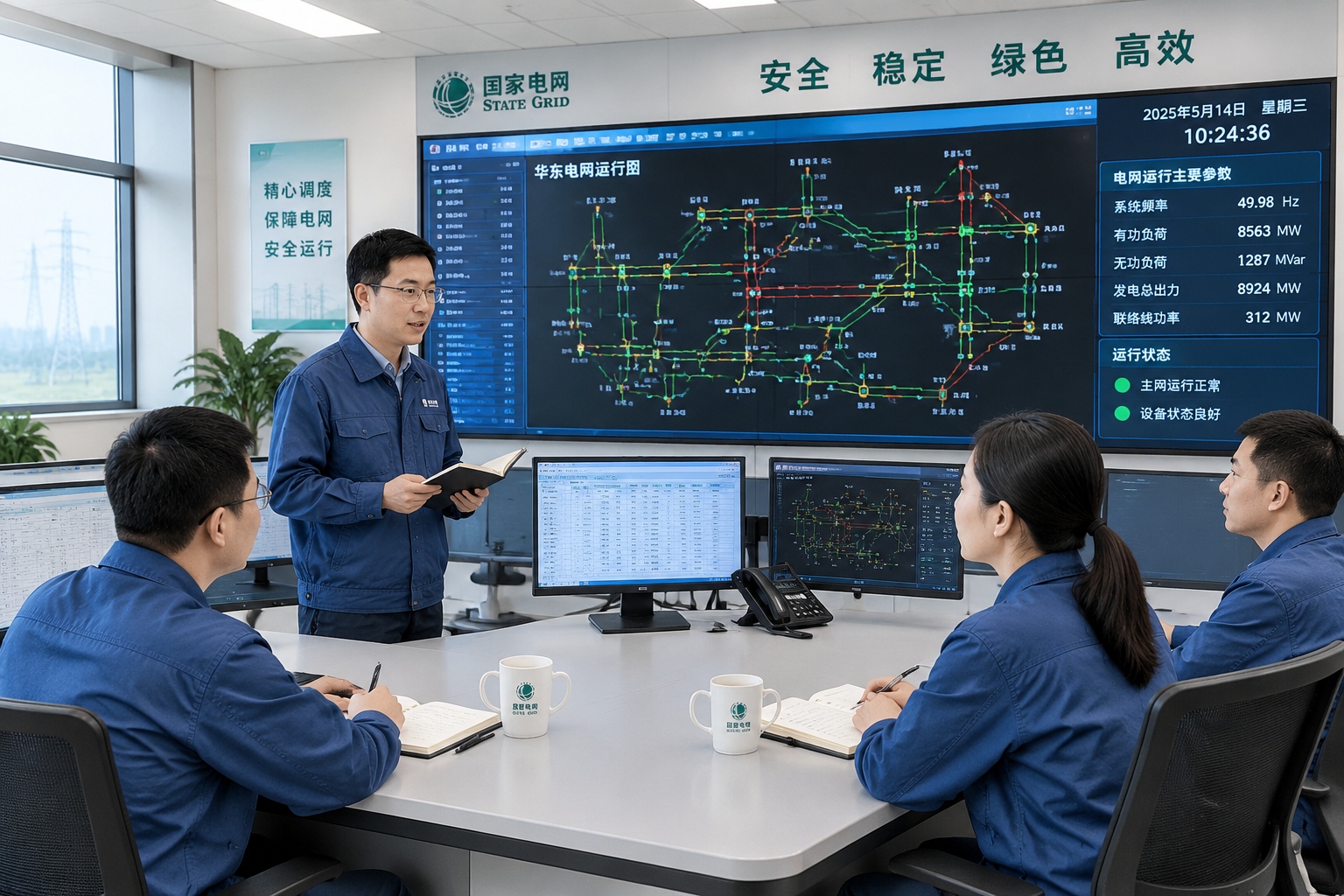
Public reports say Tianquan outperforms a leading international peer by 14% in performance tests. That sentence is worth unpacking carefully, because “performance” in optimization software is not one number.
The 14% claim: speed, scale and stability
First, speed. A 14% faster solve sounds impressive, and sometimes it is. If a planning model used to take ten hours and now takes 8.6 hours, that changes what engineers can test overnight. If a real-time calculation used to take 20 seconds and now takes 17 seconds, the gain matters less, because other parts of the control system may dominate the clock. Context decides the value.
Second, scale. A solver that is fast on a small test case but fails on a full provincial model is not a grid solver. The relevant question is whether the 14% advantage holds as models grow to include more nodes, more scenarios and more security constraints. Grid operators care about the largest, ugliest cases, not the neat demonstration case.
Third, stability. A solver can be quick on average and still be useless if it occasionally fails to find a feasible answer, runs out of memory, or produces results that shift unpredictably between versions. In a control room, reliability beats a benchmark record. Engineers need repeatable answers, clear error messages and support when something goes wrong.
So the fair question is not “Is 14% big?” It is “14% on what model, on whose hardware, against which software version, and with what success rate?” A serious test protocol should name the benchmark cases, model size, time horizon, hardware, optimality gap and number of runs. Without that, the number is a signal, not a final verdict.
Why “homegrown” matters—and what it does not mean
The word “homegrown” matters for reasons that are partly practical and partly strategic. Commercial optimization solvers are dominated by a small number of foreign vendors. Licenses can be expensive, and access can be affected by export controls or corporate policy. A domestic solver reduces a single point of failure in the software supply chain.
There is also a customization argument. China’s grid has features that generic software may not handle elegantly: large-scale ultra-high-voltage AC and DC transmission, rapidly changing renewable output, provincial spot markets, and multi-area coordination. A domestic team can work closely with grid companies to adapt models, improve numerical methods and fix problems in the local context.
That does not mean every Chinese grid will switch overnight. Power-system software is deeply embedded. Control centers run on long validation cycles, and replacing a solver means retraining staff, checking thousands of cases and proving that results are consistent with existing tools. The existence of a domestic option is not the same as mass adoption.

From benchmark to daily operation
A benchmark is a race. A control room is a marathon. The next round of evidence should be concrete: how many users are running Tianquan in production, how many real grid cases it has solved, how long it has been in service, and how quickly the development team responds to bugs. Documentation matters too. A solver without good manuals is a black box with a license.
Long-term maintenance is the least glamorous part of industrial software and often the most important. Grid models change. Renewable penetration rises. Market rules evolve. A solver must keep up, year after year, without forcing operators to rebuild their workflows. That is why public case studies from provincial grids would be more convincing than another headline percentage.

The 14% number is a useful signal. It says a domestic team can compete at a serious technical level. It does not yet prove that Tianquan is the default choice for every grid problem. The honest conclusion is that the software has reached an important milestone, and the harder test—real users, real cases, long-term support—is still ahead.
What this has to do with your electricity bill
For most people, a solver is invisible. It does not sit on a kitchen counter or appear on a phone. Its effects show up indirectly. If a grid can plan and dispatch more efficiently, it may need fewer expensive peak-hour generators, curtail less wind and solar, or delay some network upgrades. Those changes can ease costs, though fuel prices, taxes, market rules and network tariffs usually matter more to a household bill than one piece of software.
It can also matter during bad weather. Security-constrained dispatch and contingency analysis help operators test what happens if a line fails or a storm knocks out generation. A faster solver lets them examine more “what if” scenarios before a crisis, not after it. For a household, the result is not a new icon on a screen. It is a grid that can absorb more rooftop solar, schedule maintenance with less disruption and recover faster when something breaks.
The effect is real but indirect. That is typical of industrial software. It rarely makes a dramatic entrance. It just makes the system behind the lights a little more predictable.
The boring test that matters
The real milestone for Tianquan will not be a launch event. It will be the day when engineers use it without thinking about where it was made, because it is reliable, documented, supported and integrated into their daily work. That is how infrastructure earns trust: not by being exciting, but by being there.
If Tianquan can pass that test, the 14% claim will matter less as a marketing number and more as a sign of depth in China’s industrial software base. If it cannot, the number will remain a benchmark result looking for a control room.
Until then, the right posture is neither hype nor dismissal. Ask for the test protocol. Watch the user cases. Check the maintenance record. The grid already runs on arithmetic. The question is who writes the engine, and whether it can be trusted when the weather turns.
Start the discussion at forum.chinacomes.com