

Starting at the curb
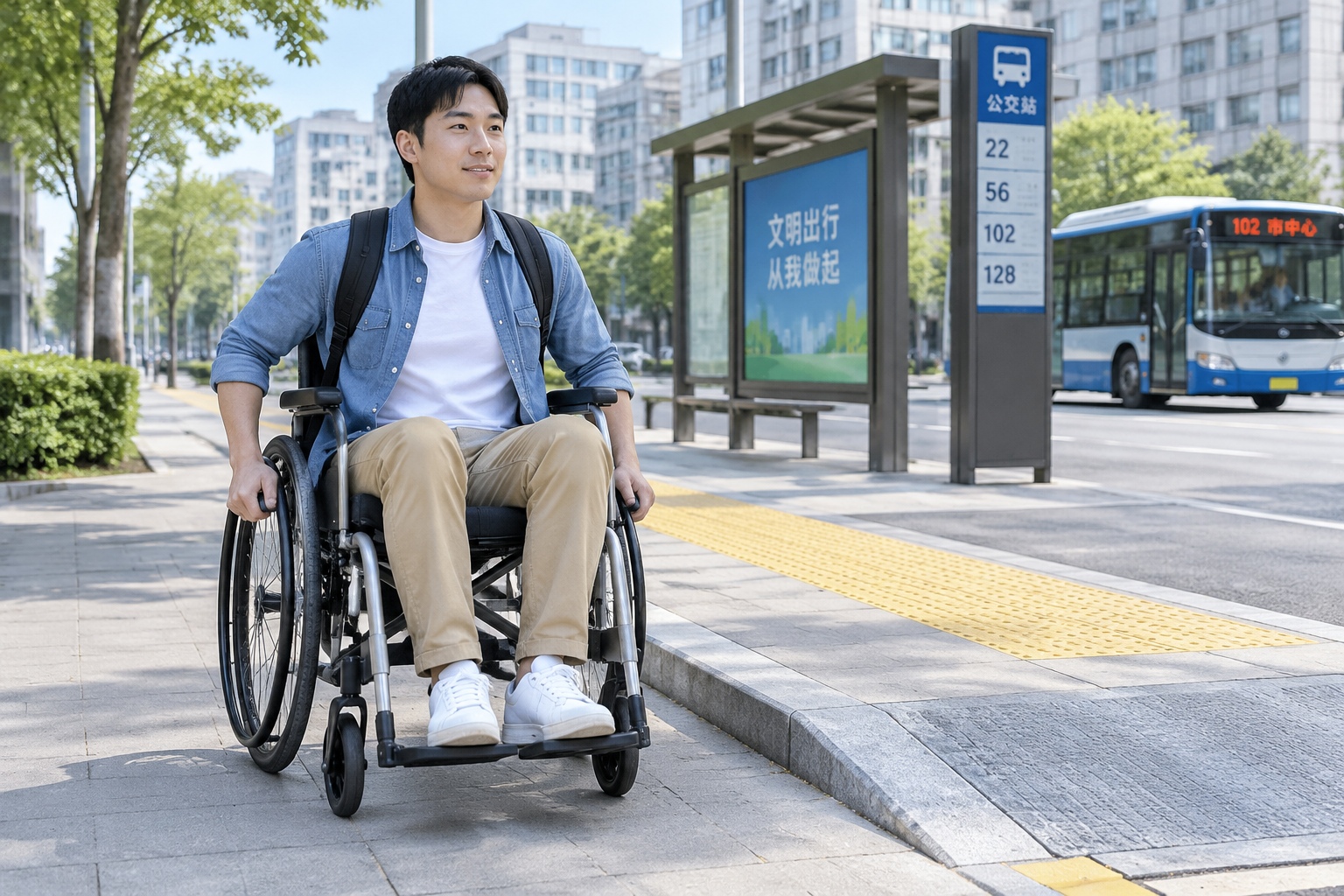
On a Tuesday morning in Hefei, a city of nearly ten million in eastern China, I followed Chen Lei as he rolled off a bus. He is 34, uses a manual wheelchair after a spinal injury, and works in software testing. He laughed when I told him why I was there. “You want to test the city? Fine. I test it every single day.”
That line framed the whole trip. Accessibility in China is not an abstract policy question. It is a series of small physical facts: whether a curb has a ramp, whether that ramp is blocked by a parked scooter, whether an elevator exists and actually works. Over two weeks I traveled through three of China’s newer, fast-growing cities — Hefei, Hangzhou, and Chengdu — and tried to move through them the way a wheelchair user would. I measured ramps, timed elevators, and asked people what their daily commute really feels like.
Why “new cities” matter
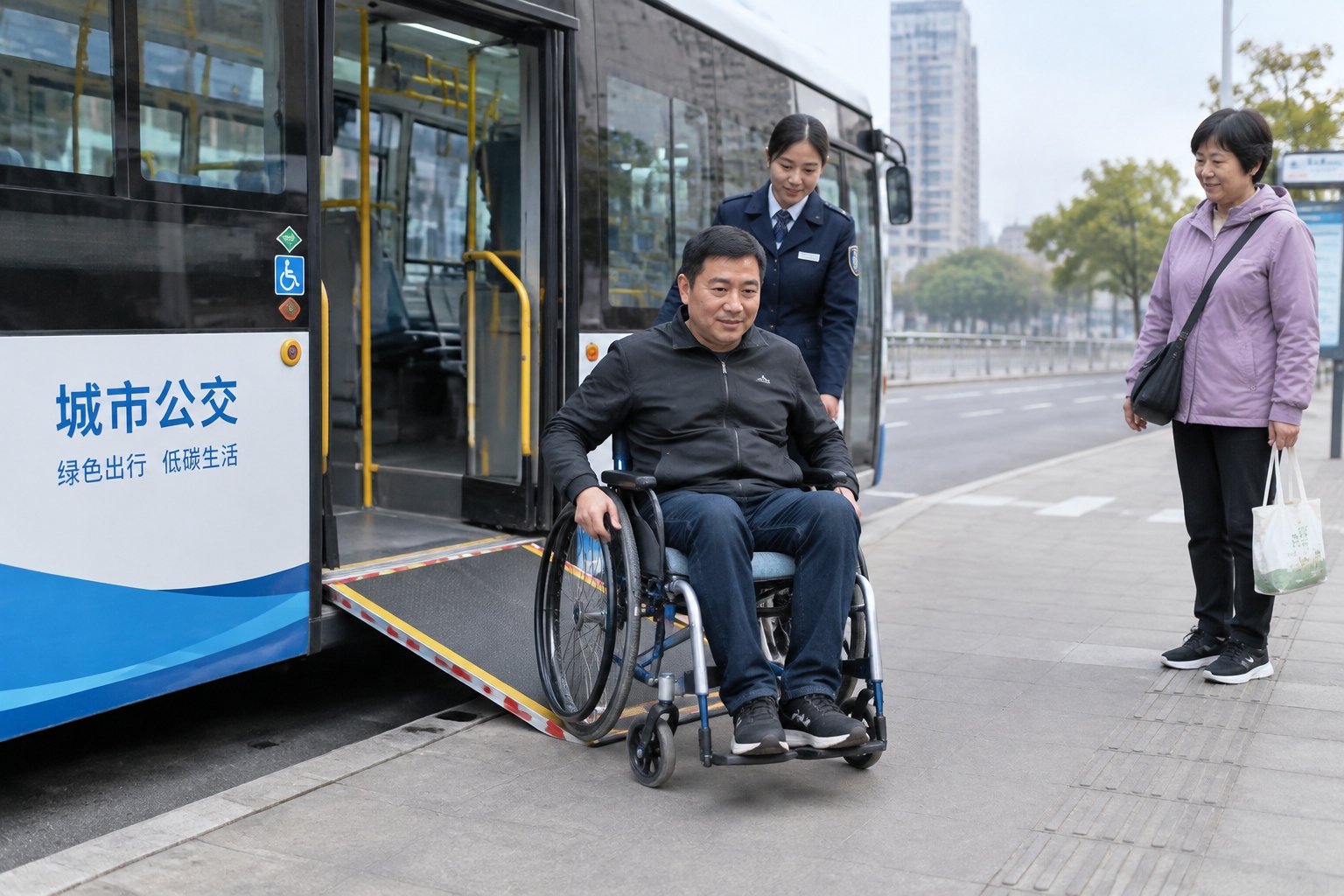
China’s older urban cores were built before accessibility was taken seriously. Narrow lanes, high thresholds, and staircases are everywhere. But over the past 15 years, enormous new districts have gone up almost from scratch — new metro lines, new government buildings, new residential blocks. These are the places where accessibility either got designed in or got left out.
The legal backdrop changed too. China’s first national regulation on barrier-free construction took effect in 2012, and in September 2023 the country passed a dedicated Barrier-Free Environment Construction Law. On paper, new public buildings and transport hubs must include ramps, accessible toilets, tactile paving, and elevators. The real question is whether the law survives contact with the sidewalk.
The metro: the clear winner
If one thing has genuinely improved, it is urban rail. Hangzhou’s metro, much of it built in the last decade, was the easiest system I tested. Every station I visited had step-free access from street to platform via elevators, and the gap between platform and train was small enough for Chen’s chair to roll across without a ramp.
Chengdu was similar. At several stations, staff noticed us and offered a portable ramp and an escort to the correct exit — a service you can also book in advance by phone. In Hefei, the newer Line 5 stations were excellent; one older interchange had a single elevator out of service, forcing a 300-meter detour. That detour is the kind of thing an able-bodied passenger never notices and a wheelchair user plans their whole day around.
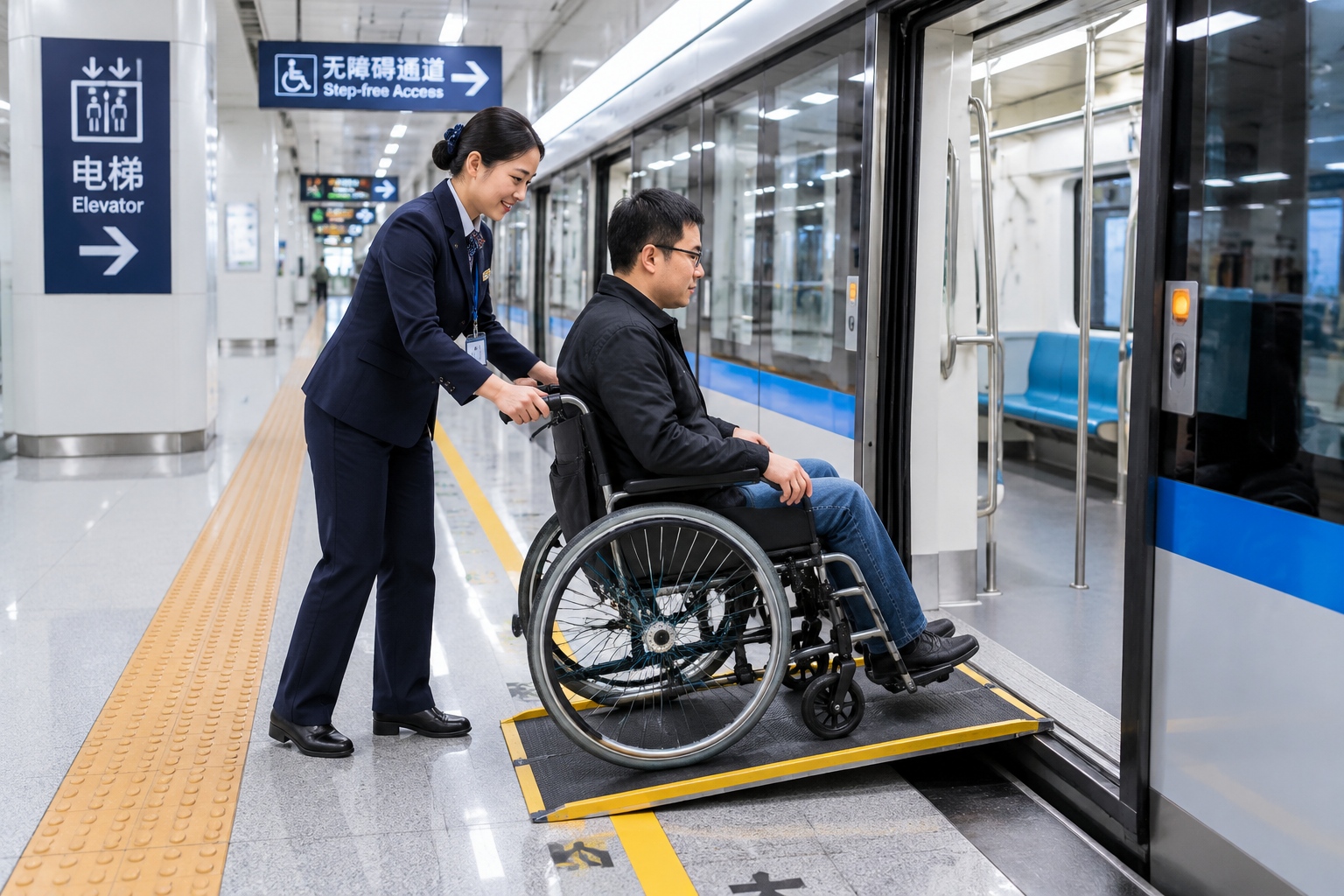
Compared with international peers, China’s new metros hold up well. Many stations are more consistently step-free than the London Underground, where a large share of stations still have no elevator at all. The weakness is not the stations themselves but the “last mile” — getting from the station exit to the actual destination.
The last hundred meters
This is where the testing got frustrating. Tactile paving — the ridged yellow strips meant to guide blind pedestrians — is installed almost everywhere in these cities, which is genuinely ahead of many Western countries. But it is often interrupted by parked shared bikes, utility poles, or a sudden end at a staircase. For wheelchair users, curb ramps exist on most new streets, yet a surprising number are too steep or end in a lip of a few centimeters that is enough to stop a manual chair cold.
I measured one ramp outside a shopping mall in Chengdu at roughly a 1:6 slope. International guidelines, including the US ADA standard, recommend no steeper than 1:12. Chen could manage it only by rocking backward and pushing hard. “A heavier person, or someone alone, would be stuck here,” he said.
Buildings: a lottery
Entrances were the most inconsistent category. New government service centers — the one-stop halls where citizens handle IDs, taxes, and permits — were reliably good, with flat entries, automatic doors, and accessible counters. This reflects a real policy push: these buildings are inspected.
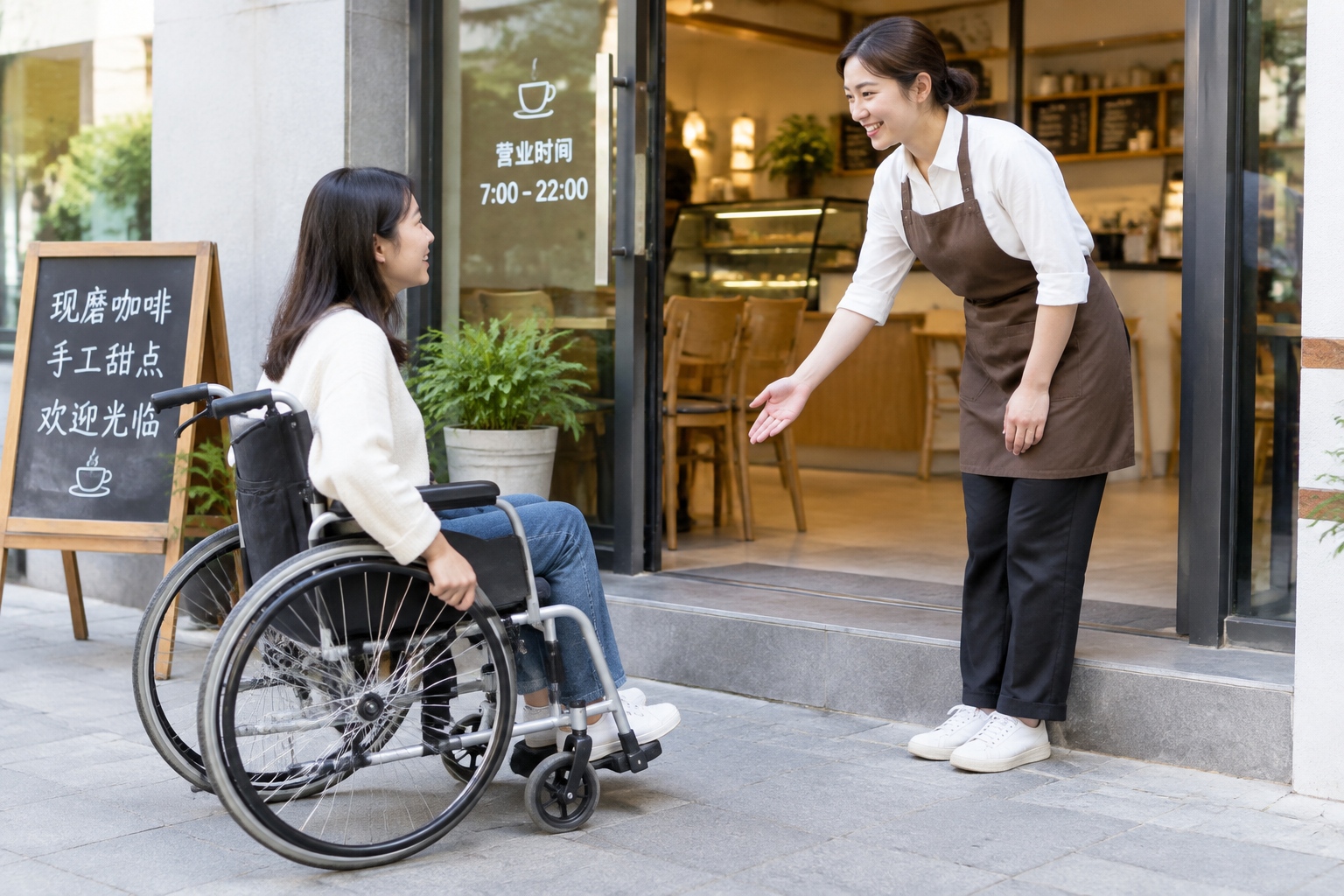
Private commercial buildings were a lottery. A new office tower in Hangzhou had a flawless ramp and a wide accessible toilet. A trendy café two blocks away had a single step at the door and a staff member who cheerfully offered to lift the chair — kind, but not independence. Older restaurants and small shops, even in new districts, often assume everyone can climb one step, which quietly excludes a wheelchair user from half the social life of a street.
What users actually say
The people I interviewed were less interested in grand comparisons than in reliability. Wang Min, a 41-year-old accountant in Hangzhou who uses an electric wheelchair, told me the hardware is now “80 percent there.” Her frustration is maintenance and enforcement: an accessible toilet used as a storage room, an elevator switched off after 9 p.m., a ramp blocked by a delivery van.
“Ten years ago I planned trips around whether anything existed,” she said. “Now I plan around whether it works today.” That shift — from absence to unreliability — is itself a kind of progress, but it is cold comfort when you are stranded.
Several users praised one distinctly Chinese advantage: delivery and e-commerce. When the physical city fails, apps fill the gap. Groceries, meals, and medicine arrive at the door within an hour. It does not fix a broken elevator, but it reduces how often a bad street design forces someone to stay home.
How it compares
Measured against international standards, China’s new cities land in an interesting middle. On coverage of new infrastructure — metros, major public buildings, tactile paving — they often match or beat older Western cities that are expensive and slow to retrofit. On consistency, enforcement, and the small details of slope, maintenance, and the “last hundred meters,” they lag behind places like Japan, where accessibility culture is deeply embedded in daily operation.
The gap is less about money or engineering and more about habit: whether a store clerk keeps the ramp clear, whether a building manager treats a broken elevator as an emergency, whether a designer sweats the final few centimeters.
The verdict
So, is China’s new urban environment wheelchair friendly? The honest answer is: increasingly yes at the level of big systems, and still unpredictable at the level of a single doorway. The metros impressed me. The streets improved year by year. The weak link is the connective tissue — the ramp that is too steep, the elevator nobody fixed, the step nobody thought about.
Chen summed it up at the end of our day, waiting for a working elevator. “The city wants to be friendly,” he said. “It just forgets, sometimes, that friendly has to work every day, not most days.” For a country that built this much this fast, closing that gap is less a construction problem than a question of attention — and attention is cheaper than concrete.
Start the discussion at forum.chinacomes.com