

The one day a year my grandmother checks the calendar twice
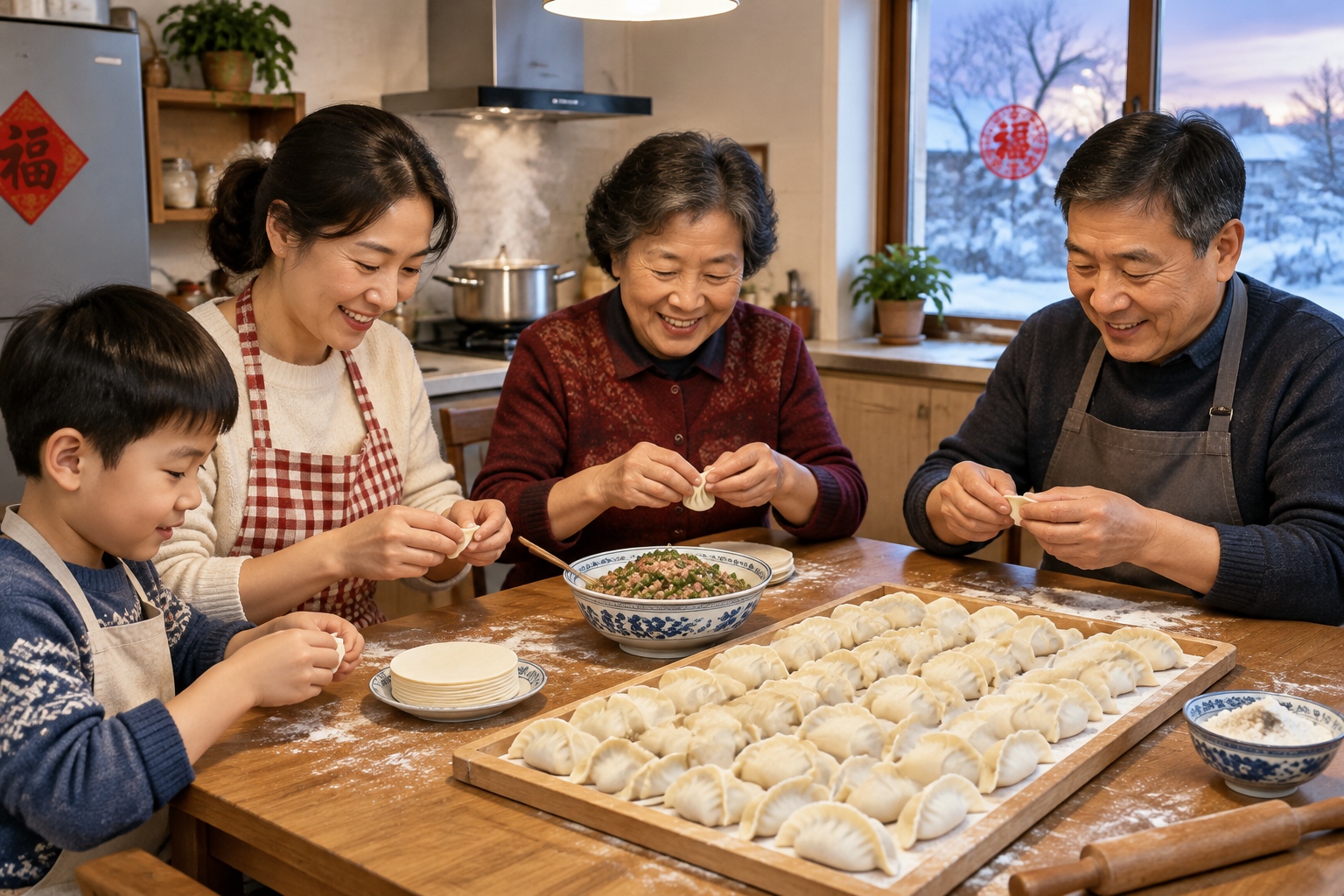
Every December, somewhere around the 21st or 22nd, my grandmother does something she does for almost no other day: she double-checks the date on the paper calendar hanging by the kitchen door. She is looking for two small characters, 冬至 (dōngzhì), the Winter Solstice. Once she finds them, the plan for dinner is settled before anyone asks. We are making dumplings.
If you did not grow up in China, this might sound like a quaint seasonal habit, the way some families roast a turkey or bake cookies on a particular day. It is that, but it is also older and stranger than it first appears. The Winter Solstice is one of the 24 solar terms in the traditional Chinese calendar, a system farmers have used for roughly two thousand years to track the sun and plan their crops. The solstice marks the shortest day and the longest night of the year. After it, the days slowly grow longer again.
There is an old saying: “冬至大如年” — the Winter Solstice is as big as New Year. In some regions people still take it that seriously.
A doctor, a freezing winter, and a bowl of soup
Here is the story my grandmother tells, more or less the same way every year.
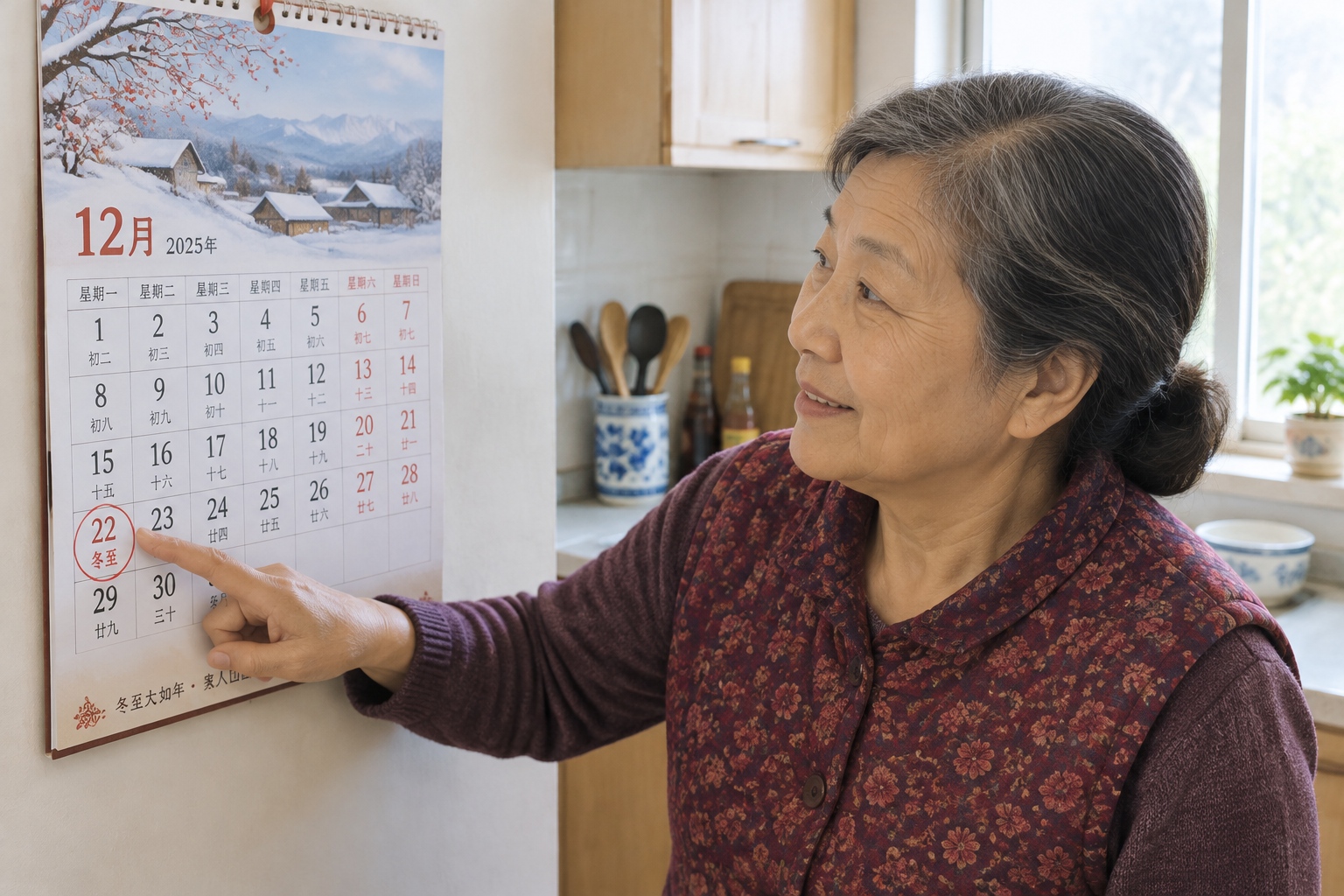
Around 1,800 years ago, near the end of the Han dynasty, there lived a physician named Zhang Zhongjing. He is a real historical figure, often called the “Sage of Medicine” in China, and his writings on treating illness are still studied in traditional Chinese medicine schools today. The legend goes that one bitter winter, on his way home, he passed crowds of poor villagers whose ears had turned raw and frostbitten from the cold. Many were too hungry and too cold to take care of themselves.
So he set up a large pot by the roadside. He boiled mutton, chili, and warming herbs, chopped it all up, and wrapped the filling in little scraps of dough folded to look like ears. He boiled these, then handed them out along with the hot broth. He called the dish “jiāo’ěr” — tender ears. People ate them, felt warmth spread through their bodies, and, the story says, their frostbitten ears slowly healed.
He supposedly gave this medicine-food away from the Winter Solstice all the way to the Lunar New Year. To remember him, people kept making the little ear-shaped parcels every solstice. Over time “jiāo’ěr” became “jiǎozi” — the dumpling.
And this is where I have to be honest with you, the way I would with a friend. This is folklore, not a medical claim. Eating dumplings will not cure frostbite, and no doctor in China thinks it will. The charm of the story is not that it is literally true. It is that an entire food tradition carries a message of kindness forward through eighteen centuries: when it is cold, feed people, and keep them whole.
There is even a half-joking warning that children repeat: if you don’t eat dumplings on the Winter Solstice, your ears will freeze off. Nobody believes it. Everybody says it.
What the kitchen actually looks like
The legend is lovely, but the reason the tradition survives is simpler and more human: making dumplings together is genuinely fun, and it takes a crowd.
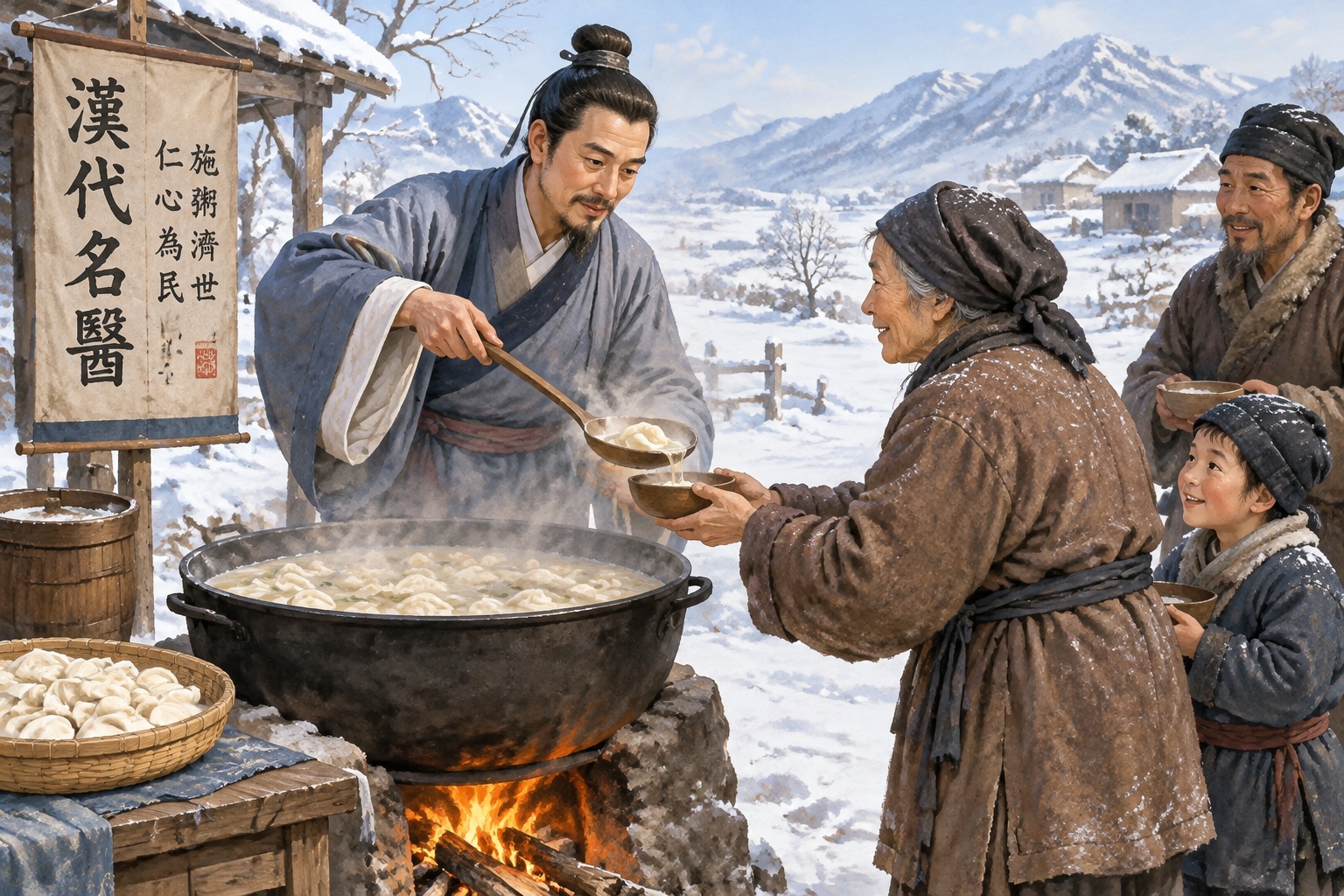
A proper dumpling session is an assembly line of relatives. Someone mixes flour and water into dough and kneads it until smooth. Someone rolls it into a long rope and cuts it into small pieces. Someone presses each piece flat and uses a short wooden pin to roll out round wrappers, thin at the edges, thicker in the middle. Then everyone else gathers around the filling.
The filling is where regions and families argue happily. In the north, pork and Chinese cabbage is a classic. So is pork with chives, or lamb with carrot, or egg with garlic chives for anyone avoiding meat. People in coastal areas might fold in shrimp. My own family always makes at least one batch with a single peanut or a cleaned coin hidden inside a random dumpling — whoever bites it is supposed to have good luck in the coming year. Mostly it just means someone yells across the table.
Folding is a skill with real range. My aunt pleats hers into neat crescents with a dozen tiny ridges. My younger cousin squashes his shut like he is sealing an envelope in a hurry. Both end up in the same pot of boiling water, and both taste fine.
Why this matters more than the food
To understand why a plate of dumplings carries so much weight, you have to understand how spread out Chinese families have become. Hundreds of millions of people work far from the towns where they grew up — in Shanghai, Shenzhen, Beijing, or overseas. Grandparents are in one province, parents in another, adult children in a third. A full family table is no longer a given.
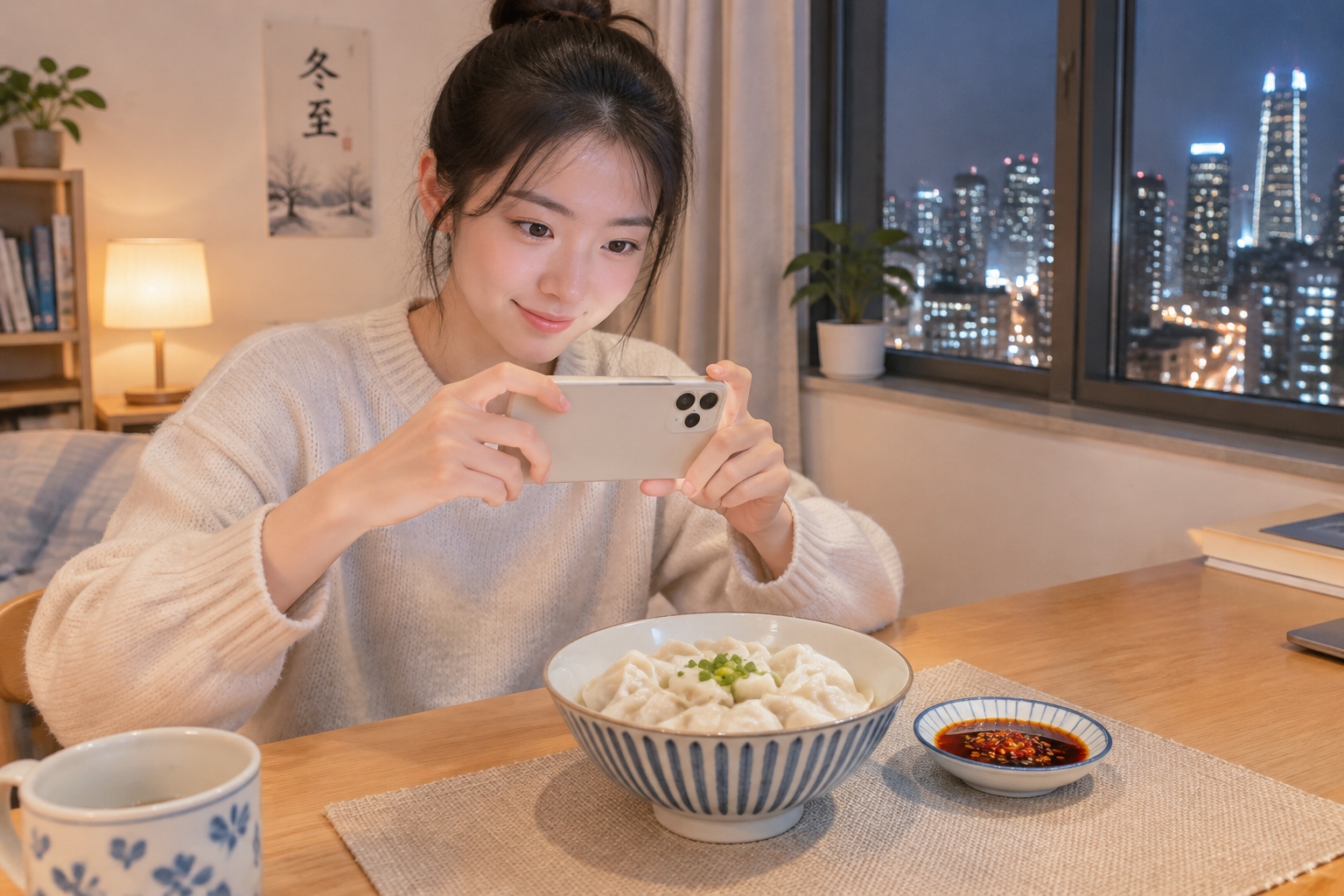
So the small festivals, the ones that don’t come with a public holiday, become quiet anchors. Not everyone can travel home for the Winter Solstice. But a lot of people will at least call, or send a photo of their dumplings, or order a bowl from the shop downstairs so they are eating the same thing on the same night as their parents a thousand kilometers away.
You see this on Chinese social media every solstice: feeds fill with photos of lumpy, imperfect, homemade dumplings. Office workers who can’t cook post their sad single dumpling from a convenience store with a laughing caption. Students abroad hunt for frozen jiaozi in Asian supermarkets so they don’t “lose their ears.” It is half nostalgia, half inside joke, fully sincere.
If you want to try it
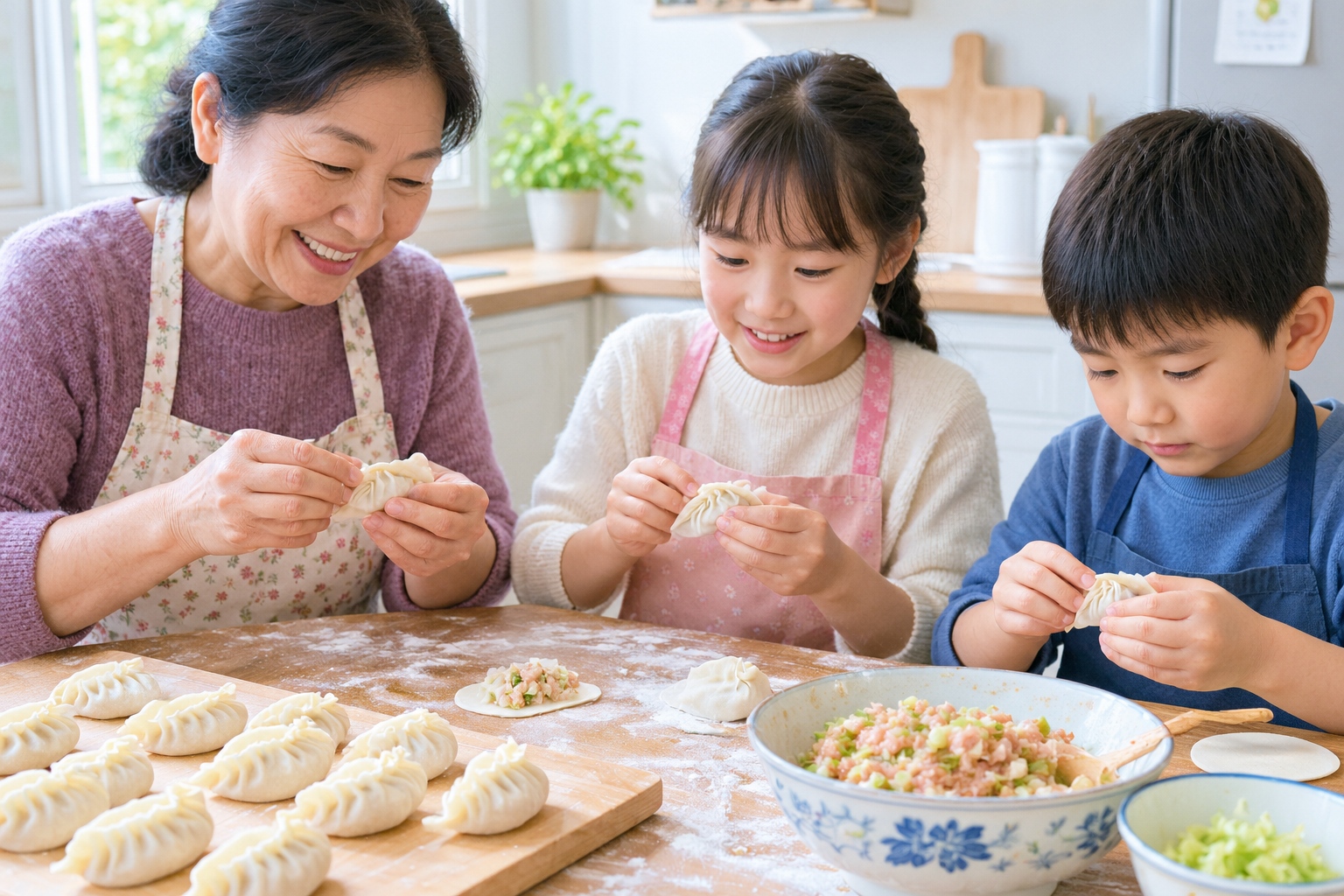
You do not need the legend, the lineage, or even a particularly cold night. You need flour, water, something savory to put inside, and ideally at least one other person, because folding dumplings alone is a chore and folding them with someone is a conversation.
Frozen dumplings from an Asian grocery are completely legitimate. Plenty of Chinese households buy them too. Boil them until they float, dip them in a mix of black vinegar, soy sauce, and a little chili oil, and you have the honest version of the dish most people actually eat.
What you are tasting is not medicine. It is something better: a very old habit of gathering close when the year turns dark, folding warmth into small parcels, and making sure the people around you make it through the cold. The story about the ears is just the wrapper. The kindness inside is the real filling.
Start the discussion at forum.chinacomes.com