

The tractor that drives itself
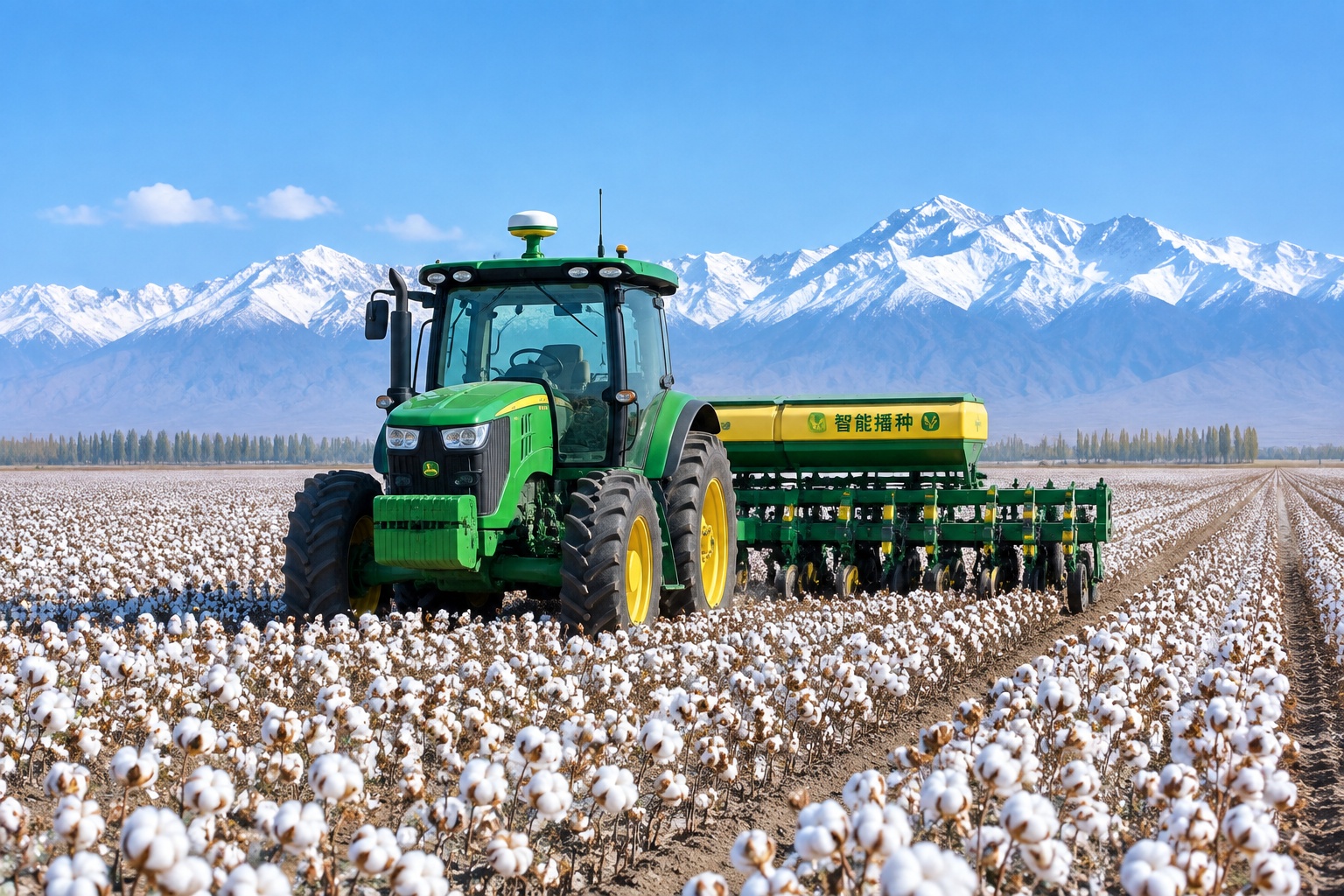
On a spring morning near Shihezi, in the Xinjiang Uyghur Autonomous Region, a green tractor moves across a vast field. The cab is empty. The steering wheel turns by itself, making tiny corrections. Behind it, a seeder drops cotton seeds into the soil in perfectly straight rows. The lines stretch for hundreds of meters without a single deviation.
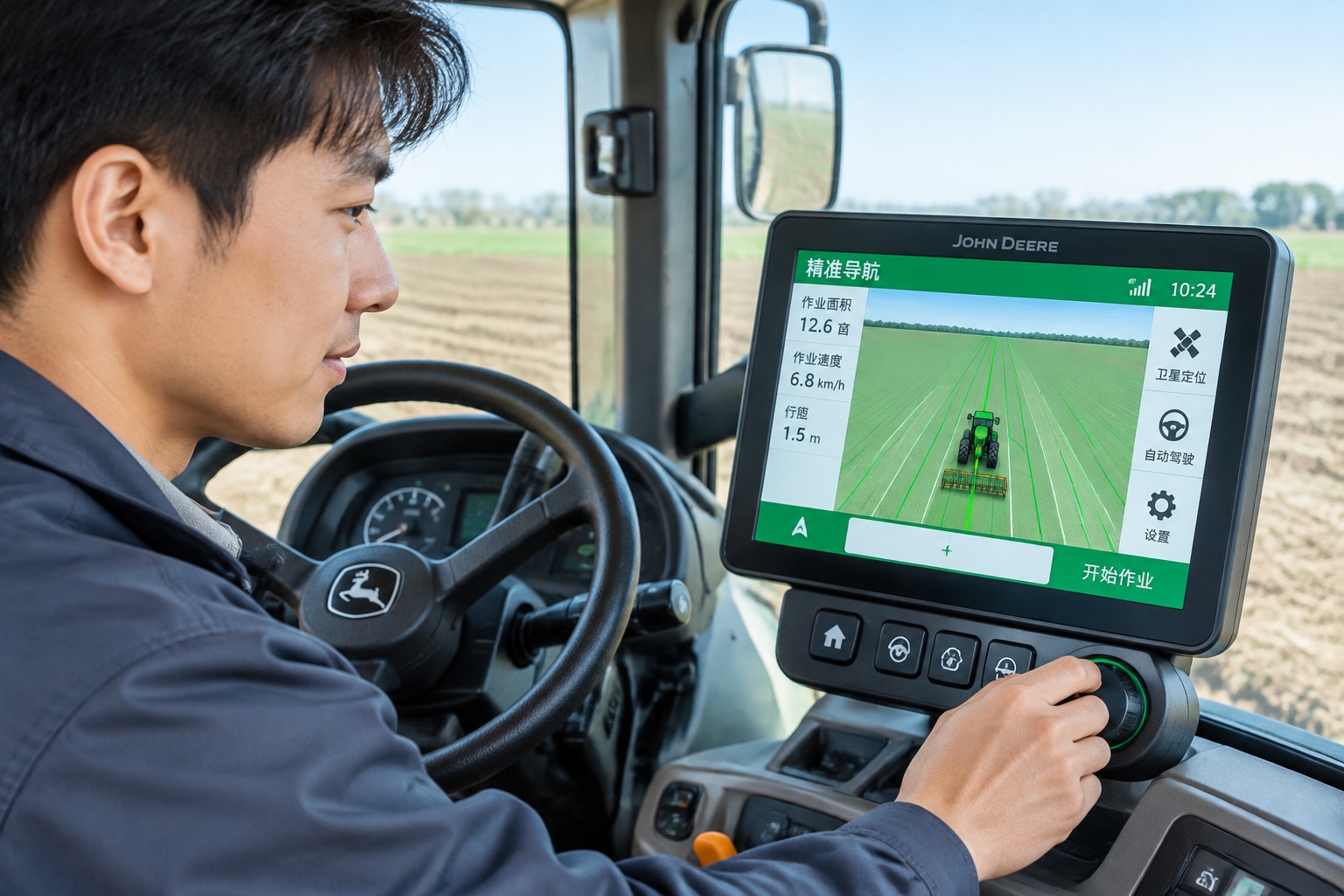
This is not a demonstration. It is a typical workday on many large farms in Xinjiang. The tractor is guided by BeiDou, China’s own satellite navigation system. With a receiver and a correction signal, it can follow a planned path with an accuracy of about 2.5 centimeters. That is roughly the width of a thumb.
Why centimeters matter in farming
For most drivers, a few centimeters off course is nothing. For a farmer planting cotton, it is everything. If rows overlap, seeds and fertilizer are wasted. If rows are too far apart, land is underused. And when the crop is ready, mechanical harvesters need straight rows to work efficiently.
Before satellite guidance, a skilled driver could keep a tractor reasonably straight for a short distance, but fatigue and poor visibility made long runs difficult. At night, it was nearly impossible. The result: overlaps of 10 to 20 centimeters on every pass. Over a 500-meter field, that adds up to a lot of wasted land, fuel, and time.
BeiDou changes the math. The system uses a base station on the ground to send real-time corrections to the tractor. The tractor’s computer compares its actual position with the planned line and adjusts the steering automatically. The driver can sit back and monitor, or leave the cab entirely.
The numbers behind the change
How much does this actually improve efficiency? Let’s look at cotton, the main crop in Xinjiang. The region produces about 90% of China’s cotton, and much of it is grown on large, flat fields that are ideal for mechanization.
With BeiDou guidance, several improvements are common:
- Land use: Overlaps are reduced from 10-20 cm to 2-3 cm. This means 5-7% more land is effectively planted.
- Fuel savings: Less overlap and smoother driving cut fuel consumption by 10-15%.
- Seed and fertilizer: Precise placement reduces waste by about 5-10%.
- Time: A tractor can work 24 hours a day, and one operator can monitor multiple machines. A task that took 10 days might now take 7.
For a 1,000-mu farm (about 67 hectares), these savings can add up to tens of thousands of yuan per season. The cost of a BeiDou guidance system, including the receiver and display, is around 20,000 to 50,000 yuan. In many areas, government subsidies cover 30-50% of that. For large farms, the payback period is often one or two seasons.
A farmer’s view from the edge of the field
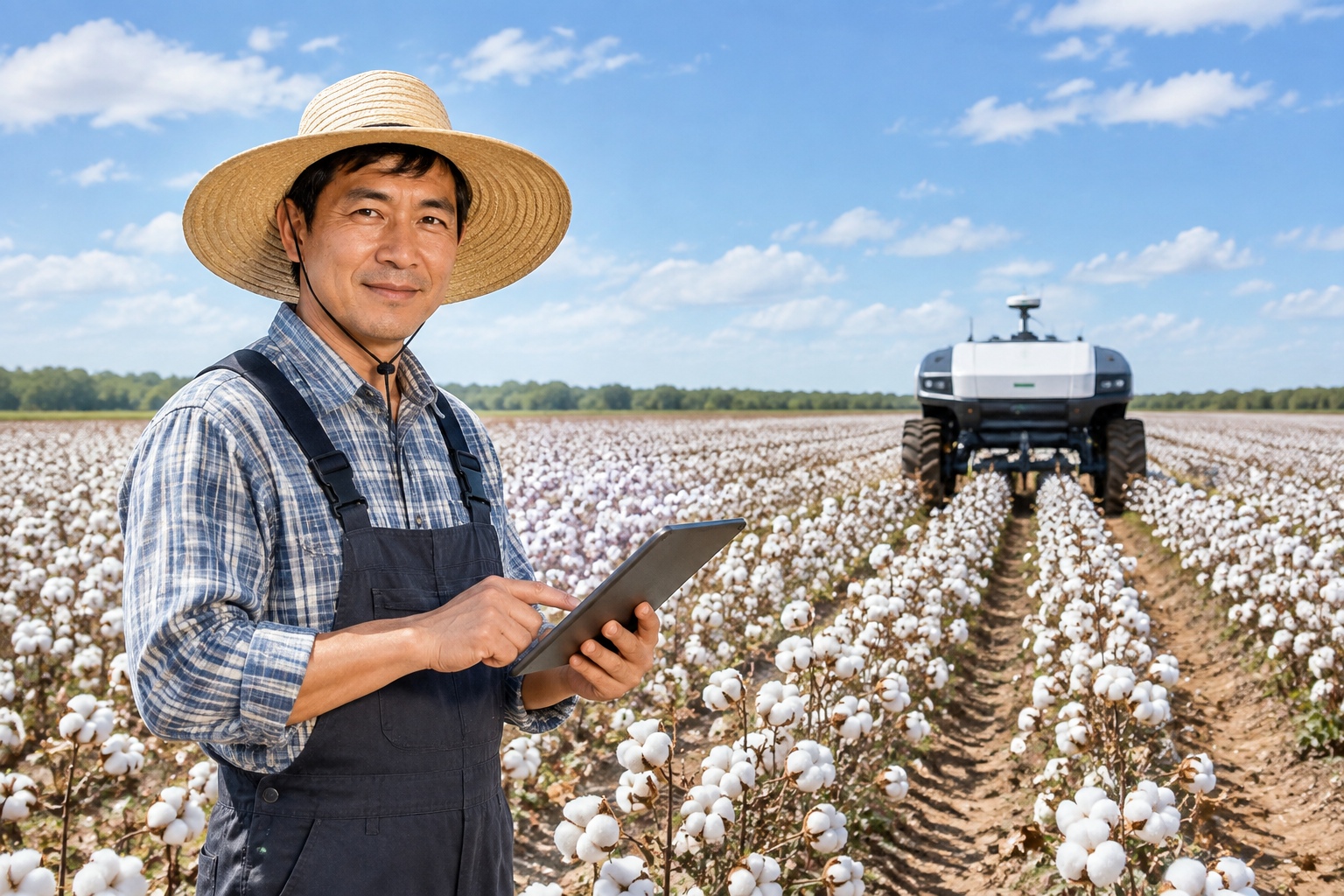
Zhang Wei, a farm manager in Aksu Prefecture, remembers the days when his team had to hire extra drivers during planting season. “We would have 10 tractors, and every one needed two drivers to work around the clock,” he says. “Now we have 15 tractors, and three people can manage them from a tablet.”
Zhang’s cooperative grows cotton and wheat on 5,000 mu. Since adopting BeiDou-guided tractors three years ago, he says labor costs have dropped by 30%. And because the rows are straighter, his cotton picker can move faster, with less damage to the plants. Yield has increased by about 8%.
He also points to a less obvious benefit: less stress. “Planting season used to be a race against time and weather,” he says. “Now the machines just keep going. I can sleep at night.”
Beyond tractors: drones, harvesters, and data
BeiDou is not just for tractors. In Xinjiang, drones guided by the same system spray pesticides and defoliants with similar precision. They fly low over the fields, using a map of the farm to avoid overlaps and gaps. This reduces chemical use by 20-30% compared to manual spraying.
Combine harvesters and cotton pickers also use BeiDou. A cotton picker with guidance can follow the rows exactly, reducing waste and improving the quality of the harvested cotton. And all these machines can send data back to a central platform, where farm managers can see fuel levels, area covered, and machine status in real time.
This is precision agriculture in practice. It is not about futuristic robots. It is about using existing technology—satellites, sensors, and software—to make everyday work more predictable and less wasteful.
The challenges that remain
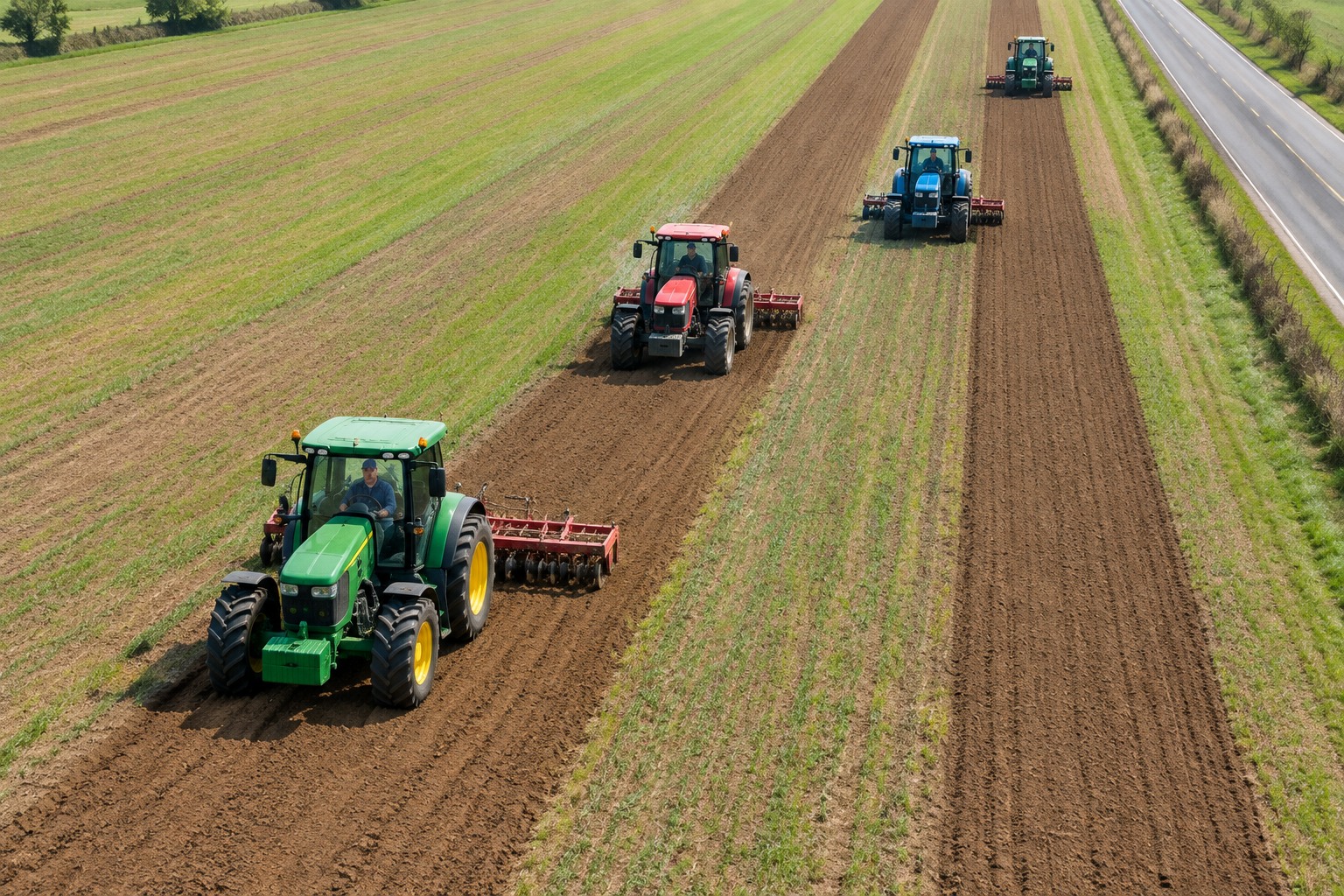
Adoption is not uniform. Large state farms and cooperatives in Xinjiang have embraced the technology quickly. But for smallholders with a few mu of land, the upfront cost can still be a barrier. Maintenance and training also require effort. In remote areas, the base station network for corrections is still expanding.
There is also a learning curve. Older farmers may be skeptical of letting a machine drive itself. “At first, I kept my hand on the wheel,” Zhang admits. “It felt strange. But after a week, I trusted it more than myself.”
These are normal frictions when new technology meets old habits. The direction, however, is clear. As costs fall and the base station network grows, precision guidance is moving from large farms to smaller ones. In some counties, service providers now offer BeiDou-guided planting as a rental service, so a farmer can get the benefits without buying the equipment.
What this means beyond Xinjiang
China’s investment in BeiDou is often discussed in the context of geopolitics—reducing dependence on GPS, building a global navigation network. But the most interesting story is happening on the ground, in fields where the technology is quietly changing how food is grown.
For countries facing labor shortages in agriculture, or looking to increase productivity without expanding farmland, the Xinjiang experience offers a practical model. The technology is not exotic. It is a combination of satellite positioning, a correction signal, and a steering system. The biggest barrier is often not the hardware but the know-how and the support network.
And for ordinary consumers, the result is less visible but still important: cotton that is cheaper to produce, with less waste and lower environmental impact. Wheat and corn grown with fewer inputs. A food system that is a little more efficient, and a little more resilient.
The straight line as a starting point
Back in Shihezi, the tractor continues its work. The sun is setting, but the machine does not stop. It will keep going through the night, planting seeds in perfectly straight lines. The farmer is at home, checking progress on his phone.
This is not a scene from a distant future. It is happening now, across millions of mu in Xinjiang. The technology is not flashy. It does not make headlines like a new rocket or a humanoid robot. But it is quietly transforming one of the oldest human activities: growing food.
And that may be the most important kind of innovation—the kind that becomes so ordinary, so reliable, that we stop noticing it. The tractor goes straight. The seeds go in the ground. The harvest comes. That is the future arriving, one centimeter at a time.
Start the discussion at forum.chinacomes.com