

The Global Flavor of China
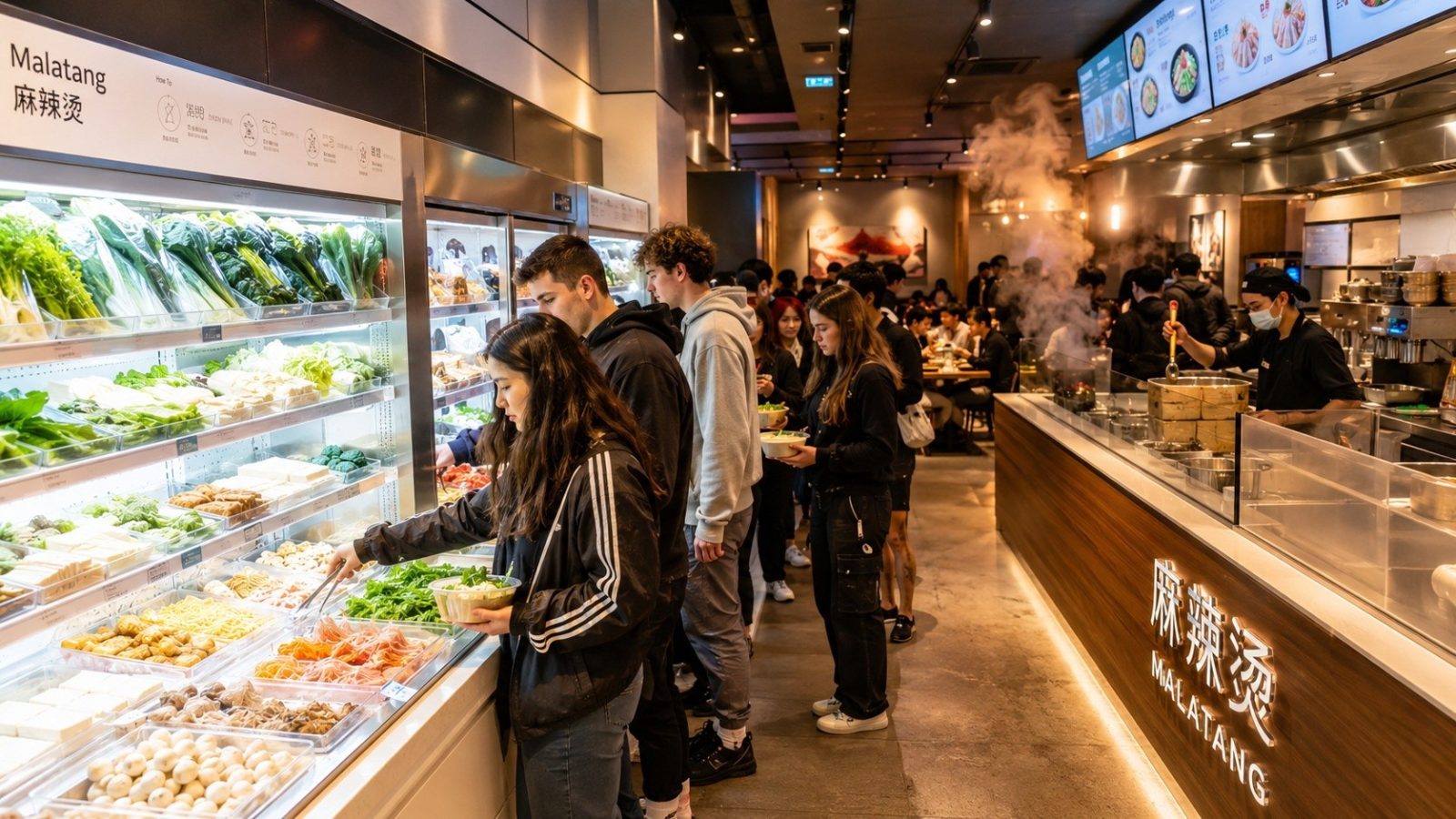
It was 10:30 PM in London. The rain was coming down hard, and I was standing outside a brightly lit storefront on Tottenham Court Road. Inside, a queue of young people—some in business attire, others in casual wear—waited patiently for a bowl of spicy hot pot. Two days earlier, in Tokyo, I had stood in a similar line near Shinjuku Station, watching students and office workers navigate the same process with practiced ease. Now, back in Chengdu, I was back where it all began, watching the steam rise from hundreds of small bowls in a bustling night market.
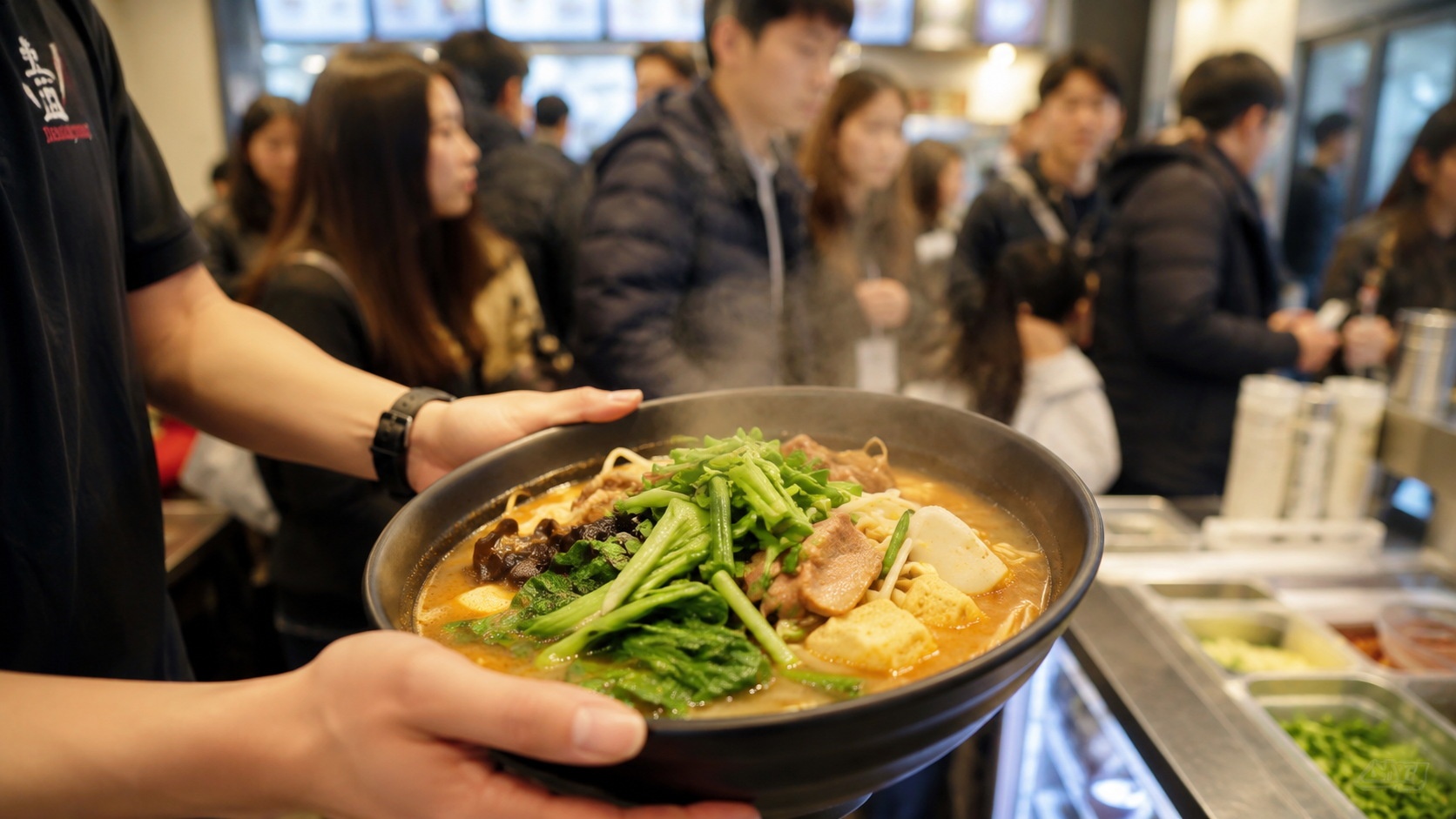
This isn’t just about hunger. It’s about a cultural phenomenon that has quietly crossed borders. Malatang (麻辣烫), often translated as “spicy hot pot,” is no longer just a regional Sichuan specialty. It has become a global staple, a mirror reflecting China’s rapid modernization, supply chain mastery, and the evolving social habits of its youth.
From Street Stall to Global Chain
In the 1990s, Malatang was the epitome of street food: plastic stools on sidewalks, broth boiled in large industrial pots, and ingredients laid out on makeshift tables. It was cheap, fast, and delicious, but often lacked hygiene standards that worried international visitors.
Today, that image has shifted dramatically. Brands like Zhiwei Malatang (ZWM) and Ma La Tang have transformed the experience into a polished, tech-enabled retail model. Think of it as the “fast-casual” evolution of Chinese street food. You walk in, scan a QR code to order via WeChat or Alipay, select your ingredients from a refrigerated display, and wait for the kitchen to boil your custom bowl. No cash changes hands. The entire process takes less than ten minutes.
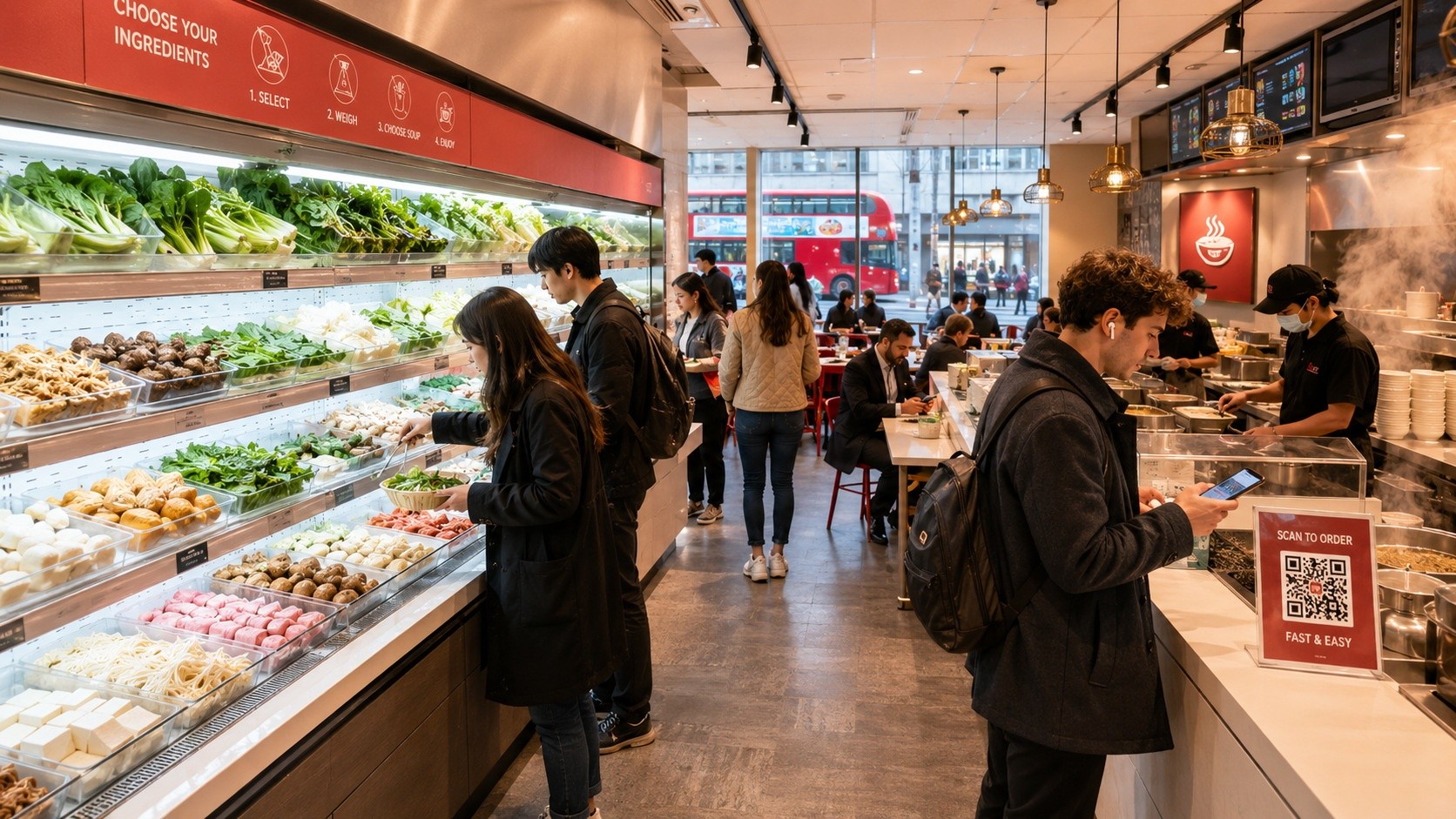
This standardization is key to its global expansion. In London and Tokyo, these chains offer a clean, air-conditioned environment that feels familiar to Western palates while retaining the core Chinese experience of customization. For the Chinese diaspora, it’s a taste of home. For local youth, it’s an affordable, trendy comfort food that fits into their busy lives.
Behind the Bowl: Technology and Supply Chain
What makes Malatang possible in three different continents is not just the recipe, but the invisible infrastructure behind it. China’s supply chain efficiency allows for centralized kitchens and cold-chain logistics that ensure consistent quality. Whether you are in Chengdu or Chiswick, the broth base and pre-cut ingredients arrive at the store fresh and standardized.
But the most striking difference is the digital integration. In China, dining out is increasingly cashless and app-driven. Mobile ordering, digital queuing, and automated payments are the norm. This contrasts sharply with traditional Western fast-casual models, where ordering at a counter or waiting for a server is still common. For a foreign visitor, this tech-savvy efficiency can feel like stepping into the future of dining.
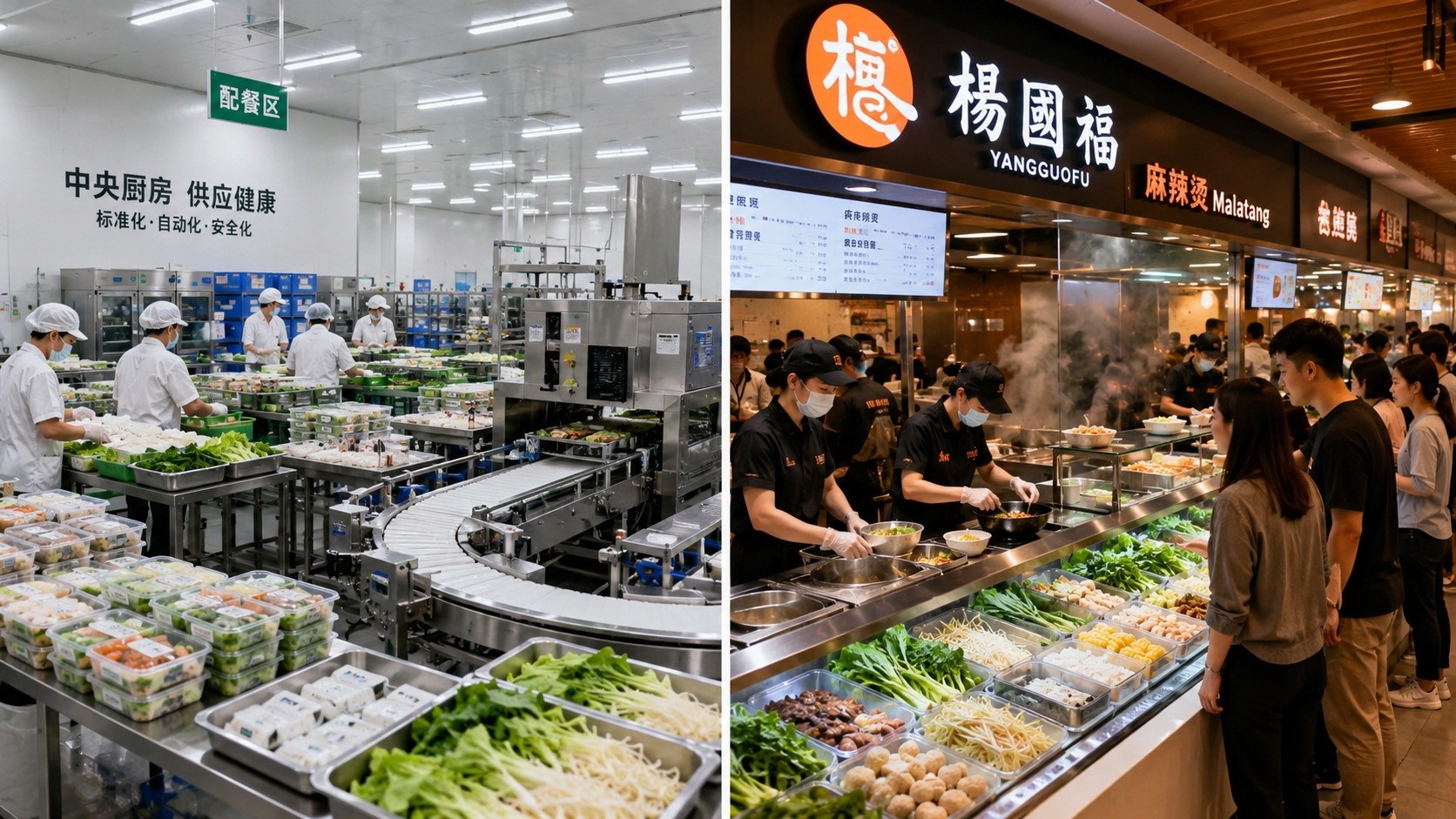
This efficiency isn’t just about speed; it’s about data. Restaurants use customer data to optimize inventory, reduce waste, and tailor menus to local preferences. In London, for example, menus might feature more vegetarian options or milder spice levels, while in Tokyo, they might include local seafood variants. This adaptability is crucial for a food culture that is traditionally seen as rigid.
Cultural Translation: Tastes and Adaptations
Of course, food is not just fuel; it’s culture. And culture needs translation. The biggest hurdle for Malatang going global has always been the “spice barrier.” The distinctive Sichuan flavor profile—”Ma” (numbing from Sichuan peppercorns) and “La” (spicy from chili oil)—can be overwhelming for those unfamiliar with it.
To bridge this gap, global brands have had to adapt. In London, you’ll find a wider range of non-spicy broths, such as tomato, mushroom, or milk-based options. In Tokyo, some chains offer a “mild” setting that reduces the numbing sensation while keeping the flavor. These adaptations don’t dilute the authenticity; they make it accessible.
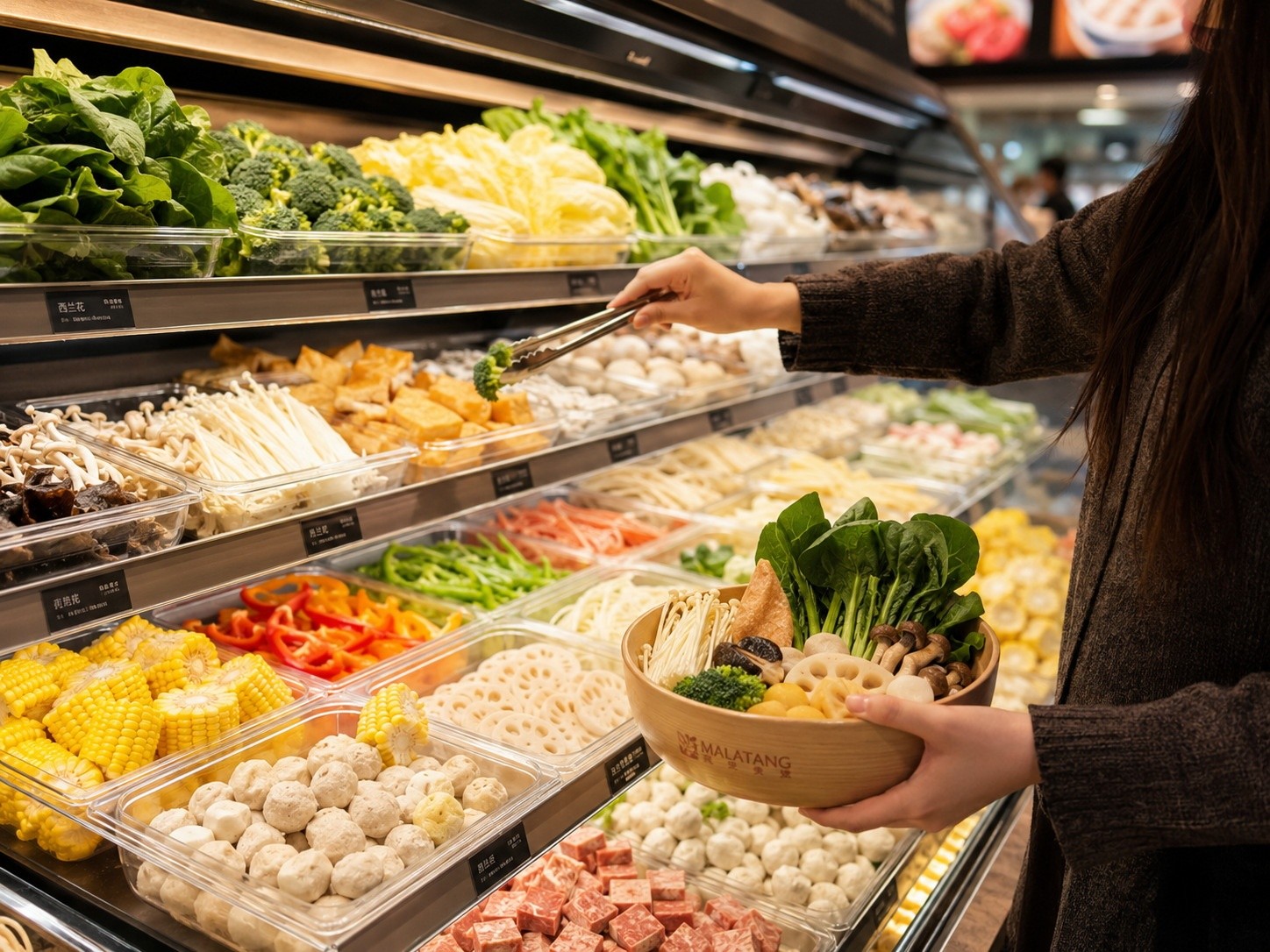
This balance between authenticity and accessibility is a microcosm of modern China’s approach to the world. It shows a confidence in its own culture, but also a willingness to engage with local tastes. It’s not about forcing Chinese flavors on the world; it’s about inviting the world to experience them at their own pace.
The Social Space: Malatang as Community Hub
Beyond the food, Malatang shops have become important social spaces. In modern Chinese cities, the number of solo diners is rising. The single-pot format of Malatang is perfect for this. You don’t need to coordinate with a group; you just pick what you like and eat at your own pace.
For students and young workers, these shops offer a “third place”—a social environment separate from home and work. It’s a safe, low-pressure space to meet friends, study, or simply unwind after a long day. The vibe is often casual and relaxed, similar to a Starbucks or a local pub, but with the added warmth of shared, customizable food.
More Than Just Food
Queuing for Malatang in Tokyo, London, or Chengdu is more than a culinary experience; it’s a glimpse into China’s consumer economy and cultural confidence. It shows how a humble street food has evolved into a global brand, powered by technology, supply chain innovation, and a deep understanding of young people’s needs.
So, the next time you see a line outside a Malatang shop, don’t just walk by. Join it. Try a bowl. It’s not just about the spice; it’s about understanding the daily life of a nation that is rapidly changing, yet deeply rooted in its traditions.