

The Morning Order
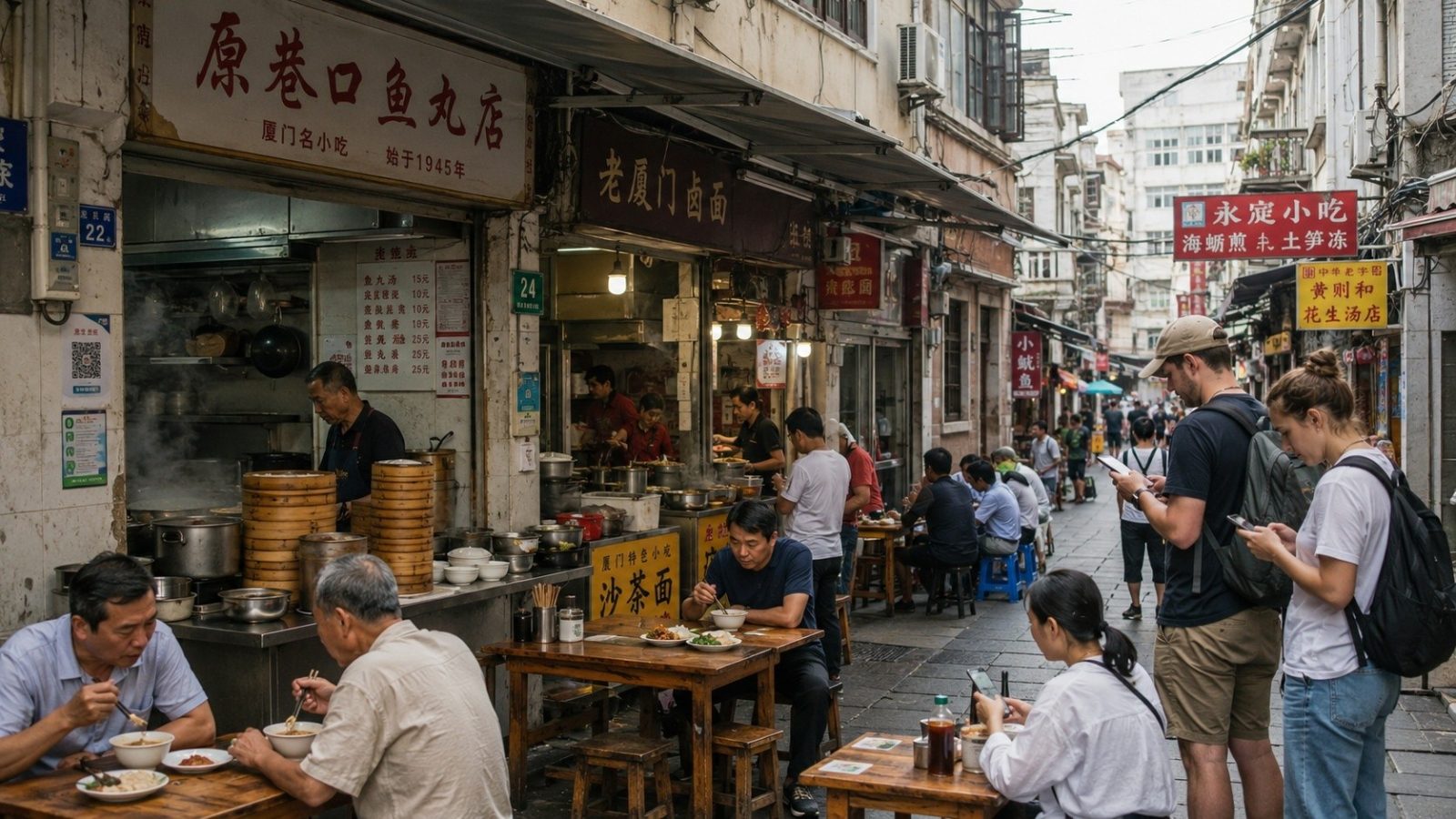
At 6:45 a.m., the steam rises off bamboo baskets in a narrow Xiamen alley. Porcelain bowls clatter against wooden tables. A group of retirees in linen shirts point at a handwritten chalkboard, calling out orders in Fujian dialect. Three tables away, visitors with backpacks scan QR codes on their phones, scrolling through Douyin recommendations before deciding what to eat.
Fujian cuisine, often called Min cuisine, is built on seafood, slow braising, and a distinct use of brine for curing. It does not rely on heavy spice. Instead, it traces the ocean’s umami through clear soups, fermented fish sauces, and delicate vegetable preparations. In a city that welcomes over 80 million visitors annually, restaurants face a quiet operational puzzle. How do you keep the broth rich enough for regulars while making dishes approachable for first-timers?
The Algorithm on the Menu
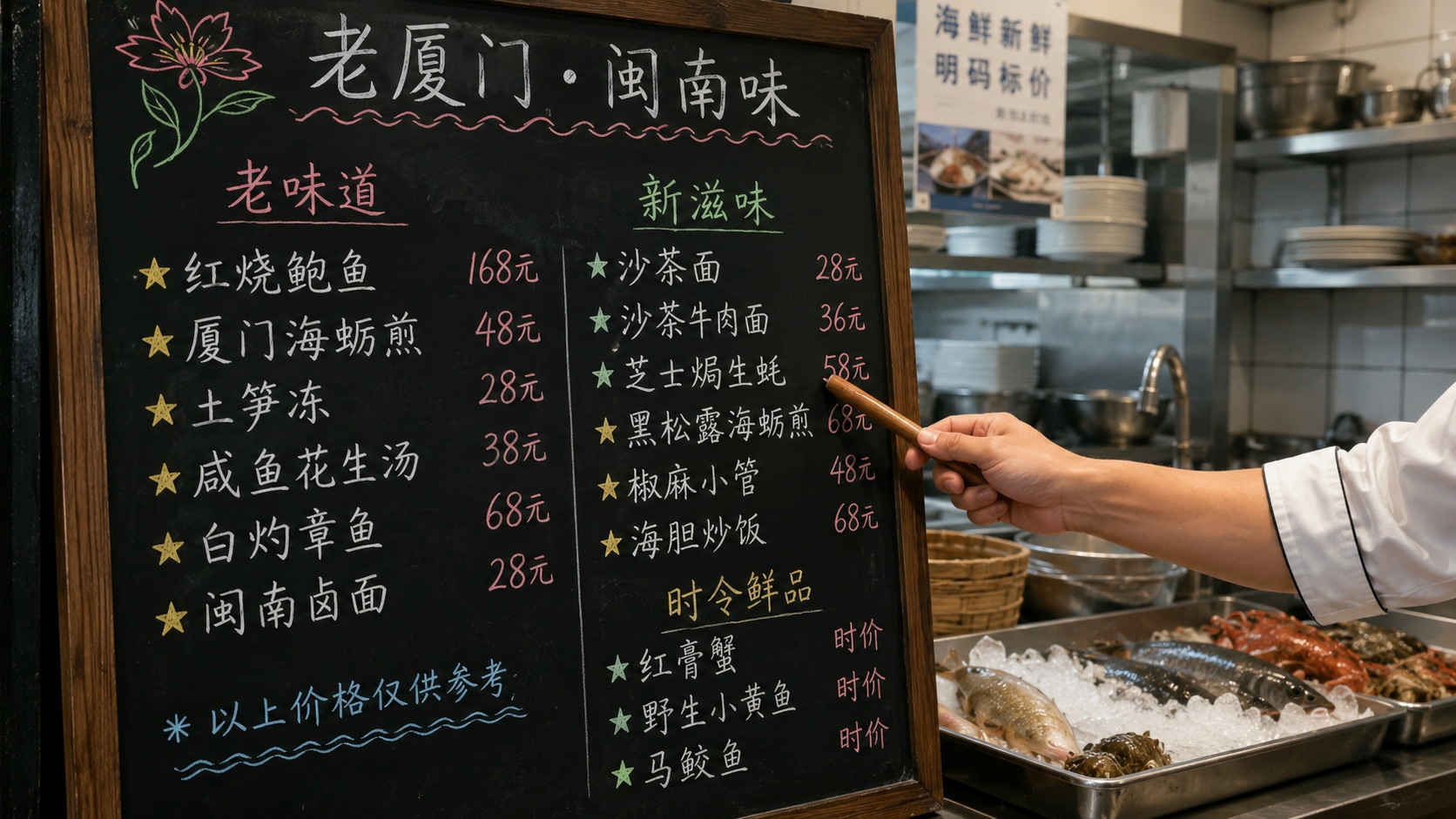
Chef Lin has run his family’s restaurant near Zhongshan Road for eighteen years. He measures salt by the pinch, adjusting it depending on the hour. “At 7 a.m., locals want the traditional brine flavor,” he says, wiping his hands on a faded apron. “By noon, tables three and four are from Shanghai and Chengdu. They ask for less oil. I don’t change the recipe. I just serve the broth on the side.”
His menu tells the story of adaptation. Ten years ago, it was heavily traditional: braised abalone, salted fish with mustard greens, and raw oysters dipped in aged vinegar. Today, the top sellers are Shacha beef noodles and crispy pork rolls. Not because locals suddenly prefer them, but because they entered the algorithm. “We didn’t invent Shacha noodles,” Lin shrugs. “They came from Guangdong. But once visitors started bringing friends back for it, we had to master it. Now it’s our bestseller. Tradition isn’t static. It’s what survives.”
What Locals Actually Want
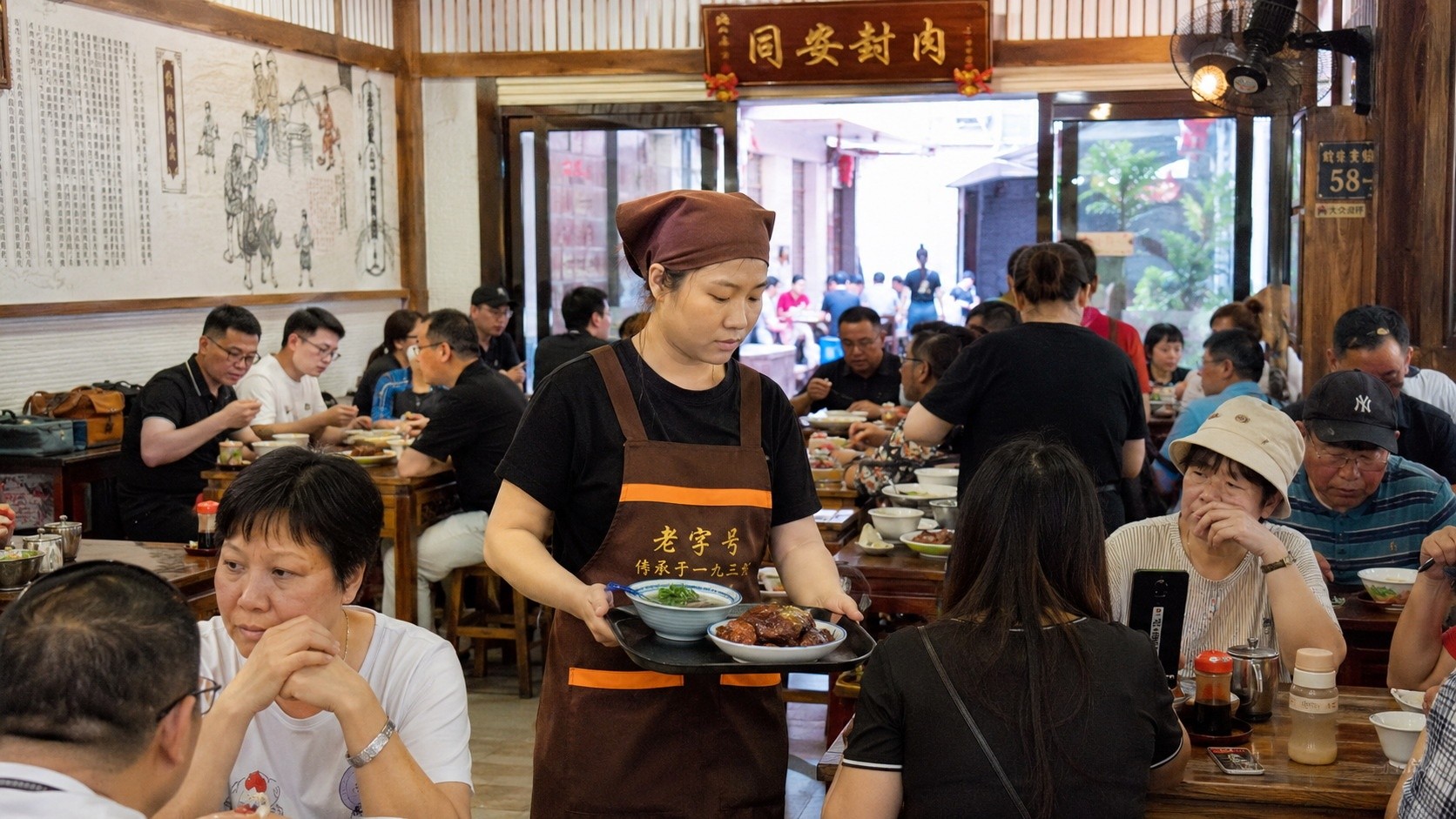
At Table 6, a couple in their sixties orders the old way: braised pork trotters, clear seafood soup, and steamed bitter melon. “We come here because the oyster omelet hasn’t turned into a sugary pancake,” the wife says. “My daughter’s friends post pictures of the ‘Instagram version’ online. I like it when they bring them here. It keeps the rent down and the chef honest. But if you want the real taste, you order off the menu.”
That off-menu request is a common signal in Chinese dining culture. Many established restaurants keep their most authentic dishes unlisted or partially hidden, relying on word of mouth rather than digital visibility. It is a low-tech filter that separates visitors looking for a quick photo from diners returning for consistency.
The Quiet Negotiation
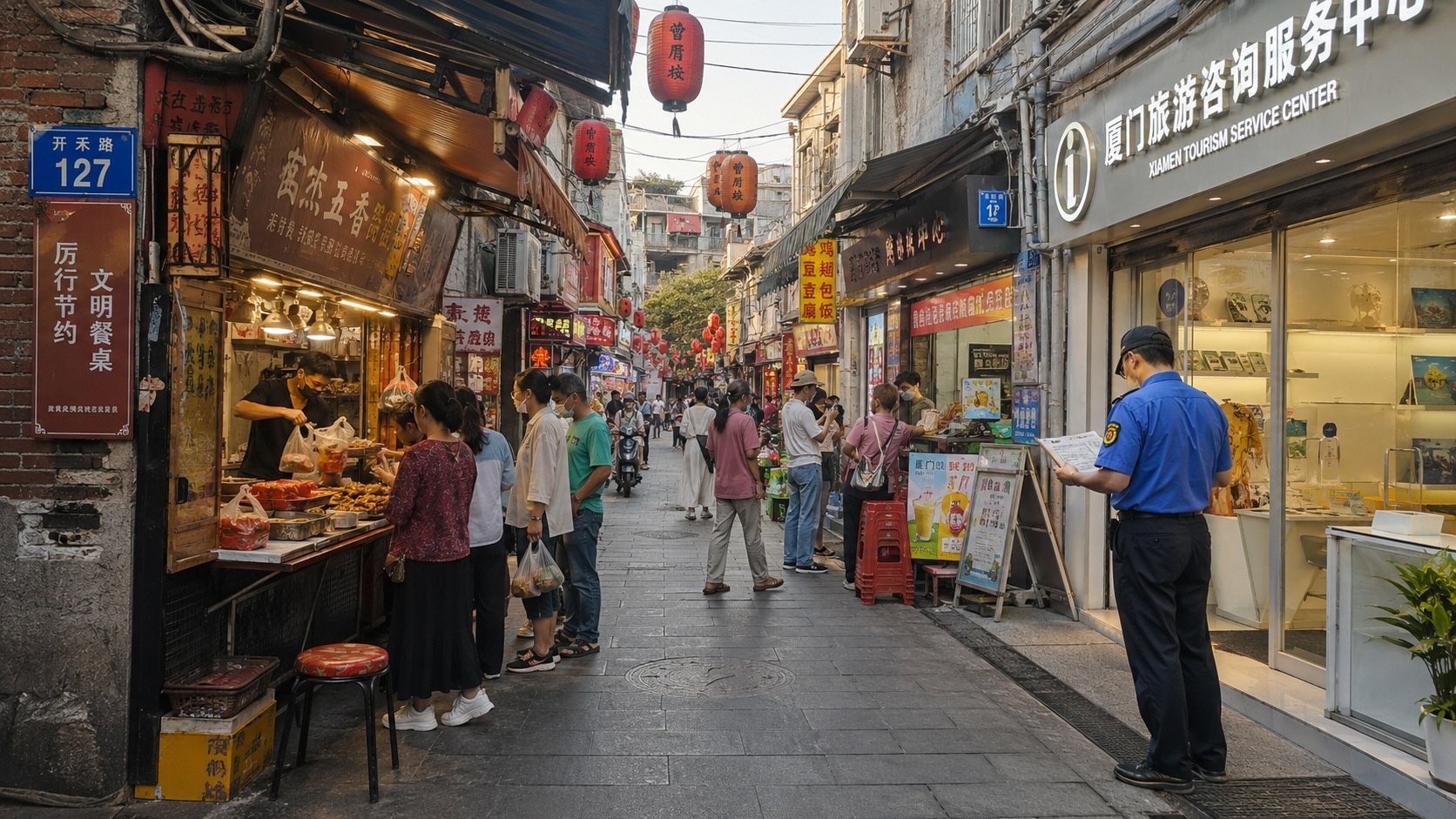
The pressure isn’t unique to Fujian. Food streets from Xi’an to Chengdu face the same tension between heritage and volume. The difference in Xiamen is the pace of adaptation. Restaurants rarely outsource to franchise chains or food trucks. Instead, they tweak portion sizes, offer “light” versions as add-ons, and use WeChat groups to remind locals about seasonal seafood arrivals.
Community market manager Chen reviews permits for a new alleyway restaurant each quarter. “Five years ago, we worried about hygiene complaints,” she says. “Now, the challenge is authenticity versus turnover rate. We don’t ban modifications. But we encourage chefs to keep one signature dish unchanged. If a place only serves what’s trending, it becomes a copy. If it only serves what it always served, it closes when foot traffic drops. The balance is in the margins.”
Translating Flavor, Not Freezing It
Back at the stove, Lin plates Lu Juan—rolled spring rolls filled with shredded vegetables, peanuts, and a hint of sweet chili. Tourists love the crunch. Locals recognize the childhood memory. He adds a side of house-made soybean paste, exactly as his father did. “Food isn’t about purity,” he says, sliding the plate across the counter. “It’s about showing up. If someone travels three thousand kilometers to taste this, I’ll make sure they remember it. Even if I adjust the salt by a pinch.”
The city’s palate isn’t being rewritten. It’s being translated. In Xiamen’s alleyways and ferry terminals, Min cuisine survives not by freezing itself in amber, but by breathing with the crowd. Locals get their umami. Visitors get an introduction. And somewhere between the wok’s heat and the morning light, a new routine takes shape—one bowl at a time.