


Decoding the “Net” in Your Paycheck
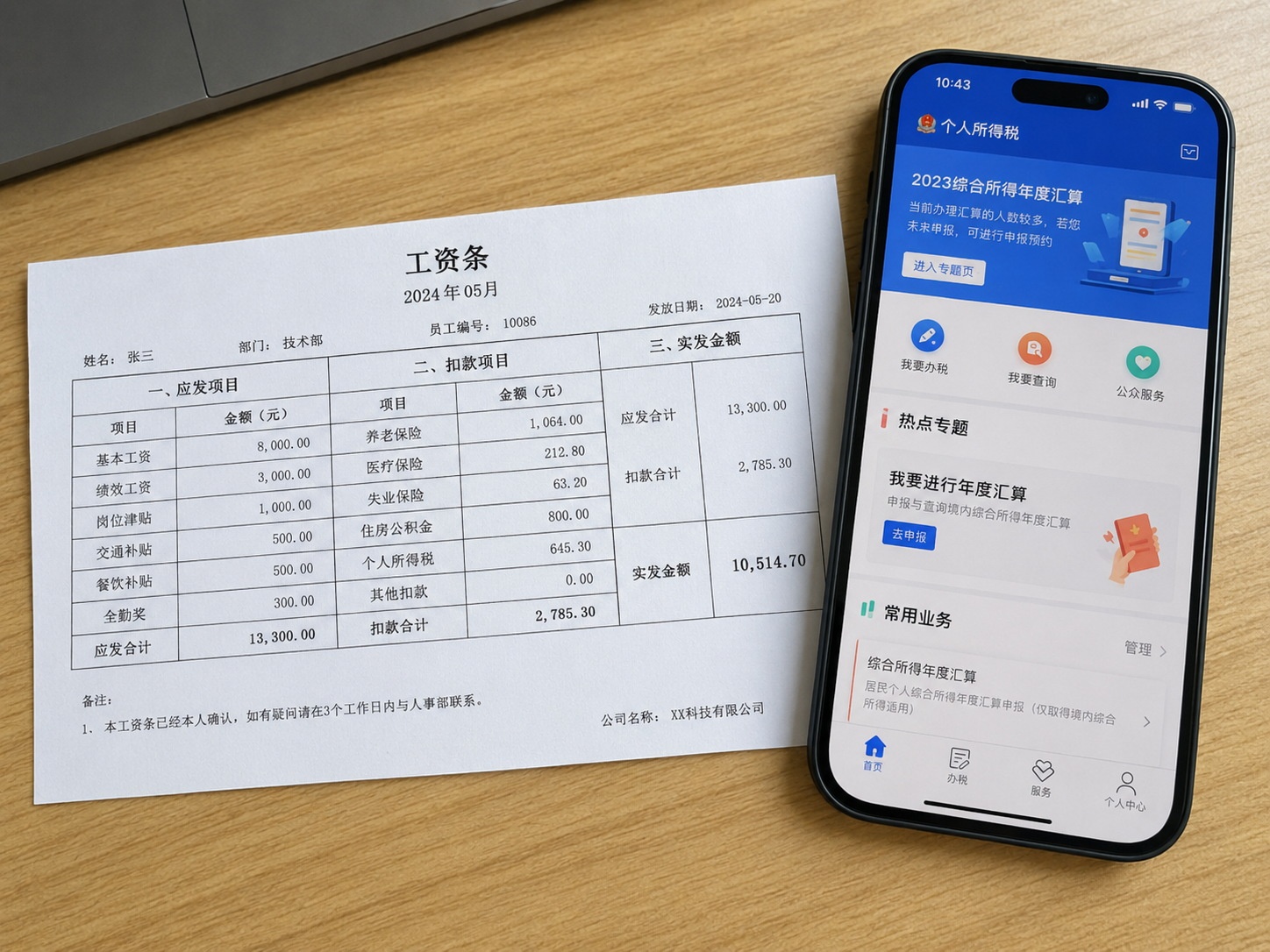
Li Wei, a marketing director from London, stared at his first Chinese payslip. It was shorter than he expected. Between social insurance, housing fund, and tax, nearly half his gross salary had vanished before it hit his bank account. “Is this normal?” he asked his HR manager.
The answer is yes, but with nuances. Understanding how personal income tax (PIT) works in China is less about memorizing laws and more about understanding the rhythm of monthly deductions and annual settlements. For expats, there are specific rules that can significantly impact your take-home pay.
Who Pays What? The Residency Rule
In China, your tax status depends on how long you live here. This is the first thing to clarify.
If you stay in China for 183 days or more in a single calendar year, you are considered a tax resident. You must declare and pay taxes on your worldwide income—money earned both inside and outside China. This is similar to systems in the US, UK, or Canada.
If you stay for fewer than 183 days, you are a non-resident. You generally only pay tax on income sourced within China. There’s also a “six-year rule” for residents: if you’ve been a resident for six consecutive years without leaving China for more than 30 days at a time in any single year, your worldwide income becomes fully taxable from the seventh year onwards.
Cracking Your Payslip
Let’s break down Li Wei’s payslip. You’ll typically see four main deductions:
- Social Insurance (“Five Insurances”): Pension, medical, unemployment, work-related injury, and maternity insurance. These are mandatory for most employees.
- Housing Provident Fund: A savings scheme jointly contributed by you and your employer. This money stays in a special account but can be used for rent or buying a home. For expats, participation is often optional depending on local regulations and company policy.
- Preliminary Tax Withholding: Your employer calculates and deducts tax every month based on your cumulative income. It’s an estimate, not the final bill.
The Seven-Bracket Progressive System
China uses a progressive tax rate for comprehensive income (wages, salaries, etc.). Think of it like climbing stairs: the higher your income, the higher the percentage you pay on the marginal amount, not all of it.
- 3% for income up to 36,000 RMB ($5,000)
- 10% for the next tier (up to 144,000 RMB)
- 20%, 25%, 30%, 35%, and 45% for higher brackets.
The key is the tax-free threshold, currently set at 60,000 RMB ($8,300) per year. If your annual pre-tax salary is below this after deductions, you likely won’t owe any tax.
Your Secret Weapon: The “Personal Income Tax” App
This is where most expats get confused—and where they can save money. China has moved entirely digital for tax filing. You don’t go to a tax bureau; you use an app called Personal Income Tax (available in English).

The app handles your annual settlement, usually between March and June each year. Here’s the workflow:
- Check Your Data: Log in and view the income declared by your employer.
- Claim Deductions: This is crucial. You can deduct special additional expenses like children’s education, continuing education, major medical expenses, housing loan interest or rent, and support for the elderly.
- Submit & Settle: The app calculates if you overpaid (refund) or underpaid (additional payment). For most expats in cities like Shanghai or Beijing with moderate rents, this results in a refund.
The “Foreigner Benefit” Change
For years, expats enjoyed extra tax breaks on housing allowances and language training. However, starting January 1, 2022, these specific preferential policies were merged into the standard special additional deductions mentioned above.
This means you can no longer simply deduct your rent receipt as a “foreigner benefit.” Instead, you must claim it under the Housing Rent deduction category in the app. If you own a home and have a loan, you might choose the Housing Loan Interest option instead—but you can’t pick both.
Common Pitfalls to Avoid
- Ignoring the App: Failing to file your annual settlement can lead to late fees. It takes 10 minutes, and it’s free.
- Misunderstanding “Global Income”: If you are a tax resident, declare everything. Hiding overseas income is risky as data sharing between countries increases.
- Rent Receipts: Keep digital or physical copies of your rent contracts and payment records. The app may ask for verification.
Taxes in China aren’t scary once you see the logic. It’s a system designed to be self-reported via technology. Once you set up the app and understand your deductions, what was once “vanishing” money becomes a predictable part of your financial planning—and possibly, a welcome refund.