

The Alley That Shrank
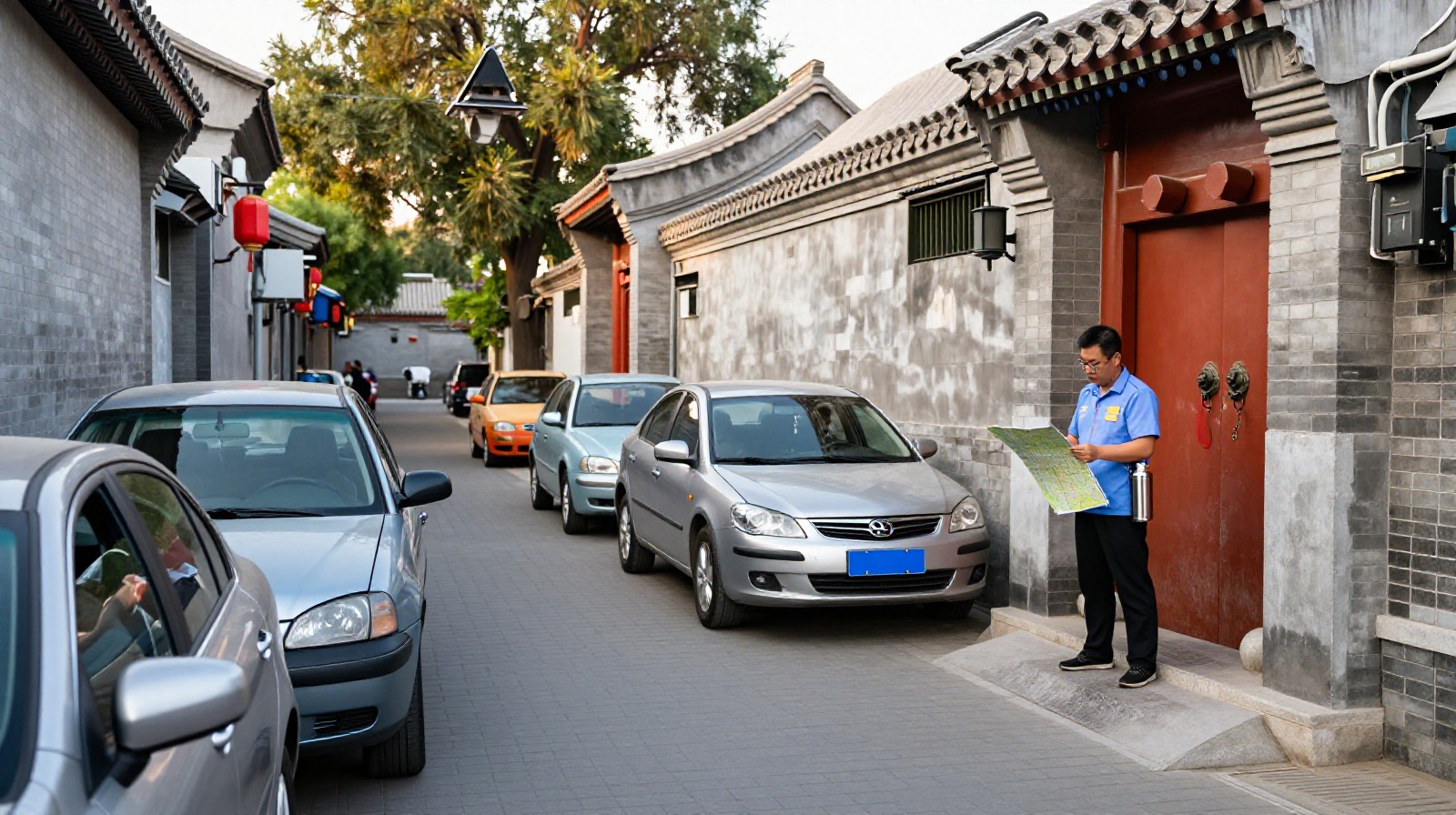
4:30 p.m. The asphalt in a Xicheng hutong is soft from the afternoon heat. Three sedans are wedged into a four-meter-wide lane, their doors bearing scratch marks like old bruises. Xiao Chen, a delivery rider, has parked his e-bike in the middle of the path and is arguing with Lao Li, a recently retired neighbor. Lao Li’s mobility scooter is stuck in the gap. No police sirens wail. No property manager shouts. Wang Fang, a community grid worker, steps in with a thermos and paper cups. “Stand down,” she says. “Let’s sit inside. Have some tea. We’ll sort out the math.”
Hutongs were built for horse carts and pedestrians during the Ming and Qing dynasties. Today, Beijing has over six million registered cars. Many residents bought their first vehicle in the 2010s. The alleys never widened. Parking became a daily negotiation. When a car blocks a neighbor’s driveway or a fire hydrant, tension spikes. In dense urban China, space is the ultimate currency.
Tea, Maps, and a Rotating Schedule
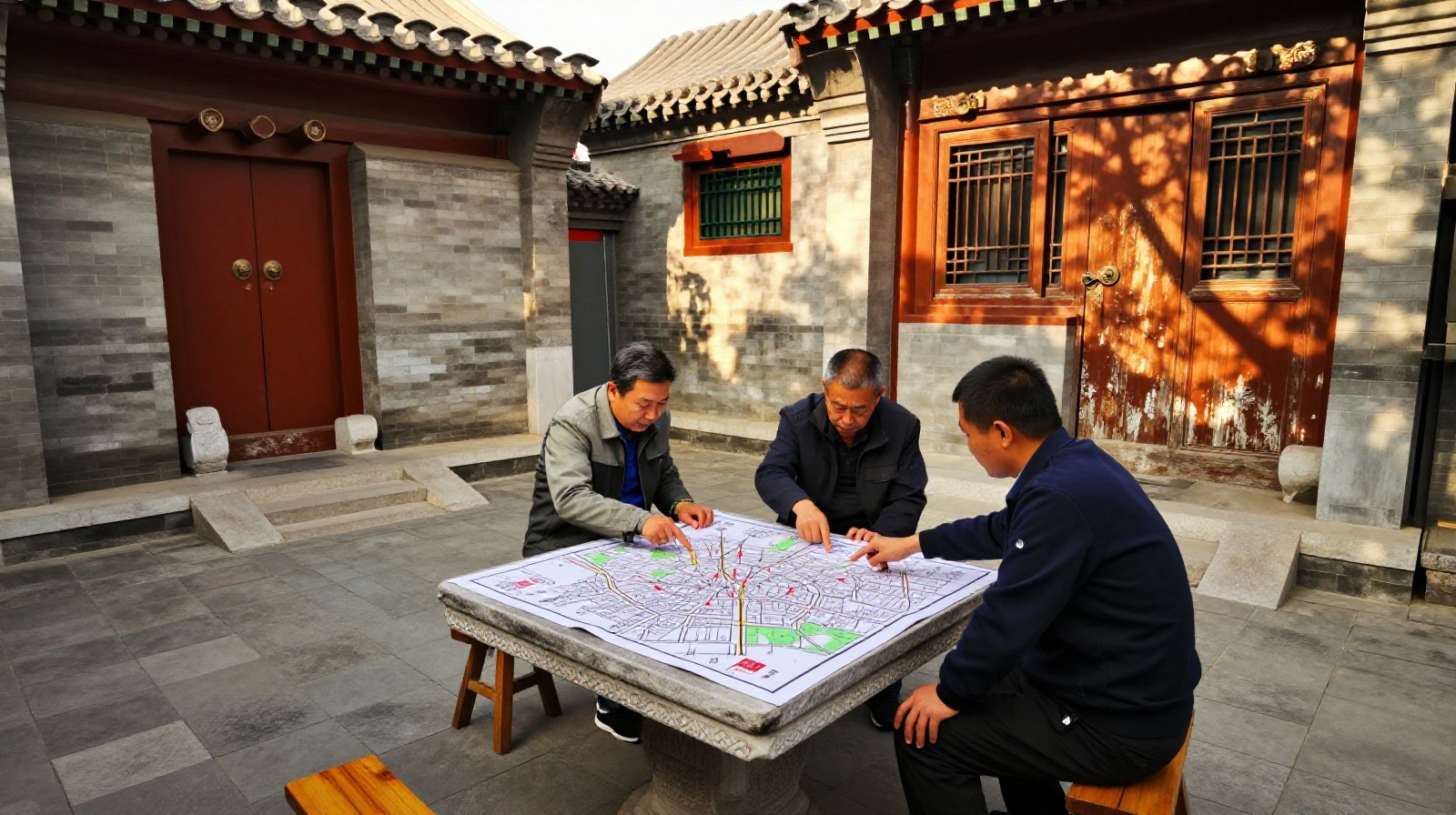
They move to a shaded courtyard with a stone table. Wang spreads a hand-drawn map of the alley. “How many spots do we actually have?” she asks. Three residents reply: four. “But we have nine cars.” Laughter follows. They sketch a rotating system. Weekdays, cars take turns parking on the east side. Weekends, visitors get priority. A rule emerges: leave at least 1.5 meters for passage. Any car blocking the route must move within ten minutes. They scan a QR code to join a neighborhood WeChat group. The first message reads: “Parking schedule v1.0 is set. Please update if you change shifts.”
The process takes forty minutes. No forms are stamped. No fines are issued. By dusk, the alley clears. Xiao Chen parks on the west side. Lao Li navigates his scooter through the gap. Wang packs her thermos. The dispute didn’t vanish; it was scheduled. In a city of 21 million, this quiet arithmetic keeps the old neighborhoods breathing.
When Acquaintance Society Meets Asphalt
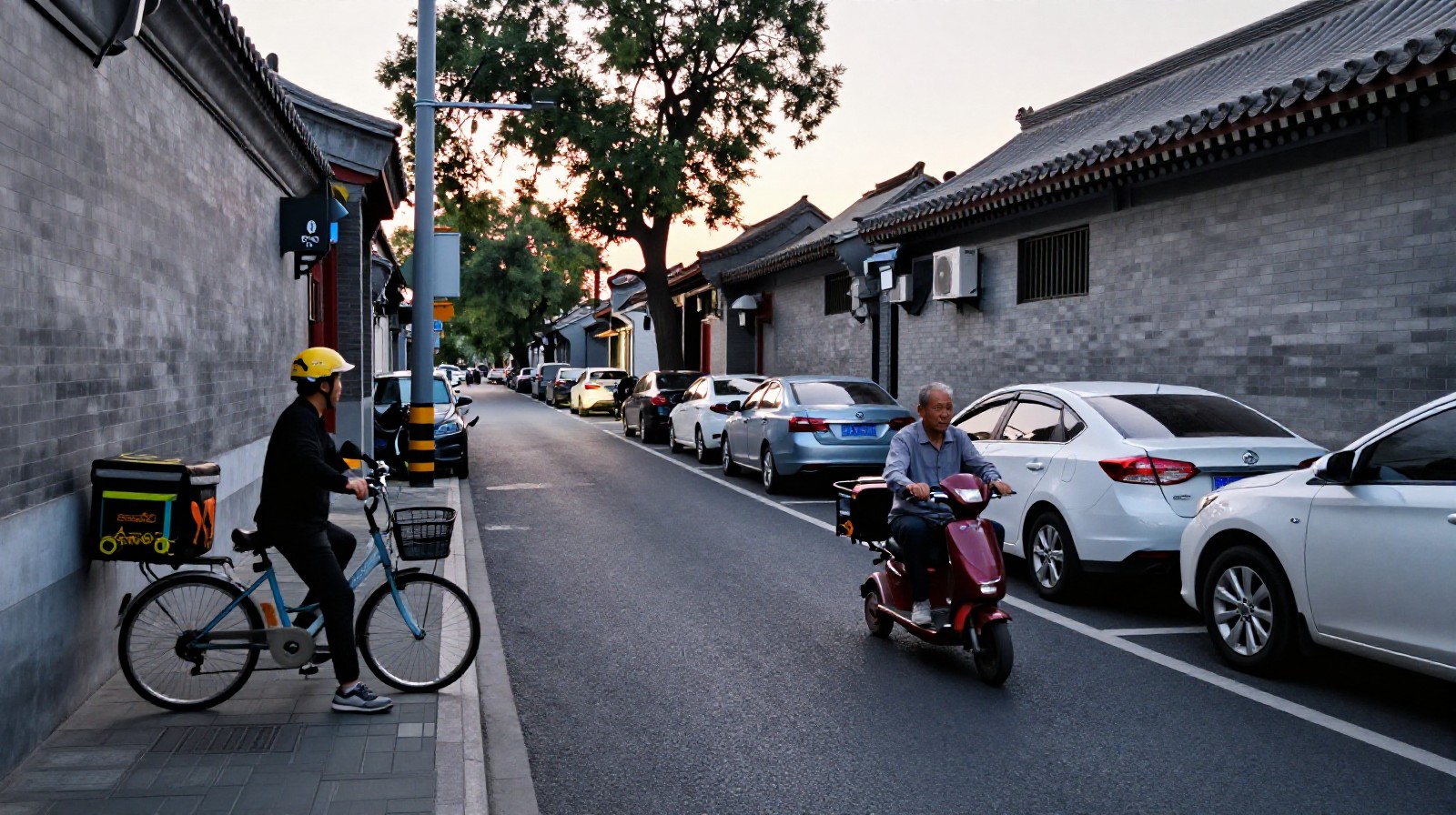
This scene repeats across Beijing’s old districts, and it reflects a governance model that prioritizes mediation over litigation. Chinese urban management relies heavily on grid workers who live in the communities they serve. They know whose child is in college, whose business failed, whose mother lives alone. This social capital turns strangers into manageable neighbors. The approach echoes the Fengqiao Experience, a decades-old mass-line campaign that instructed cadres to resolve conflicts locally before they escalated. Today, it has been updated: dialogue replaces enforcement, and shared vulnerability replaces rigid authority.
Informal negotiation doesn’t replace infrastructure. Beijing is still building underground garages and enforcing strict license-plate lotteries to curb emissions. But when concrete lags behind demand, human flexibility steps in. “Sitting down and talking” works because it acknowledges a simple truth: everyone needs to get home. Everyone fears being stranded. The process costs little money but builds trust. It’s not a utopia—arguments still flare, schedules break, some residents opt out. Yet the alternative is usually gridlock, police tickets, and lasting resentment.
The Quiet Architecture of Negotiation
What makes this method stick is its adaptability. Traditional neighborhood culture, once built on face-to-face greetings and mutual obligation, now runs on digital tools. WeChat groups, community mini-programs, and real-time location sharing let residents coordinate without losing the personal touch. A young mother can request a temporary spot for her stroller. An elderly couple can swap parking days during hospital visits. The system bends before it breaks.
Foreign observers often assume China’s urban governance is purely top-down, relying on surveillance cameras and algorithmic enforcement. The reality is messier and more human. Street-level workers act as translators between state policy and street-level reality. They carry thermoses instead of clipboards. They measure conflict in minutes of delay, not percentage points. When a parking dispute erupts, they don’t see a violation; they see a broken routine that needs fixing.
More Than Just a Parking Spot
The “sit down and talk” approach is not a magic fix for China’s urban challenges. It cannot generate new land or reverse decades of rapid motorization. But it does offer a template for how dense cities manage friction without fracturing. In places where public space is scarce, negotiation becomes infrastructure. It turns shared constraints into shared rules. It reminds residents that an alley belongs to everyone who walks through it, not just the person who parks inside it.
As Beijing continues to modernize, these old neighborhoods will keep shrinking and expanding at the same time. New delivery routes will carve through ancient brick walls. Property values will shift. The cars will grow larger, the alleys narrower. Yet the practice of pulling up a chair, drawing a map on paper, and asking “who needs what first?” remains unchanged. It is a quiet refusal to let space turn people against each other. In a country moving at breakneck speed, that kind of pause is its own form of progress.