

The Morning Rhythm of a TCM Pharmacy
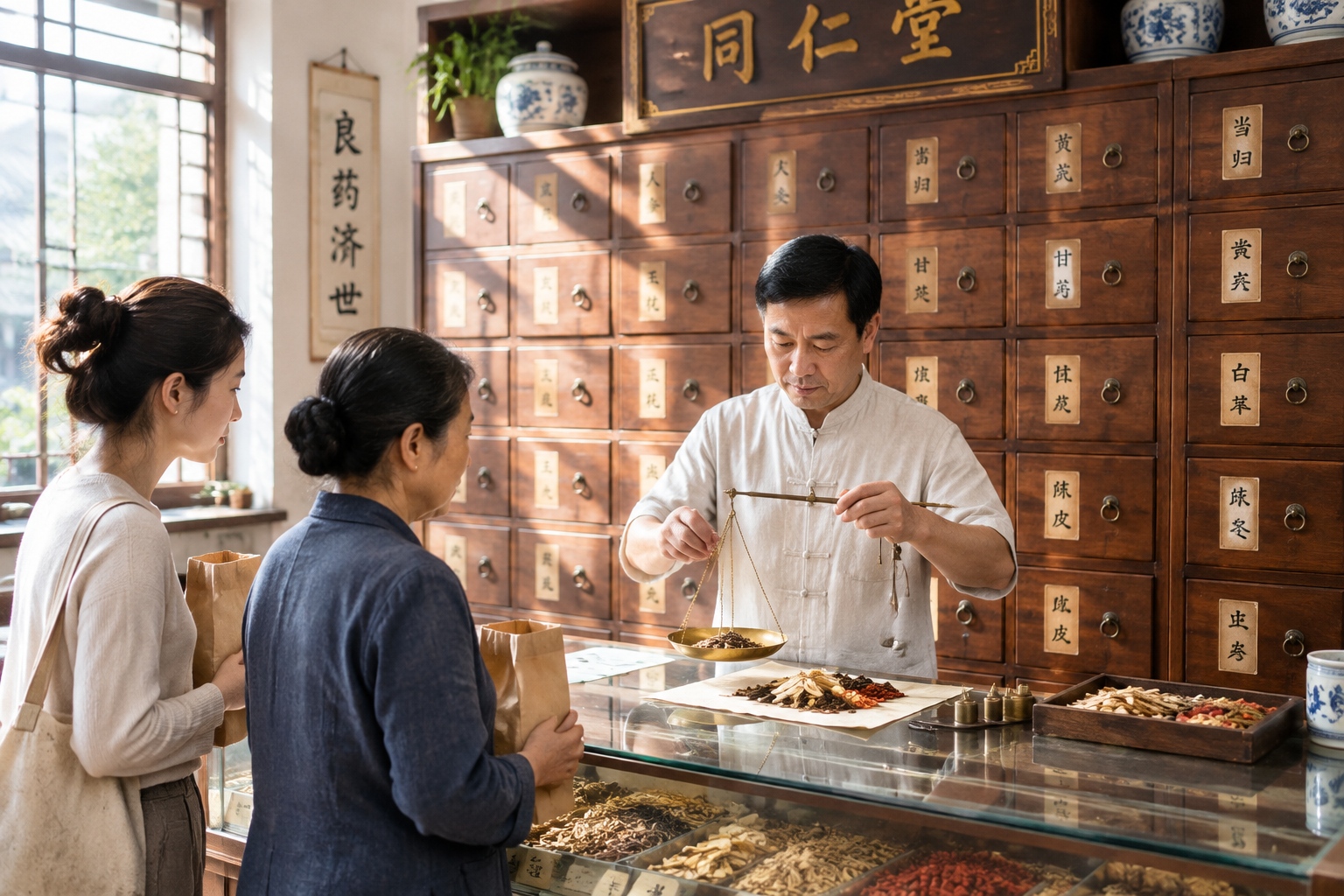
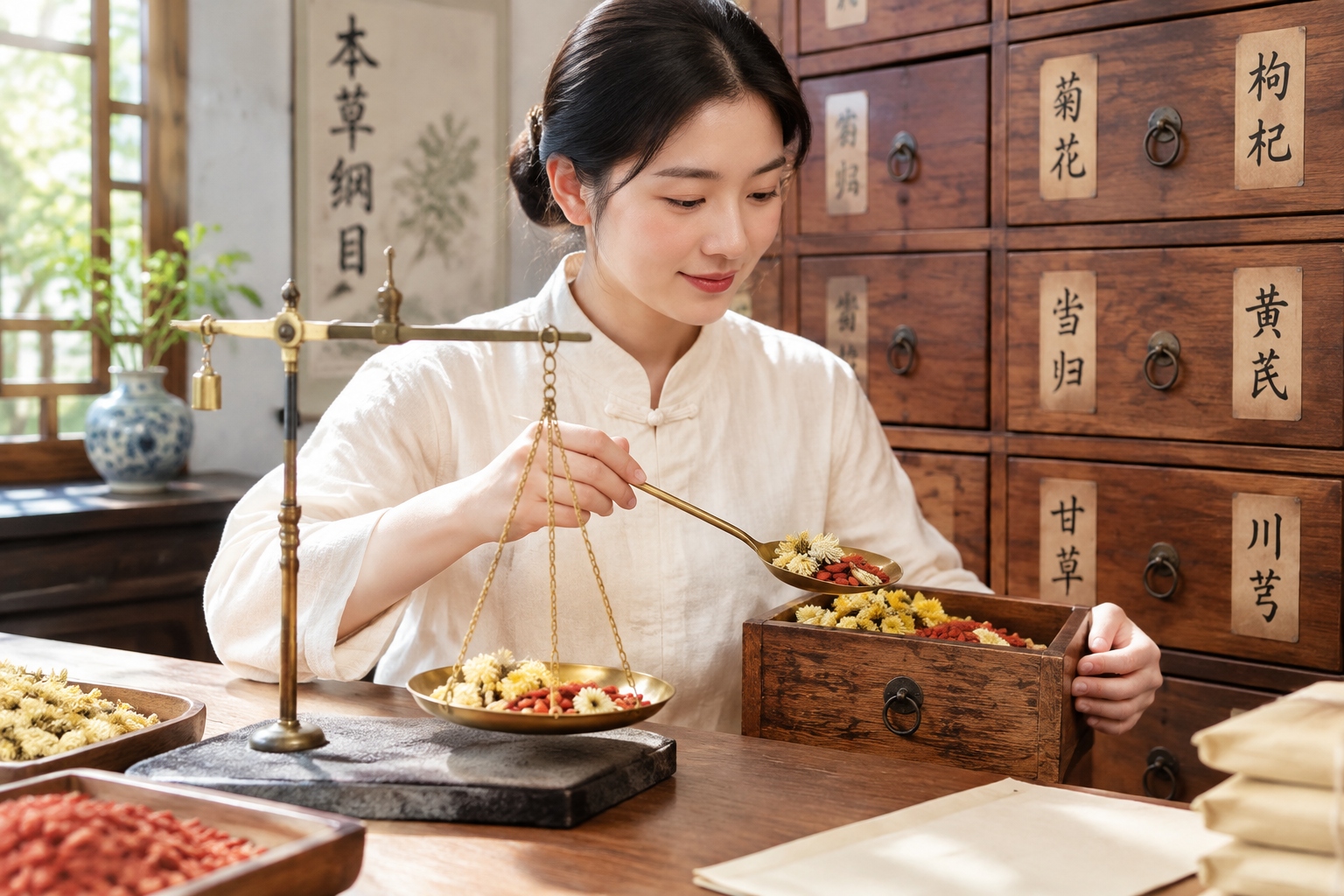
The bell above the door chimes at 8:45 a.m. Inside a pharmacy on Nanjing West Road, the air carries a dry, earthy weight. Dried tangerine peel, scorched licorice root, and crushed cassia bark hang in suspended layers. Behind the counter, Li Wei slides open a wooden drawer with his thumb. The sound is sharp, rhythmic: click, slide, tap. A brass scale balances on a felt pad. He scoops dried chrysanthemum into a paper bag, adds goji berries, ties it with twine, and hands it to a woman waiting in line.
This scene repeats in thousands of pharmacies across China every morning. It is not a museum exhibit. It is a functioning part of the daily healthcare routine for millions. Customers come for seasonal shifts, mild digestive issues, or preventive care after long flights. They do not expect miracles. They expect balance.
The Cabinet and the Craft
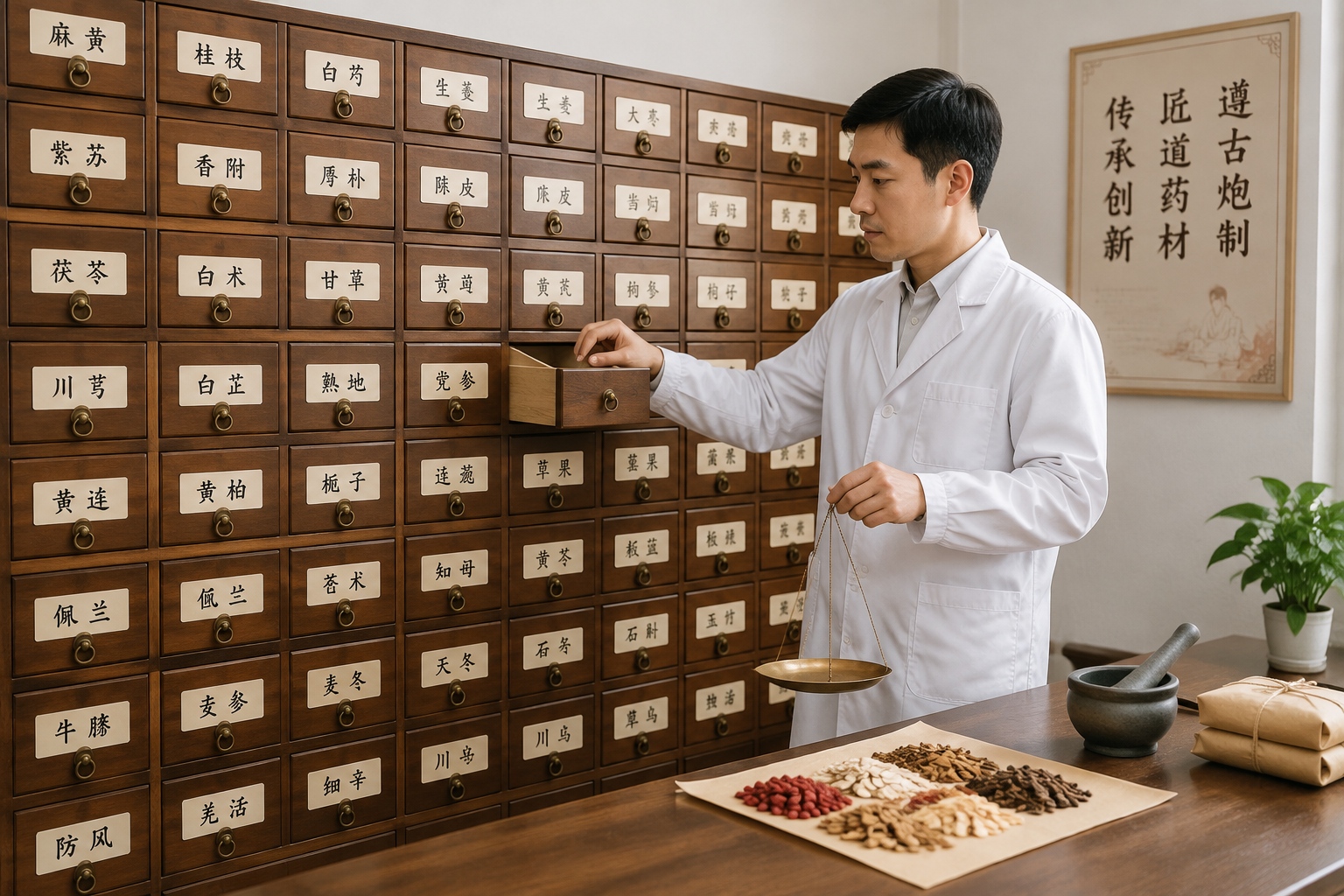
The centerpiece of any traditional pharmacy is the wooden wall of drawers, locally called the baizi gui or hundred-drawer cabinet. Despite its name, modern units typically hold between sixty and eighty compartments. Each drawer is labeled with handwritten calligraphy: dried ginger for cold symptoms, poria mushroom for dampness, mint for wind-heat.
Li Wei works by memory and muscle. He does not measure every herb digitally anymore. Instead, he uses a traditional brass scale calibrated in liang, roughly 31 grams, and smaller qian. The process is slow but deliberate. Customers watch the needle settle on the zero mark before the herbs are wrapped. This tactile rhythm has survived decades of supermarket medicine and online delivery apps because it offers immediate customization for seasonal shifts or mild ailments.
How Diagnosis Actually Works
Western medicine typically targets a specific pathogen or organ dysfunction. Traditional Chinese Medicine approaches the body as an interconnected system. The core principle is bian zheng shi zhi, syndrome differentiation and treatment. Two patients with the same headache might receive completely different herbal formulas if one suffers from liver fire and the other from blood deficiency.
Pulse diagnosis remains the most famous technique, but it is not a mandatory ritual for every visit. In busy urban pharmacies, many customers come for chronic management or lifestyle adjustments. They describe symptoms in practical terms: poor sleep, heavy limbs during rainy seasons, acid reflux after spicy meals, or feeling cold when others wear light jackets. Practitioners map these patterns to herb categories.
Herbs are rarely single ingredients. A standard formula blends three to ten substances to balance their effects, much like a culinary recipe where no single spice dominates. Tonics support energy reserves. Heat-clearing agents address inflammation-like symptoms. Aromatics open blocked circulation. The goal is not to suppress a symptom but to restore the body’s internal equilibrium.
The Modern Pharmacy in Practice
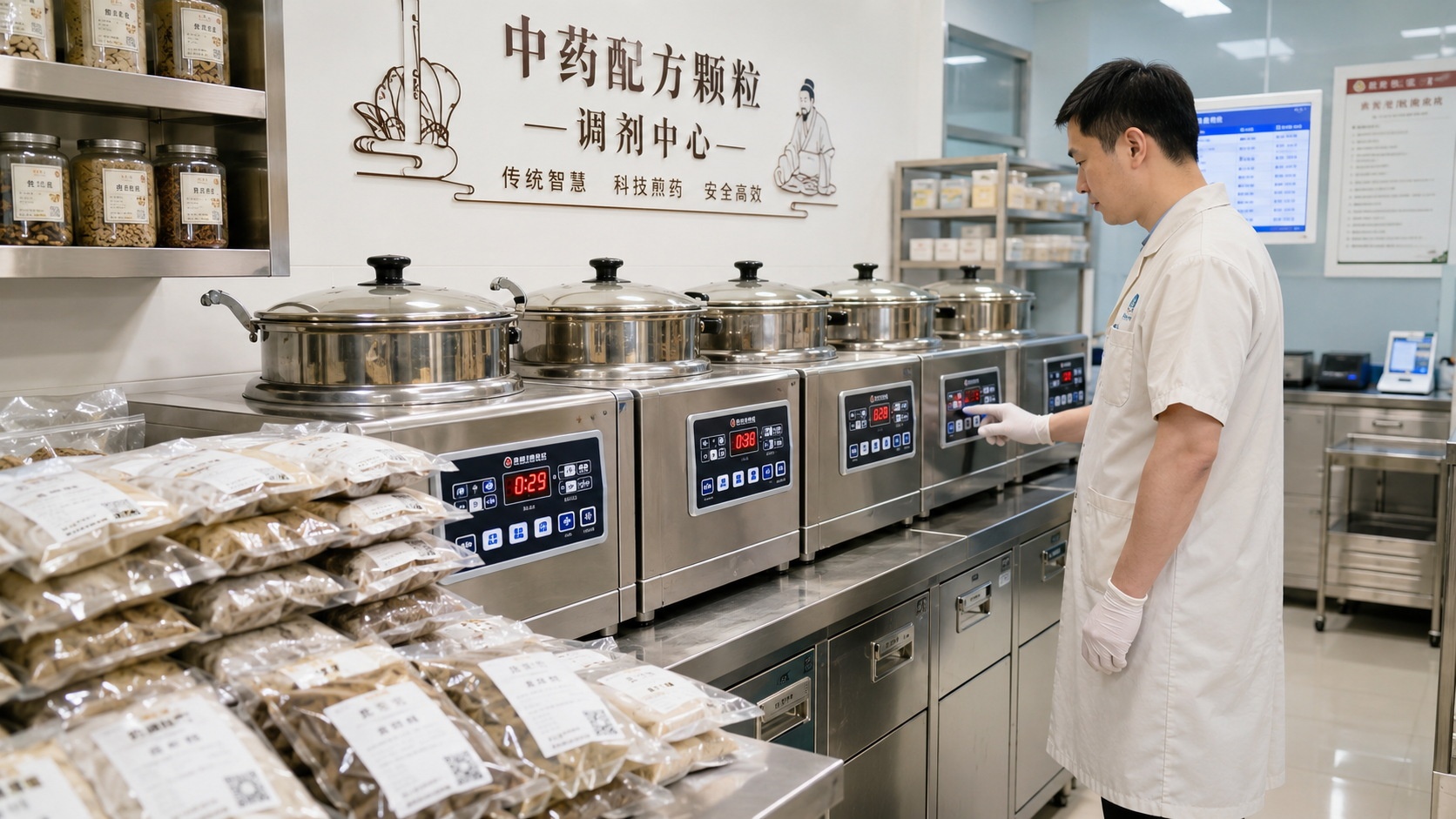
Walking into a TCM pharmacy today reveals a hybrid space. Behind the traditional counter sits a row of stainless-steel decoction machines. When customers cannot boil herbs at home, they pay a small fee for professional preparation. A technician fills vacuum-sealed pouches with water and herbs, sets a timer, and hands over hot packs within forty minutes.
The packaging has shifted from brown paper to clear plastic. Digital records now track prescriptions across different branches of the same chain. Regulatory oversight is strict. Every herb must pass pesticide and heavy metal tests before it reaches the shelves. Supply chains source materials directly from agricultural cooperatives in Yunnan, Gansu, and Hebei. Grading systems separate premium roots from standard inventory, ensuring consistent potency.
Many urban clinics pair TCM practitioners with Western doctors. A patient recovering from surgery might take antibiotics alongside herbs prescribed to reduce swelling and speed tissue repair. This integration is not mystical. It is logistical. It reflects how healthcare in China adapts to modern standards while keeping traditional workflows intact.
What Visitors Should Know
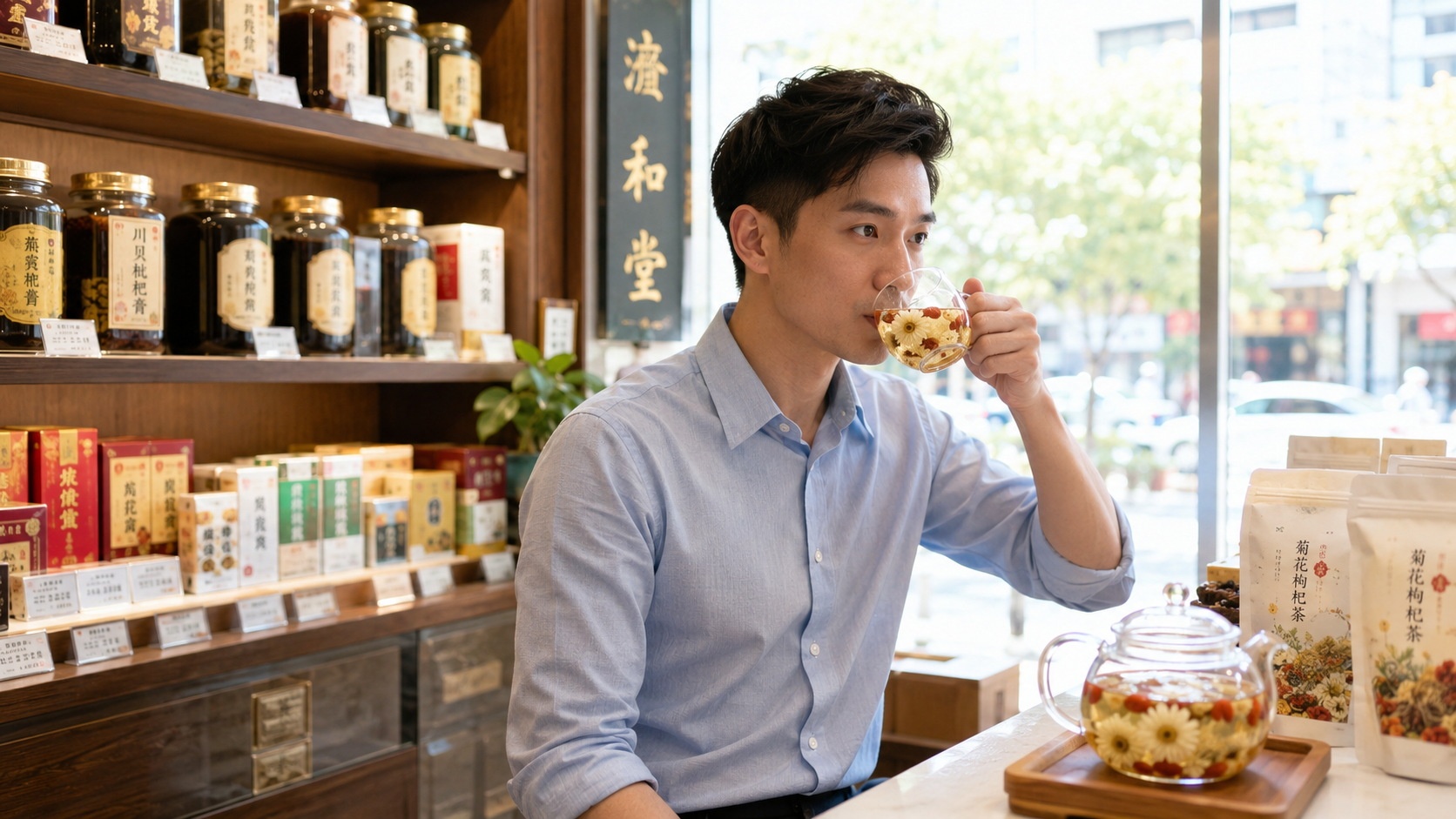
For expats or short-term travelers, TCM pharmacies are accessible but operate on different rules than Western drugstores. You do not need a prescription for mild herbal teas or over-the-counter pastes, known as gao fang. These thick, sweetened extracts are popular among office workers who spend hours staring at screens.
A common starter blend is chrysanthemum and goji tea, marketed for eye strain and seasonal dryness. Another is red date and longan paste, sold in small jars to boost energy during winter. Communication matters more than medical terminology. Instead of guessing Latin names or anatomical terms, describe how your body feels: I wake up tired, my joints ache when it rains, or I get mouth ulcers after travel. Practitioners are accustomed to translating these observations into herbal recommendations.
Pricing is straightforward. A standard herbal decoction costs roughly 30 to 60 RMB per day. Over-the-counter teas range from 15 to 40 RMB per pouch. Licensed TCM doctors charge consultation fees similar to Western specialists, but many pharmacies offer free basic assessments for minor complaints.
Avoid aggressive detox treatments or strong purgatives unless supervised by a licensed clinician. TCM works best as a steady adjunct, not a quick fix for acute infections or severe pain. The wooden drawers do not hold secrets; they hold centuries of accumulated observation. Modern pharmacies balance tradition with safety protocols and regulatory compliance. For those stepping into this space, the experience is less about decoding ancient mysteries and more about participating in a living health culture.
Start the discussion at forum.chinacomes.com