
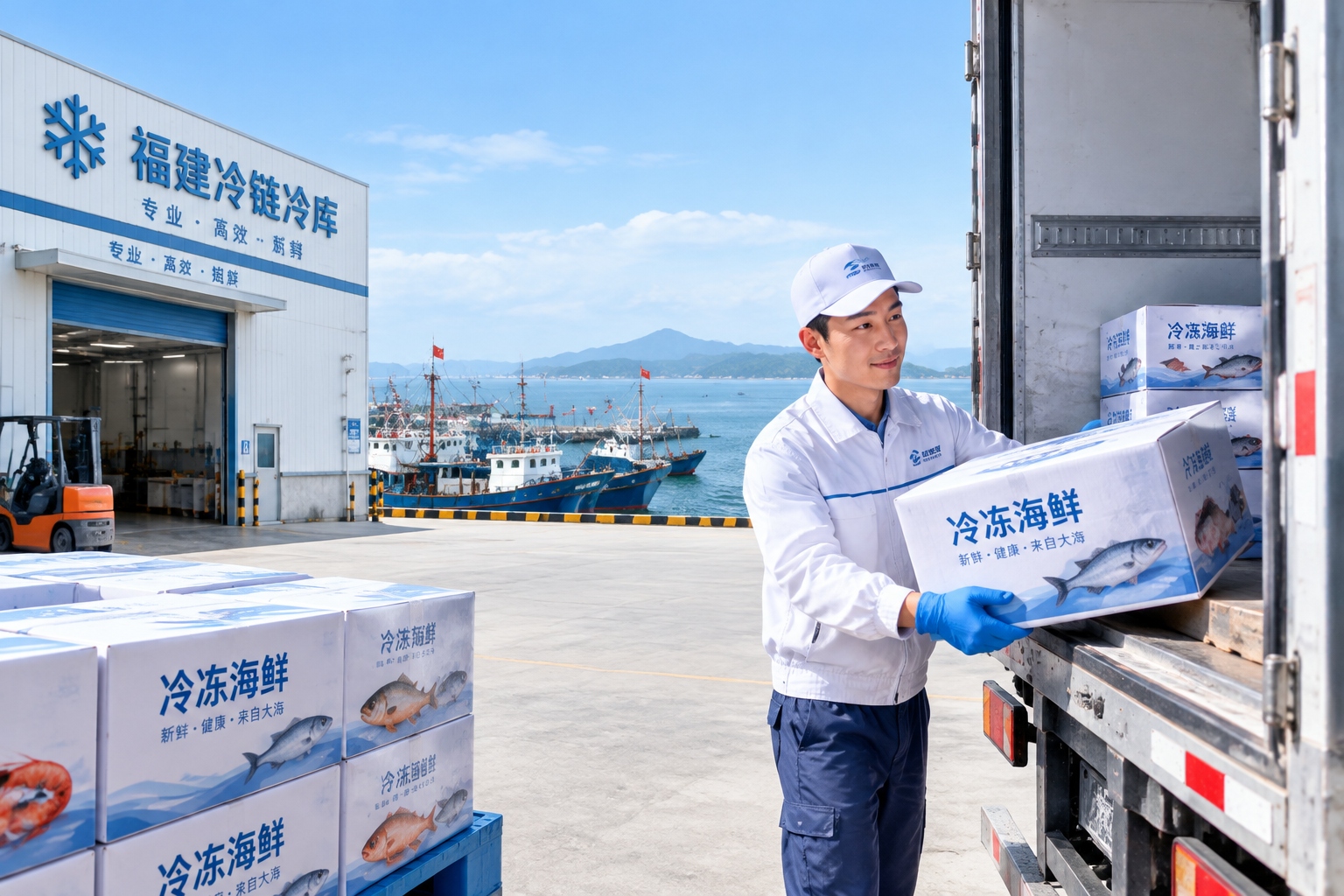

From Tide Pools to Living Rooms: Breaking the Distance Barrier
In many parts of the world, eating fresh seafood is a seasonal ritual or a luxury reserved for special occasions. You buy salmon in winter, lobster in summer, and pray the fishmonger knows what “fresh” means. In China, however, this distinction has largely blurred. Take Lin Wei, a chef in Chengdu, located over 1,600 kilometers from the East China Sea. Last Tuesday, he steamed a whole yellow croaker that had been caught in Fujian province just 14 hours earlier. For him, the distance between the ocean and his kitchen is no longer defined by geography, but by the efficiency of logistics.
This shift is not magic; it is infrastructure. China’s cold chain logistics network has grown so dense that fresh seafood from coastal provinces like Fujian can now reach inland cities within 24 to 48 hours. This transformation answers a fundamental question for outsiders: How does a country of 1.4 billion people maintain the quality of perishable goods across such vast distances without breaking the bank?
The answer lies in a hybrid model that combines ancestral wisdom with cutting-edge technology. It is not just about refrigerators on trucks; it is about a seamless digital and physical system that connects fishermen directly to consumers.
Old Crafts Meet Modern Packaging
Fujian, a province on China’s southeast coast, has a 3,700-kilometer coastline and a culture deeply tied to the tides. For centuries, Fujianese people developed ingenious ways to preserve seafood before refrigeration existed. Techniques like salting, sun-drying, and fermenting were not just about survival; they created distinct flavors that define local cuisine today, such as the salty-sweet taste of dried oysters or the crisp texture of preserved clam strips.
Today, these traditional methods are undergoing a modern makeover.
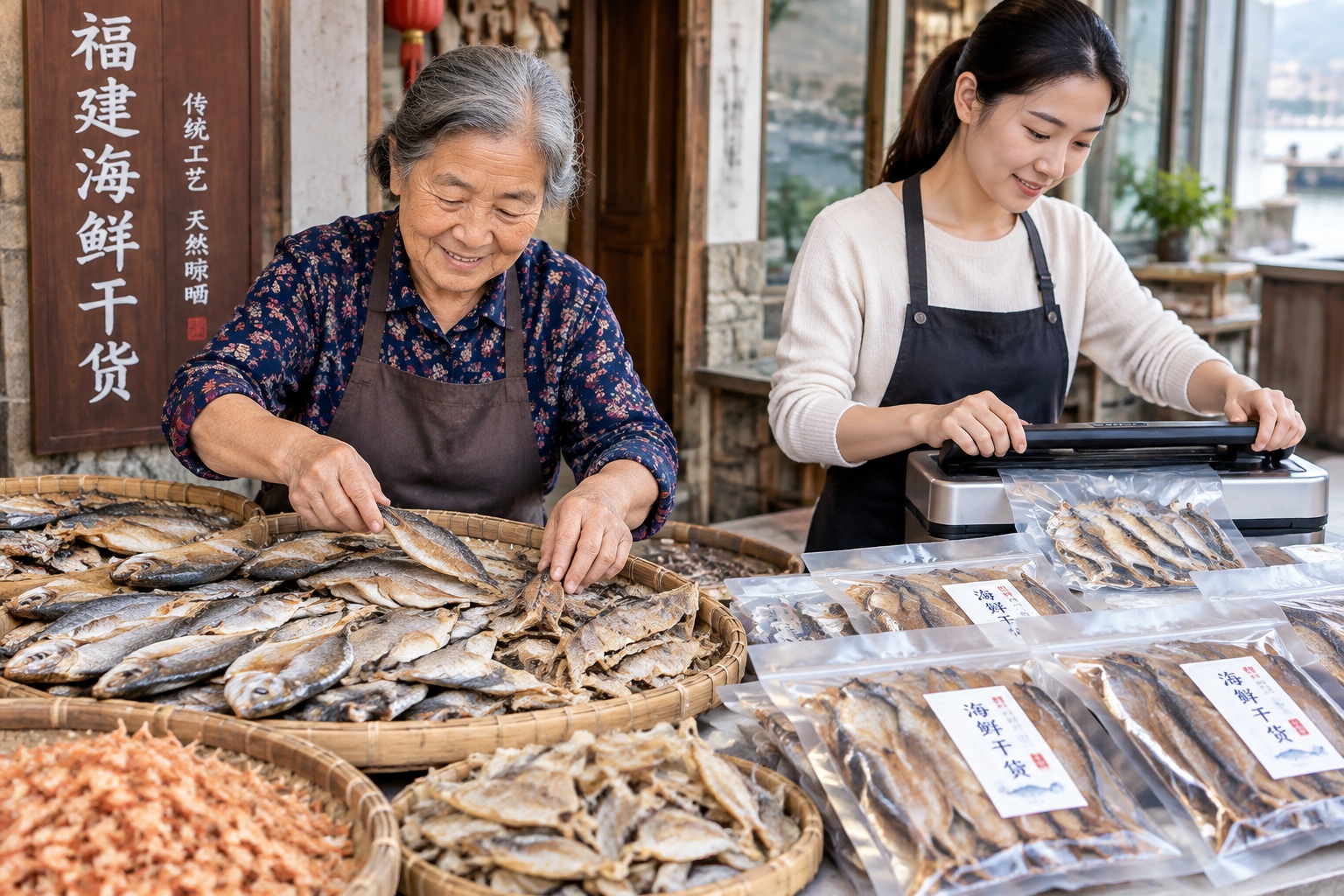
In Fujian’s coastal towns, you will still see elders meticulously cleaning and salting fish under the sun. But next to them, young entrepreneurs are testing vacuum-sealing technologies and modified atmosphere packaging (MAP) that extend shelf life while locking in moisture. The goal is not to replace tradition, but to stabilize it.
“We used to worry about the rainy season ruining our catch,” says Chen Min, a third-generation seafood processor in Fuzhou. “Now, we use industrial-grade vacuum packing for our premium dried scallops. It keeps the flavor exactly as my grandmother made it, but it can sit in a fridge for months instead of days.” This blend of old recipes and new packaging allows Fujian’s specialty products—like abalone, conch, and sea cucumber—to travel far beyond their local markets.
The Invisible Highway: How Cold Chains Work
The real game-changer is the cold chain infrastructure itself. In China, this network is often described as an “invisible highway.” It starts at the port, where seafood is ice-packed or flash-frozen within minutes of being landed. From there, it enters a multi-layered logistics system.
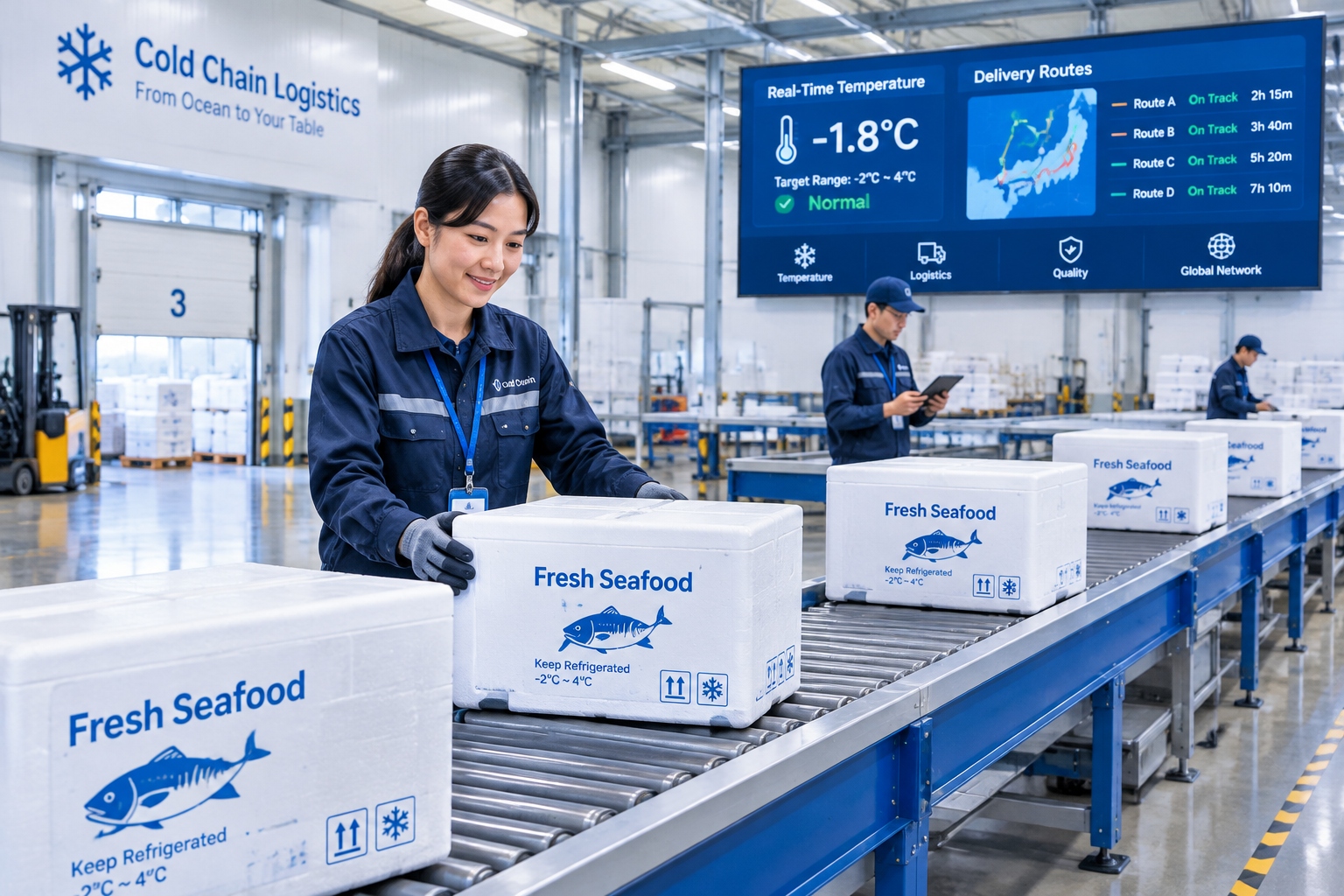
According to industry data, China’s cold chain storage capacity has exceeded 200 million cubic meters in recent years, with a steady annual growth rate of over 10%. More importantly, the “last mile” delivery has been revolutionized by e-commerce platforms. When a customer in Xi’an or Wuhan orders fresh crab from Fujian, it doesn’t go through multiple wholesale markets. It goes directly from a Fujian warehouse, packed with dry ice and gel packs, onto a dedicated cold truck.
For ordinary consumers, this means reliability. Apps like Hema Fresh (Freshippo) and JD Daojia offer real-time tracking of temperature during transit. If the temperature deviates, the system alerts the driver and sometimes even offers automatic refunds if the quality drops. This level of transparency was unimaginable a decade ago.
More Than Food: A Shift in Lifestyle
The impact of this logistics network extends beyond convenience. It has reshaped dietary habits across China. Inland families, previously dependent on freshwater fish and frozen imports, now have access to the same variety of seafood as coastal residents. This is not just about eating better; it is about a shift in lifestyle expectations.
Consider the popularity of Fujian’s “Buddha Jumps Over the Wall” (Foshou Tiaoqiang), a complex stew requiring abalone, sea cucumber, bird’s nest, and premium ham. Traditionally, this dish was expensive and difficult to prepare, often reserved for weddings or major festivals. Today, pre-made versions using high-quality, cold-chain-fresh ingredients are widely available online. A young professional in Beijing can order the ingredients, heat them up, and serve a restaurant-quality meal at home.
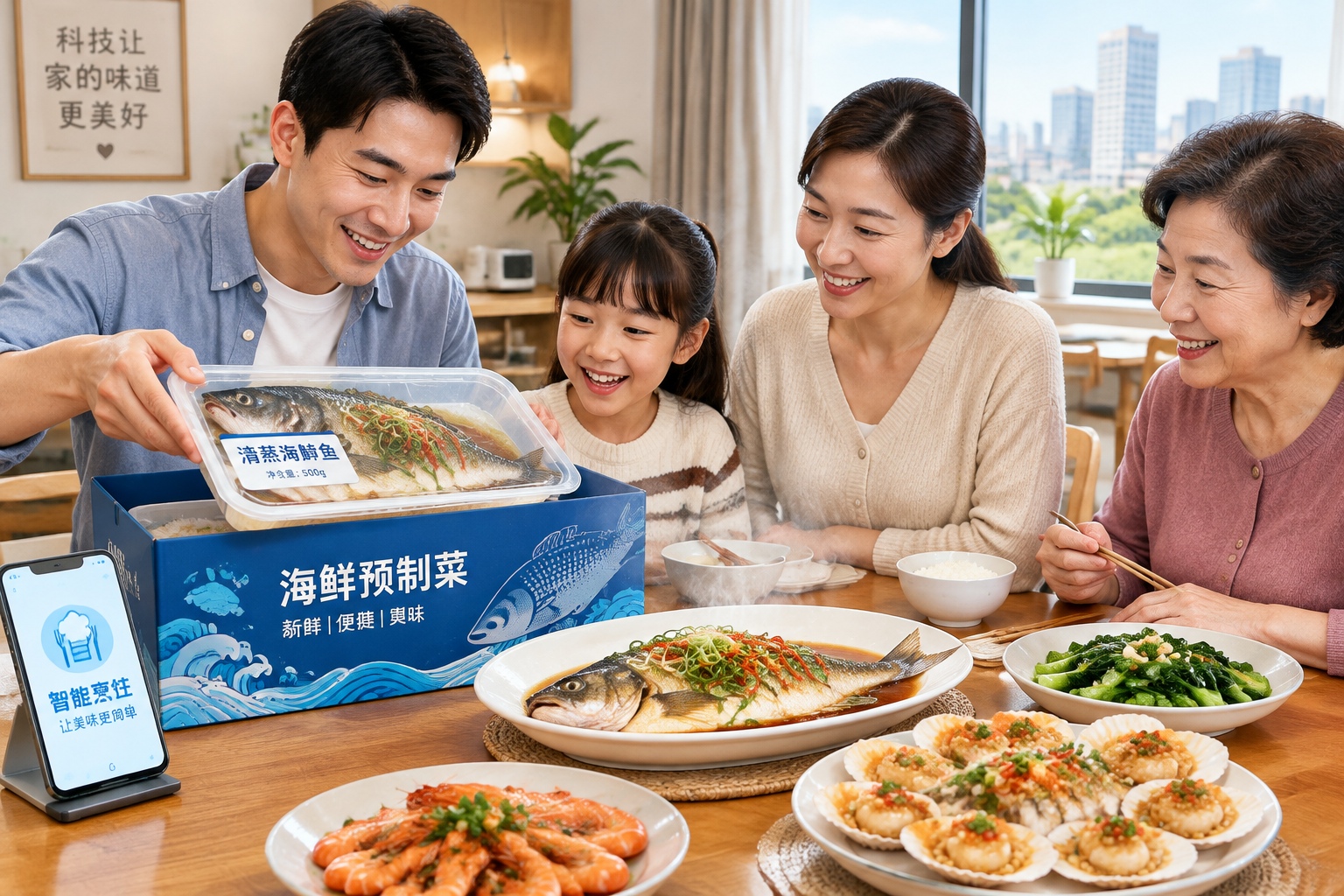
This trend reflects a broader phenomenon: the democratization of luxury. Technology has lowered the barrier to entry for high-quality food, allowing middle-class families across different regions to enjoy the same culinary experiences. It also supports local economies in coastal areas, where fishermen can sell directly to national markets without relying on middlemen who previously dictated prices.
The Reality Behind the Freshness
Of course, this system is not without its challenges. Maintaining consistent cold chain temperatures across thousands of kilometers requires significant energy and investment. There are also concerns about environmental impact, such as the use of plastic packaging and refrigerants. However, the industry is rapidly adapting. Many companies are switching to biodegradable ice packs and optimizing routes to reduce carbon footprints.
For the average Chinese consumer, the result is a new normal. Freshness is no longer a rare commodity; it is a standard expectation. Whether it’s a bowl of steamed fish in Sichuan or a plate of grilled oysters in Beijing, the sea is closer than ever before.
Conclusion: Connecting Through Taste
The story of Fujian seafood is a microcosm of modern China’s development. It shows how infrastructure, technology, and tradition can work together to solve everyday problems. For overseas readers, it offers a glimpse into how logistics has become the backbone of daily life, turning geographical limitations into manageable distances.
As you enjoy your next meal, consider the journey your food took to get there. In China, that journey is faster, smarter, and increasingly sustainable. It’s not just about moving goods; it’s about connecting people through the universal language of taste.
Start the discussion at forum.chinacomes.com