
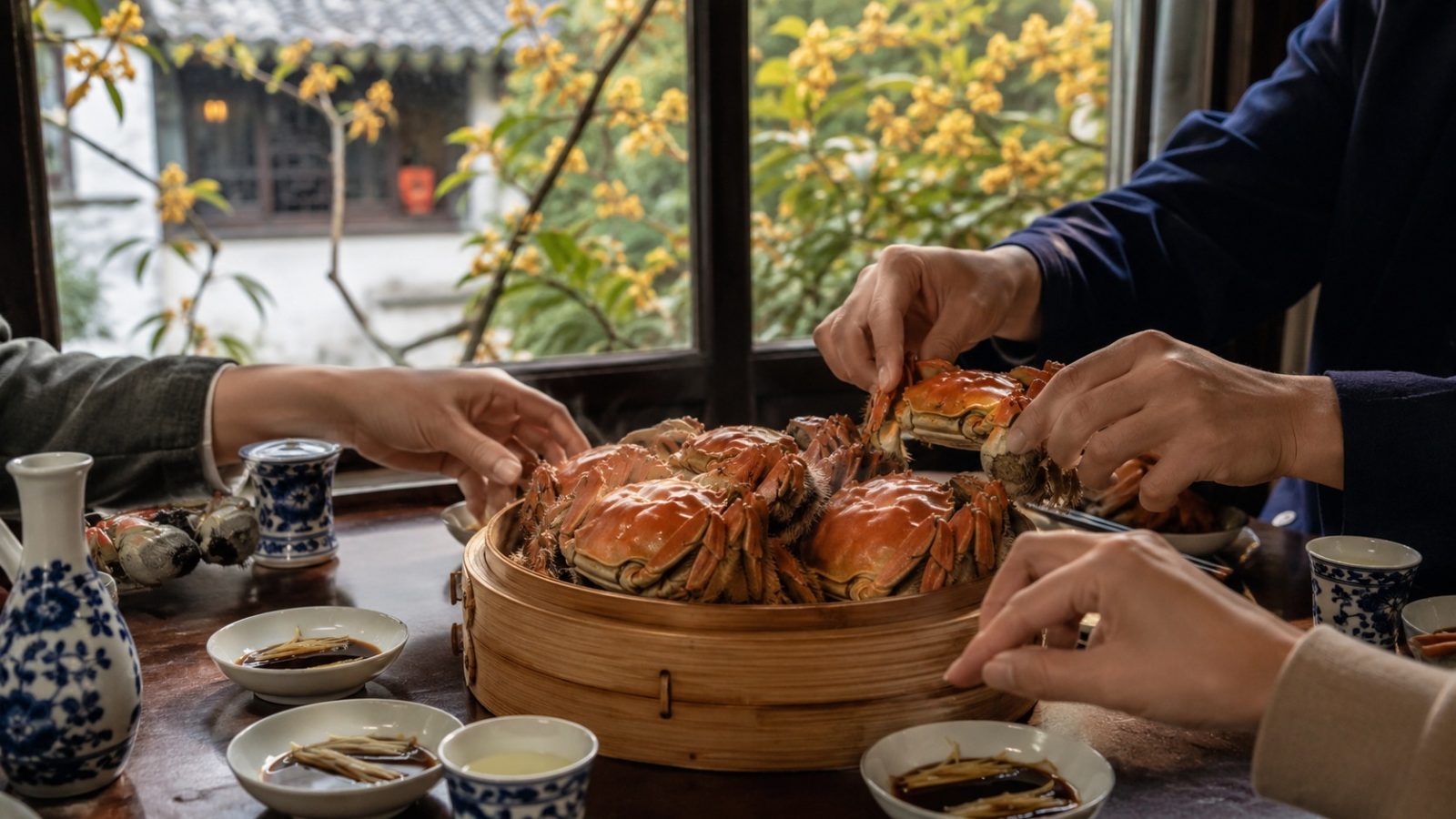

The Scent of Osmanthus and the Craving for Autumn
It starts with a shift in the wind. In Suzhou, the humid heat of summer finally breaks, replaced by crisp air carrying the heavy, sweet scent of osmanthus flowers blooming along the canals. For locals, this sensory change is a biological alarm clock. It signals one thing above all else: the hairy crab season has arrived.
Unlike in many Western cultures where food trends are often dictated by influencers or restaurant marketing, the craving for hairy crab (known locally as *dazhaxie*) in Suzhou is communal and instinctive. It is a collective memory triggered by the temperature drop. As soon as the first autumn breeze hits, the conversation shifts from “What are you working on?” to “Have you booked your crabs yet?”
More Than Food: A Centuries-Old Ritual
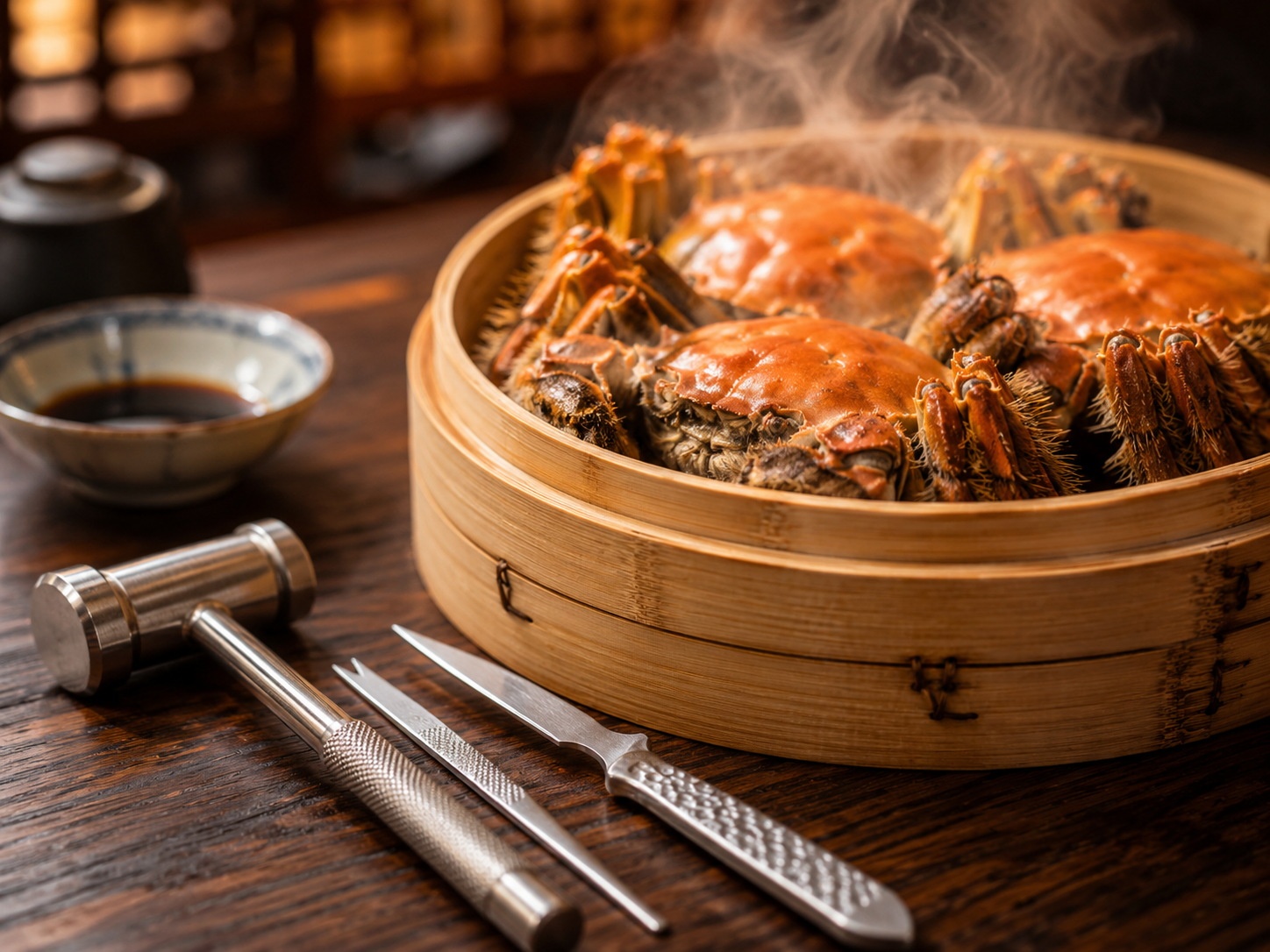
To the uninitiated eye, eating a hairy crab can look like a chore. These crabs are not served in easy-to-eat portions. They require patience, dexterity, and a specific set of tools—a small hammer, a pair of tweezers, and a sharp knife. The process of extracting the meat from the claws and legs is slow, taking anywhere from 15 to 20 minutes per crab.
This slowness is not an inconvenience; it is the point. In Chinese culture, there is a profound philosophy known as *”shi bu shi shi”* (eat only when it is in season). Hairy crabs are the ultimate expression of this. They are harvested only in autumn when their roe and tomalley (the yellow part inside) are at their peak richness.
The ritual of eating them reflects a local aesthetic of patience and appreciation. You don’t rush a hairy crab. You sit down, perhaps with tea, and take the time to appreciate the effort it takes to get the meat. It is a momentary pause in a fast-moving world, a reminder that some things cannot be hurried.
The Modern Logistics of Tradition
While the tradition is ancient, the way Suzhouites access these crabs is decidedly modern. Ten years ago, you might have needed connections (*guanxi*) to get fresh crabs from specific lakes like Yangcheng or Taihu. Today, the supply chain is sophisticated and accessible to anyone with a smartphone.
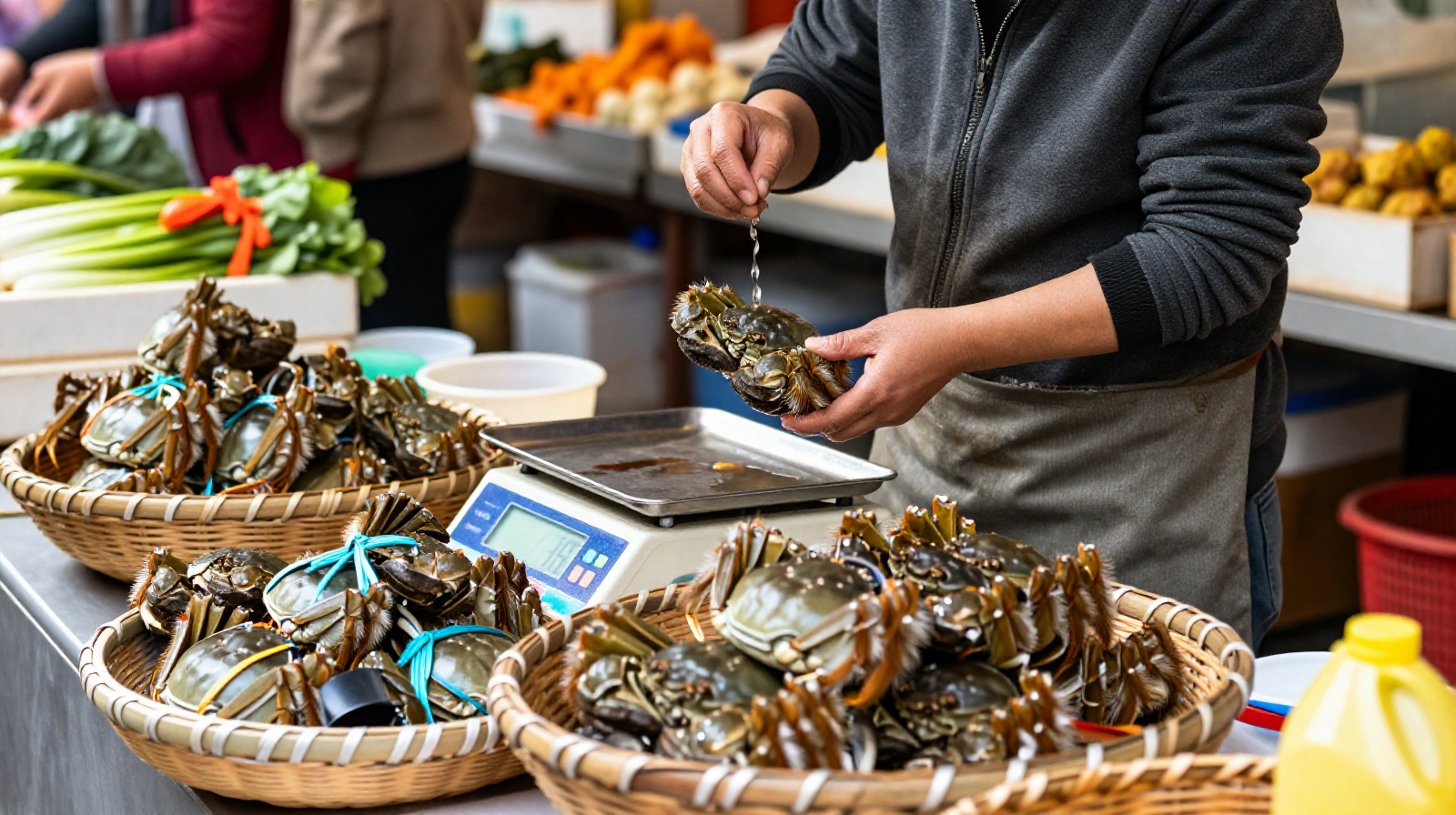
Walk through a local morning market in Suzhou, and you will see the transformation. Stalls are stacked high with woven baskets of live crabs, their legs twitching. Vendors, often older women with weathered hands, expertly weigh the crabs on digital scales while shouting out prices that fluctuate daily based on size and gender (male crabs are larger and meatier; females have richer roe).
For young professionals who work long hours in Suzhou’s high-tech zones, the ritual has adapted. Premium crab packages are now delivered directly to office doors or homes via apps like Meituan or Ele.me. You can order a set of steamed crabs, complete with ginger vinegar dipping sauce and hot yellow wine, and have it arrive within an hour. It is a fascinating blend of ancient culinary heritage and hyper-efficient modern logistics.
The Social Glue of the Dinner Table
Why go through all this trouble? The answer lies in the social function of the meal. In China, food is rarely just about nutrition; it is about connection. Sharing a pot of hairy crabs is an intimate act. Because the eating process is messy and time-consuming, you cannot look at your phone. You must engage with the people sitting across from you.
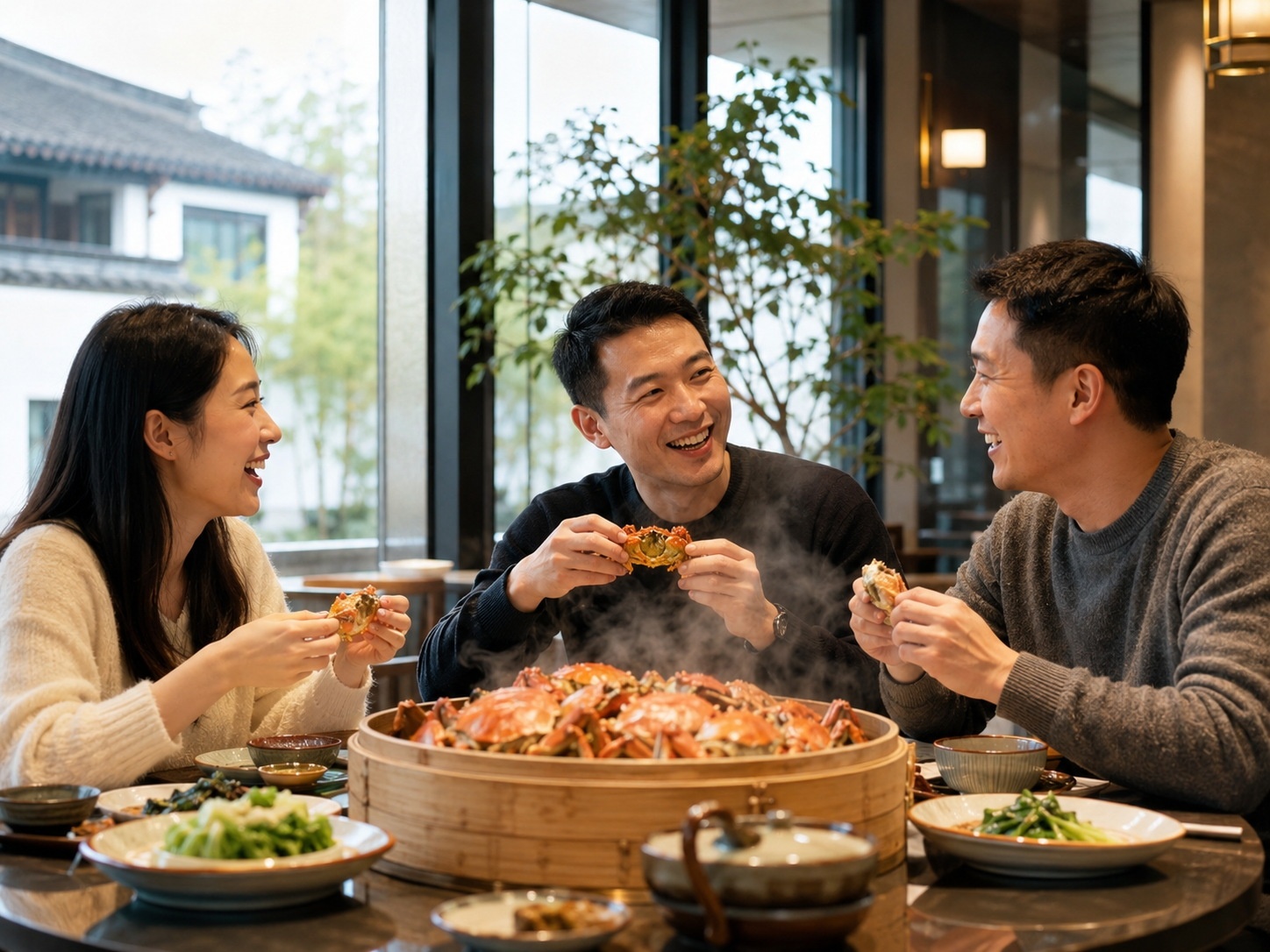
This makes it a perfect bonding ritual for families and friends. In an era where everyone is glued to screens, the hairy crab forces a “digital detox.” It requires conversation, laughter, and sometimes a bit of competition—who can extract the most meat? Who has the fastest hands?
For expats and visitors, participating in this ritual offers a genuine window into Chinese social life. It is not about the cost of the crab, which can be surprisingly affordable for local varieties, but about the shared experience. It is a way to say, “I value our time together enough to slow down.”