

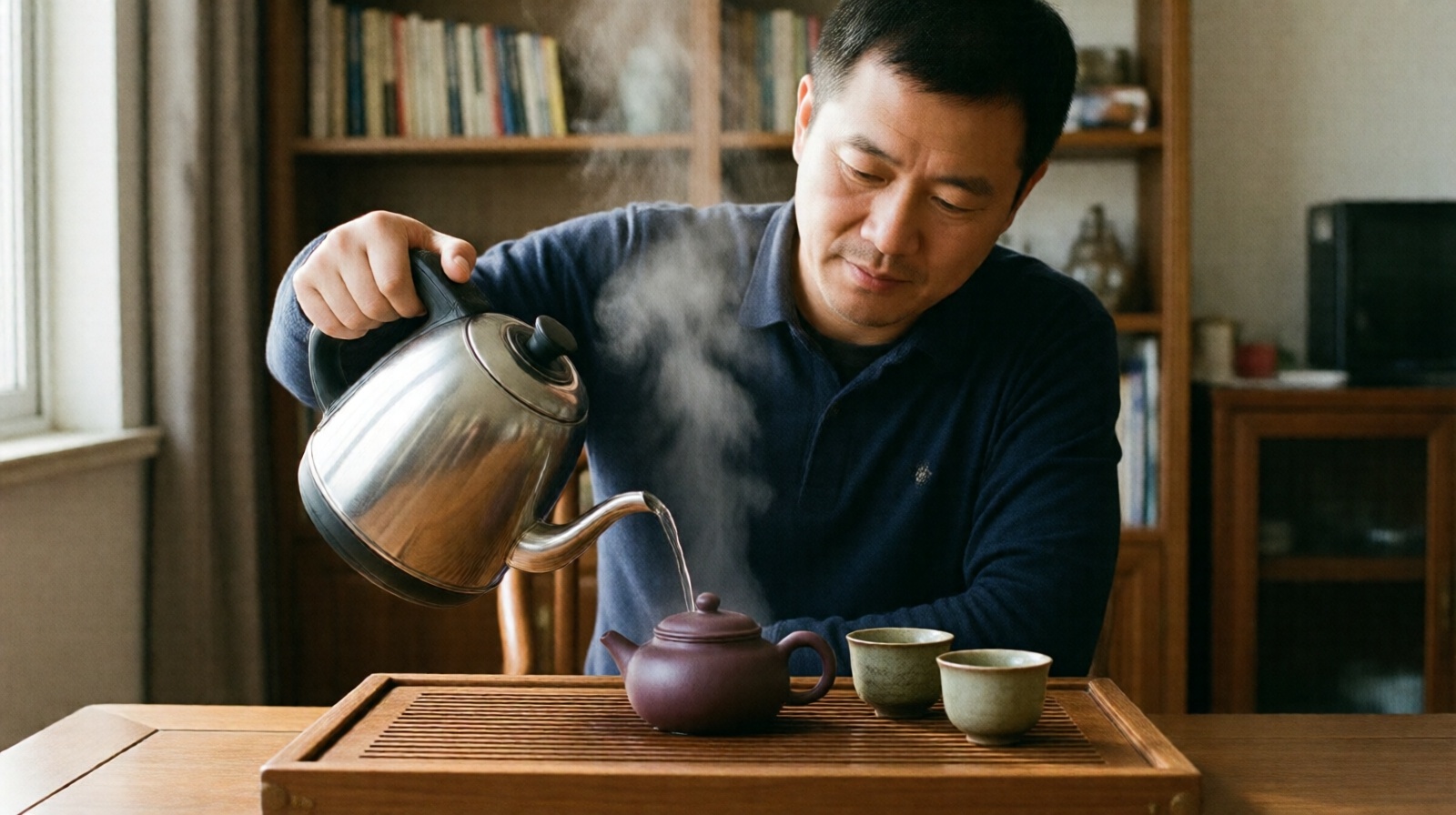
Last week, I visited my friend Xiao Ming in his small apartment in Shanghai. As soon as I stepped through the door, he reached for his electric kettle. Within minutes, a small purple clay pot was steaming on the table, and he poured me a cup of oolong. “This is from Wuyi Mountain,” he said, handing it to me with both hands. We hadn’t talked about his job, his family, or the city’s latest news yet—but the tea had already started our conversation.
The Tea Table as a Social Hub
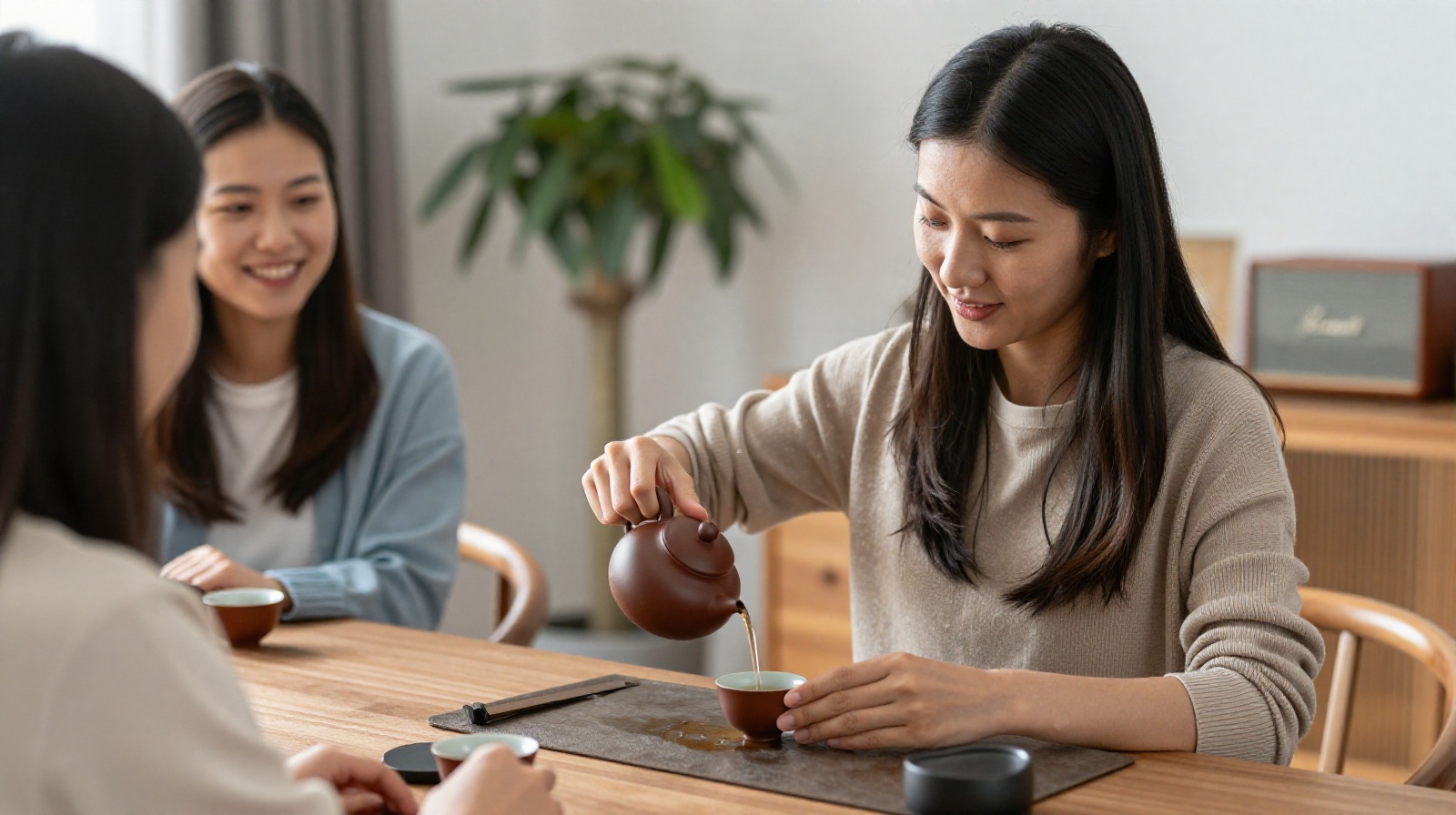
In China, offering tea is the simplest and most sincere gesture of welcome. When you enter a home, an office, or even a car dealership, the first thing that appears is often a cup of tea (or a bottle of water, if you’re in a hurry). The act of pouring tea creates a small ritual: the host pours, the guest receives with two hands or taps fingers on the table as a thank you. For younger generations, the finger-tapping gesture (a light knock on the table with index and middle fingers) is a fun, respectful nod to tradition—originally a kowtow substitute from the Qing dynasty, now a casual way to say “cheers” without words.
Business meetings in China almost always involve tea. A hot pot of green or oolong tea sits in the center of the table, and the host regularly refills guests’ cups. It’s not just about hydration; the tea provides a natural pause, a moment to think before speaking. I’ve seen tense negotiations soften over a second steeping of Tieguanyin. The tea gives participants something to do with their hands, an excuse to slow down and listen.
Young People’s Tea: New Teahouses and Bubble Tea
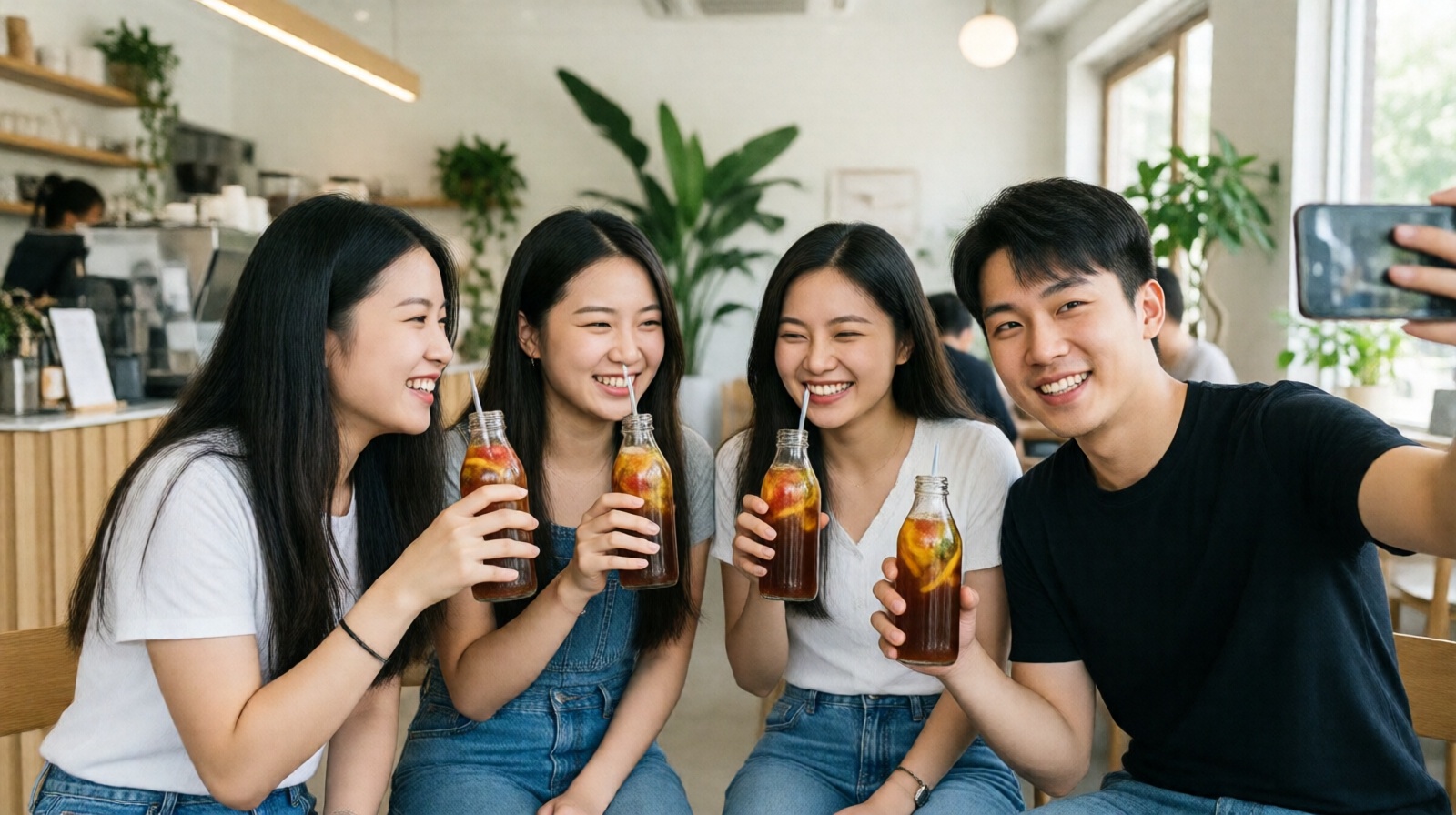
Walk into a new-style teahouse in Chengdu or Hangzhou, and you’ll find twenty-somethings lounging on sofas with laptops, sipping cold-brew jasmine tea from glass bottles. These modern tea spaces—brands like Heytea, Nayuki, or local independent shops—have reinvented tea culture for a generation that grew up with Starbucks. The drinks are photogenic, often topped with cheese foam or fresh fruit, but the core is still tea: green, black, oolong, or jasmine.
And then there’s bubble tea (milk tea). Though it’s become a global phenomenon, in China it’s a social ritual in itself. Groups of friends order different flavors, take photos, and share a sweet moment together. A large milk tea with tapioca pearls costs around 15–30 RMB ($2–$4), making it an affordable luxury for students and young workers. The phrase “Let’s grab a bubble tea” has replaced “Let’s grab a coffee” in many social circles.
Regional and Class Differences in Tea Drinking
Tea culture varies dramatically across China. In Chengdu, the capital of Sichuan, people flock to traditional teahouses in parks, where they sit on bamboo chairs and sip jasmine tea from covered bowls, often accompanied by ear-picking services or a game of mahjong. In Guangzhou, morning tea (yum cha) is a family affair: dim sum and small cups of pu’er or oolong are shared over hours of chatter. In Beijing, older men walk with thermoses filled with loose-leaf green tea, while in Shanghai’s financial district, executives might order a single-origin oolong in a minimalist tea bar.
Class also plays a role. A factory worker might drink cheap green tea from a large cup all day; a tech entrepreneur may invest thousands in aged pu’er cakes and attend tea ceremonies. But the common thread is that tea belongs to everyone. No matter the price, the act of offering tea remains a universal sign of respect and hospitality.
Tea as a Gift and Emotional Symbol
Tea is one of the most common gifts in China. When visiting parents during Spring Festival, a box of high-quality tea is a safe and meaningful present. When a friend returns from a trip to Fujian, they bring back tieguanyin. When a colleague gets promoted, a nice tea set might be the office gift. The packaging matters—elegant tins or decorative paper wraps show thoughtfulness.
Tea also carries emotional weight. My grandmother in Hangzhou always insists on serving Longjing (Dragon Well) tea to guests, even though she knows they might not appreciate its subtle chestnut flavor. For her, it’s about sharing a piece of home. I’ve seen young couples give tea as wedding favors, with the message “May our love be as lasting and fragrant as fine tea.”
Tea in a Changing China: Constant Yet Fluid
Today, China is one of the fastest-changing societies in the world. But tea’s role in social life remains remarkably stable. Whether you’re a billionaire in Shenzhen or a student in Xi’an, the first thing you do when a guest arrives is prepare tea. It’s a habit so ingrained that even in the age of WeChat and video calls, the physical act of pouring tea still holds a place.
Tea shops are also evolving. Specialty tea boutiques now offer tasting sessions similar to wine tasting, where connoisseurs discuss terroir, roast levels, and harvest seasons. On social media, tea influencers with millions of followers share brewing tips and reviews. The tea world is vibrant and accessible.
What hasn’t changed is the human connection. Tea is the excuse to sit down, share a quiet moment, and say, “Let’s talk.” In a country of 1.4 billion people, that simple gesture still does wonders.