

Introduction: A Sunday Afternoon in Nanjing
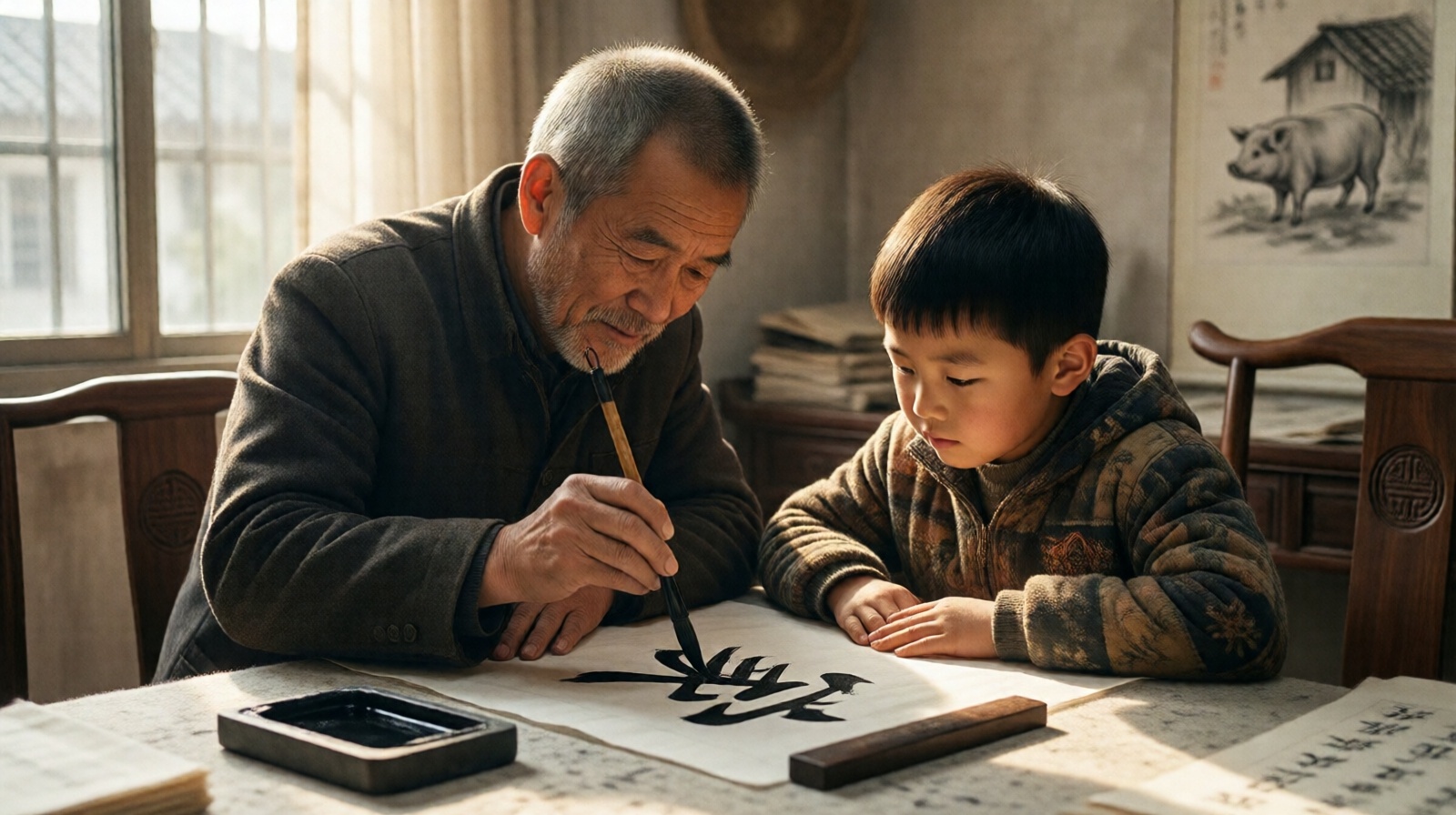
On a mild Sunday afternoon, I sit in a small apartment in Nanjing, watching Li Wei, a 68-year-old retired teacher, guide his 7-year-old grandson through a calligraphy exercise. The boy’s brush trembles as he paints the character ‘家’ (jiā) — home — on a sheet of rice paper. “Look,” Mr. Li says, pointing at the strokes. “The top part is a roof. The bottom is a pig. A house with a pig under one roof — that’s what home meant to our ancestors.” The boy giggles, but the lesson sticks.
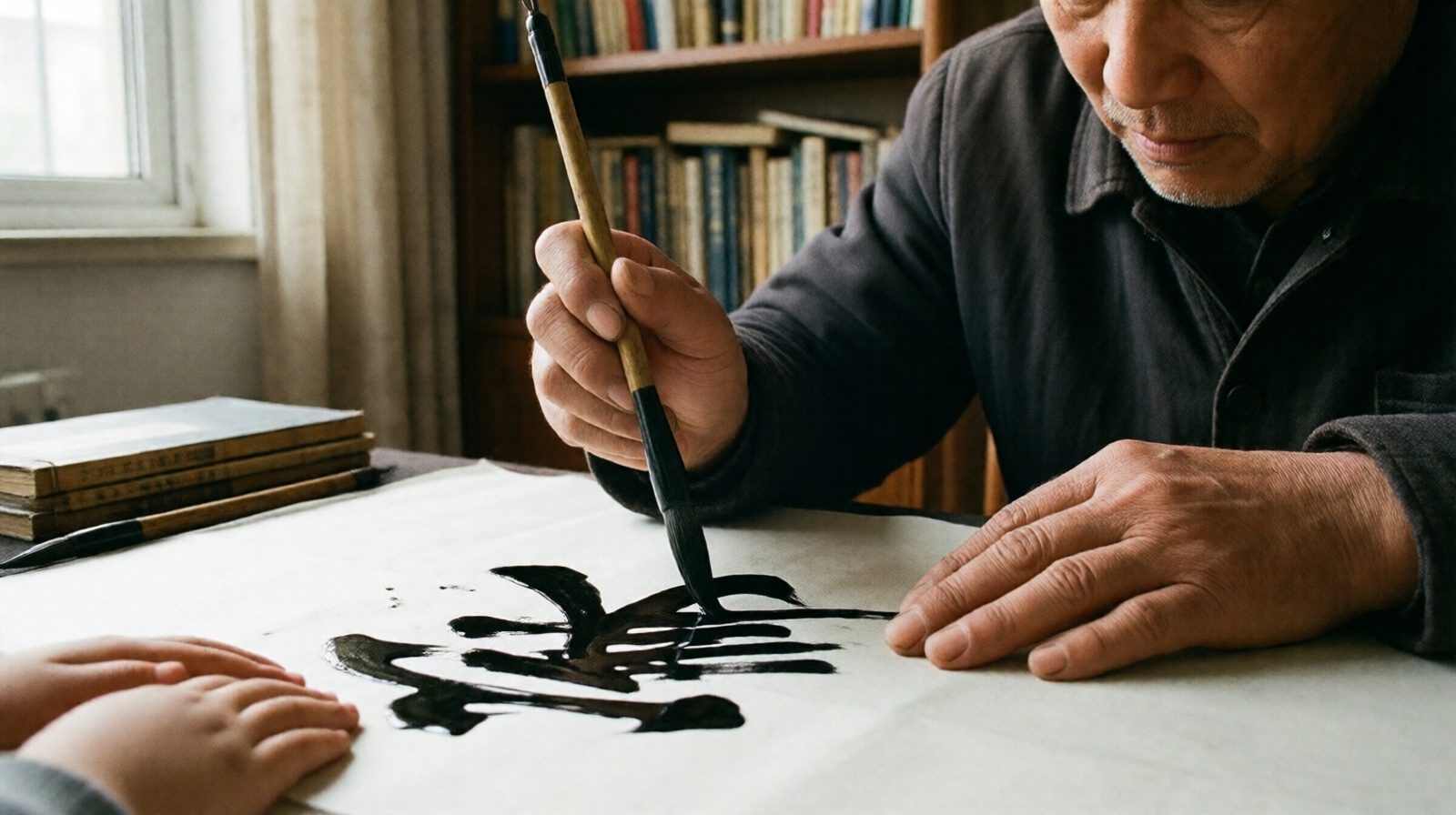
For anyone curious about Chinese culture, the character ‘家’ is a perfect starting point. It’s not just a word; it’s a time capsule. By unpacking its history — from ancient carvings on turtle shells to the simplified script used on smartphones today — you can glimpse the deep roots of Chinese family values: why three generations often live together, why millions travel across the country for Lunar New Year, and why family obligations feel so heavy yet so warm.
The Anatomy of ‘家’: A Roof and a Pig
The modern character ‘家’ has two components: the radical ‘宀’ (mián), meaning a roof or shelter, and ‘豕’ (shǐ), meaning pig. But why a pig? In ancient China, around 4,000 years ago, pigs were the most important domesticated animal. They represented wealth, stability, and food security. A family that owned a pig could survive the winter. So putting a pig under a roof wasn’t just about livestock — it was about prosperity and the ability to feed one’s kin.
This combination appears in the earliest known Chinese writing, the oracle bone script of the Shang dynasty (c. 1600–1046 BCE). On a piece of turtle shell excavated from Anyang, the character shows a simple house outline with a pig silhouette inside. The message is clear: home is where the shelter is, and the pig is the proof of a settled, thriving household.
Evolution of the Script: From Bone to Brush
Chinese characters have evolved dramatically over three millennia, and ‘家’ is a vivid example. In bronze inscriptions (jinwen) from the Zhou dynasty, the character became more elaborate: the roof gained two sloping lines, and the pig took a more naturalistic form. By the time of the Qin dynasty (221–206 BCE), the Small Seal script (xiaozhuan) standardized the shapes — the roof became neat and square, the pig more stylized.
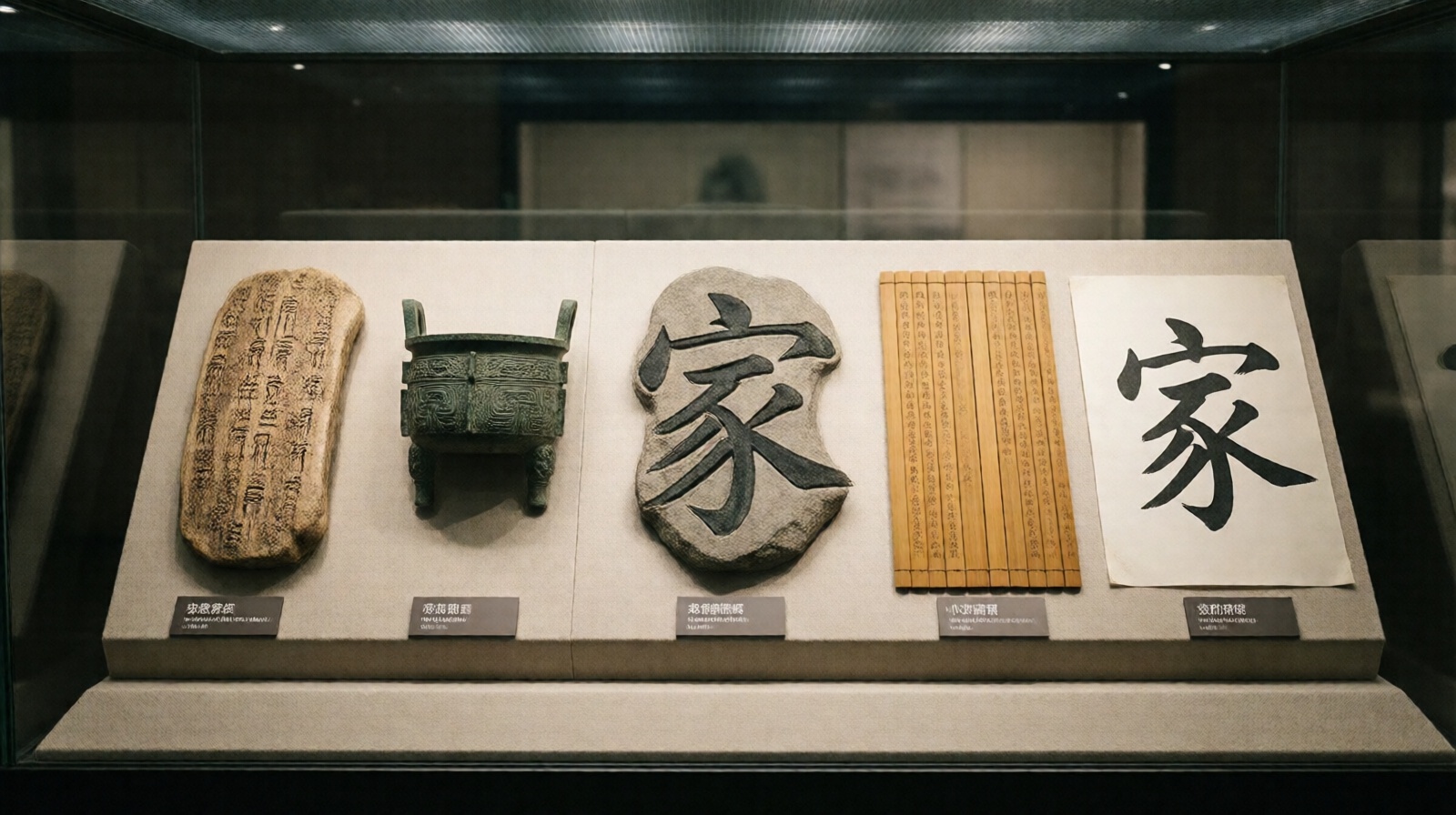
During the Han dynasty, clerical script (lishu) simplified strokes for faster writing. The pig’s legs and snout merged into a single squarish block. Then, in the Wei-Jin period, the regular script (kaishu) we use today fixed the form: a roof on top, and below, a flattened pig shape that no longer looks much like an animal but carries the same meaning.
This evolution mirrors changes in Chinese society. As families grew larger, the concept of ‘family’ expanded to include multiple generations under one roof — literally. Traditional Chinese houses were often built around courtyards, with separate wings for grandparents, parents, and children. The character ‘家’ never changed its core meaning: a shared space where people and resources are protected.
Family Values in Modern China
Fast-forward to 2025. The character ‘家’ is everywhere — on restaurant signs, in wedding invitations, glowing on WeChat group chats. But its emotional weight remains as heavy as ever. Consider the annual ‘Spring Rush’ (chunyun), the world’s largest human migration: during the 40 days around Lunar New Year, Chinese people make over 2 billion trips to reunite with their families. A factory worker in Shenzhen might spend 30 hours on a crowded train to reach a village in Sichuan. Why? Because “回家” (huí jiā) — returning home — is not just a trip; it’s a moral and emotional duty.
Zhang Min, a 29-year-old software engineer in Beijing, tells me: “I video-call my parents every night. We have a family group chat with 12 people — aunts, uncles, cousins. Every week, someone shares old photos of our ancestors. My generation may live far apart, but we are still under one digital roof.” That digital roof is the modern version of the ancient pig pen: it represents connection, care, and continuity.
Filial piety (孝, xiào) remains a central pillar. Adult children are expected to support aging parents financially and emotionally. Many young couples buy apartments close to their parents’ homes, or build houses with separate quarters for the elderly. When my neighbor Mr. Chen’s mother fell ill, he took a month of unpaid leave to care for her. “She raised me; it’s my turn to be under her roof,” he said, using the same character ‘家’ to describe both physical shelter and mutual obligation.
Conclusion: More Than a Word
The character ‘家’ is not merely a linguistic artifact. It is a living piece of culture that reveals how Chinese people define belonging. From the oracle bone pig to the WeChat family group, the essence remains: home is where the roof covers those you care for, and the pig — now replaced by a salary, a house mortgage, or a hot meal — symbolizes the shared wealth that keeps a family together.
Next time you see the character ‘家’, look closer. It holds 4,000 years of human longing, labor, and love. And maybe, just like Mr. Li’s grandson, you’ll smile at the thought of a pig sleeping safely under a roof — the oldest dream of home.