

The Midnight Call
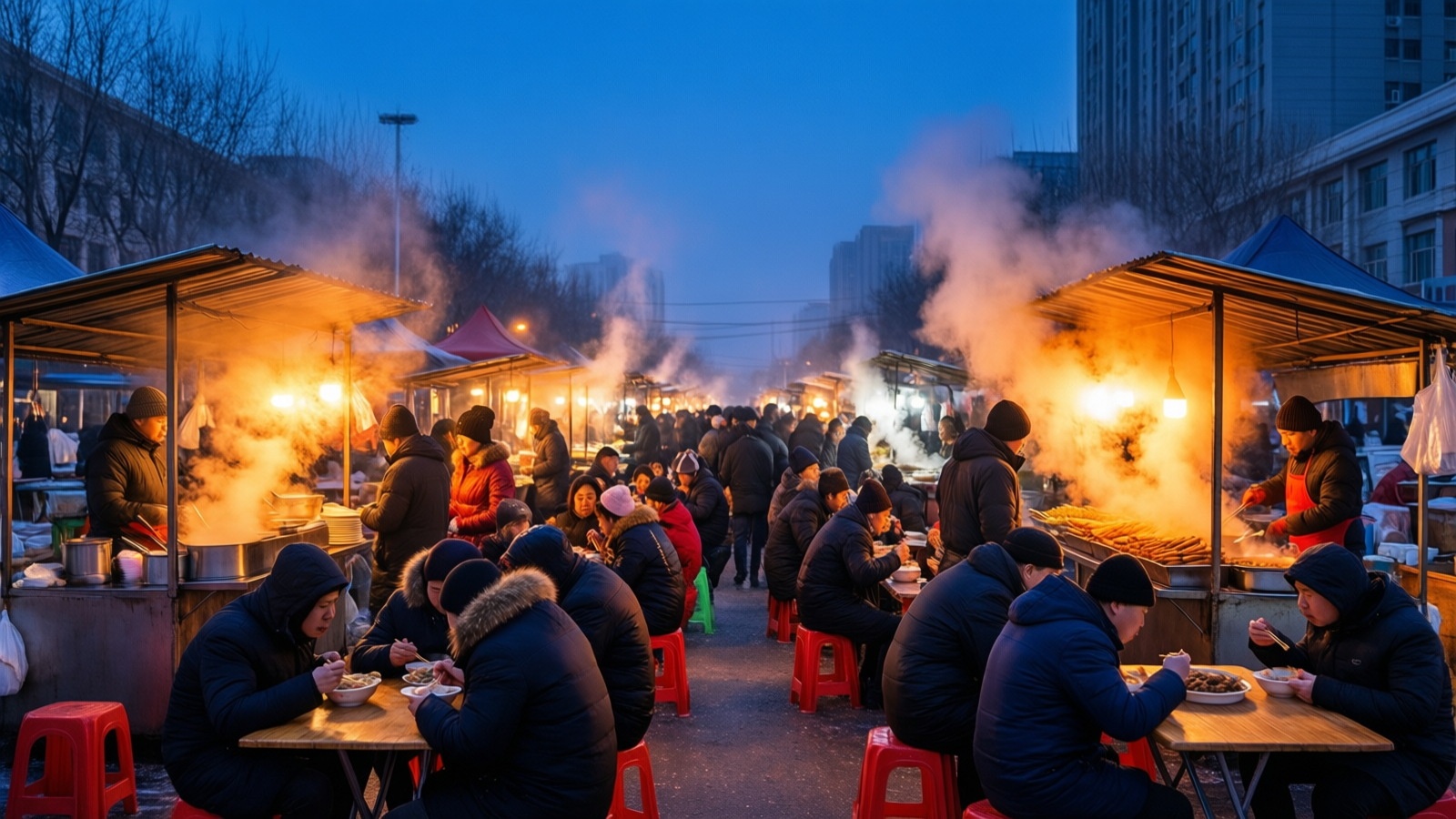
At 4:00 AM, Shenyang is not asleep. In fact, for thousands of residents, this is the hour when the city truly begins to breathe. While most Western cities are quiet under a blanket of silence or streetlights, Shenyang—a former heavy industrial hub in Northeast China—is lighting up its corners with portable gas lamps and steam generators.
The phenomenon seems counterintuitive at first. Why wake up before sunrise? For locals, it is not about obligation but opportunity. The morning market, known locally as zaoshi, is where the day’s fresh supplies are sourced at prices that would shock a Western shopper. But more importantly, it is where the community gathers. It is a place where retired factory workers, young delivery drivers, and early-shift nurses come together before the city fully wakes up.
The Cold & The Steam
Stepping into a Shenyang morning market in winter is a sensory assault. The temperature hovers around -15°C (5°F). Your breath freezes instantly, forming white clouds that mix with the thick, savory steam rising from hundreds of woks.
The ground is often a mix of wet pavement and frozen puddles, tracked by rubber boots and snow tires. Yet, people move with practiced efficiency. There is no shivering; there is only motion. Stalls are lined up in narrow alleys or open squares, each guarded by a large metal stove that radiates heat like a small sun. The air smells of burning coal (or increasingly, clean gas), fried dough, and strong tea.
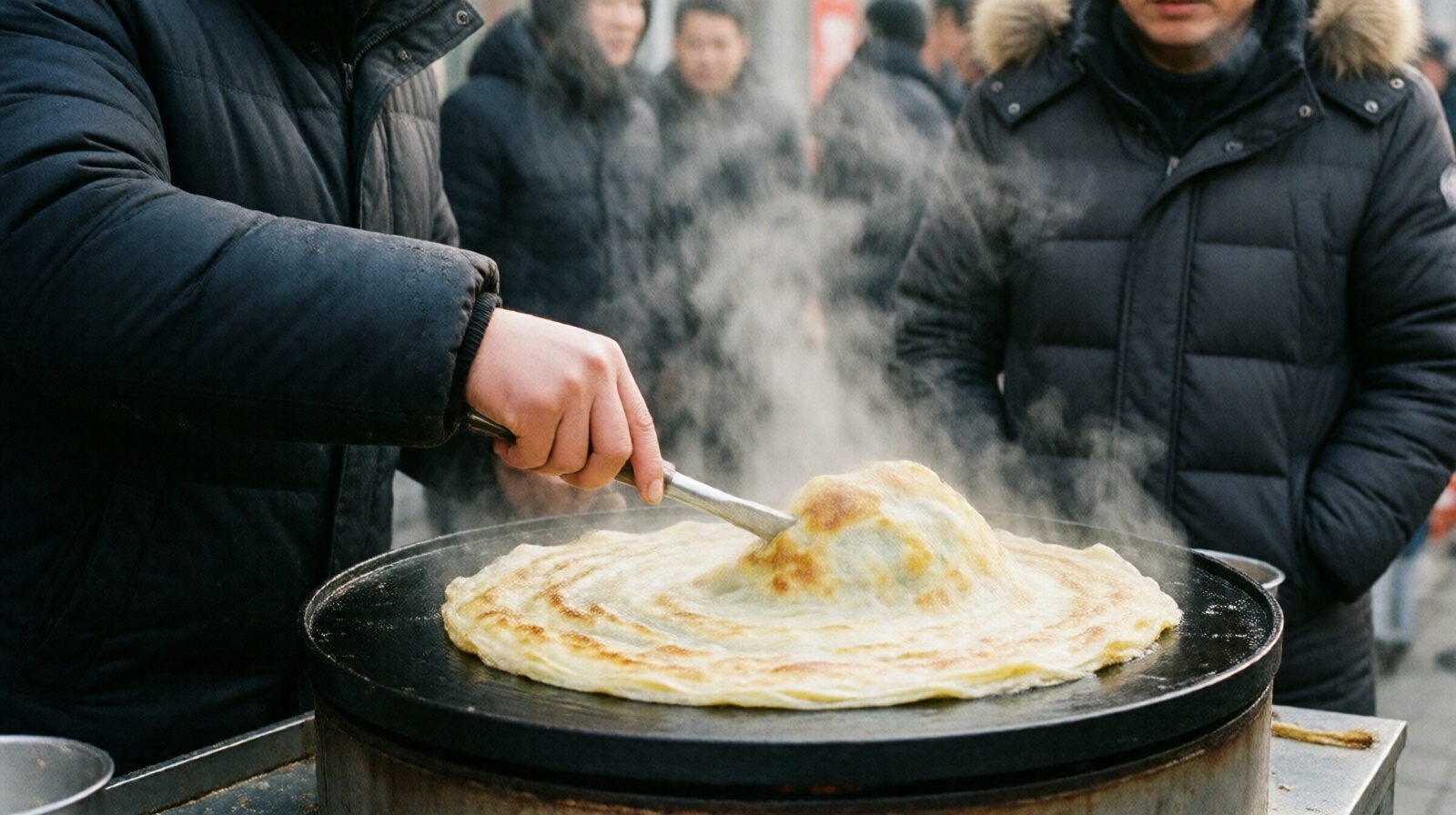
Visitors often find themselves drawn into the rhythm without realizing it. You are handed a plastic stool to wait for your order. You watch as a vendor flips a pancake with a flick of the wrist, or scoops steaming soy milk from a massive thermos. The noise level is high—shouts of prices, laughter, and the clatter of metal chopsticks—but it feels welcoming, not chaotic.
The ‘Hardcore’ Breakfast
What makes Shenyang’s breakfast “hardcore”? It is the portion size, the caloric density, and the unapologetic richness. This is fuel for a region that has historically relied on heavy physical labor and endures long, harsh winters.
Jianbing: The Local Twist
You will find jianbing (savory crepes) across China, but the Shenyang version is distinct. Here, vendors often add a whole fried egg and sometimes even leftover braised meat from previous days to keep costs low. The sauce is thicker, spicier, and sweeter than in southern cities. It is eaten with one hand while walking to work.
Soy Milk & Youtiao
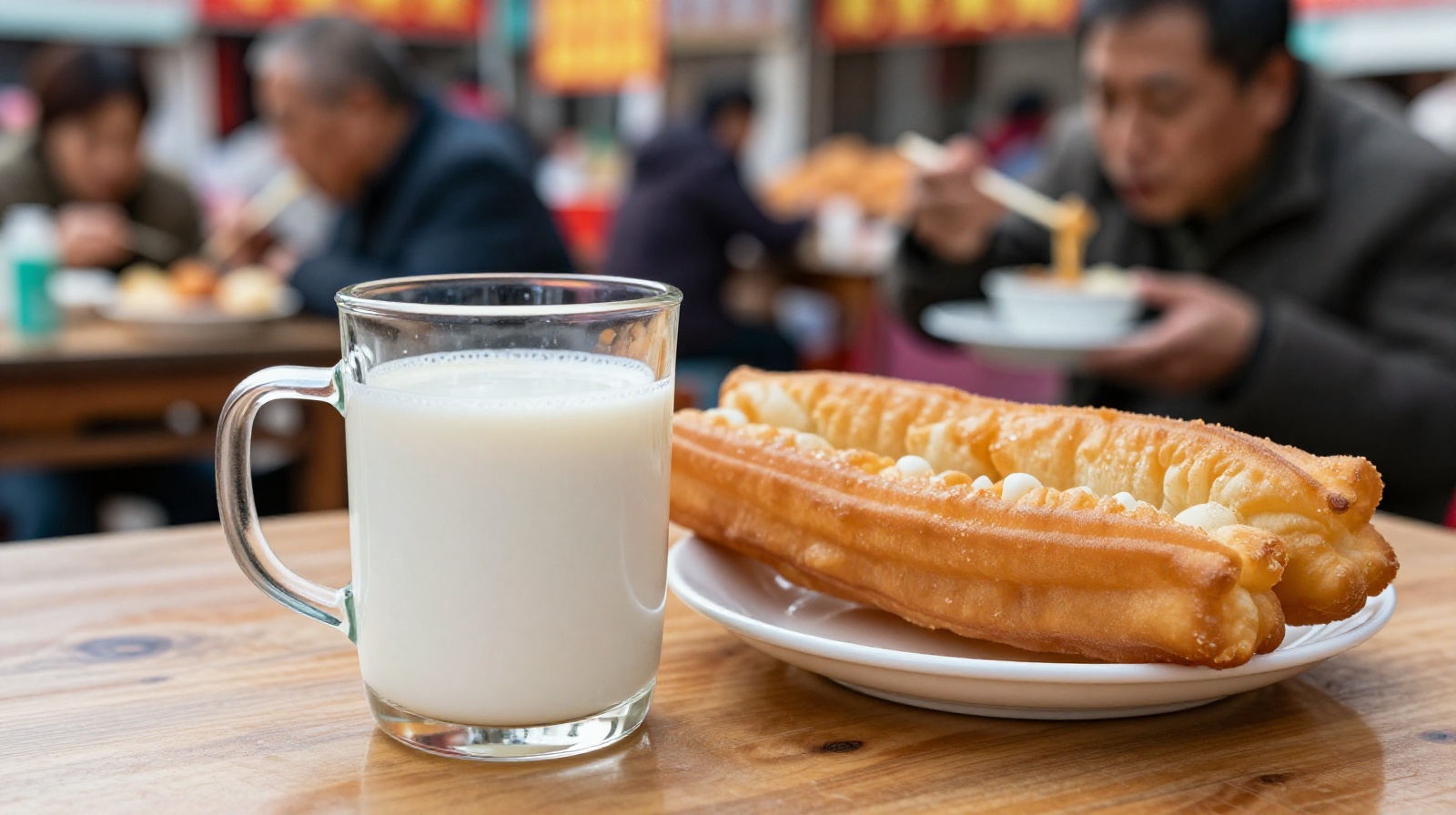
Large buckets of hot soy milk are a staple. Unlike the sweet, thin versions found in cafes, Shenyang’s soy milk is rich, slightly grainy, and served piping hot. It is almost always paired with youtiao (fried dough sticks). Locals dip the crispy dough into the smooth liquid, creating a textural contrast that defines the meal.
Jianbing Guozi & Street Skewers
For those who want more, there are grilled skewers (chuanr) available even at dawn. Meat sizzles on grills, coated in cumin and chili powder. It might seem unusual to eat lamb skewers for breakfast, but in Northeast China, energy is energy. The goal is warmth.
Social Hub: More Than Just Food
To view the morning market merely as a place to buy food is to miss its primary function. It is Shenyang’s living room.
Here, social hierarchies flatten. A university professor might stand next to a construction worker while waiting for tanghulu (candied haws). Bargaining is not just about money; it is a form of social interaction. “How much for these apples?” is often followed by “You’re my neighbor, give me a good price.” It is a ritual of connection.
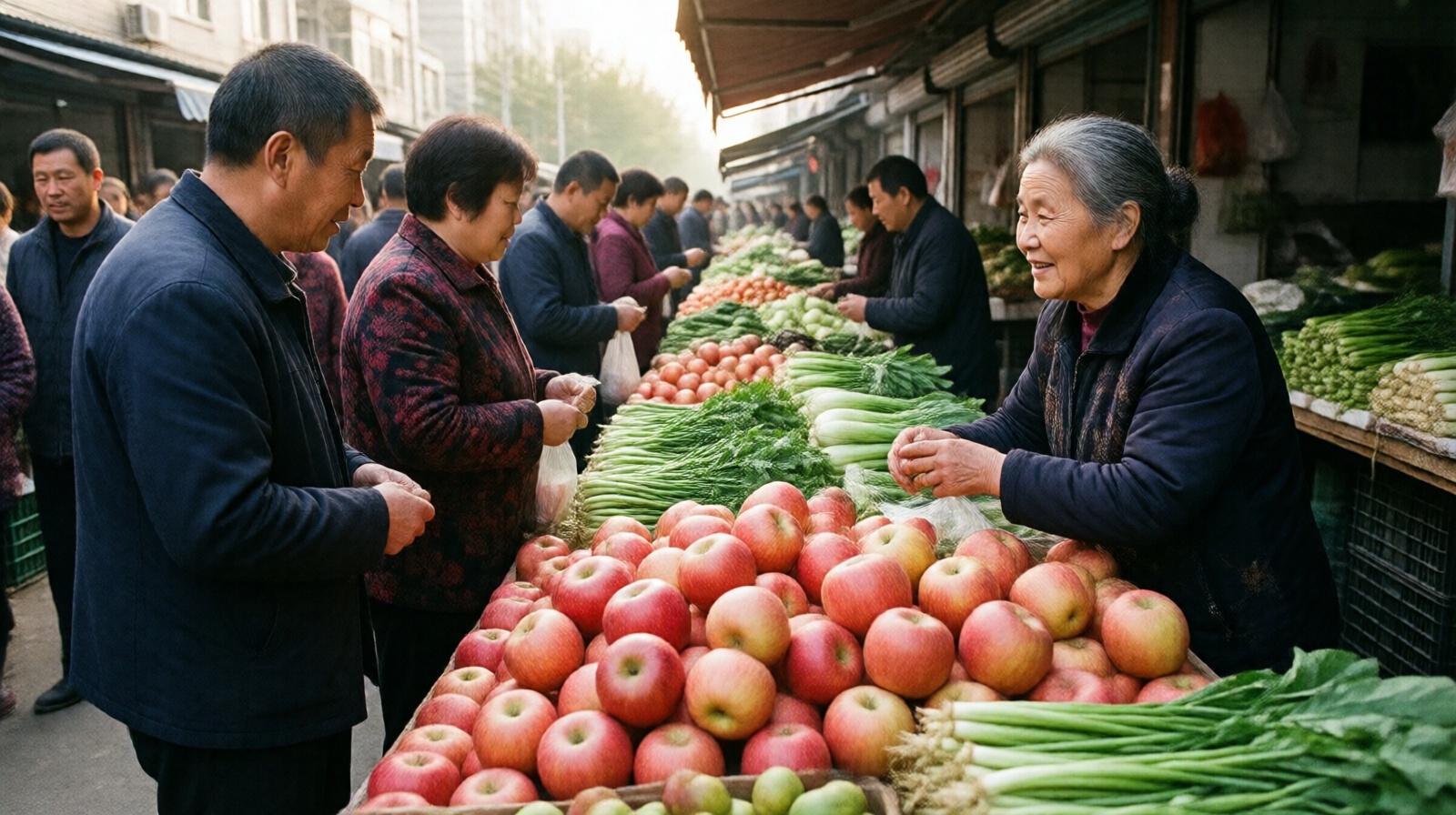
Information flows as freely as the food. News about job openings, housing rentals, and local gossip is exchanged over steaming bowls of noodle soup. For elderly residents who may feel isolated in modern high-rise apartments, the market provides a crucial daily social anchor.
Modern Shenyang
Shenyang is often remembered for its past as “The Factory of China.” But today, it is undergoing a quiet transformation. The morning markets reflect this duality. On one side, you see traditional stalls selling fresh vegetables from nearby rural counties. On the other, you see young people using smartphones to pay via WeChat or Alipay, scanning QR codes with practiced speed.
The city is investing in upgrading these spaces—improving drainage, adding public restrooms, and ensuring food safety inspections—without erasing their raw, authentic character. This balance between modernization and tradition is key to understanding contemporary China. It is not about replacing the old ways with shiny new malls, but integrating them into daily life.
Practical Guide for Visitors
If you visit Shenyang, do not skip the morning market. Here is how to navigate it like a local:
- Go Early: Arrive between 6:00 AM and 8:00 AM. By 9:00 AM, many popular stalls are closed.
- Dress Warmly: Wear layers. The cold is biting, especially when standing still while waiting for food.
- Pay Digitally: Cash is rarely used. Have WeChat Pay or Alipay set up on your phone. If you cannot use these, find a stall that accepts UnionPay cards or bring small amounts of cash (though this is becoming harder).
- Eat What You See: Don’t be afraid of the unknown. The stalls with the longest lines usually have the freshest food.
- Cultural Etiquette: Tipping is not practiced. Haggling is friendly, not aggressive. Smile; locals are generally curious and welcoming to foreigners who show interest in their culture.