

A Scent of Roasted Sesame and Sweetness
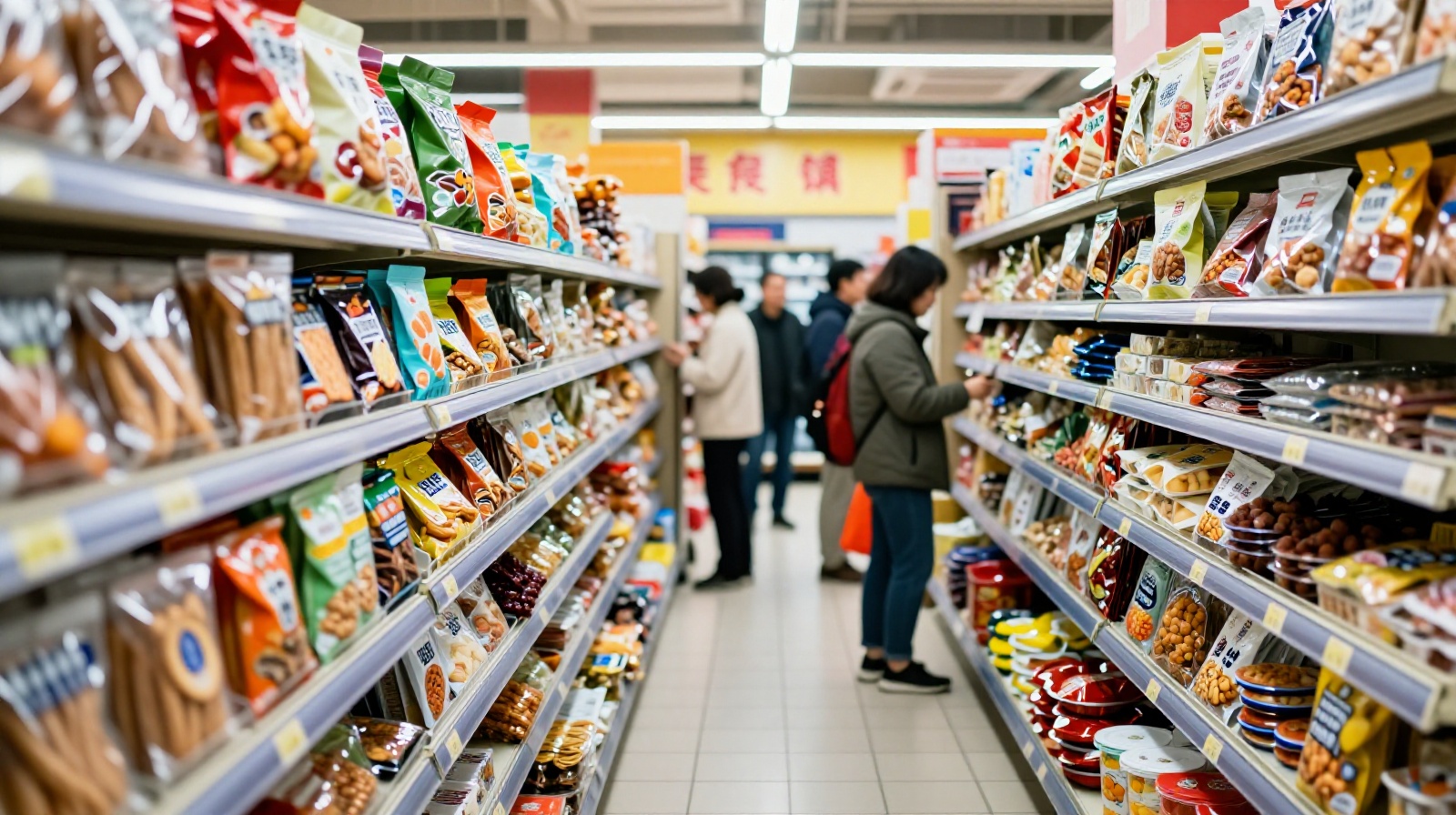
The air inside the Supermarket Fresh in Beijing’s Haidian District smells distinctively: a mix of roasted sesame, sweetened bean curd, and the faint plastic scent of new packaging. It is 6:15 PM on a Tuesday, just as office workers are flooding out of nearby glass towers. The fluorescent lights hum overhead, casting a sterile glow on aisles that stretch impossibly far.
Most Western visitors assume Chinese supermarkets operate like their local Walmart or Tesco—organized by category, with limited choices in each. They are wrong. Walk past the produce and meat sections, and you hit the wall: The Snack Aisle. It isn’t just a shelf; it is a multi-layered fortress of flavor.
More Than Just Chips and Cookies
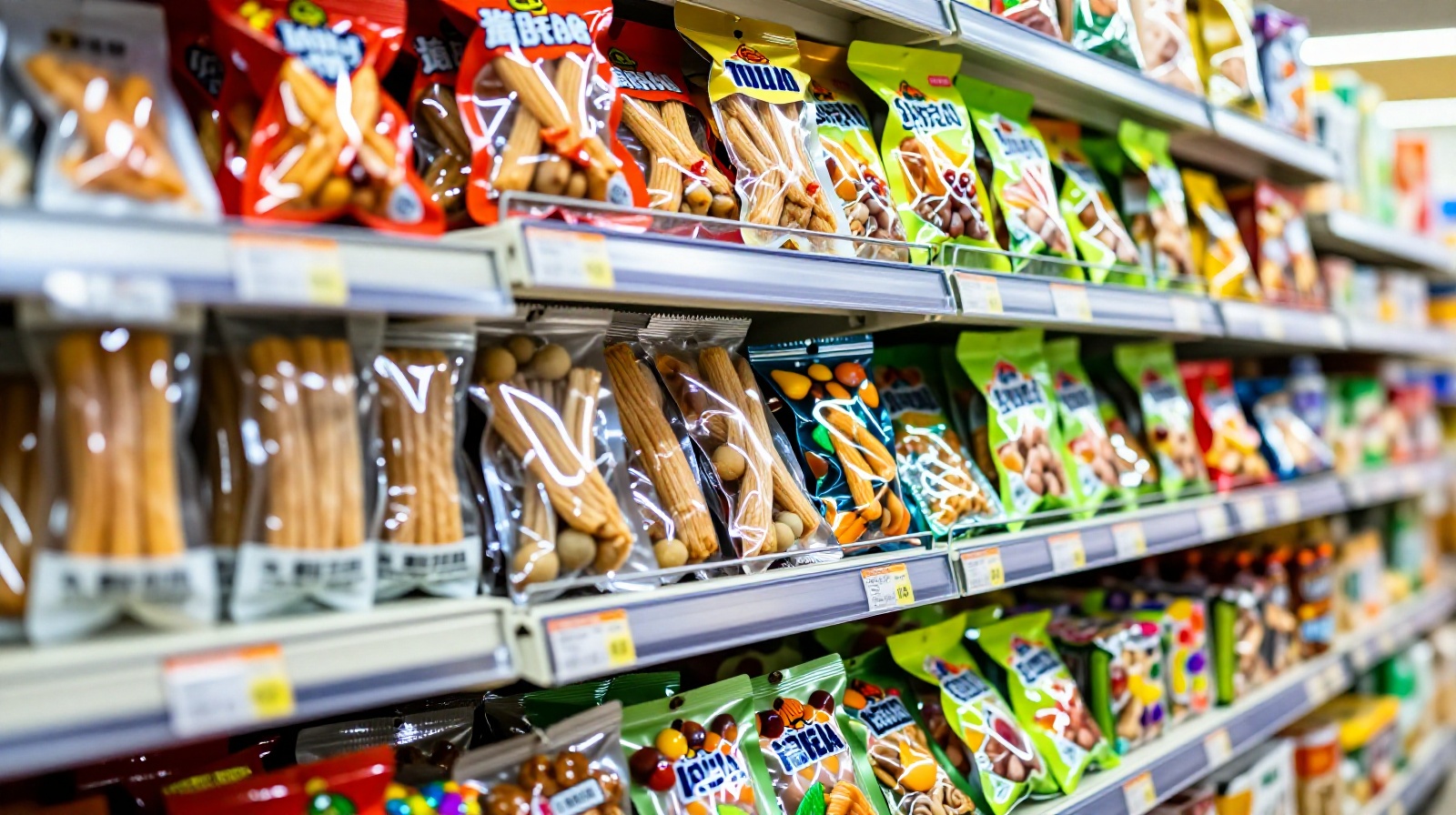
The sheer volume is staggering. In one section alone, there are over 300 SKUs (stock keeping units) visible. The categories don’t make sense to an outsider at first glance. You see traditional dried fruits like longan and lychee next to latiao (spicy gluten strips), a chewy, spicy snack that is a cultural phenomenon.
But the real madness lies in the “New Wave” section. Here, you find products that seem impossible outside of China. There are crab-flavored potato chips with actual roe bits, black sesame mochi filled with red bean paste, and yogurt-coated puffed corn that tastes like a cross between a cereal bar and a candy.
Take the “Spicy Hot Pot” flavored crackers from the brand Sunflakes. They are covered in a fine powder of chili oil and Sichuan peppercorn. It’s not just spicy; it’s numbing. Next to them, a box of Milk Tea cookies features distinct flavors like Brown Sugar Pearls and Jasmine Tea—ingredients that define modern Chinese breakfasts but rarely appear in Western biscuits.
The Logic Behind the Chaos: Speed and Socializing
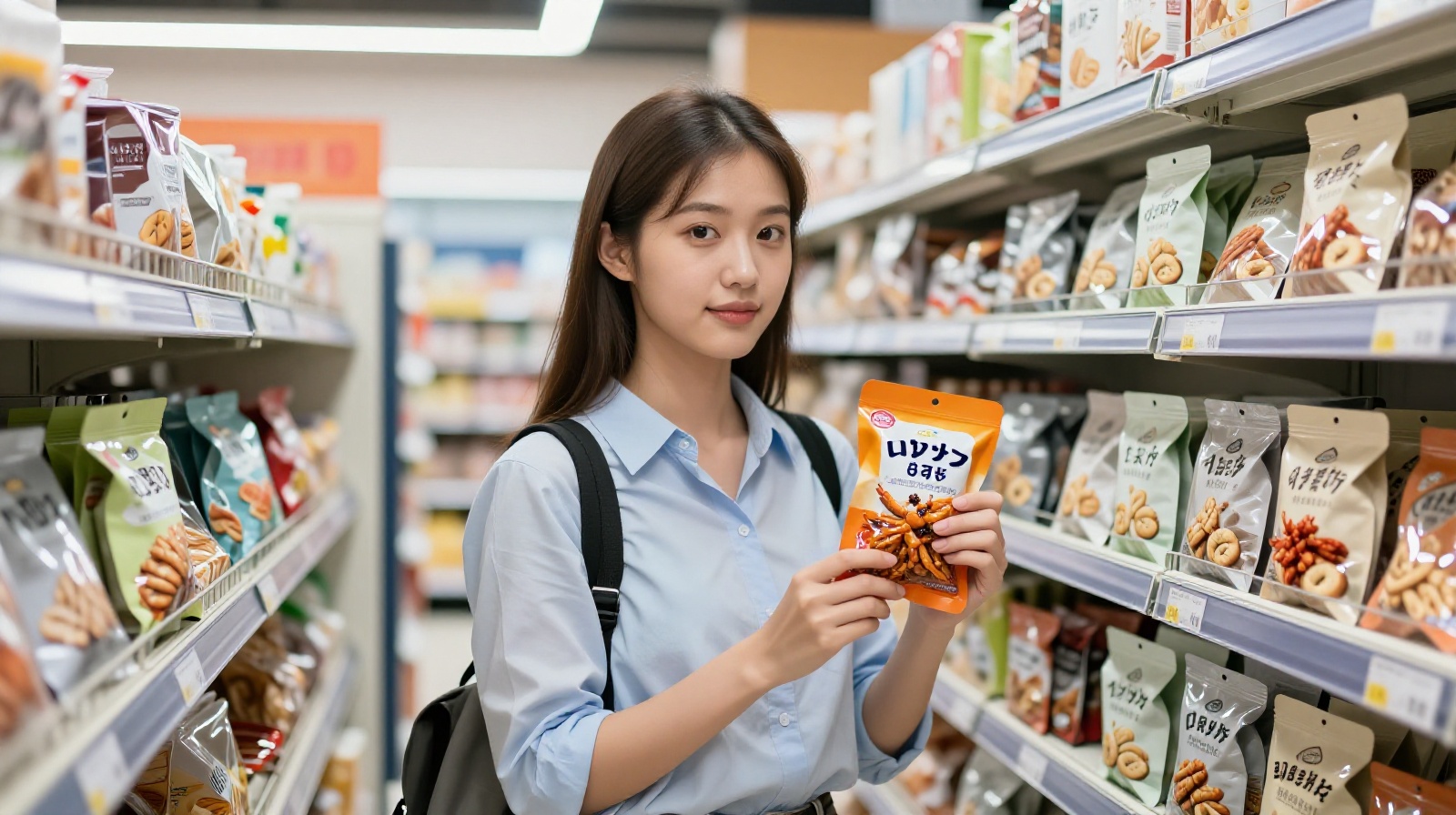
I stopped to ask Liu Mei, a 28-year-old software engineer buying dinner for her family, why she spends so much time here. “It’s not just about hunger,” she explains, holding up a small packet of spicy squid snacks. “These are quick. I eat one on the subway. It’s my break. And when I go out with friends, we buy bags to share.”
For Liu Mei and millions like her, snacks are fuel for a fast-paced life. The packaging is designed for portability—single-serve packets that fit in a pocket or purse. But there is also a deep social component. In China, snacking isn’t just solitary; it’s communal.
The shelves reflect this. You see large family packs of nuts and dried fruit, often decorated with red ribbons for good luck, sitting alongside tiny, colorful single-serve treats perfect for office parties or late-night study sessions at university dorms. The price point is incredibly low—a whole bag of premium seaweed snacks might cost less than a dollar, making impulse buying easy.
Innovation at Breakneck Speed
What makes this aisle truly unique compared to the US or Europe is the speed of iteration. In Western supermarkets, a new flavor might take years to develop and test. Here, if a trend starts on Douyin (Chinese TikTok) today—say, a specific type of spicy tofu snack—the shelves will be stocked with it within two weeks.
Brands are constantly experimenting with textures and flavors that challenge the palate. You’ll find savory snacks that taste like soup or desserts that incorporate savory elements like cheese and pickles. It is a culinary playground where risk-taking is rewarded by immediate consumer feedback.
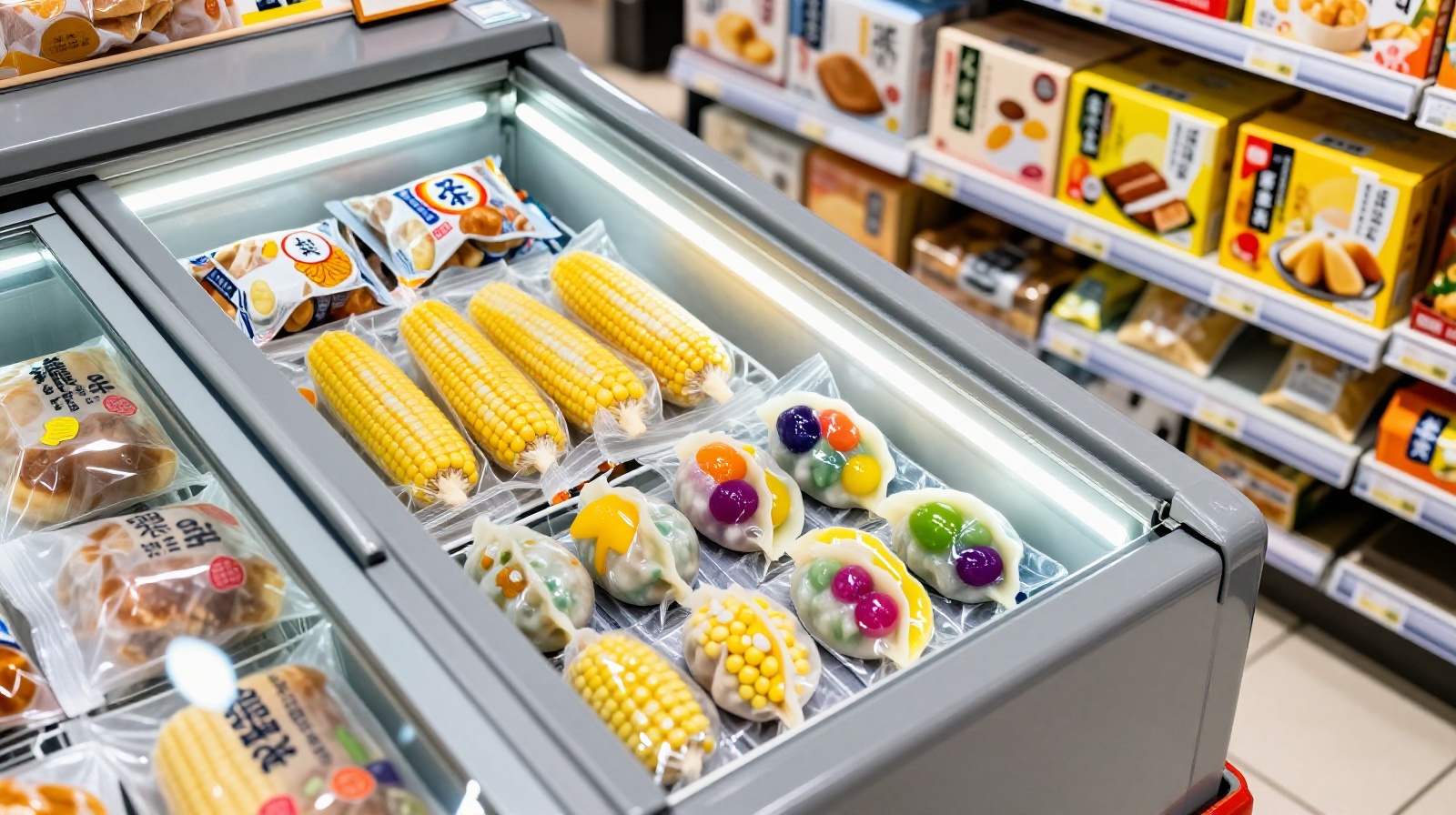
The “Import-Local” hybrid is another fascinating layer. Look for Japanese-style melon bread with Chinese tea flavors, or Korean corn dogs reimagined as bite-sized, frozen treats sold in the freezer aisle right next to the fresh snacks. The supply chain is so efficient that global trends are localized overnight.
More Than Just a Snack
Walking out of this supermarket, Liu Mei’s cart is half full of snacks she didn’t plan to buy. It’s not a lack of discipline; it’s the environment. The snack aisle in China is a reflection of a society that values speed, variety, and shared experiences.
It’s a place where tradition meets futurism, where a bowl of hot pot flavor can be turned into a dry cracker, and where the cost of joy is often less than the price of a coffee. For anyone looking to understand modern China, start here: not in the stock market or the tech labs, but in the chaotic, colorful, and deliciously crazy snack aisle of your local neighborhood supermarket.