

One Morning in a Hotel Room
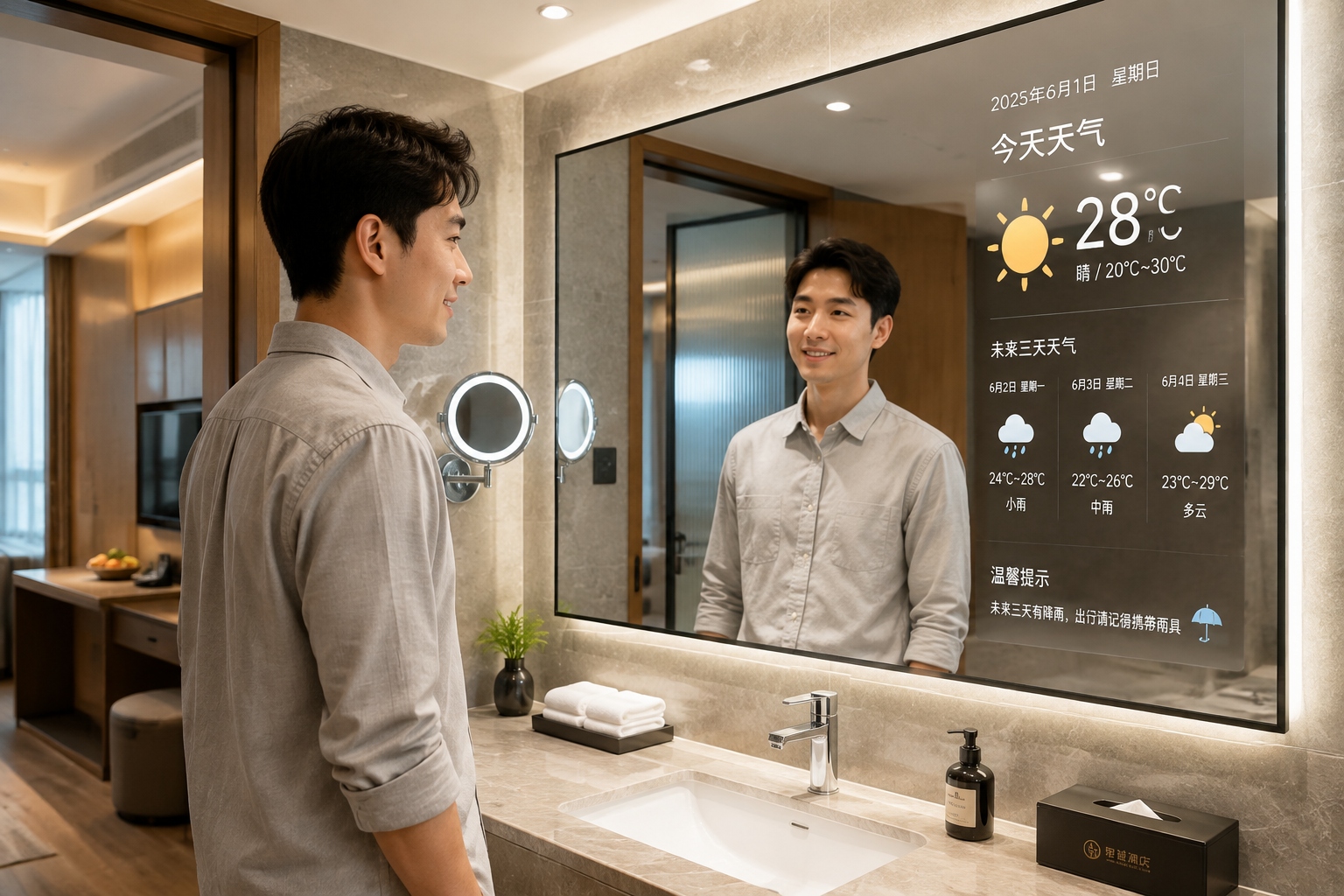
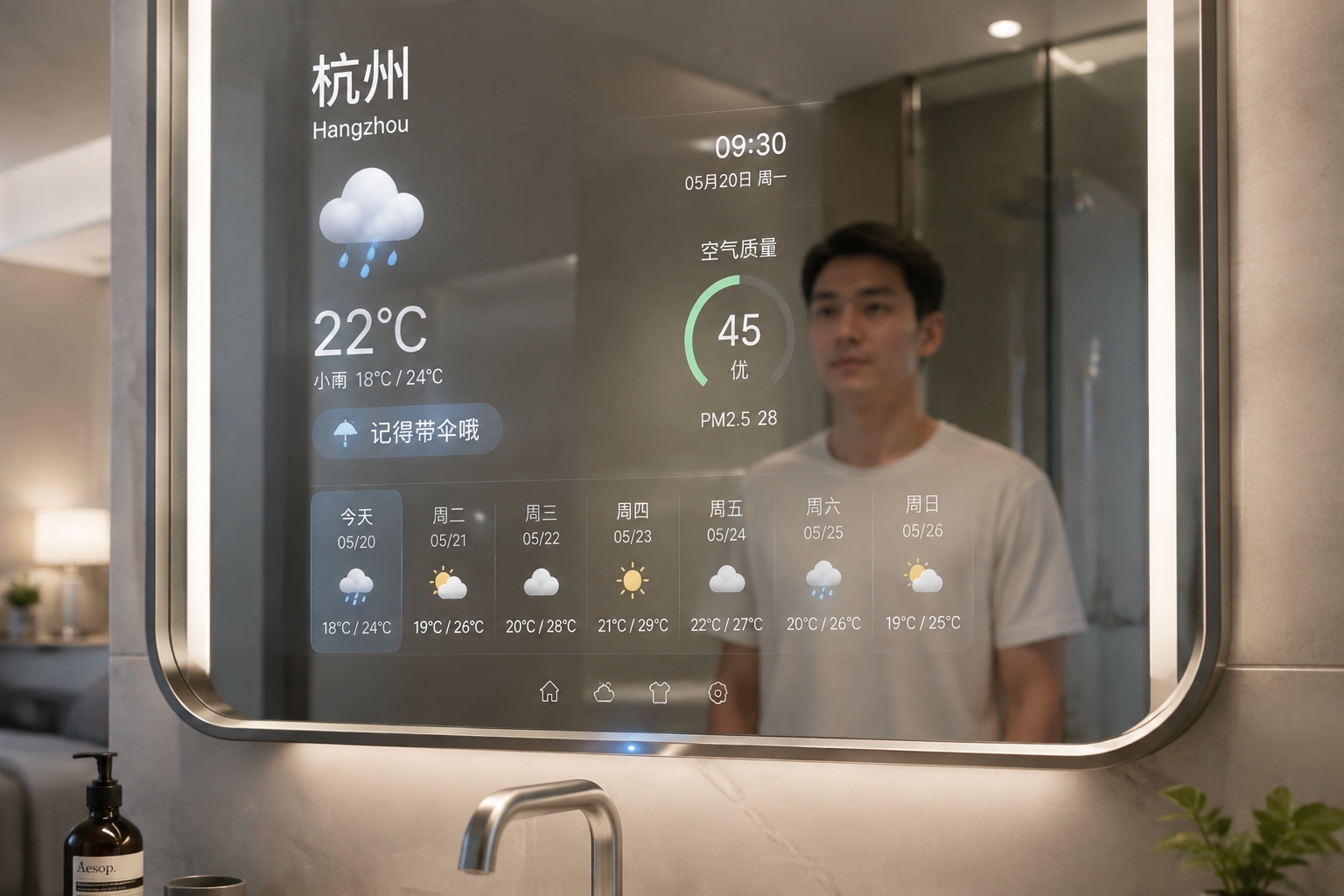
I pressed my finger against the bathroom mirror to wipe away a drop of toothpaste. The mirror didn’t just show my reflection — it glowed, showing a gentle blue weather map with the day’s forecast: 22°C, light rain in the afternoon, air quality index 42. It also said, “Don’t forget your umbrella.” I had only checked in ten minutes earlier, and now a mirror was talking to me.
That moment was a small glimpse of how technology is woven into everyday travel in China. The smart mirror is not a gimmick for tourists. It’s a practical tool that many locals have come to expect. To understand what it is and why it became popular, I spent two days testing one in a hotel room and talking to the people behind it.
The Mirror That Does More Than Reflect
This wasn’t a futuristic concept hotel in Shanghai’s tech district. It was a mid-range business hotel in Hangzhou, a city about an hour from Shanghai by high-speed train. The smart mirror is becoming a standard feature in many Chinese hotels, especially those that cater to younger travelers.
Wake up, and the mirror shows the weather, the news headlines, your flight status if you’ve linked your booking. It can also control the curtains, the lights, and even the shower temperature. Some models let you cast your phone’s screen to the mirror, so you can watch a video or check your social media while brushing your teeth.
How does it work? The mirror is essentially a waterproof display with a built-in processor and sensors. It connects to the room’s smart control system via the hotel’s Wi-Fi network. When you talk to it, you’re actually talking to a voice assistant that understands Chinese and some English. The interface is designed to disappear when you’re not using it, so it looks like an ordinary mirror most of the time.
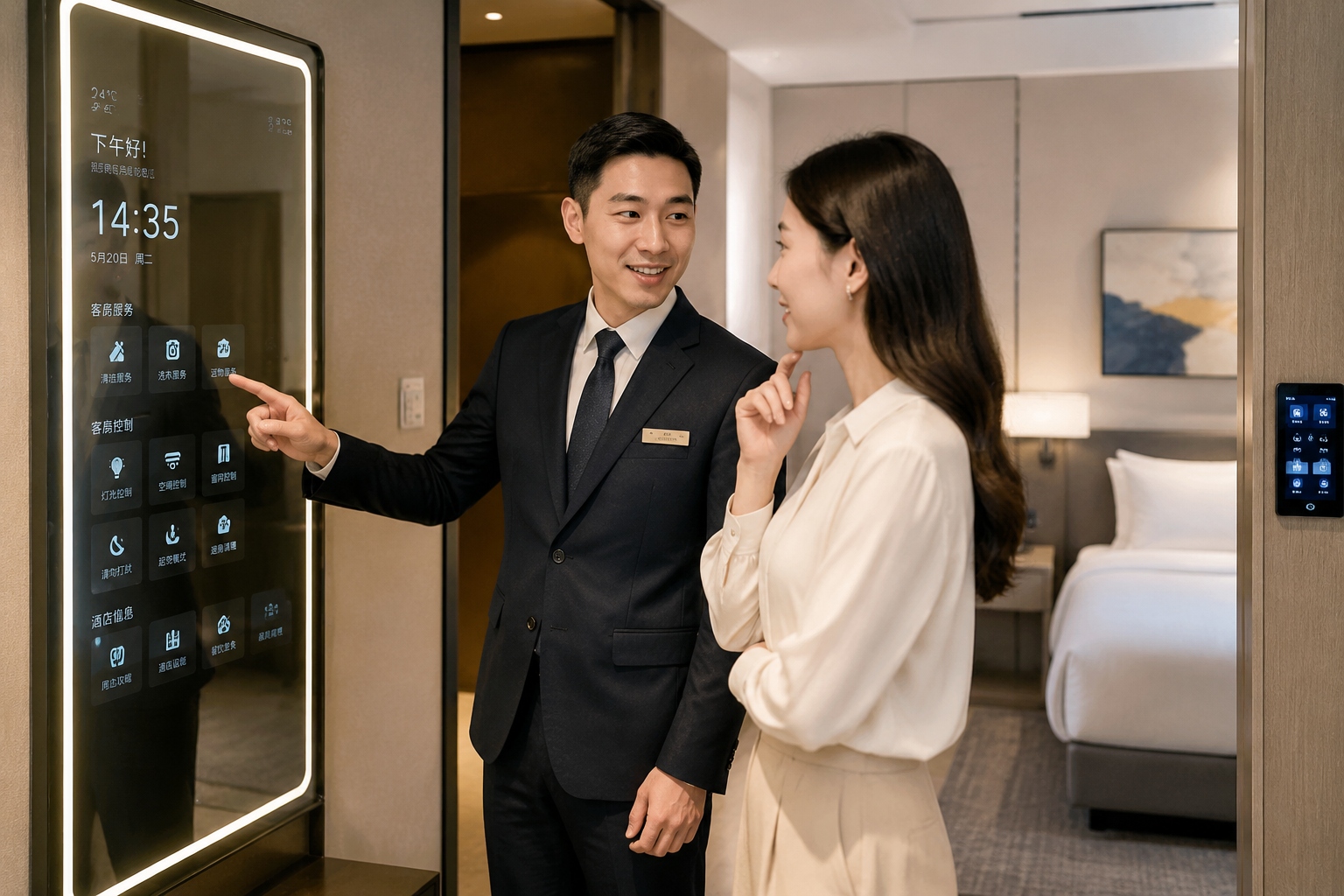
The mirror I used responded to voice commands like “Hello, mirror” to wake it up, and “Turn off the light” to control the room. It also responded to touch. The interface is simple, with large icons and fonts, because hotel guests might be too sleepy to fiddle with complex menus.
Why Hotels Are Adopting This Tech
For hotel chains, smart mirrors are part of a broader push to upgrade the “smart room” experience. Guests spend a lot of time in the bathroom in the morning, so it’s one of the most effective places to provide useful information.
I spoke with Liu Wei, operations manager at the hotel. “When we installed these mirrors last year, we expected a short-term novelty effect,” he told me. “But guest satisfaction scores for the rooms have gone up by 15 percent. Many guests mention the mirror in their online reviews. Some families book the room just because of it.”
The mirrors also help with operations. Because they’re connected to the hotel’s management system, the housekeeping team can see if a room is occupied and adjust cleaning schedules. In some hotels, the mirror can even display the hotel’s restaurant menu and allow guests to order breakfast directly.
Cost is still a factor. A high-end smart mirror can cost around 5,000 to 10,000 yuan (about $700 to $1,400). That’s not cheap, but for a hotel with several hundred rooms, the investment can be recouped through slightly higher room rates and better reviews. Liu Wei says the maintenance cost is lower than he expected: “The hardware has been reliable. We update the software remotely, just like updating a phone.”
Another reason for the rapid adoption is government support for “smart tourism.” Many cities in China have launched initiatives to encourage hotels and scenic spots to adopt digital technology. This makes it easier for hotel owners to get subsidies or tax breaks for installing smart equipment.
The Everyday Internet of Things
What surprised me most wasn’t the technology itself, but how normal it felt. I’m not a tech person. I just wanted a shower and to know if it was going to rain. The mirror answered both without any instruction manual.
This is a good example of how the Internet of Things (IoT) is quietly entering daily life in China. In fact, the smart mirror is just one small part of a larger ecosystem. Many Chinese homes now have smart speakers that control air conditioners, smart refrigerators that remind you when milk is about to expire, and smart door locks that you open with your fingerprint.
What makes this different from the smart home devices available in other countries? One big factor is integration. In China, several major tech companies provide platforms that allow devices from different brands to work together. So the same app that controls your phone can control your hotel room, your apartment, and your car.
Another factor is cost. Chinese manufacturers are producing sensors and displays cheaply and in huge quantities. This means what was once a luxury feature is now available in a mid-priced hotel. The price per room is falling every year.
It’s also a generational thing. Many Chinese travelers in their twenties and thirties grew up with smartphones and voice assistants. For them, talking to a mirror is no weirder than talking to a phone. In fact, a 2023 survey by a travel platform found that 60% of Chinese travelers said they would choose a hotel with smart technology over one without, even if it costs a bit more.
Privacy and Practical Concerns
Of course, not everyone feels comfortable with a mirror that watches and listens. The smart mirror has a microphone, and some models have a camera. In the hotel, I noticed a small sticker on the mirror saying that the camera is disabled by default and that the microphone only activates when the wake word is said. Still, privacy concerns are real.
Hotel managers say they take these concerns seriously. “We disable all cameras in the rooms,” Liu Wei explained. “The mirror in the bathroom has no camera at all. It’s just a display and a microphone. We tell guests this in the room instructions.” He added that the voice data is processed locally on the device, not stored on a cloud server, which is a standard practice for such devices.
For international visitors, the key is to be informed. If you’re worried about privacy, you can disconnect the mirror from the network by pressing a button in the hotel’s control panel. Or you can simply unplug it. But that would be a pity, because the mirror is genuinely useful.
What It Means for Travelers
If you’re traveling to China, you don’t need to look for a “smart hotel.” It’s increasingly common in regular business hotels. When you book, check if the room description mentions “智能客房” (smart room) or “语音控制” (voice control). You might find that the room adjusts its own lighting when you enter, the curtains open automatically with your voice, and the mirror gives you a brief weather briefing while you wash your face.
That said, the experience can vary. Some hotels have simple mirrors that just show time and weather. Others have full interactive screens. It’s worth reading recent guest reviews to see what actually works.
The Mirror and the Future
Standing there, watching the mirror switch from the weather to a video of a swimming fish when it wasn’t in use, I thought about how much has changed in a decade. Ten years ago, a hotel room in China typically had a TV, a telephone, and a paper binder with hotel information. Now, the mirror can do all of that and more.
But the real promise isn’t just about mirrors. It’s about the idea that technology can give us a little more time and comfort. I never had to search for a weather app. I never had to guess if the room temperature was right. The room simply responded to me.
As I packed my bag, I asked the mirror one last question: “What’s the traffic like to the train station?” It paused for a second and said, “About 25 minutes by taxi. There’s a slight delay on the main road, so you might want to leave 10 minutes earlier.” I nodded, thanked the mirror, and left. It felt strangely polite.
Start the discussion at forum.chinacomes.com