

A Strike, Then a Split
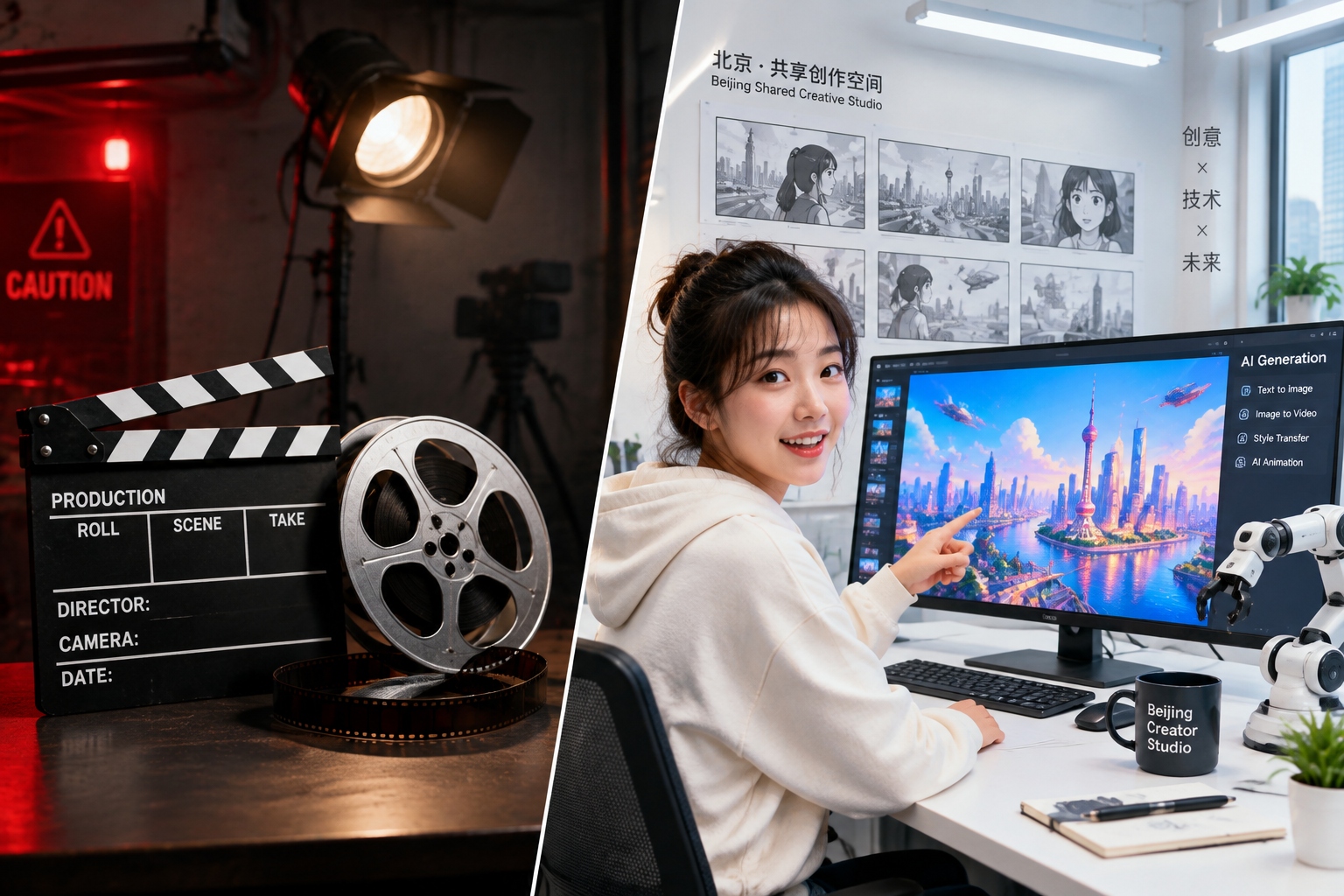
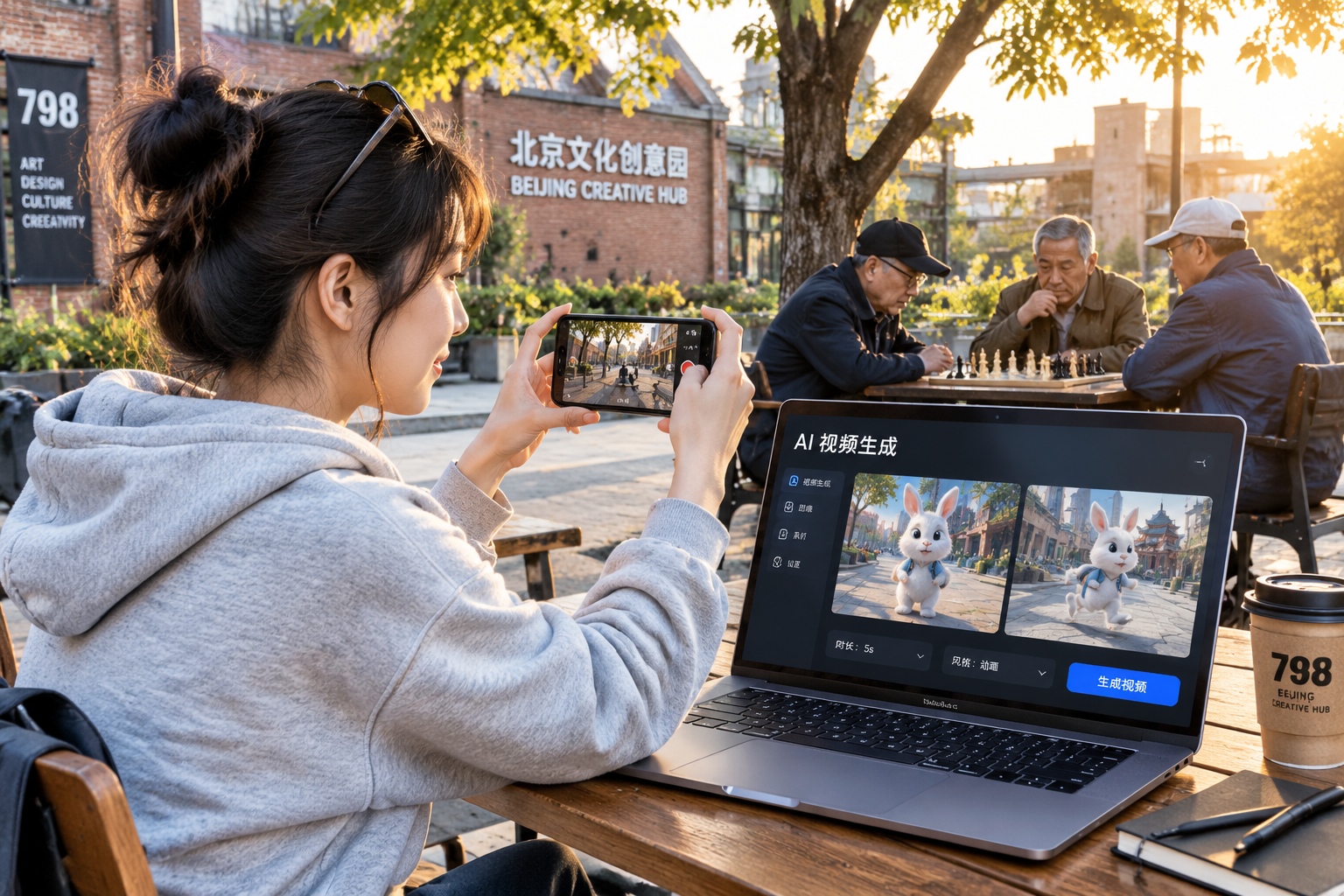
In May 2023, picketers walked the pavement outside Paramount Studios in Los Angeles. Among their signs was a simple warning: “AI will never tell our stories.” The Writers Guild of America had called the strike partly over fears that studios would use generative AI to replace screenwriters. Months later, in Beijing, a young animator named Zhou Yue was not on any picket line. She was sitting in a shared studio near the Chaoyang district, staring at a laptop screen. On that screen, a rough video clip of a rabbit walking through a bamboo forest was being generated by an open-source text-to-video model. “Two years ago, this shot would have taken us a week in Maya,” she said. “Now it takes half an hour, and we can iterate ten versions before lunch.”
That contrast is not a small anecdote. It captures a structural divergence. Hollywood, the world’s oldest and most powerful film industry, is bracing itself against generative AI as an existential threat. Meanwhile, in China, the same technology is being adopted by a younger, hungrier generation of creators who never had access to the old system. The result is two very different roads: one paved with fear, regulation, and legal action; the other with pilot programs, low-cost production, and state-supported experimentation.
Hollywood’s Fear: Copyright, Jobs, and Control
To understand Hollywood’s fear, you need to know the economics of the industry. A typical studio film has a budget between $50 million and $200 million. That money pays for screenwriters, actors, grips, set builders, visual effects teams, and thousands of contractors. Union contracts protect these jobs. But generative AI threatens every layer. Why pay a screenwriter $200,000 to rewrite a script when a language model can generate a draft in seconds? Why hire a VFX studio to render explosions when an AI video tool can create them with a prompt?
The 2023 strike was only the beginning. In 2024, the California legislature passed several bills restricting the use of AI replicas of actors and requiring consent for digital doubles. Hollywood studios, including Disney and Warner Bros, have set up dedicated AI task forces, but their public stance remains cautious. Their biggest battle is over copyright: if a model is trained on a database of images and screenplays, who owns the output? Courts are still deciding.
But fear is not just about money. It is also about control. The film industry is built on a star system and a studio hierarchy. A director like Christopher Nolan spends years perfecting a script. A celebrated cinematographer like Roger Deakins designs every frame. Generative AI, by allowing anyone to produce cinematic video, flattens that hierarchy. It makes authorship diffuse. That is deeply uncomfortable for an industry that has spent a century defending the romantic idea of the “auteur.”
China’s Experiment: From Animated Shorts to Virtual Production
China’s film industry has never had a Hollywood-style labor union system. The state-run film studios, which once controlled all production, have long given way to private companies and platforms. But the barriers to entry were still high in 2019: a decent short film could cost millions of yuan, and distribution was controlled by a handful of platforms.
Generative AI changed the math. In 2023, when Sora was still an unreleased demo, Chinese tech companies were already shipping their own text-to-video models, including Zhipu’s CogVideo, Alibaba’s Wanxiang, and later Kuaishou’s Kling. These tools were not just cheaper than Western counterparts; they were more accessible. Most Chinese AI video generators offer free tiers or charging per minute, often less than 10 yuan (about $1.40).
The result is a burst of experimental production. In 2024, the National Film Administration announced a support program for “AI film pilots,” funding dozens of short films that used generative AI for pre-visualization or full shot production. One of the earliest big productions to adopt this technology was the costume drama “Flourished Peony,” which used AI to test colors, set designs, and camera angles before the actual shoot. Another lighter example is the short film “The Future of Xiali,” made by a team of graduates from the Beijing Film Academy. They generated entire sequences of a dystopian city using Kling, and the film was shown at a local festival.
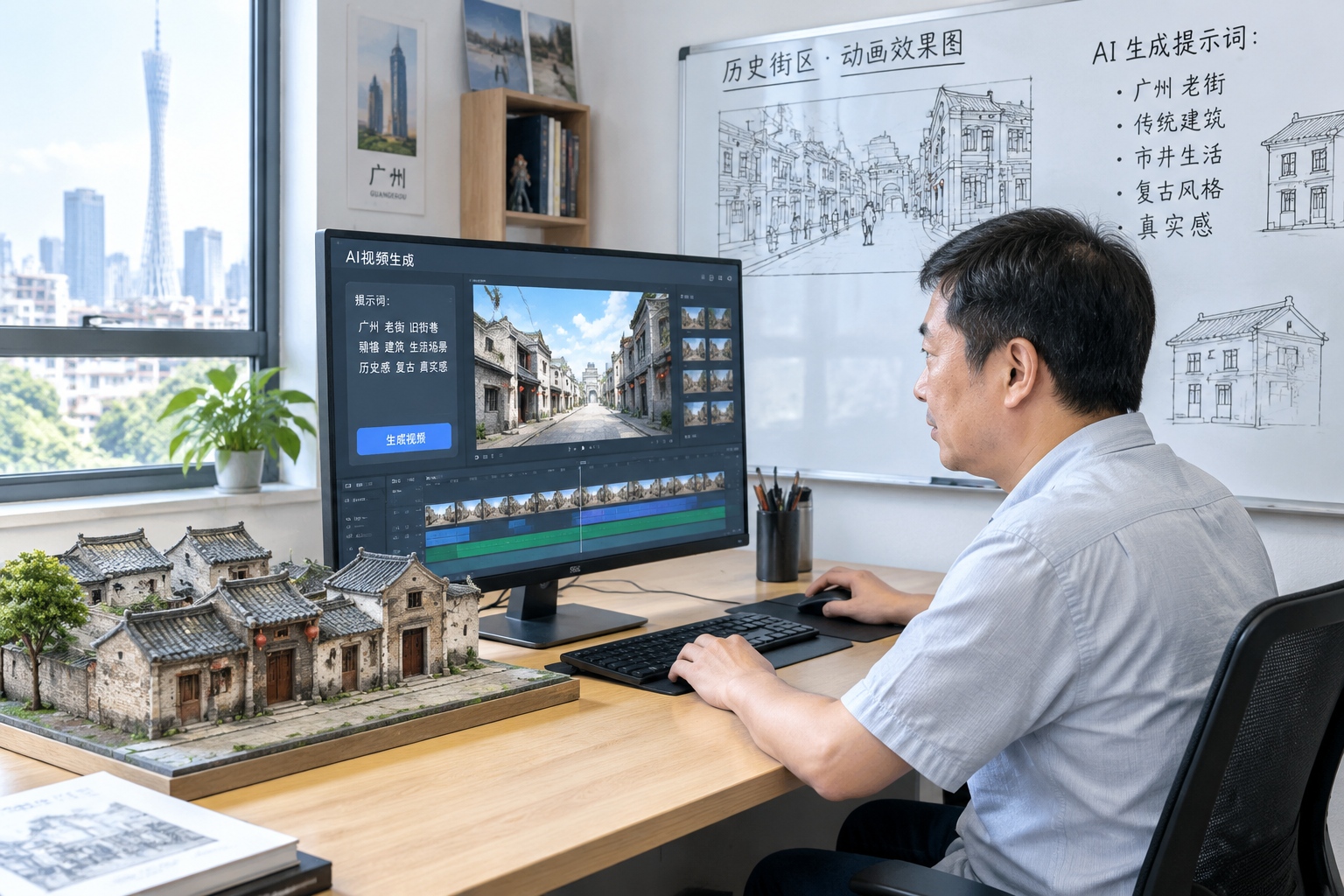
But the more striking experiments are happening on the fringes, away from festival red carpets. In Guangzhou, a retired factory worker named Li Wei learned to use iFlytek’s video tool to make short clips about his neighborhood. “I use it to tell stories about the old buildings before they get demolished,” he said. His account has 10,000 followers on Douyin. None of this would be possible without AI tools that convert his rough drawings and narration into moving images.
Why They Diverged: Industrial Ecology and Market Demand
The two paths are not just about technology adoption. They reflect deeper differences in how the industries are organized and what audiences expect.
In Hollywood, the industry is a closed system protected by powerful unions and intellectual property law. The AI’s training data is a massive unresolved legal question. Studios accumulate “content libraries” worth billions, and they are afraid AI might devalue their archives. The state also has a different role: the U.S. government is unlikely to fund AI film projects, leaving companies to navigate lawsuits and labor contracts.
China’s film industry is younger, less unionized, and more open to digital experimentation. The Chinese government has been actively promoting AI in cultural industries, treating it as a matter of national competitiveness. In 2024, the National Radio and Television Administration issued guidelines encouraging broadcasters and streaming platforms to use “intelligent production” tools. State funding, though not massive, is available for research and pilot projects.
Market demand also differs. Chinese audiences have a huge appetite for short-form video: Douyin alone has over 600 million daily active users. Vertical, fast-paced content made with AI tools is not considered a threat to “real cinema” but rather a new format that feeds an existing ecosystem. In Hollywood, movies are still the main event, and streaming is a side business. In China, the line between film, web series, and short video is blurry. A person who makes a 10-minute AI-generated drama for Douyin is considered a content creator, not a strike-breaking scab.
A New Player: Young Creators and the Power of Ordinary People
Perhaps the most significant development in China is who gets to tell stories. In the past, a film school degree, money, and connections were necessary. Now, a 20-year-old student in Chengdu can generate a sci-fi short with nothing more than a smartphone and a few hundred yuan in computing credits. The barrier is not capital but imagination.
Take the case of the “Citi in the Cloud” competition, held by a Chinese tech company in 2024. It called for creators to make urban-themed videos using AI tools. Among the winners was a young woman from rural Gansu province who had never made a film before. Her piece, titled “The City in the Desert,” was a dreamlike montage of glass towers rising from sand dunes. She said she used the AI to “paint my feelings about moving to the city.”
Educational institutions are also partnering with companies to open AI film courses. At the Communication University of China in Nanjing, a new curriculum teaches students to use generative AI as part of the storyboarding and previsualization process. Professors tell students that AI is not replacing the director but becoming a “co-pilot.”
This does not mean the quality is always high. Many AI-generated videos in China are derivative, clichéd, or technically messy. But the sheer volume of amateur experimentation creates a faster feedback loop. Errors are corrected in hours, not months. New techniques are shared in WeChat groups and on Bilibili tutorials.
Compatibility: Finding a Way to Live with AI
The road ahead is not a simple race between Hollywood and China. Each side will keep its own rhythm. Hollywood may push for restrictive laws, but it will also absorb AI into blockbuster production, quietly. China may experiment freely, but it will still need human storytellers to give those AI images meaning.
In 2025, a Chinese director with a debut feature at a major festival used AI to generate background crowd scenes, a task that would have required thousands of extras. Weeks earlier, another director in Los Angeles told a mirror interview that he refused to use AI for anything but simple clean-up, “to protect the craft.” Both are making legitimate choices. The question is not who will win, but how each industry will mutate the technology to serve its own values.
Back in Beijing, Zhou Yue is no longer just a short-film maker. She now has a small team of five people. They are using an AI pipeline to produce a 20-minute animated science fiction piece for a streaming platform. “When I started, people in my class thought AI was a joke,” she said. “Now they are asking me for tips.” She paused and looked at the screen where her digital rabbit was hopping through a city street. “I don’t know if we’re making a new cinema. But we are definitely making films that nobody could have made before.”
Start the discussion at forum.chinacomes.com