

A Metal Tray and a Fistful of Cumin
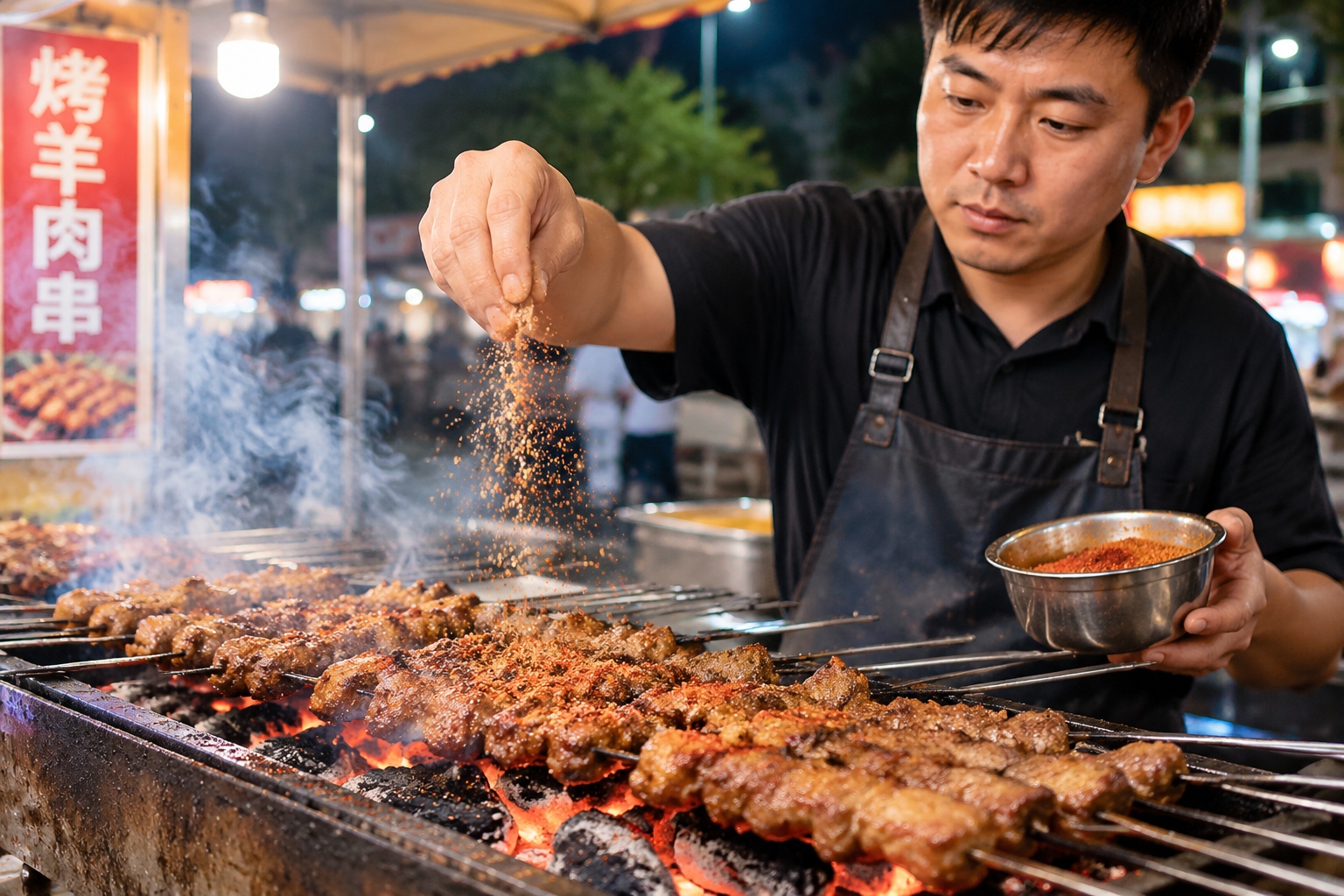
At a night stall in Chengdu, a cook in a black apron lifts a dozen lamb skewers off the charcoal and slides them onto a metal tray. No plate. No sauce. The only thing that lands on the meat is a fistful of cumin and chili powder, thrown on while the fat is still spitting. He says two words, hao le — done — and the tray goes across the counter. Ninety seconds later there is nothing left but the wooden sticks and a smell that stays on your jacket until morning.
If your idea of Chinese food was formed in a Cantonese restaurant in London or San Francisco, nothing about this meal fits. No steaming basket, no sweet and sour, no rice. Just bread, lamb, and a spice most Westerners associate with Indian or Mexican cooking.
That gap is worth understanding, because Xinjiang food is one of the clearest windows into how large and how layered China actually is.
Chinese Food Is Not One Food
Ask a Chinese friend what Chinese food means and they will probably name a province. Cantonese cooking in the south is steamed and lightly sweet. Sichuan cooking in the southwest is numbing and hot. Food from Jiangnan, around Shanghai, is braised and sugary. The country has a long habit of dividing its kitchens into regional schools, and none of them taste much alike.
Xinjiang sits in the far northwest — roughly a sixth of China’s land area, about 25 million people, and borders touching eight countries from Kazakhstan and Kyrgyzstan to Afghanistan and India. It rarely appears on the classic list of Chinese cuisines, which is exactly what makes it interesting. Its table looks less like Hangzhou and more like Samarkand, Tehran, or Istanbul.
Cumin, Chili, and Lamb: A Different Flavor Map
The single most recognizable note in Xinjiang cooking is cumin. In Mandarin it is ziran, a word borrowed from the region’s own Turkic and Persian vocabulary, and it is used the way Sichuan cooks use peppercorn: generously, constantly, without apology. Where Sichuan food numbs the mouth, Xinjiang food warms it. Chili is there, but usually plays second instrument.
Behind the cumin sits lamb — grilled, braised, steamed inside pastries, cooked into rice. Then onion, tomato, carrot, black pepper, dried chilies, and dairy: thick yogurt, milk tea, sometimes a fermented mare’s-milk-style drink. The staples are wheat, not rice.
How the Silk Road Ended Up on a Dinner Plate
Oasis towns like Kashgar and Turpan were where caravans stopped for water, and they have been mixing kitchens for two thousand years. Cumin travelled east from Persia and the Middle East. Wheat, the clay tandoor oven, and flatbread technique came from Central Asia. Lamb came from the steppe herders to the north. Chili arrived much later, after American peppers reached Asian ports in the sixteenth century and then slowly moved inland.
The result is a cuisine that reads as Central Asian or Middle Eastern to a Western palate, yet has been part of China for centuries. That is why a Xinjiang restaurant in a Chinese city feels like a small trip abroad — except the prices are in yuan and the payment is a phone screen.
Three Things to Order First
Naan, or nang
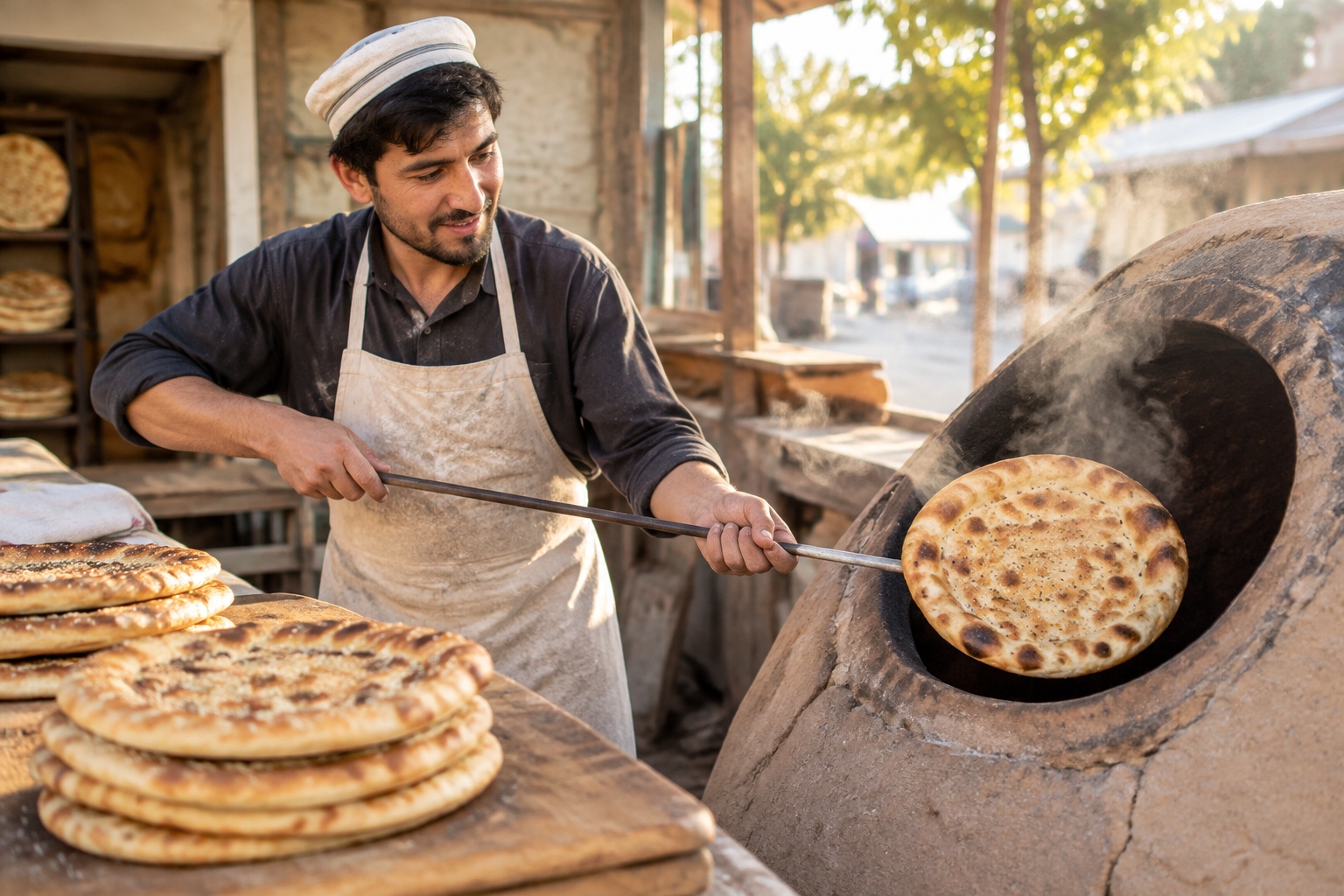
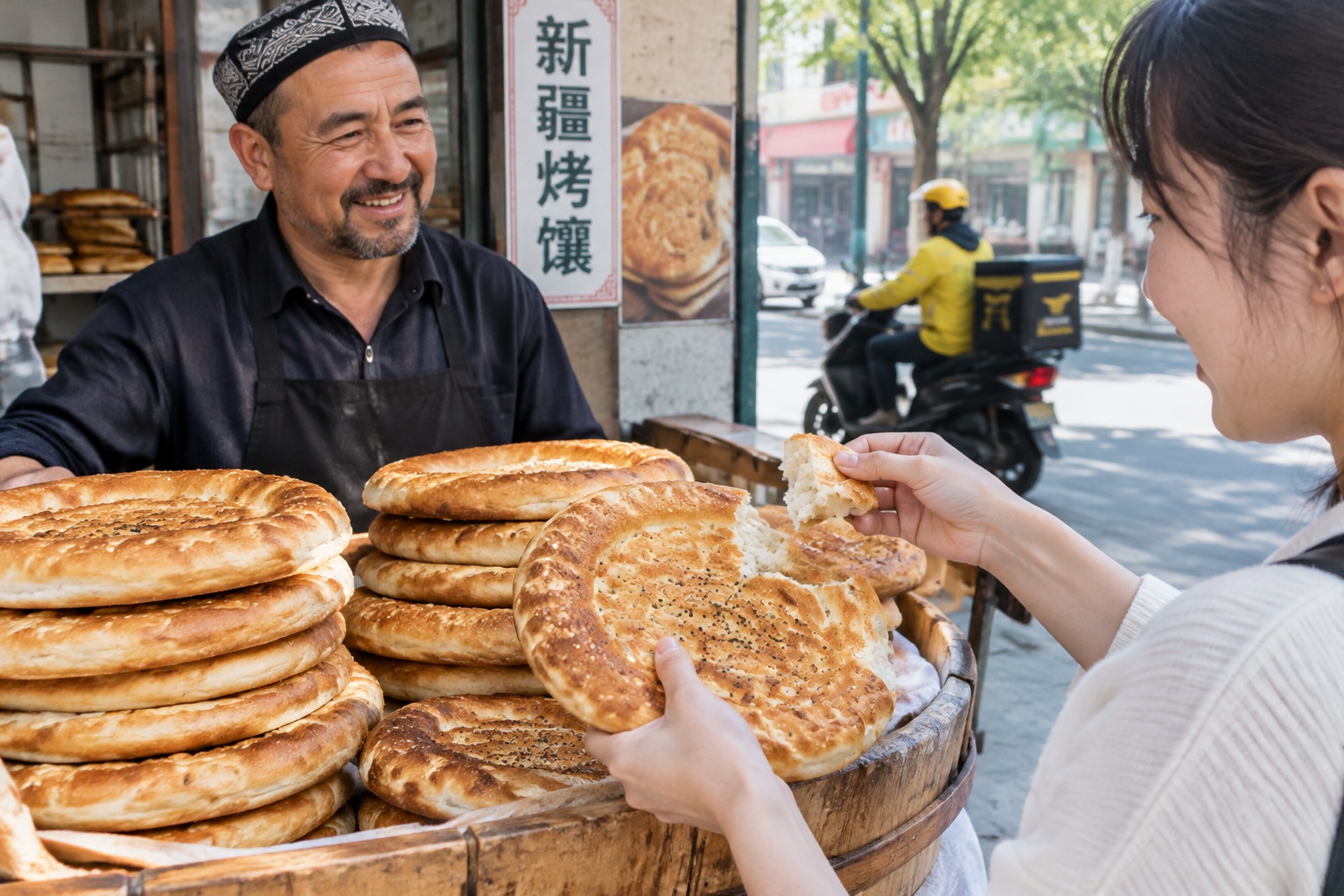
Not the soft Indian naan served beside curry. Xinjiang naan is a round, dimpled flatbread slapped against the inside wall of a clay oven called a tonur, then pulled out crisp and blistered. It comes in sizes from a saucer to a steering wheel, sometimes dusted with sesame or stuffed with lamb. Stalls sell it in stacks, it keeps for days, and it works as bread, plate, and spoon.
Lamb skewers, yangrou chuan
Three or four cubes of lamb on a thin metal or wooden stick, with a piece of fat-tail in the middle so the meat stays moist. Seasoning is usually cumin, chili, and salt; in Xinjiang itself, some cooks use salt only and let the lamb do the talking. Expect roughly 5 to 15 yuan per skewer depending on city and size, which means a filling dinner for two is often under 100 yuan.
Hand-pulled noodles, banmian or latiaozi
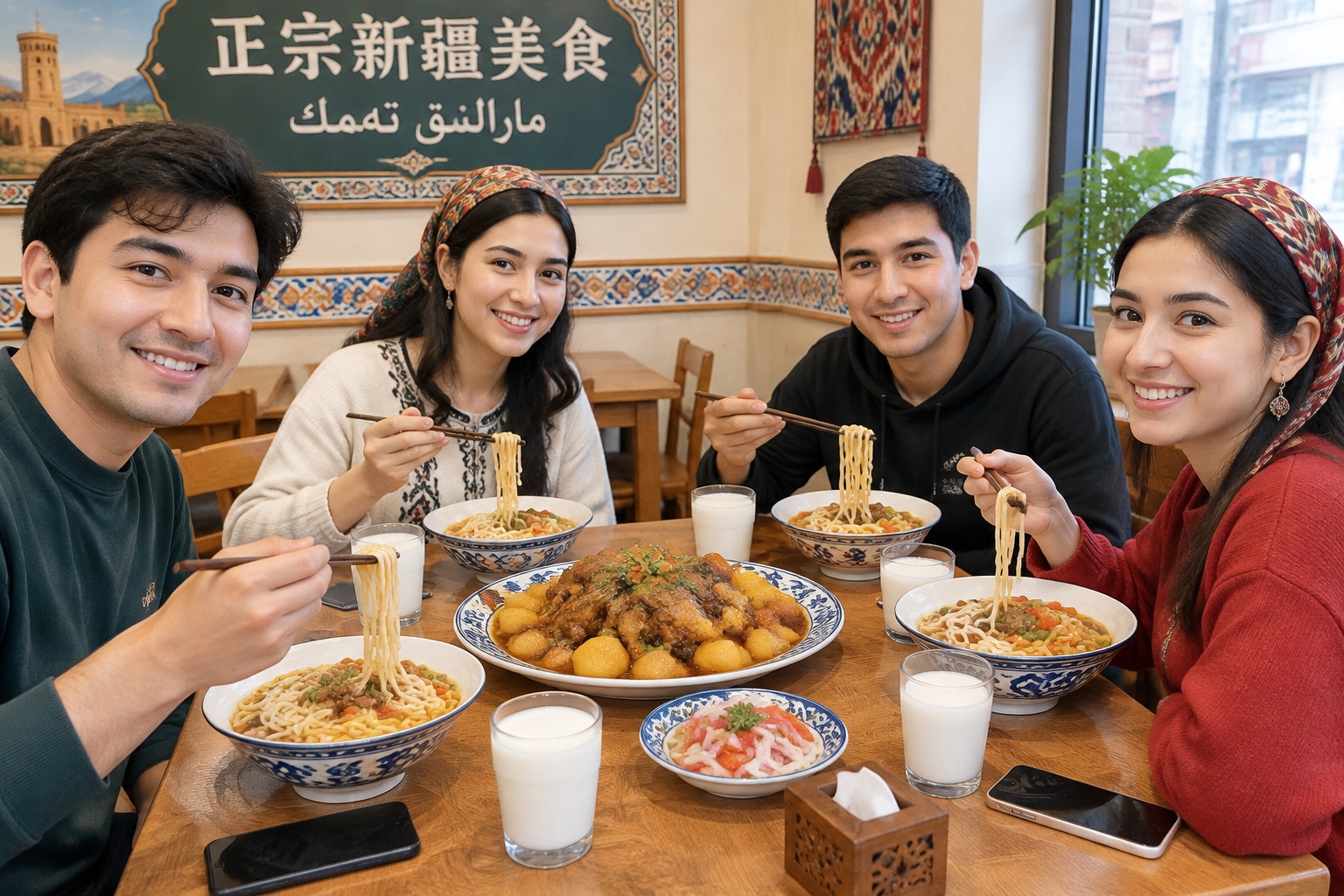
Thick, chewy wheat noodles pulled to order and topped with a stir-fry of lamb, peppers, tomato, and onion. This is the dish to order if you want a full meal rather than a snack, and it is the one most likely to remind a Western visitor of Italian pasta — though the sauce carries more cumin than oregano.
If you still have room, add dapanji, a big plate of chicken braised with potatoes and peppers and finished with wide belt noodles, or zhuafan, rice cooked with lamb, carrots, and raisins.
How a Skewer Dinner Actually Works
Skewers in China are not fast food. They are a slow evening. You sit on a plastic stool at a pavement table, order by the ten, and keep ordering as the night goes on. Beer arrives in small bottles. Someone always says ten more and someone else always agrees. A good stall stays busy until two in the morning and nobody hurries you out.
Compare that with the kebab shop on a European high street, where the food is fast, vertical, and eaten standing up on the way home. Same animal, same spice family, completely different social function.
If You Come From Europe or America
A few things will feel familiar, and a few will not.
The bread will surprise you. Naan is not a side dish — it is the utensil. You tear a piece, fold it around meat, and use it to mop the juice at the bottom of the plate. Ordering a second one is normal.
The ordering unit will surprise you too. Nobody orders one skewer. Ten is a starter.
Paying will feel familiar only if you have been in China for a while: the bill is settled by scanning a QR code with WeChat or Alipay, and many small stalls barely keep cash anymore.
Look for the green qingzhen sign, which marks a halal kitchen. It means no pork and no alcohol in the cooking, and it is a reliable marker of a family-run Uyghur or Hui restaurant. Many are staffed by relatives from a single town, and you may hear Uyghur, Mandarin, and a little English at the same counter.
On heat: if you cannot take it, say shao la — less chili — when you order. The cumin you cannot escape, and you should not want to.
Why It Travels So Far Beyond Xinjiang
Xinjiang food is now ordinary street food across the country. In almost any Chinese city above a million people you can find naan stacked in a shop window and a charcoal grill going after dark. Delivery apps list lamb skewers next to bubble tea. Xinjiang-style stir-fried rice noodles turned into a genuine social-media trend a few years ago, with queues outside shops in cities that have no Xinjiang community at all.
The reasons are practical. It is cheap, fast, filling, and halal, which makes it work for China’s Muslim diners, for students, for night-shift workers, and for anyone leaving a bar at midnight. Most customers in Shanghai or Wuhan are Han Chinese. This is food that crosses lines other conversations struggle to cross.
What a Plate of Noodles Does Not Explain
It would be dishonest to pretend food is the whole story. Xinjiang is one of the most discussed and most contested regions in China, and the arguments around it are complicated, political, and far outside the scope of a dinner. A street stall should not be asked to answer them.
What is observable is smaller and more human. On a Tuesday night in a city three thousand kilometres from Kashgar, a table of strangers will share a plate of noodles, argue over the last skewer, and pay with their phones. That is not a resolution. It is just a meal — and it is real.
Practical Notes
Go hungry and order less than you think, then order again. Ask for shao la if you are sensitive to heat. Drink the yogurt drink or the salty milk tea rather than cola. Budget 50 to 120 yuan per person for a full meal. And if you are in Xinjiang itself, in Kashgar or Urumqi, the same dishes cost less and, by most accounts, taste even better.
Start the discussion at forum.chinacomes.com