
4 a.m., Winter Chill on the Mountain
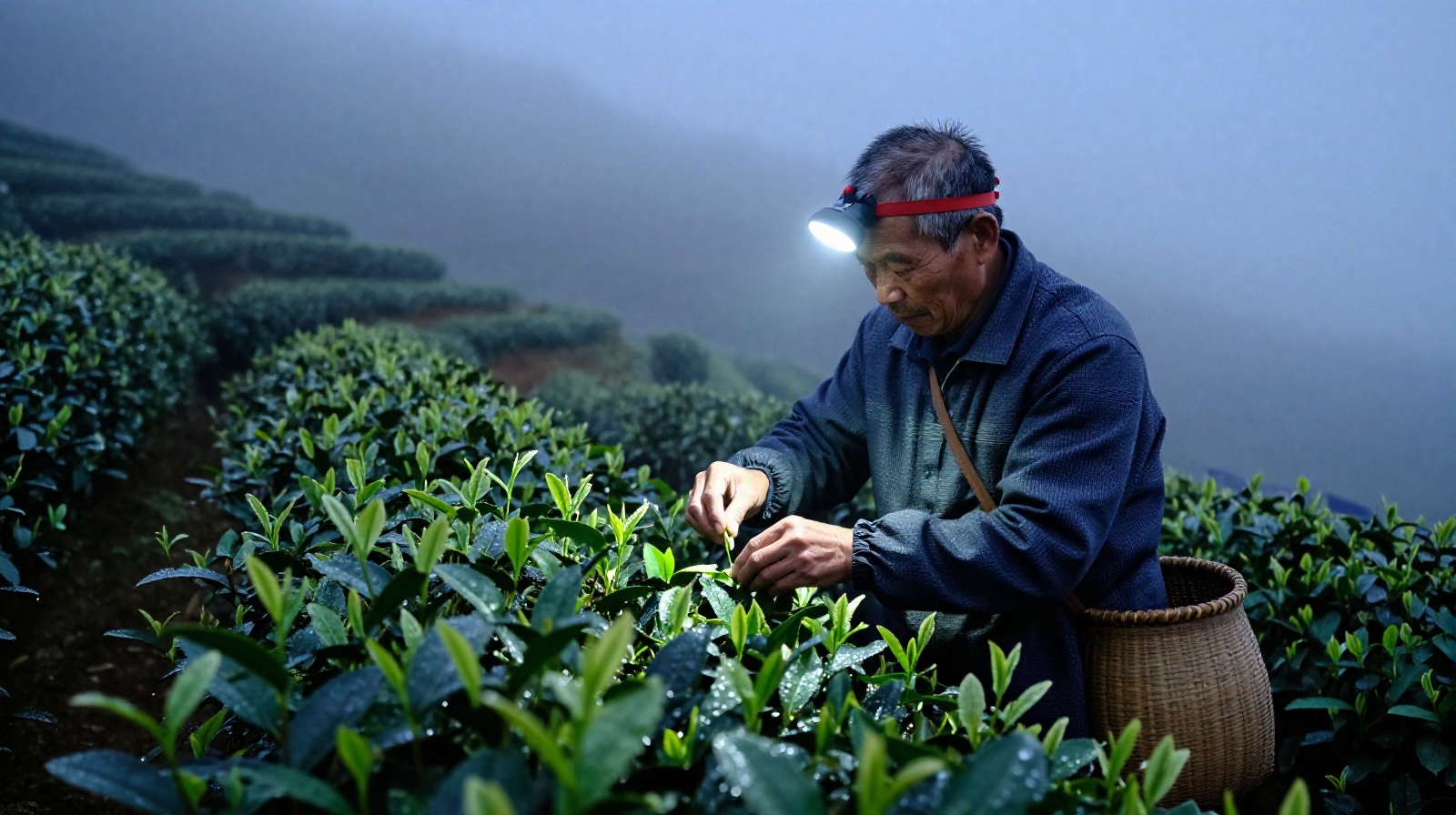
Chen Ming clicks on his headlamp at 3:50 a.m. The beam cuts through the damp darkness of early spring. He slides on a pair of rubber boots, pulls a thin jacket over his padded vest, and steps onto the muddy path that leads to his tea terraces. The air smells of wet earth and old leaves. In the distance, a dog barks once, then silence.
By 4:15, he is crouched among the waist-high bushes, his right hand moving like a bird’s beak — pinching, twisting, dropping. Only the top two leaves and the unopened bud go into the bamboo basket strapped to his waist. He works by touch and memory. “Don’t pull too hard,” he mutters to himself. “The shoot will break.” His fingers are calloused, but they move with a lightness that comes from 40 springs of practice.
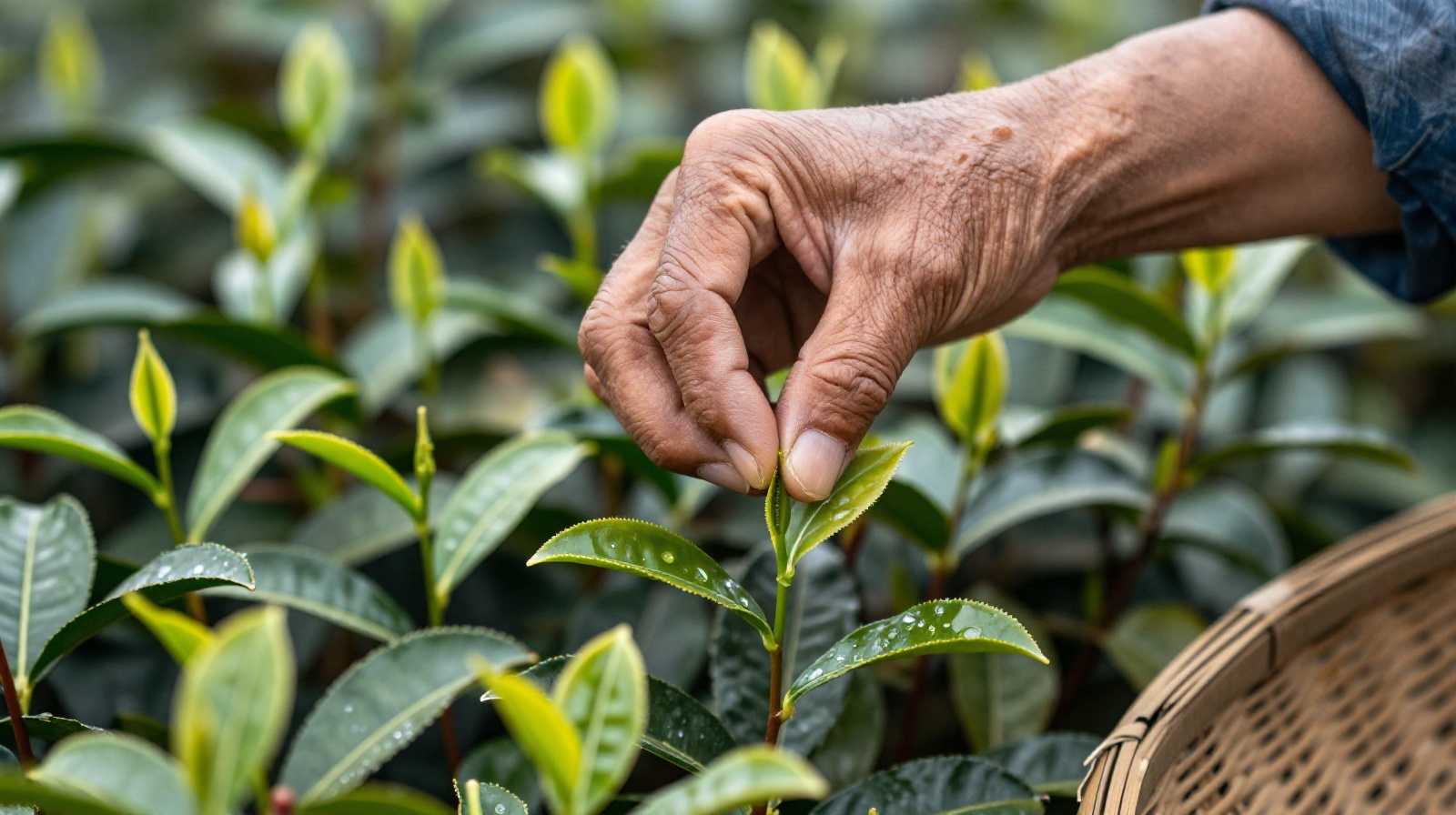
This early-picked tea, called mingqian (pre-Qingming), sells for the highest price — sometimes 500 yuan ($70) per kilogram at the village market. A skilled picker can gather about 5 kilograms of fresh leaves in a six-hour morning shift, which shrinks to just over 1 kilogram after roasting. Chen knows every ounce counts.
Iron Wok and Bare Hands: The Roasting Ritual
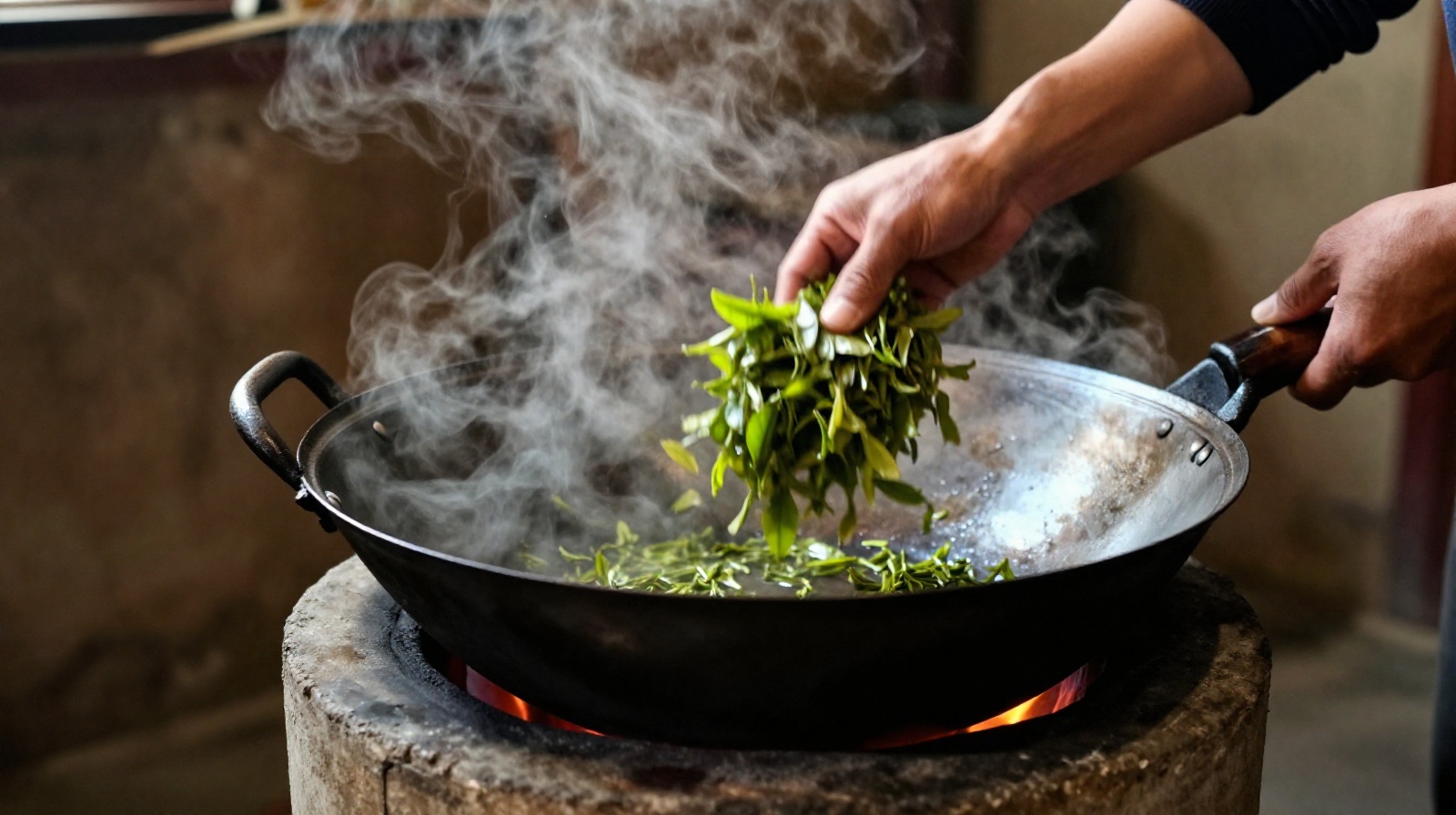
Back at the house, Chen’s wife has already lit the wood-fired iron wok. The room fills with a sharp, grassy aroma that gradually sweetens as the leaves hit the hot metal. Chen plunges his bare hand into the wok, tossing and pressing the leaves in a rhythmic motion. The temperature inside the wok hovers around 250°C (480°F). He can gauge it by feel — a skill passed down from his father, who learned it from his grandfather.
“It burns at first, for years,” he says, showing his palm, leathery and crisscrossed with tiny scars. “But after a while, you can’t feel it as much. Your hand becomes the thermometer.”
The first batch takes about 40 minutes. The twisted, dark-green leaves are then spread on bamboo trays to cool before a second, gentler roasting. Chen works without a clock, relying on the color change and the sound of leaves crackling.
A small mistake — too long or too hot — can turn a premium batch into a bitter mess. Chen remembers last spring when a sudden rain ruined three kilograms of drying leaves. “You just start over the next day,” he says, shrugging. There’s no insurance for weather. There’s only the next morning’s alarm.
Market Haggling: The Price of a Good Leaf
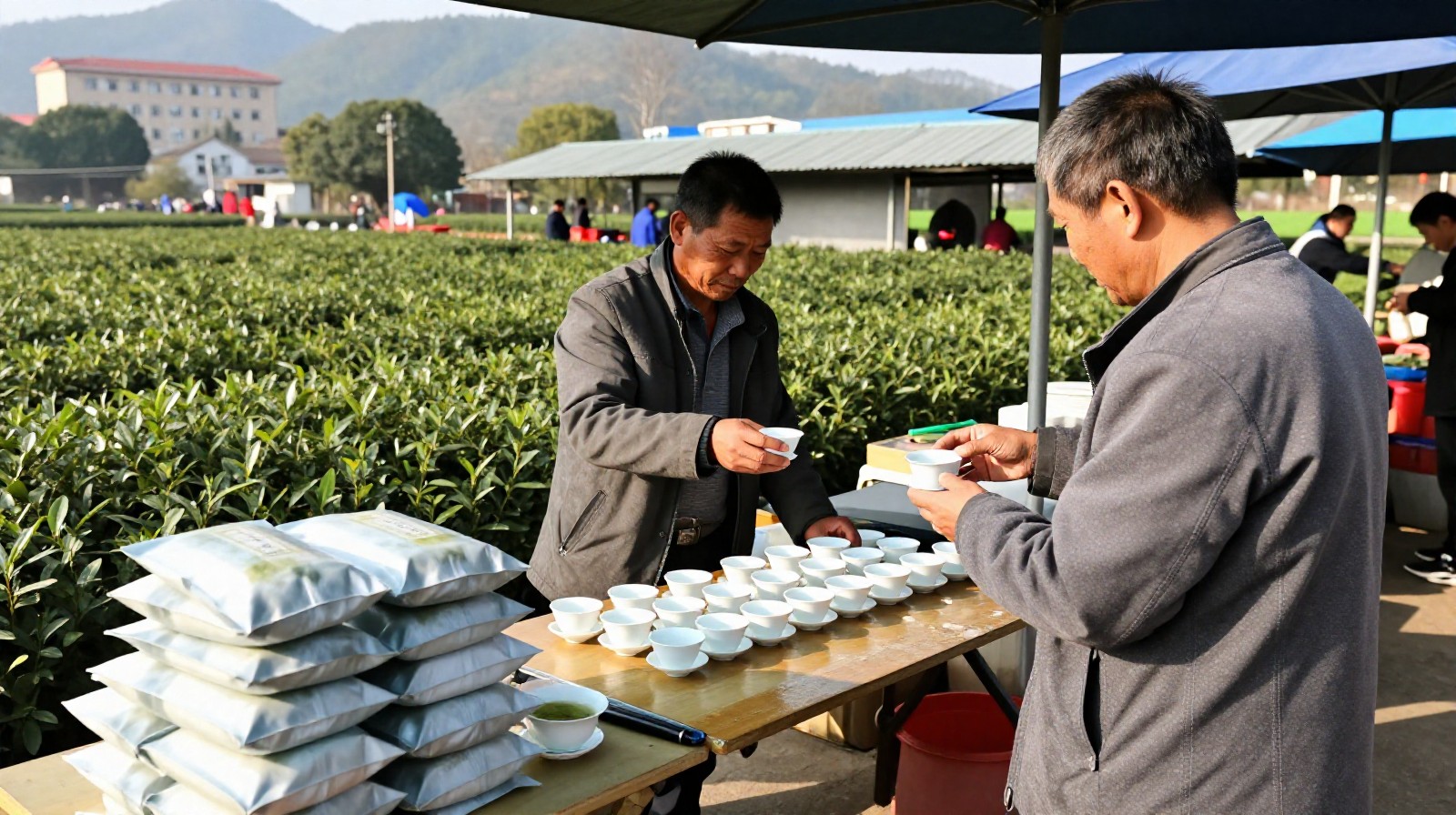
By 3 p.m., Chen packs six sealed bags of finished tea — about 12 kilograms total — onto the back of his electric tricycle. He drives 20 minutes to the township tea market, a crowded open-air space next to the bus station. Buyers from the city walk between stalls, picking up small samples, sniffing, and scrutinizing the shape of the leaves.
Chen sets up his own folding table. He lays out three samples in white porcelain cups, pours boiling water, and waits. The tea unfurls slowly. A buyer in a gray jacket stops by, picks up a cup, and holds it to the light. “Not bad color,” he says. “But the water is a bit cloudy. 380 yuan per kilo.”
Chen shakes his head. “This is pure mountain tea, no pesticide. That batch costs 450. Look at the leaf bottom — whole, not broken.”
For 15 minutes they go back and forth, trading numbers and glances. Finally, they settle at 420 yuan. Chen weighs out two kilos, takes the cash, and stuffs it into a worn leather pouch. It’s a fair price, he later says, but not as good as last year. Competition from cheaper plantation teas has been squeezing margins.
Smartphones and Delivery Orders: The New Marketplace
While Chen haggles at the market, his daughter, 26-year-old Xiao Li, handles the online orders from home. She started a WeChat store two years ago and now posts short videos of her father roasting tea on Douyin (China’s TikTok). “Look at this green color — no machines, just hands,” she narrates in one clip. The video has 12,000 views.
Some orders come from customers hundreds of kilometers away — Shanghai, Beijing, even Guangzhou. Xiao Li packs vacuum-sealed bags into cardboard boxes and calls the courier service that picks up directly from the village twice a day. Last year, online sales contributed about 30% of the family’s total income. “It’s still smaller than the market, but it’s growing,” she says.
Chen is skeptical of the phone world. “I don’t understand how people can buy tea without smelling it first,” he admits. But he doesn’t stop her. As long as the tea leaves the house, he’s satisfied.

Evening Gathering: A Cup of Tea and Tomorrow’s Hopes
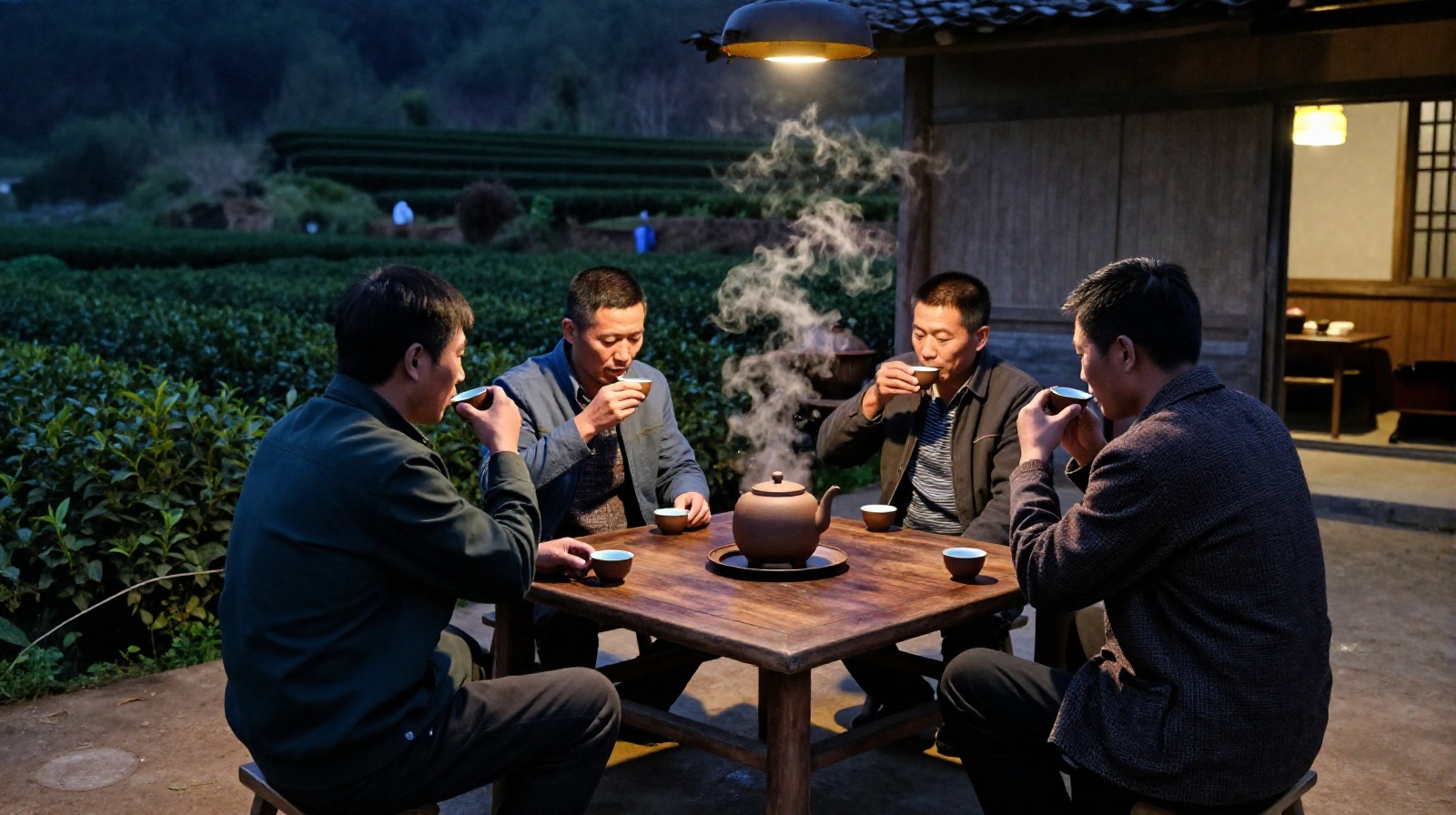
At 7 p.m., the work is finally done. Chen, his wife, Xiao Li, and her younger brother sit around the low wooden table in the main room. A kettle whistles on the stove. Chen pours hot water into a small clay teapot, waits ten seconds, and pours the amber liquid into tiny cups. The room is quiet except for the sound of sipping.
“This batch is good,” he says, holding up a cup. “Not the best I’ve ever made, but close.”
They talk about the coming month: the next spring harvest will be smaller, and prices usually drop after Qingming. Xiao Li shows her father a new order notification on her phone — a repeat customer from Shenzhen. Chen nods, takes another sip.
Outside, the mountain is dark. The tea bushes stand silent under the stars. Tomorrow, the alarm will ring at 3:50 a.m. again. For Chen Ming, a tea farmer’s life is a loop of picking, roasting, selling, and sleeping. But inside that loop, every season brings a new chance — to make better tea, to reach more customers, to keep a tradition alive.