


The Math Starts at a Train Station
An American friend who runs a small machine shop in Ohio spent two weeks traveling in China last year. He came home with a page of numbers scribbled on the back of a hotel receipt.
The first line was a train: Shanghai to Hangzhou, about 170 kilometers, roughly the distance from Cincinnati to Columbus. It took 45 minutes and cost 73 yuan, around $10. “At home that’s a two-and-a-half-hour drive,” he said, “and there is no train.”
The second line was the part that unsettled him — the sheer volume of concrete, steel, cable and silicon added to a country he had last seen in 2011. He kept circling one question. Who paid for all of this, and what did they give up?
That question now has a number attached. In each of the past two years, China has put close to $7 trillion into fixed assets: factories, housing, roads, rails, power plants, ports, pipelines, data centers, machinery. Two years, roughly $14 trillion.
The comparison is what makes the number interesting. The United States has an economy about 55% larger than China’s, yet it invests somewhere around $6 trillion a year in everything, public and private combined. China’s economy is smaller. Its investment bill is not.
This has stopped being an obscure statistic. In December 2024, China extended visa-free transit to 10 days for citizens of 54 countries, and foreign entries roughly doubled last year to about 27 million. Many of those visitors are doing what my friend did: walking around with a calculator running in the background.

Where the Money Physically Goes
Aggregate figures blur. Infrastructure does not. Most of the gap can be inspected from a window seat.
Rail and metros
China’s high-speed rail network passed 48,000 kilometers at the end of 2024 — roughly 70% of the world’s total. The United States has no line built to that standard. Amtrak’s fastest service, Acela, briefly reaches 240 km/h on one stretch in Rhode Island and averages well below it.
Intercity trains are only part of it. More than 40 Chinese cities now operate metro systems, and Shanghai’s and Beijing’s each run past 800 kilometers. New York’s subway, the largest in the US, still depends on signal equipment older than most of its riders.
Power
In 2024 alone, China added about 277 gigawatts of solar capacity — more than the entire installed solar base of the United States. Total generating capacity in China now exceeds 3,300 GW, about two and a half times America’s.
For a household, this registers as an absence: power cuts are rare, air conditioning is unremarkable, and running a dryer, an induction cooker and an electric car charger on the same evening takes no planning.
Factories
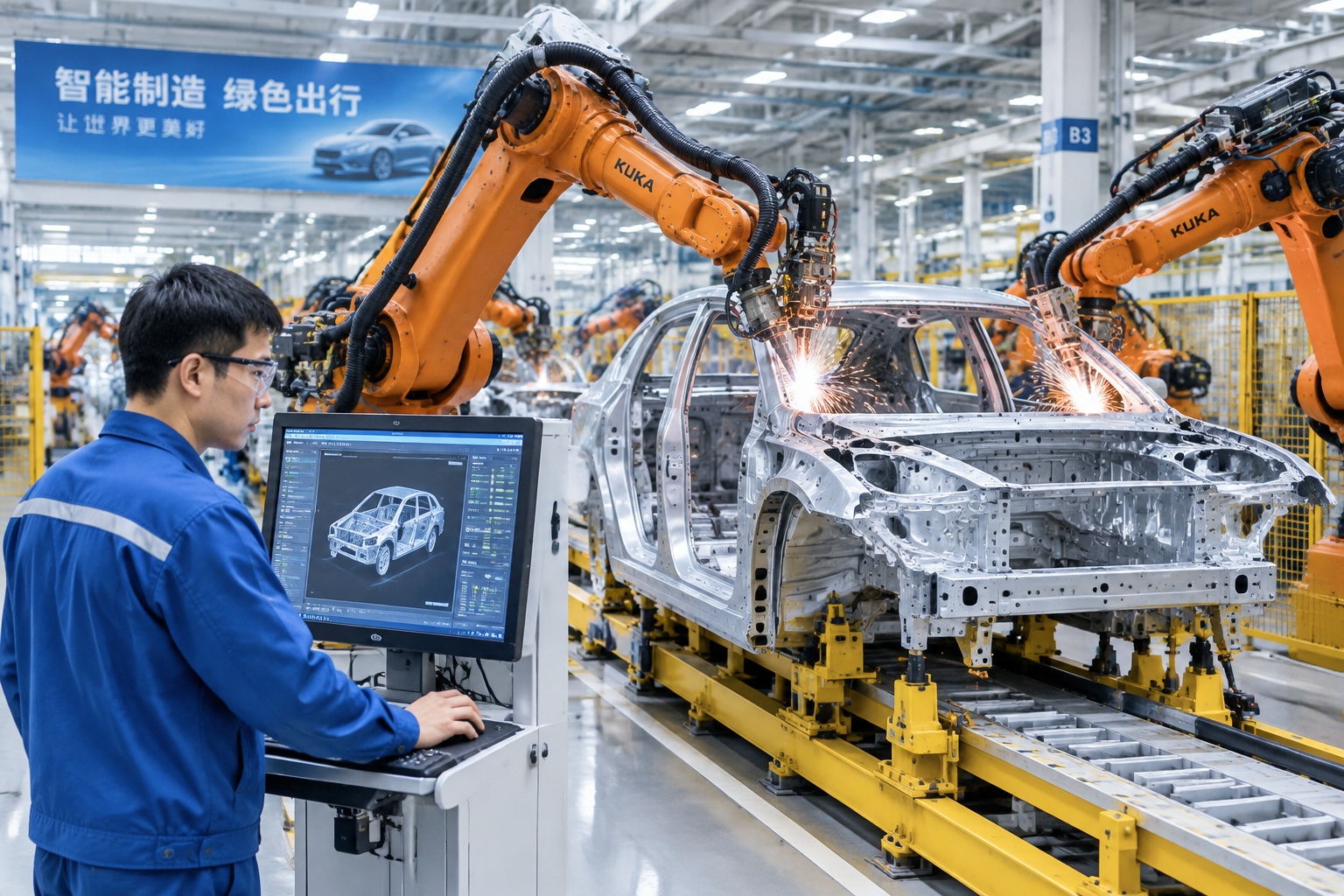
China installed about 276,000 industrial robots in 2023, more than half the world’s total that year, according to the International Federation of Robotics. Its operating stock of roughly 1.75 million units is larger than that of every other country combined.
The unglamorous layer
Some spending never makes a headline: rural roads, water treatment, cold-chain warehouses, county hospitals, 5G base stations. China had built more than 4.2 million of those by the end of 2024, reaching villages where the nearest city is two hours away.
That layer is why farmers in remote provinces can sell fruit on a livestream and have it packed, chilled and delivered to Shanghai within 48 hours. It is also why some county-level high-speed rail stations stay quiet for most of the day.
What Ordinary People Notice
Capital formation is an abstraction. Its returns show up as daily texture.
A commuter in Chengdu can live 12 kilometers from the office, ride the metro for half an hour, and pay roughly the price of a coffee. Groceries, prescriptions and phone chargers arrive the same day, because the logistics network was largely built before the demand showed up.
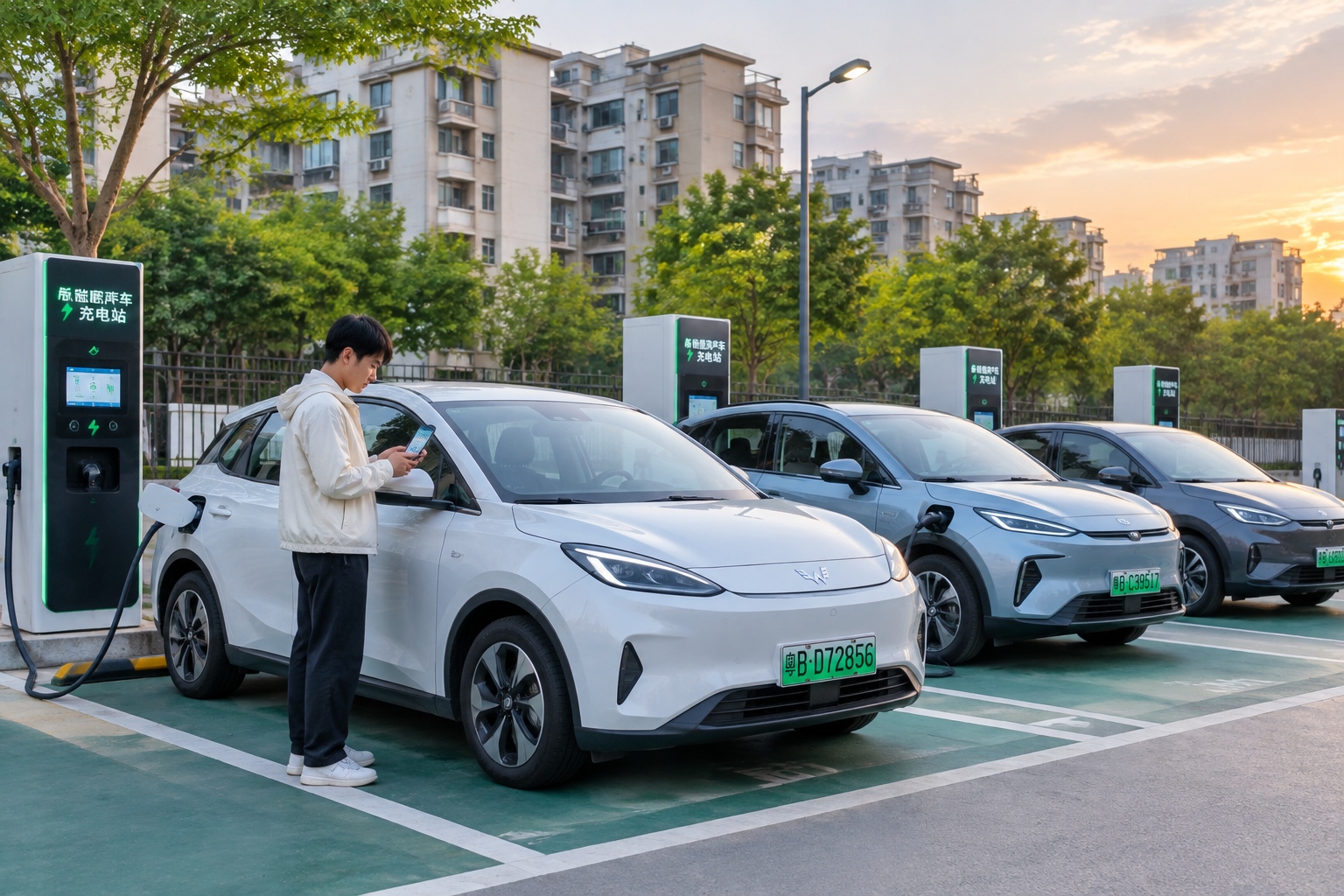
Electric cars are the clearest case of infrastructure turning into household economics. China sold about 12.9 million new energy vehicles in 2024 — more than 40% of all new cars — and there are over 12 million charging points nationwide. Entry-level EVs sell for the equivalent of $10,000 to $20,000. In the US, EVs were roughly 8% of new car sales, and the average transaction price was above $55,000.
Air quality is the change visitors notice first. Beijing’s average PM2.5 concentration is about two-thirds below its 2013 peak, after coal plants were relocated, the rest retrofitted, and buses and taxis electrified. Anyone who saw the grey skies of a decade ago finds the current version of the city hard to square with memory.
The Bill Arrives Somewhere
None of this was free, and the costs are not hidden.
China’s investment rate has run above 40% of GDP for two decades. Household consumption is about 39% of GDP, against roughly 68% in the United States. In plain terms: Chinese families consume a smaller share of what the country produces, and a large slice of national income is recycled into building more things.
Returns are falling. Economists track this with the incremental capital-output ratio — how many dollars of investment are needed to generate one more dollar of GDP. In China it has roughly doubled since the 2000s, from around 3 to somewhere between 6 and 8. A bridge nobody crosses still counts as investment; it stops counting as growth fairly quickly.
The strain shows up in local government finance. Provinces and cities borrowed heavily through off-books financing vehicles to pay for roads, subways and industrial parks. Official local debt stands around 47 trillion yuan, and estimates of the broader hidden total run into the trillions of dollars. Some of those projects will never earn back what they cost.
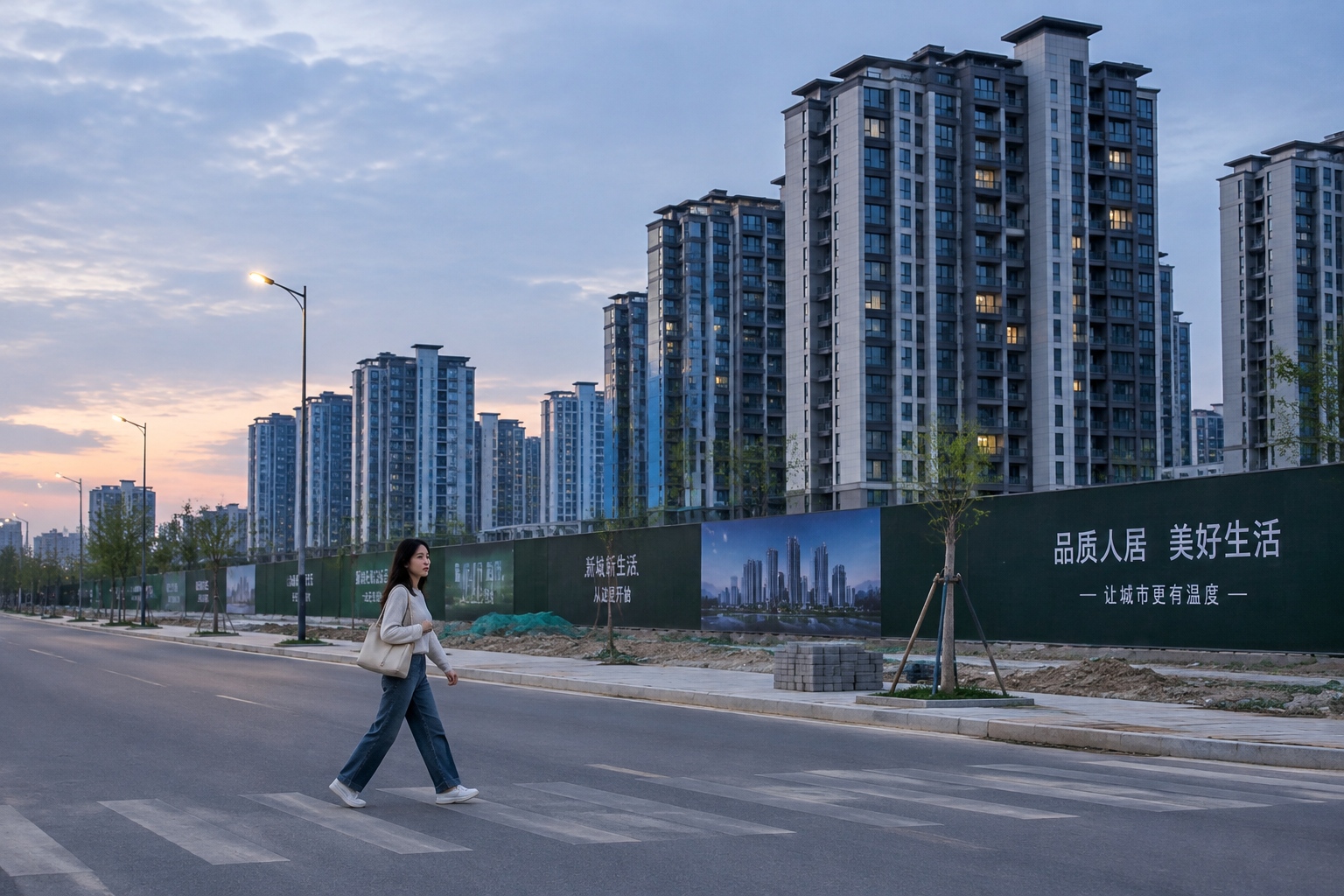
Housing is the other reckoning. Floor space sold peaked in 2021 and has fallen sharply since, and some new districts — built ahead of the residents — still look sparse at night.
Trade friction belongs to the same story. The US raised tariffs on Chinese EVs to 100% in 2024; the EU imposed countervailing duties, arguing that subsidized capacity exceeds what the world can absorb.
What the United States Buys Instead
The contrast is not that America fails to invest. It invests in different things, and that difference is a set of priorities rather than an accident.
US investment leans toward software, intellectual property, data centers and research. Big technology companies spent more than $200 billion on AI infrastructure in 2024 alone. S&P 500 firms bought back roughly $900 billion of their own shares that year, considerably more than the federal government spends on highways. Meanwhile the American Society of Civil Engineers grades US infrastructure at C-minus and estimates a $2.6 trillion funding gap over ten years.
An American visitor to China notices the physical world. A Chinese visitor to the US notices the depth of capital markets, the strength of research universities and the returns on a dollar spent on software. Each system is optimized for something different, and each is paying for what it neglected.
What the Visitor Concluded
My friend from Ohio did not come home with a verdict on which system is better. He came back with something narrower: for about 15 years, one country decided the fastest way to raise living standards was to build things, and it did so at a scale with no precedent.
The bill for that decision is arriving now — in local debt, in low returns, in a property sector that has to shrink. The real story is the next $14 trillion. Can China make investment pay off in consumption, services and high-end manufacturing rather than more concrete? Can the United States rebuild its capacity to build at all? Neither question gets settled by a train ride, but the first half of the answer is visible from a window seat — which is where my friend started counting.
Start the discussion at forum.chinacomes.com