
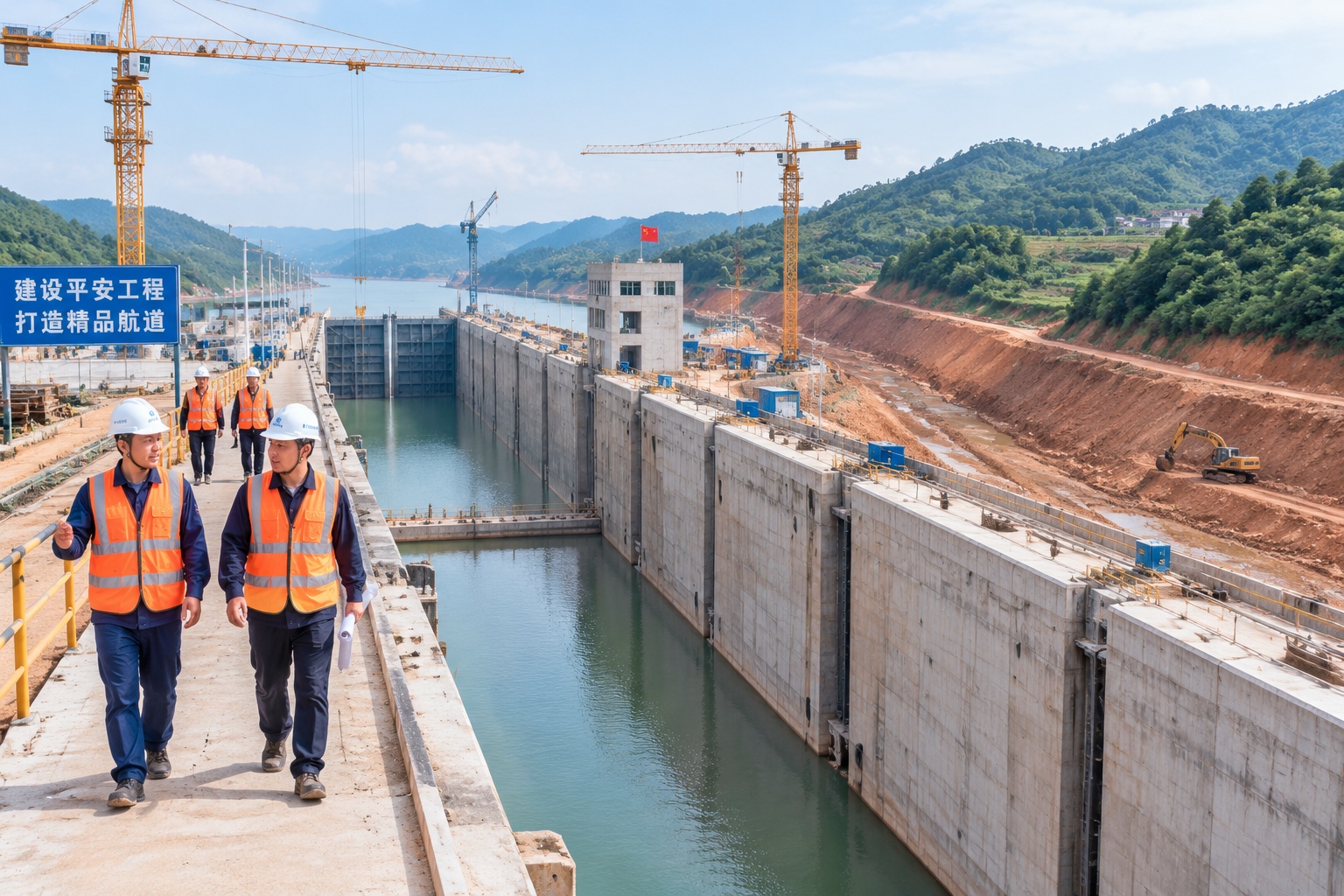

Concrete at Madao: a canal that is almost real
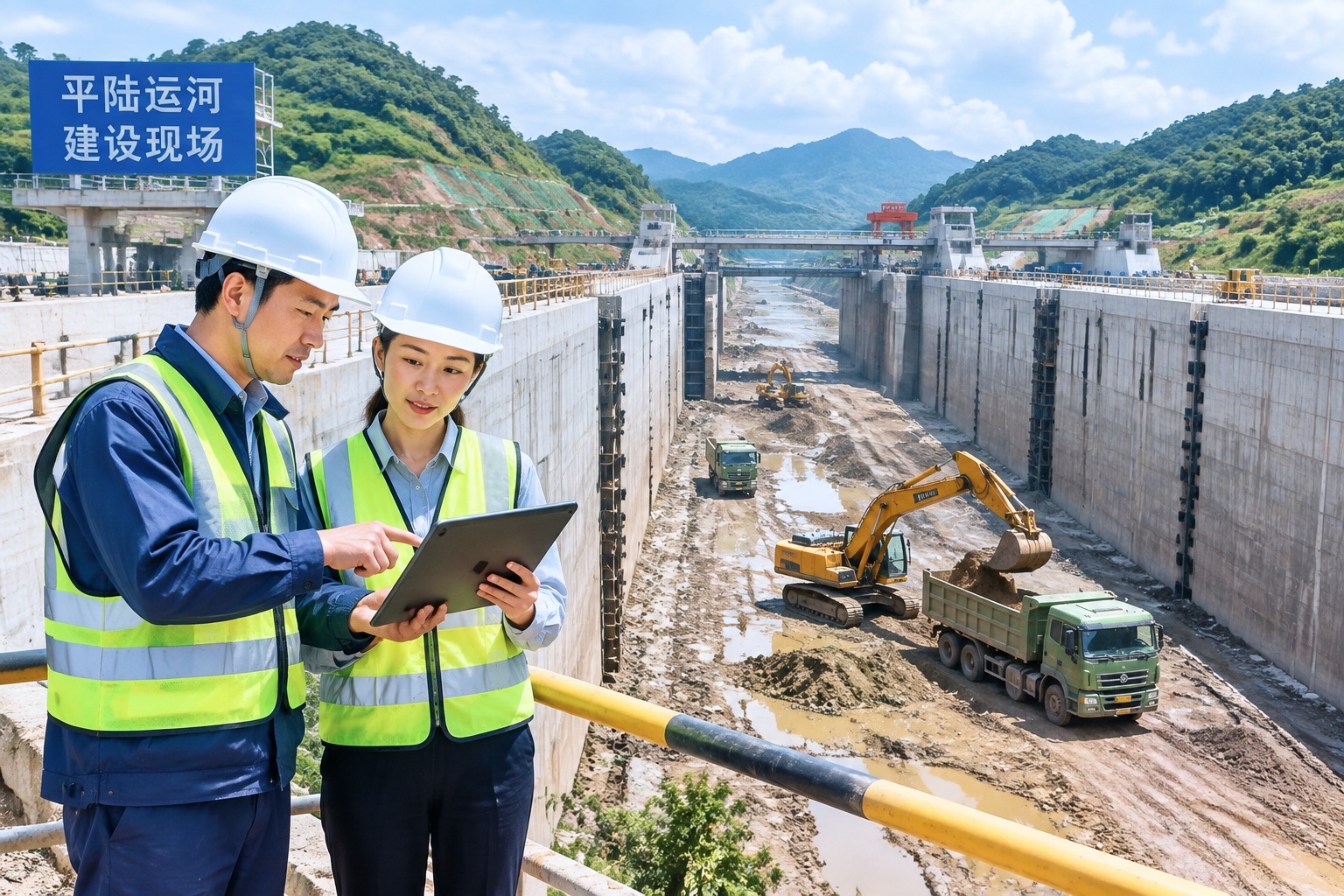
At Lingshan county in southern Guangxi, workers are pouring concrete for the Madao lock, one of three lock complexes on the Pinglu Canal. The canal is 134 kilometres long, built to the top inland navigation standard, and wide enough for 5,000-tonne vessels. It will carry ships from the Xi River system straight to the Gulf of Tonkin, with the sea outlet at Qinzhou.
Work began in August 2022. The opening date is the end of 2026. The budget is about 72.7 billion yuan, roughly US$10 billion.
What it changes on the ground is a detour. Today, a barge full of Guangxi sugar or cement heading for the sea goes east through Guangdong first, roughly 560 kilometres out of its way. Once the canal opens, the same cargo turns south at Nanning and reaches the coast. It is the first canal built in China to connect a major river system with the sea since the Grand Canal, and the anchor project of the New Western Land-Sea Corridor.
Why this is a network story, not a single-project story
Pinglu is the one everyone has heard of. Behind it, at least four other canals in southern China sit at very different stages: one is already carrying freight, two exist mostly on paper, and one is a serious engineering proposal with no construction start date. Chinese planners also have a 2035 target for the whole system. Below, each project is sorted by what has actually happened, so that planned is not mistaken for built.
The Jianghuai Canal: open, and quietly busy
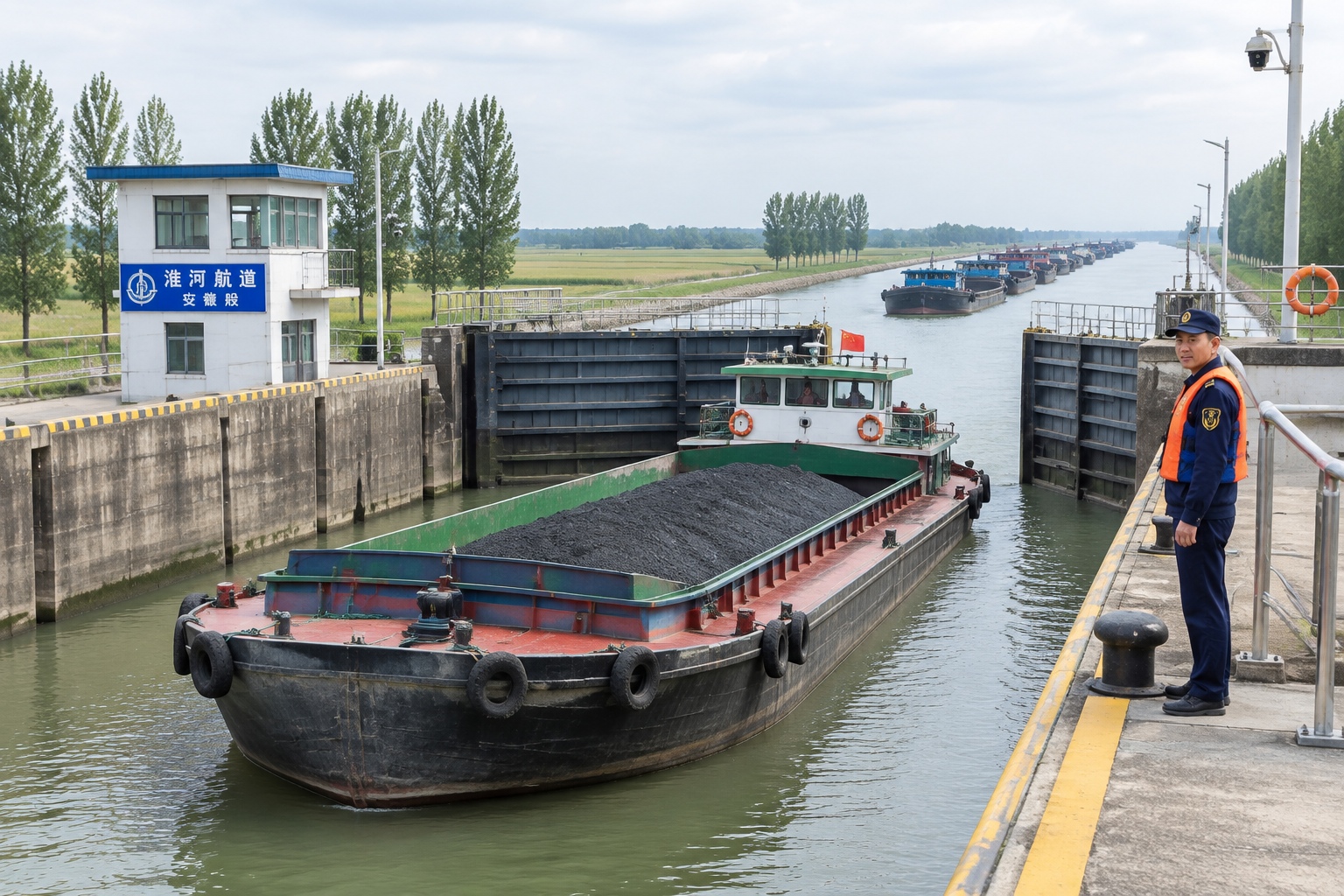
Anhui’s Jianghuai Canal is the southern canal outsiders rarely hear about, because it arrived as part of a water project rather than a transport one. The Yangtze-to-Huaihe diversion scheme was built to move water from the Yangtze north into the Huai River basin, which has too little water and too much of it at the wrong time. Locks were added so the same channel could also carry ships.
The navigation channel runs roughly 350 kilometres, linking the Huai and the Yangtze inside Anhui. Before it existed, cargo from the Huai basin had to travel east through Hongze Lake and the Grand Canal to reach the Yangtze, a detour of several hundred kilometres. Now a barge loaded at Zhoukou in Henan, hundreds of kilometres inland, can come down the Shaying and Huai rivers and turn into the Yangtze near Tongling. Hefei, a city of nearly 10 million people sitting next to the canal, has a working inland port. Trial navigation began at the end of 2022, ships have used it ever since, and a second phase is under construction.
Zhejiang-Jiangxi-Guangdong: a 320 billion yuan idea, still on paper
If the Jianghuai Canal was a by-product, the Zhejiang-Jiangxi-Guangdong Canal is the project engineers discuss in decades. It would cut across Jiangxi province to link the Qiantang River basin around Hangzhou with the Pearl River basin near Guangzhou. Total route length is put at about 1,988 kilometres, but most of that is existing river that would be widened, dredged and fitted with locks; the genuinely new digging is only a few hundred kilometres.
The cost estimate circulating in provincial planning documents is around 320 billion yuan, more than the Three Gorges Dam. It is at the feasibility and argument stage: written into Jiangxi’s own plans, not yet approved as a national project, with no start date.
The hard questions are water and money. The Gan River, which would carry most of the traffic, fell to record lows in the drought of 2022. Locks need water to operate, and shipping competes with farms and cities for it. Engineers propose water-saving locks and a chain of dams, but the studies are still open. Planning language mentions 1,000-tonne-class vessels on the southern section, and those assumptions are exactly what is being argued over.
Two shorter ones: Xianggui and Jinghan
Two more canals appear regularly in provincial documents, both smaller and both still undecided.
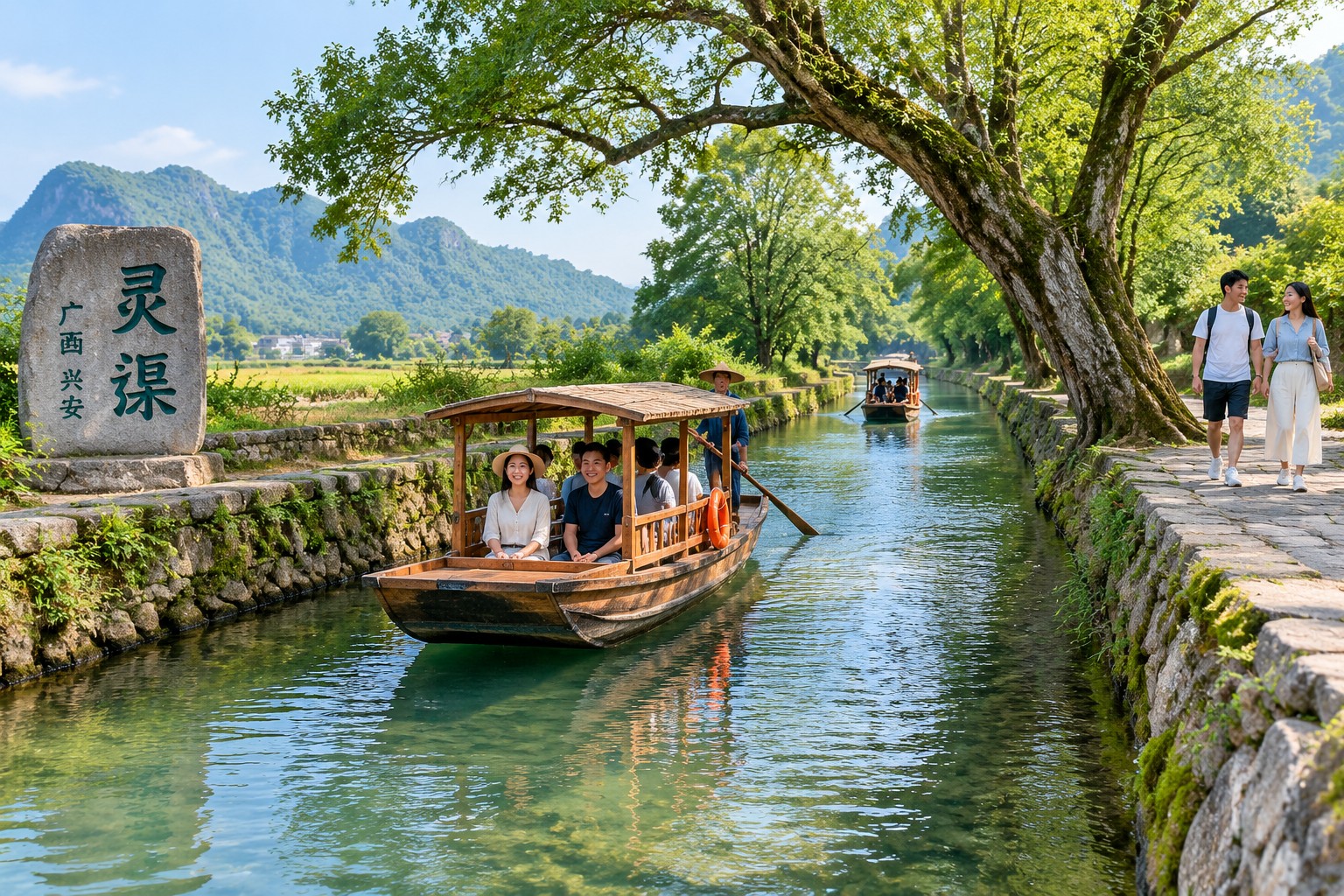
The Xianggui Canal would reconnect the Xiang River, a Yangtze tributary in Hunan, with the Gui River, which joins the Xi River at Wuzhou in Guangxi. That is a return to something old: the Lingqu canal, cut by the Qin around 2,200 years ago, already linked the two basins, though not for modern ships. Two routes are on the table, one following the Lingqu corridor and one further east, each involving about 300 kilometres of channel. Hunan and Guangxi have pushed the idea for years. There is no approved design.
The Jinghan Canal is Hubei’s proposal to bypass the slow, silty meander of the Yangtze between Jingzhou and Wuhan. A new channel of roughly 230 kilometres from the Songzi area toward Wuhan would cut about 260 kilometres off the trip and let larger ships through a middle Yangtze stretch where depth currently limits them. It is a research topic, not a construction site.
What 2035 actually commits to
In May 2023 the central government published the National Water Network Construction Plan, a framework that treats water supply, flood control, irrigation and navigation as one system. Its headline target is a functioning national main skeleton by 2035. A separate transport plan issued in 2021 sets a goal of about 25,000 kilometres of high-grade inland waterways by 2035, arranged in a four vertical, four horizontal, two networks layout. The canals above are candidates for that framework, and some are already inside it.
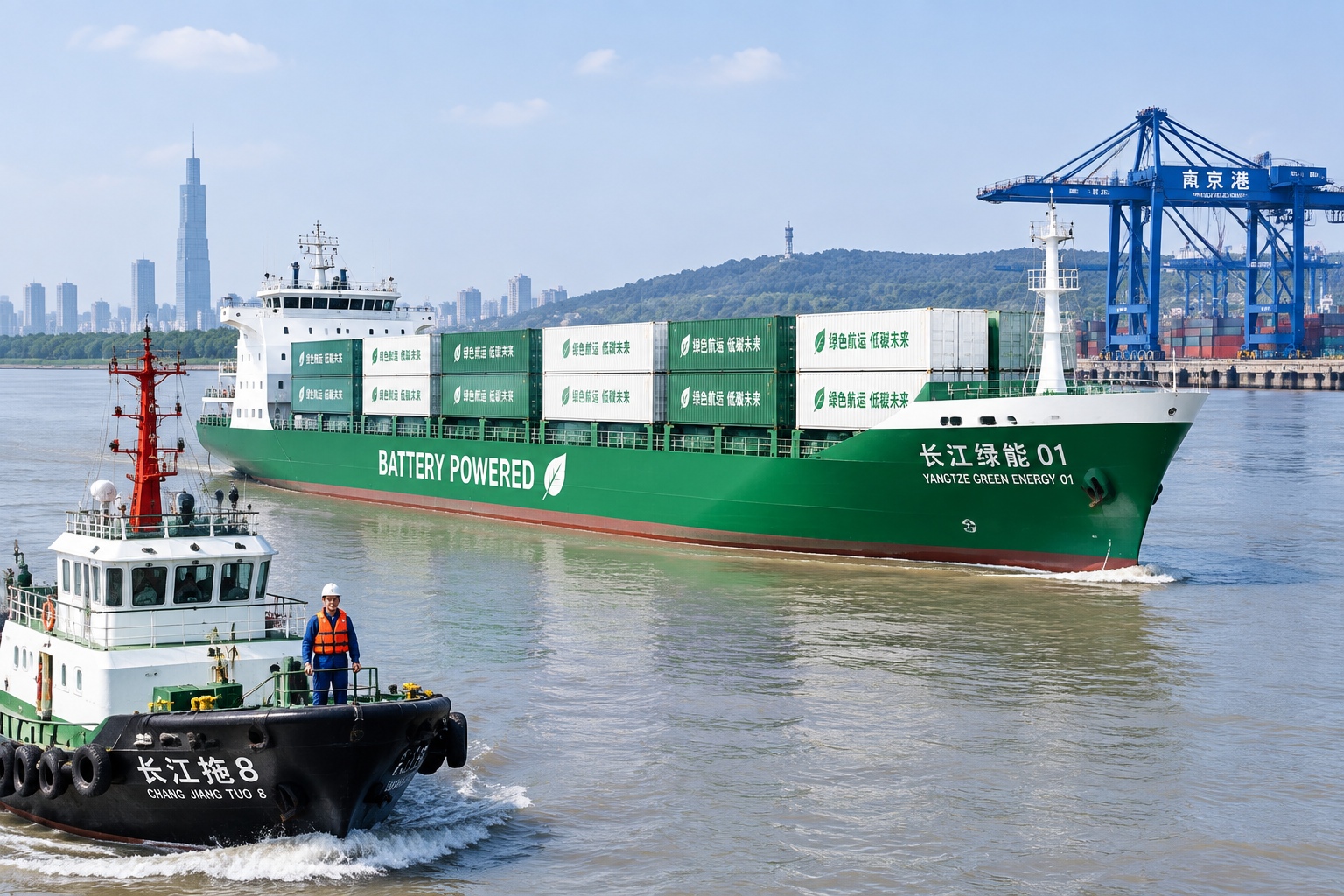
The economics explain the interest. Inland waterway freight in China is commonly estimated at around a third of rail cost and a fifth of road cost, and one 5,000-tonne vessel carries what well over 100 trucks would. Ship engines also burn far less fuel per tonne-kilometre, which is why the same plans keep mentioning battery-powered and LNG vessels. Since 2024, electric container ships have been running on fixed Yangtze routes.
What is actually built, and what is not
Status as of the mid-2020s:
- Open to shipping: the Jianghuai Canal, in trial navigation from late 2022 and in service since.
- Under construction: the Pinglu Canal, due at the end of 2026; the second phase of the Yangtze-to-Huaihe scheme; capacity upgrades on the Gan, Xiang and Han rivers.
- Under study, no start date: the Zhejiang-Jiangxi-Guangdong Canal, the Xianggui Canal, the Jinghan Canal. Provincial governments have commissioned feasibility work and written the projects into their own plans; none has been approved as a national construction project.
The parts that are genuinely hard
Canals are expensive and pay back slowly, because water freight is cheap by design. The Pinglu Canal’s 72.7 billion yuan will take decades to recover if cargo forecasts hold; if they do not, the numbers get worse. Water is the second constraint. Southern China has wet years and dry years, and the dry ones are getting harder to plan around. In 2022, drought pushed the Gan and Xiang rivers so low that shipping stopped; a canal that depends on those rivers inherits that risk. Ecology is the third: every lock and dam changes fish migration, wetlands and sediment flows, and the compensation work is part of the bill.
So the honest answer to what canals China is building in the south is a short list of three or four, plus a longer list of drawings. The concrete at Madao is real. Most of the rest is a plan with 2035 written on it, and plans change everywhere, including in China.
Start the discussion at forum.chinacomes.com