

The Herd That Waits for the Train
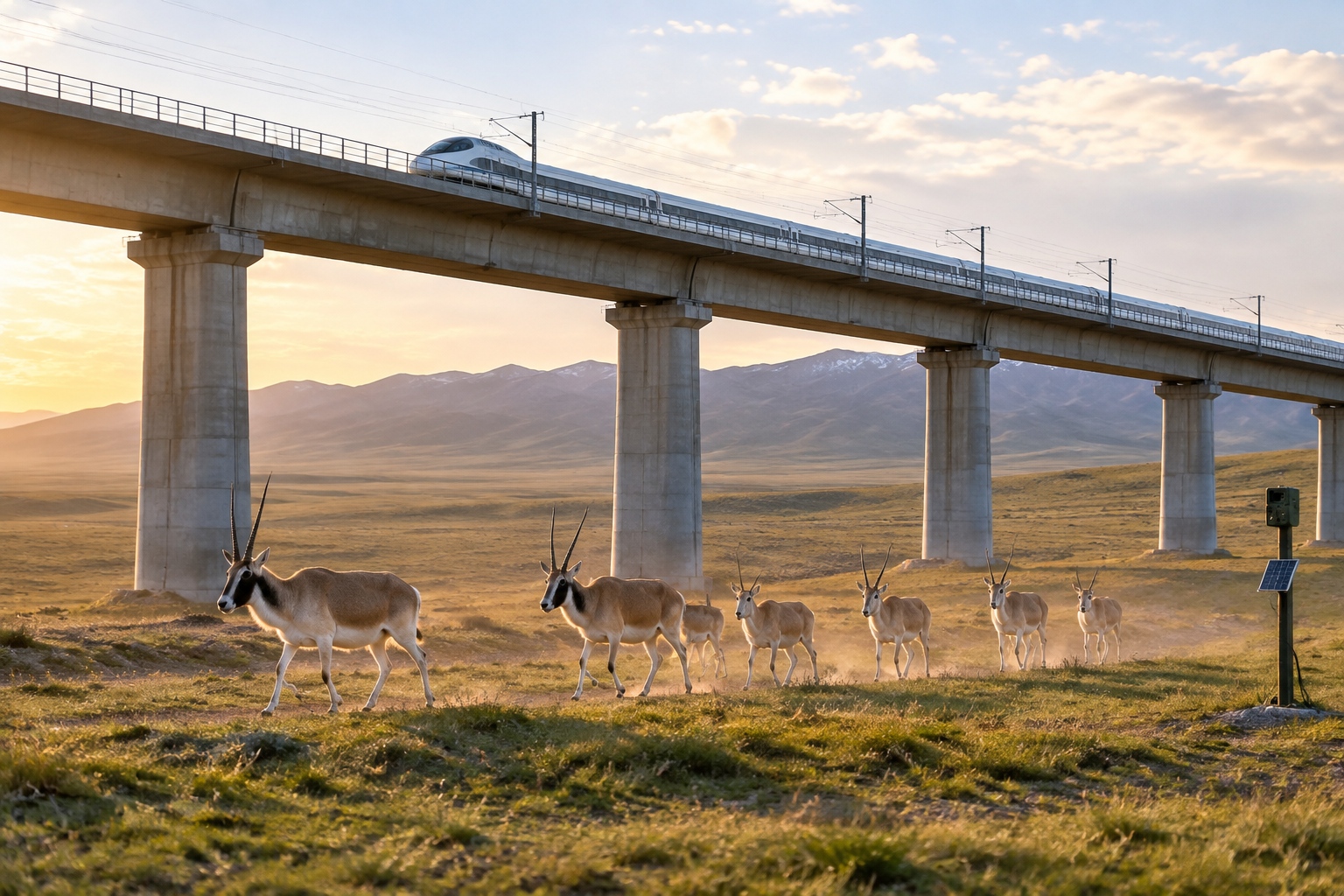
Every June, on a plateau 4,500 metres above sea level in Qinghai province, tens of thousands of Tibetan antelopes start walking. The pregnant females head for Zhuonai Lake to give birth, then walk back — a round trip of roughly 300 kilometres across one of the emptiest landscapes in China.
Halfway along that route sits the Qinghai–Tibet Railway, which reached Lhasa in 2006. To a wild animal, a railway is not just noise. An embankment is a wall. A fence is a wall. A train every few minutes is a moving wall. Biologists call the result habitat fragmentation: a single range sliced into pieces too small and too isolated to stay healthy.
The antelopes cross anyway, walking down shallow ramps and filing beneath the tracks while the trains above slow to a crawl and the drivers hold their horns. China now runs more than 48,000 kilometres of high-speed rail, on top of a dense conventional network laid across mountains, deserts, wetlands and grassland. Making that network passable for animals has become a routine part of designing it.
What a Wildlife Corridor Looks Like on a Railway
The phrase sounds abstract. On a construction drawing, it takes four shapes.
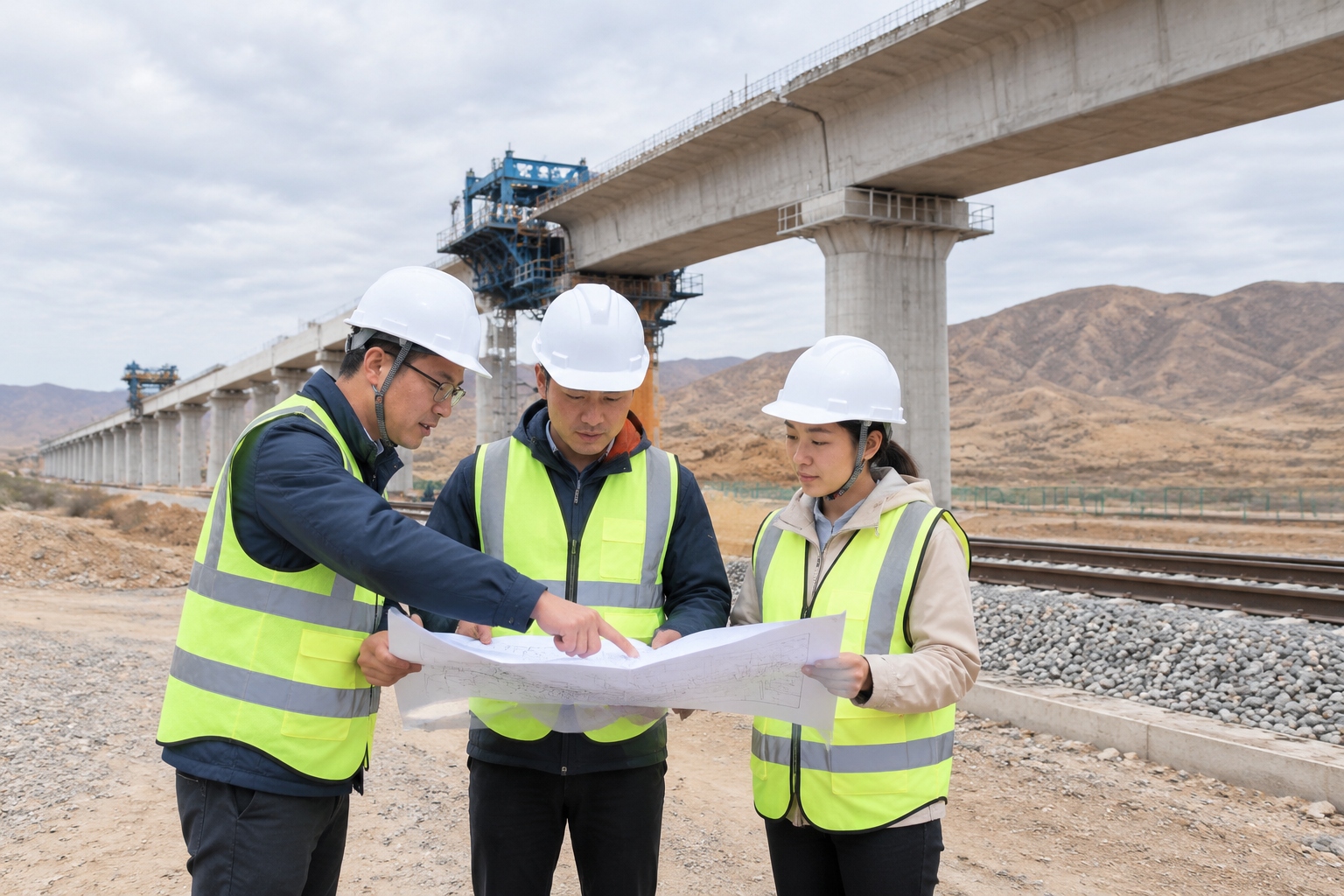
The most common is an underpass: a bridge whose spans leave dry ground beneath the tracks. Chinese design teams call the method 以桥代路 — replacing embankment with viaduct — and it addresses a problem that is easy to underestimate. A three-metre embankment stops almost everything that walks. A viaduct on the same alignment stops nothing.
Second is the land bridge: where a line runs through a tunnel, the surface above stays intact, so animals cross without knowing the railway is below. Third are culverts and box passages, sized for badgers, foxes, leopard cats and other small residents. Fourth are slope passages, the ramps the antelopes use, built at the ends of embankments so hoofed animals can walk over rather than turn back.
None of it works alone. A corridor has to sit where animals already move, which means surveys before the alignment is fixed. Fences have to open at the right points, because a fence with no gap turns a barrier into a trap. Since a 2016 revision of China’s railway environmental protection design code, wildlife passage requirements have belonged to the standard design review rather than being added at the end.
Qinghai–Tibet: The First Serious Test
This was where the approach was tested at scale, under conditions that left little margin: permafrost, thin air, and a construction schedule that would not wait for migration season. Engineers built 33 wildlife passages along the Golmud–Lhasa section, mixing underpasses, culverts and overpasses. During the June-to-August migration, trains crossing the Hoh Xil reserve must slow down and are barred from sounding their horns.
The results took years to show. In the first seasons, herds approached the embankment and turned back; monitors watched animals pace along the fence line for hours. Within a few years, researchers tracking the herds found that most of them — in some seasons more than 90 percent — were using the passages. Over the same period poaching was brought under control, and the Hoh Xil antelope population climbed from fewer than 20,000 in the 1990s to more than 70,000 today.
It is tempting to file that as a clean success. The more careful reading is that no single structure did the work: passage design, fence layout, speed limits and anti-poaching patrols had to arrive together. Remove one and the numbers change.
Beijing–Zhangjiakou: A Wetland, a Great Wall, 350 km/h
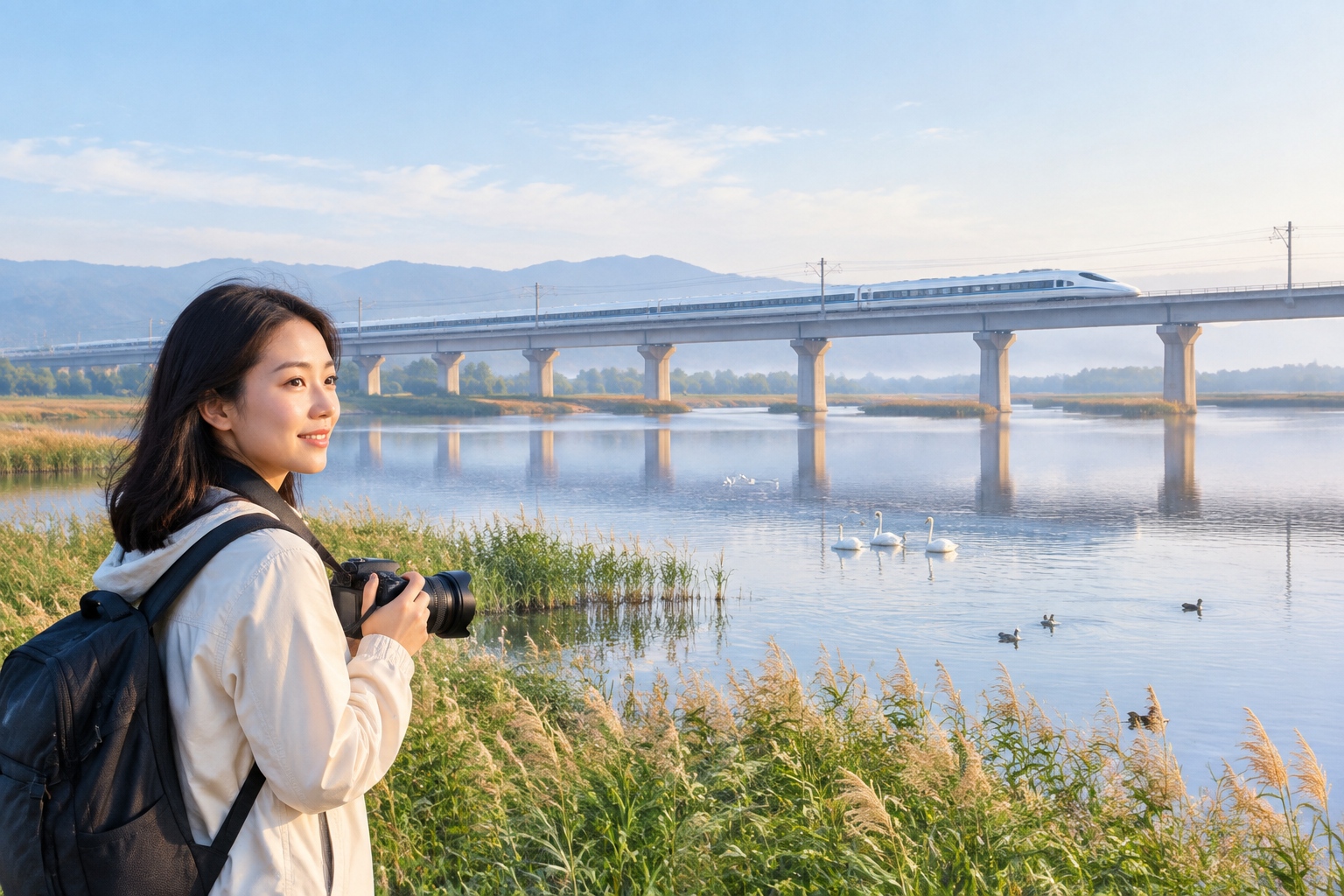
The line built for the 2022 Winter Olympics shows how the same logic survives at 350 km/h, where stopping distances are measured in kilometres. West of Beijing it crosses Guanting Reservoir, a wetland used by migratory birds; rather than fill and embank, engineers carried the railway over the water on a viaduct about nine kilometres long. Farther north, two tunnels do similar work. The six-kilometre Qinghuayuan tunnel passes under the century-old Qinglongqiao station instead of through it, and the twelve-kilometre Badaling tunnel runs beneath the Great Wall rather than cutting across it.
Not every decision on that line was about animals; heritage and hydrology mattered too. But the tool kit is the same, and it has become a habit: when a sensitive surface cannot be avoided, the line goes onto a bridge or underground.
Lanzhou–Xinjiang: Leaving the Desert Open
On the 1,776-kilometre Lanzhou–Xinjiang line, opened in 2014, the obstacle was distance. The route follows the Hexi Corridor and crosses the Anxi Extreme Arid Desert National Nature Reserve in Gansu, home to the Mongolian wild ass, known locally as the khulan, and the goitered gazelle. Both move long distances between sparse water sources, and both are wary of anything resembling a fence.
Designers replaced long stretches of embankment with viaducts and culverts where the reserve’s own surveys showed animals crossing. It is a less photogenic solution than a purpose-built animal bridge, and it is the one that works: open ground under a bridge is simply more open ground.
What the Infrared Cameras See
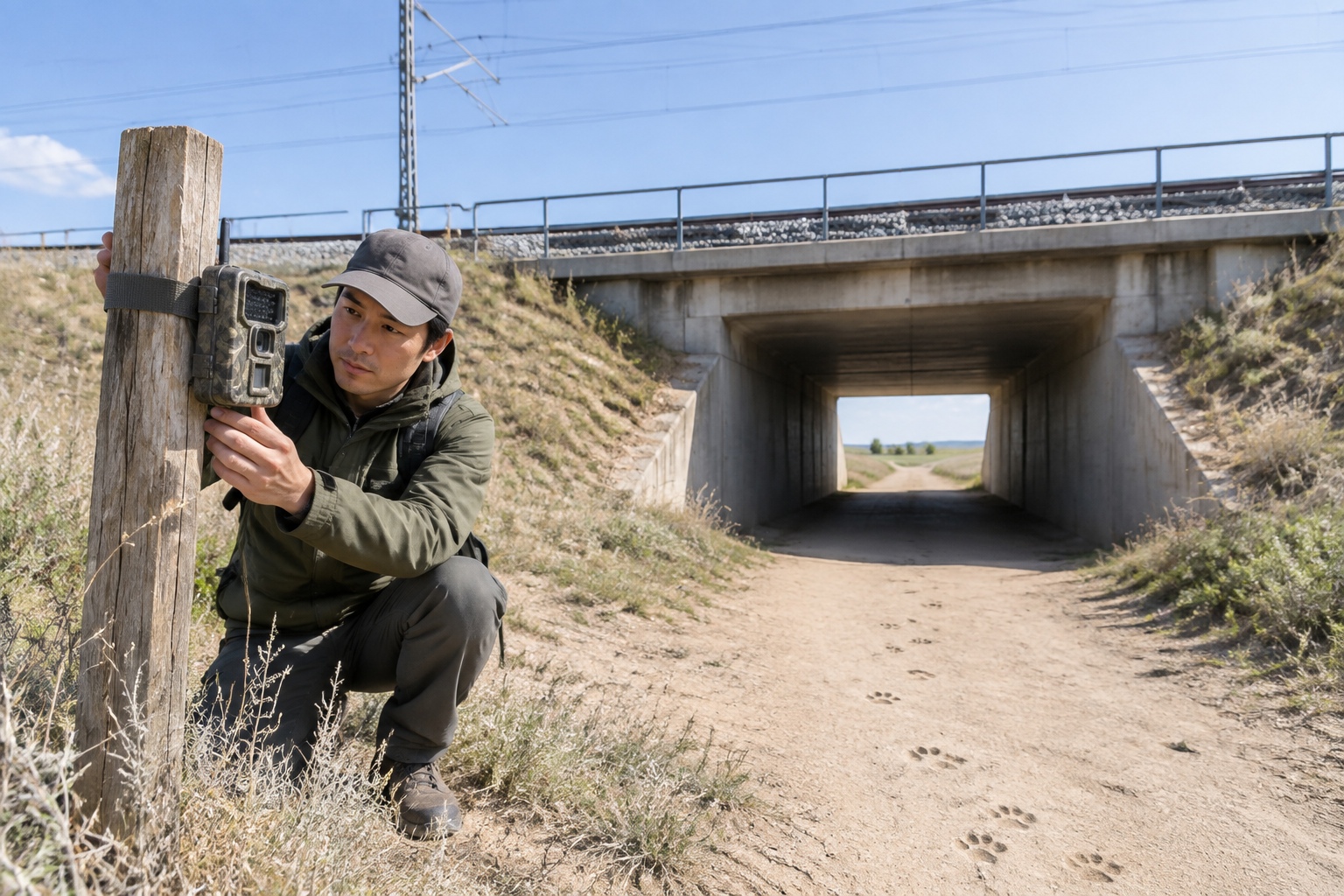
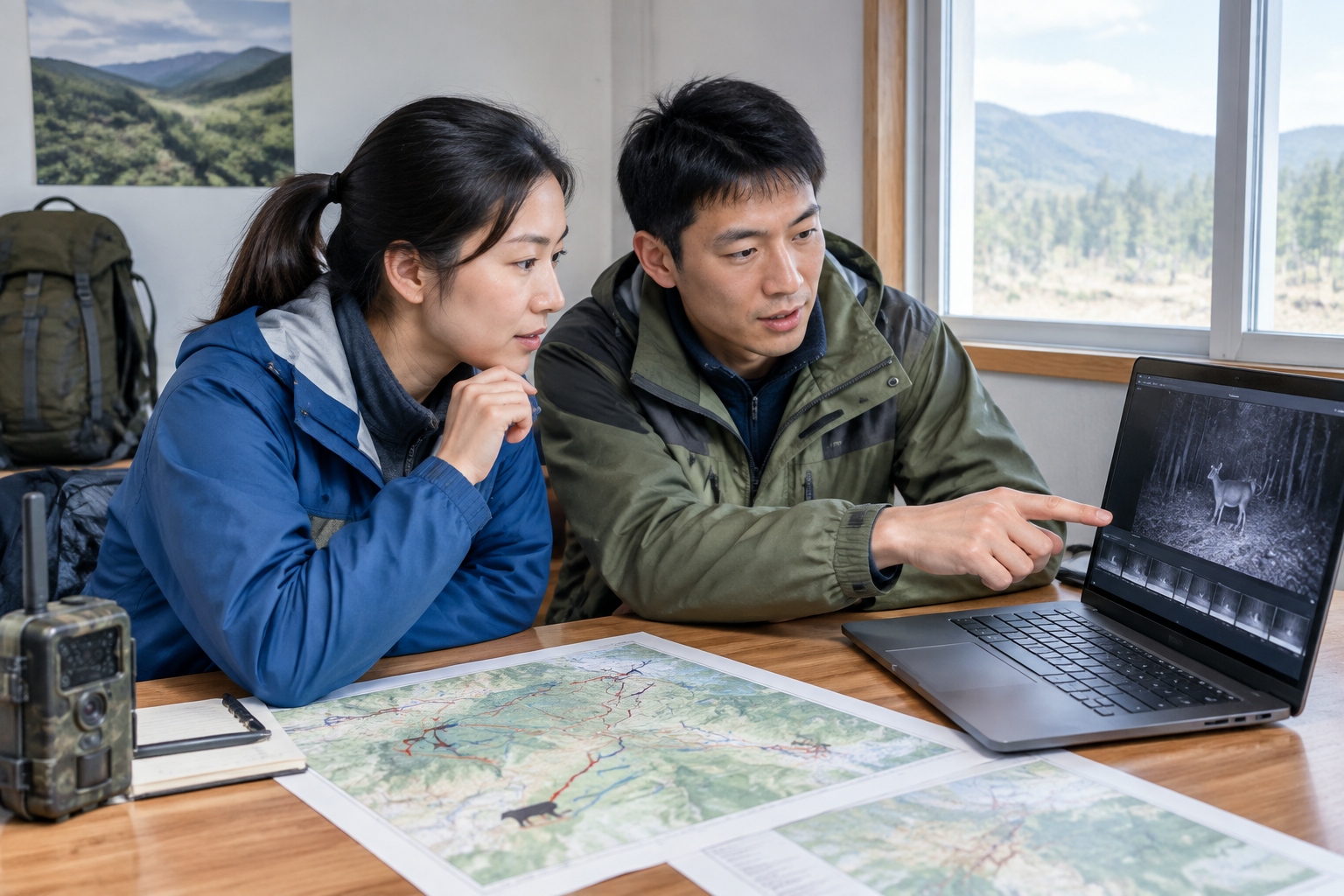
Verification is unglamorous. Camera traps are bolted to posts at the mouth of a passage; researchers count tracks and scat; a few animals wear GPS collars so their seasonal routes can be mapped against the alignment.
The footage does not show instant adaptation. Badgers, foxes, leopard cats and pikas tend to adopt a new passage within a season or two. Herds of wild asses and gazelles take longer, and some passages that looked logical on paper stay nearly empty for years — usually because the entrance is too bright or too narrow, or leads somewhere the animals do not want to go. That feedback is the point. Without monitoring, a corridor is only a guess.
The Engineer’s Trade-Off
Ask the people who design these lines where the difficulty lies, and the answer is rarely technical. A viaduct costs several times what an embankment costs over the same kilometre, and every extra span has to be justified to a project board years before any animal appears on camera.
That is why sequence matters more than structure. Habitat surveys come first, while the alignment can still move; avoiding a wetland by 300 metres at the drawing stage costs almost nothing, while rebuilding a bridge later costs almost everything. The working rule engineers describe is avoid, then mitigate, then monitor — and the first word is the one most often skipped when schedules tighten.
The approach travels with Chinese contractors. Kenya’s Mombasa–Nairobi Standard Gauge Railway, built by a Chinese company and opened in 2017, cuts through Tsavo East and West national parks and carries dozens of culverts and bridges, including underpasses tall enough for elephants to walk through upright.
Where It Is Still Fragile
Three things keep this from being a settled story. Monitoring is uneven: a handful of flagship lines are studied closely, while hundreds of smaller crossings have never been formally assessed, and much of the reporting stays in Chinese-language journals. Corridors also compete with other land uses — a passage that works today can be cut off by a new road, solar farm or mine on the far side. And design is not the same as protection. China’s “ecological protection red line” now covers roughly 30 percent of its land area, which constrains where infrastructure can go at all, but a line on a map is only as strong as the enforcement behind it.
Why This Matters Beyond China
Antelopes walking under a railway bridge are not a metaphor. They are the measurable result of decisions made at a drawing board, paid for in concrete and checked later by camera traps.
The larger point is about scale. A country that lays tens of thousands of kilometres of track in two decades also creates tens of thousands of kilometres of potential barriers. Whether those barriers become walls or crossings depends on choices that are expensive, unglamorous and invisible to passengers. On the Qinghai–Tibet line the visible part is a train crossing an empty plateau. The part that matters may be the herd passing quietly underneath it.
Start the discussion at forum.chinacomes.com