

The Night Shift Begins
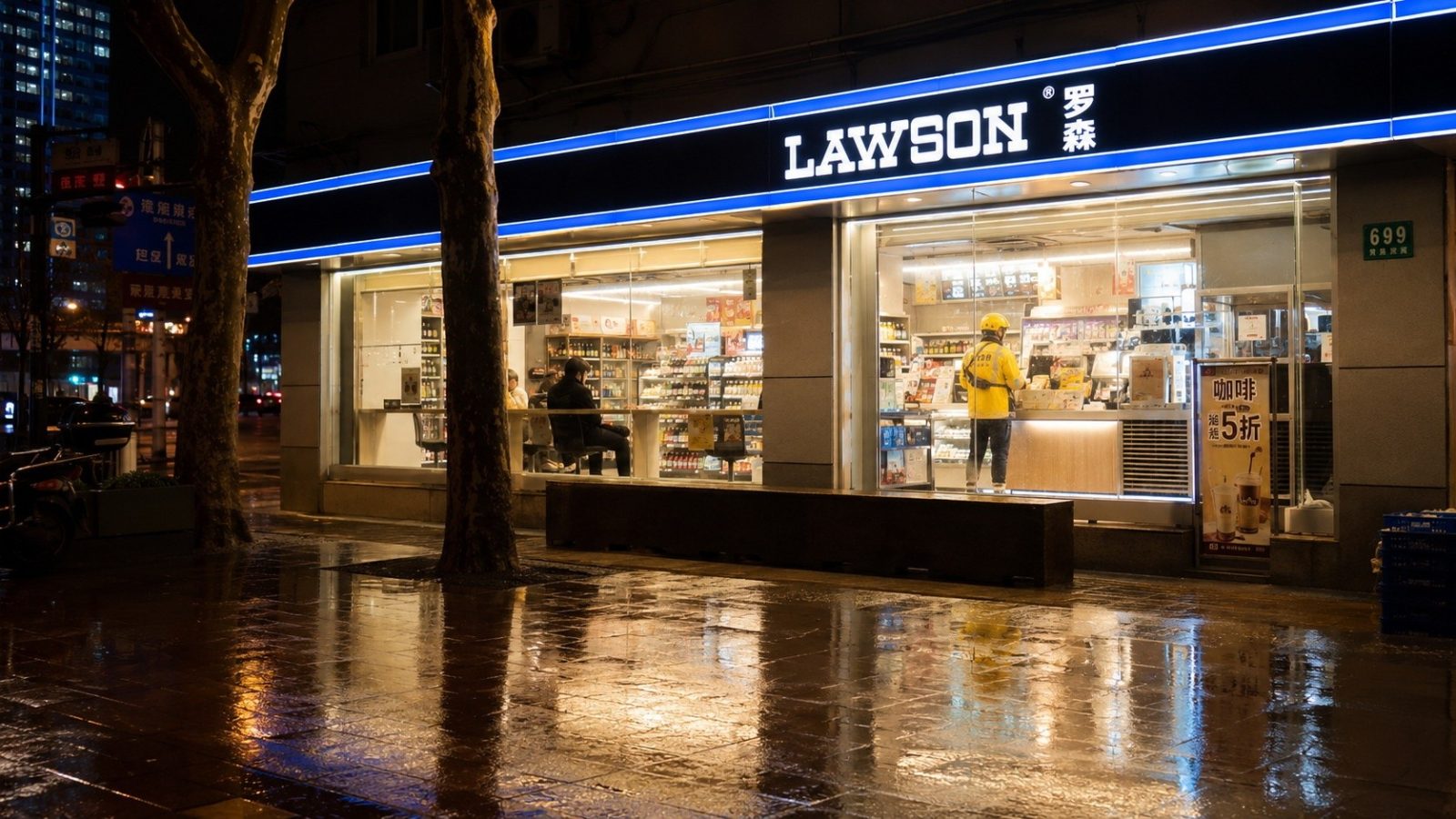
At 2:00 AM, the air conditioning in Chen Wei’s store hums with a steady, low-frequency drone. The fluorescent lights are dimmed to “night mode,” casting a softer, amber glow over the shelves. Outside, the rain has just stopped, leaving the asphalt of the Shanghai street slick and reflective. Inside, it is warm, smelling faintly of roasted corn and fresh coffee.
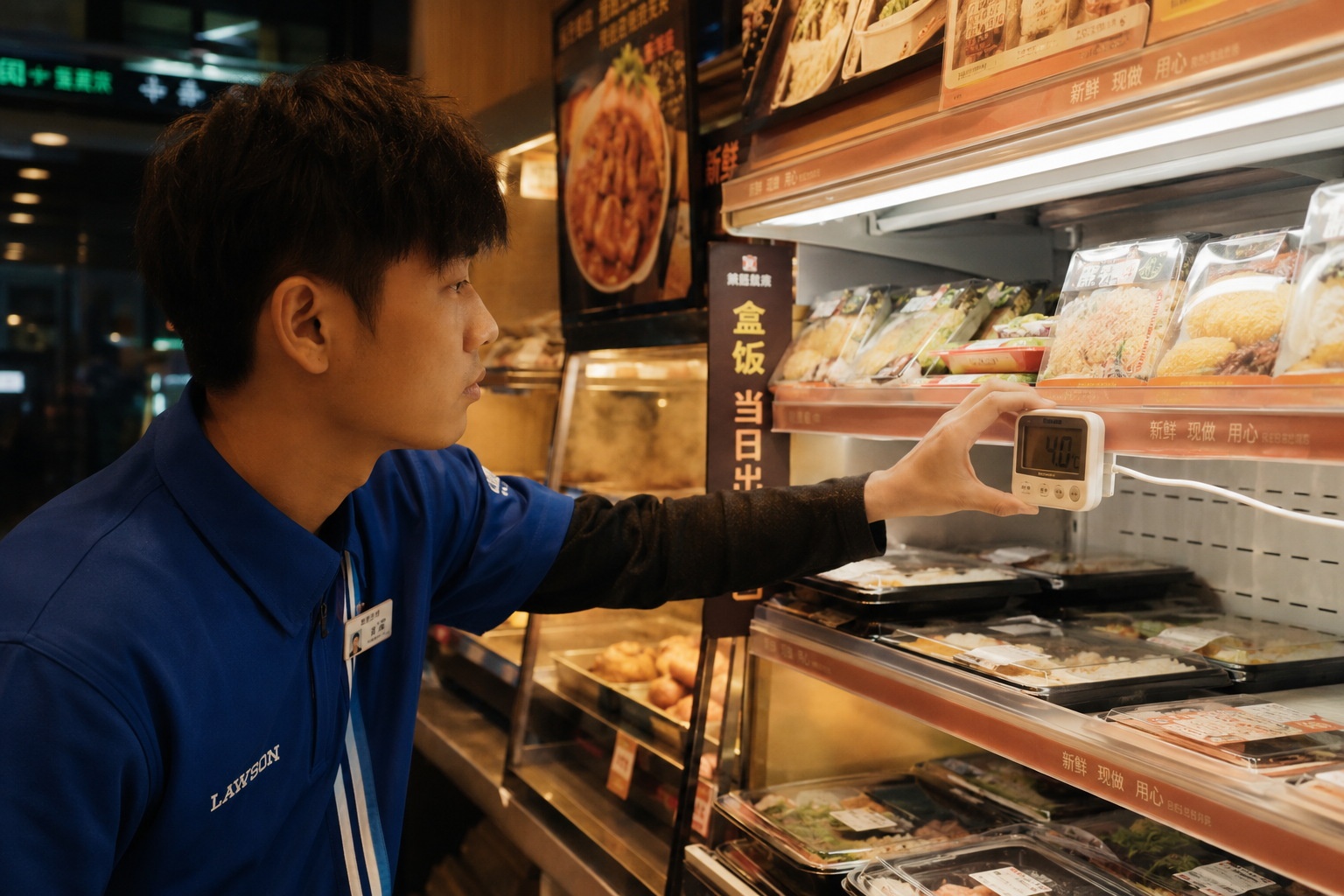
Chen Wei, 28, adjusts his uniform cap and checks the digital thermometer on the bento boxes. This is his third night in a row as the sole operator. In China, convenience stores—chains like FamilyMart, Lawson, and 7-Eleven—are not just places to buy snacks. They are cultural fixtures, offering everything from hot meals and laundry services to package pickup and bill payments. For Chen, this 20-square-meter space is less a shop and more a second home, a sanctuary where the city’s rhythm slows down just enough to be observed.
The City’s Nocturnal Visitors
The door chimes. A young man in a wrinkled suit stumbles in, holding a smartphone. He is likely an office worker who missed the last subway train or stayed late for a project deadline. He doesn’t look at the snacks. He goes straight to the hot food section, buys a steaming bento box and a bottle of barley tea, and sits on the small plastic stools by the window.
This is a common scene. In Chinese megacities, the “996” work culture (9 am to 9 pm, six days a week) has created a demographic that lives on the edge of exhaustion. The convenience store becomes their temporary living room. Chen watches them eat in silence, many scrolling through social media or staring blankly at their screens. He rarely intervenes. His job is not just to sell goods, but to provide a warm, lit space where people can decompress without judgment.
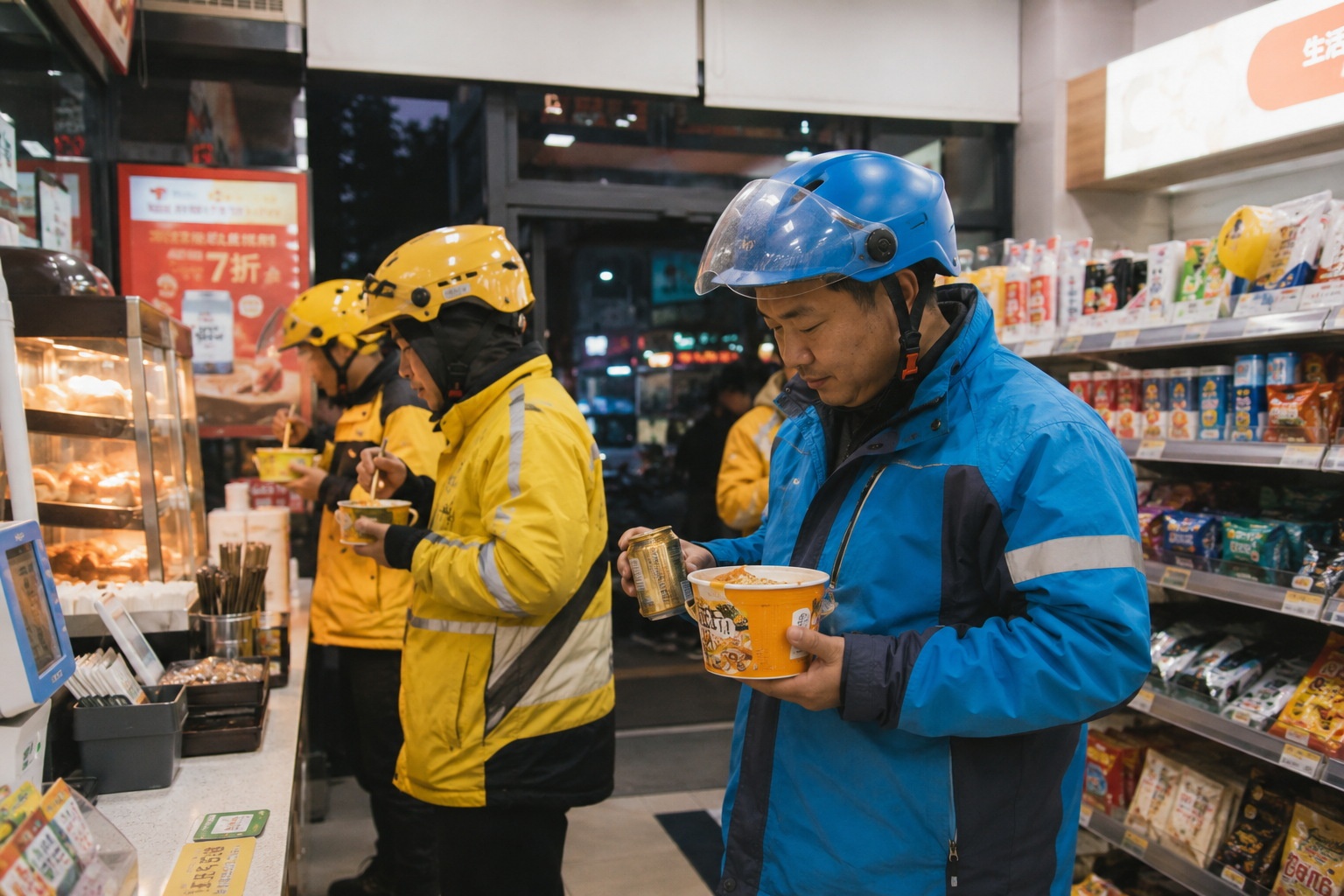
Later, around 3:30 AM, the clientele shifts. Delivery riders in yellow and blue uniforms rush in for energy drinks and instant noodles. They are the logistical veins of the city, moving goods and data at high speed. Chen knows most of them by name. He has a routine: he prepares hot water for their noodles before they even ask, a small gesture of mutual respect between two people who understand the weight of a night shift.
The Invisible Supply Chain
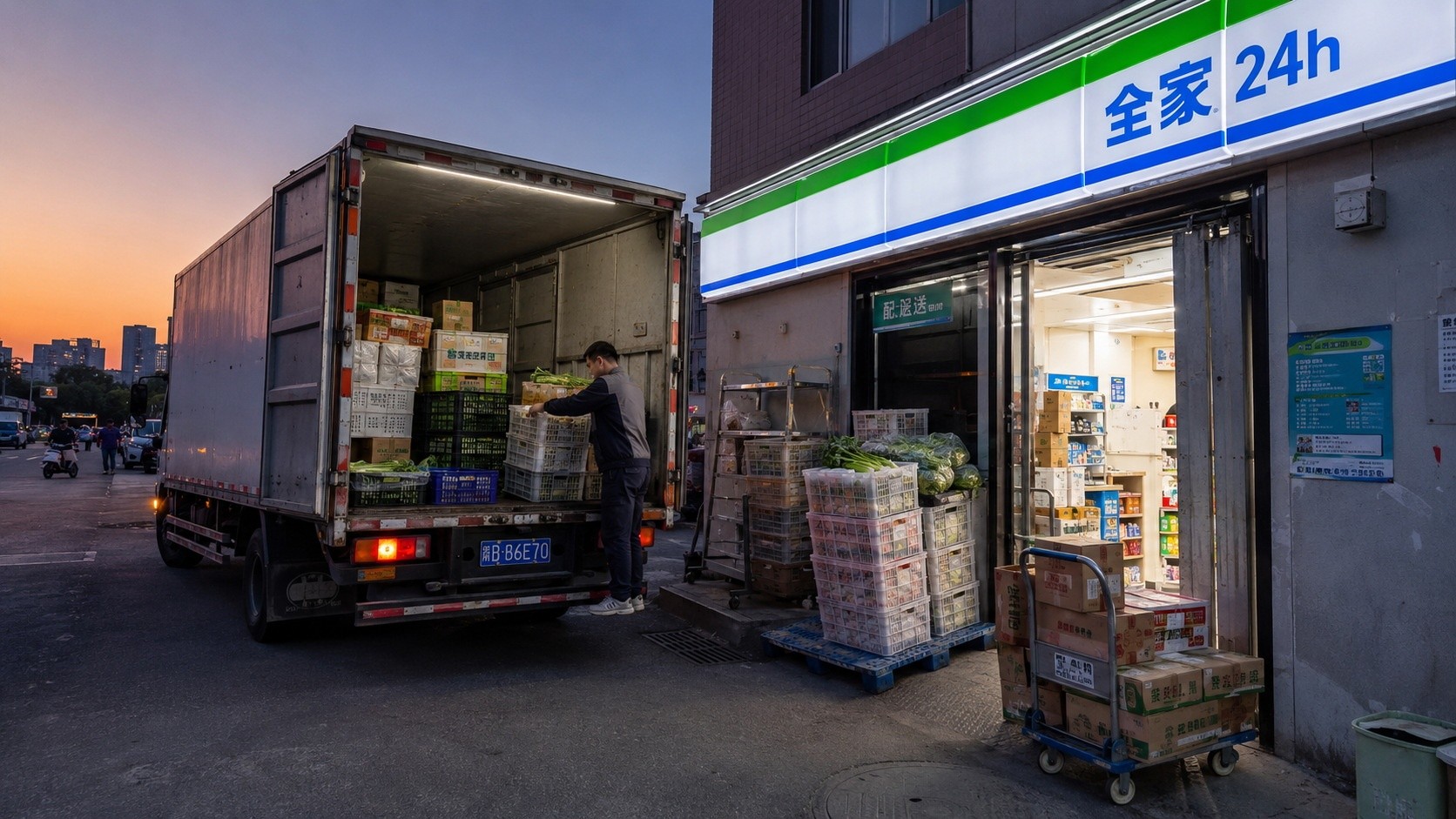
While the store feels static to the customer, it is actually a hub of intense logistical activity. At 4:00 AM, when the street is empty, Chen receives his delivery. The trucks arrive precisely on schedule, guided by an algorithm that predicts demand down to the individual item.
“If we run out of onigiri by 5 AM, the system flags it,” Chen explains, unpacking crates with practiced efficiency. “We don’t guess. We know.” This is the backbone of China’s retail revolution. Unlike Western supermarkets that restock daily or twice a week, Chinese convenience stores often receive multiple deliveries per day for perishable items like sushi, sandwiches, and fresh fruit. The turnover rate is incredibly high. What you buy at 10 PM was likely delivered that same morning.
This efficiency allows the store to operate 24/7 without waste. It is a marvel of data logistics: weather forecasts, local event schedules, and historical sales data are combined to determine exactly how many milk teas or instant noodles to stock. For Chen, it means less time worrying about expired goods and more time managing the human element of the store.
Solitude and Subtle Connections
The hours between 4:00 AM and 6:00 AM are the loneliest. The store is quiet, save for the sound of the refrigerator compressors cycling on and off. Chen sits behind the counter, often reading or checking his phone. In a society that values constant connectivity, this enforced solitude can be heavy.
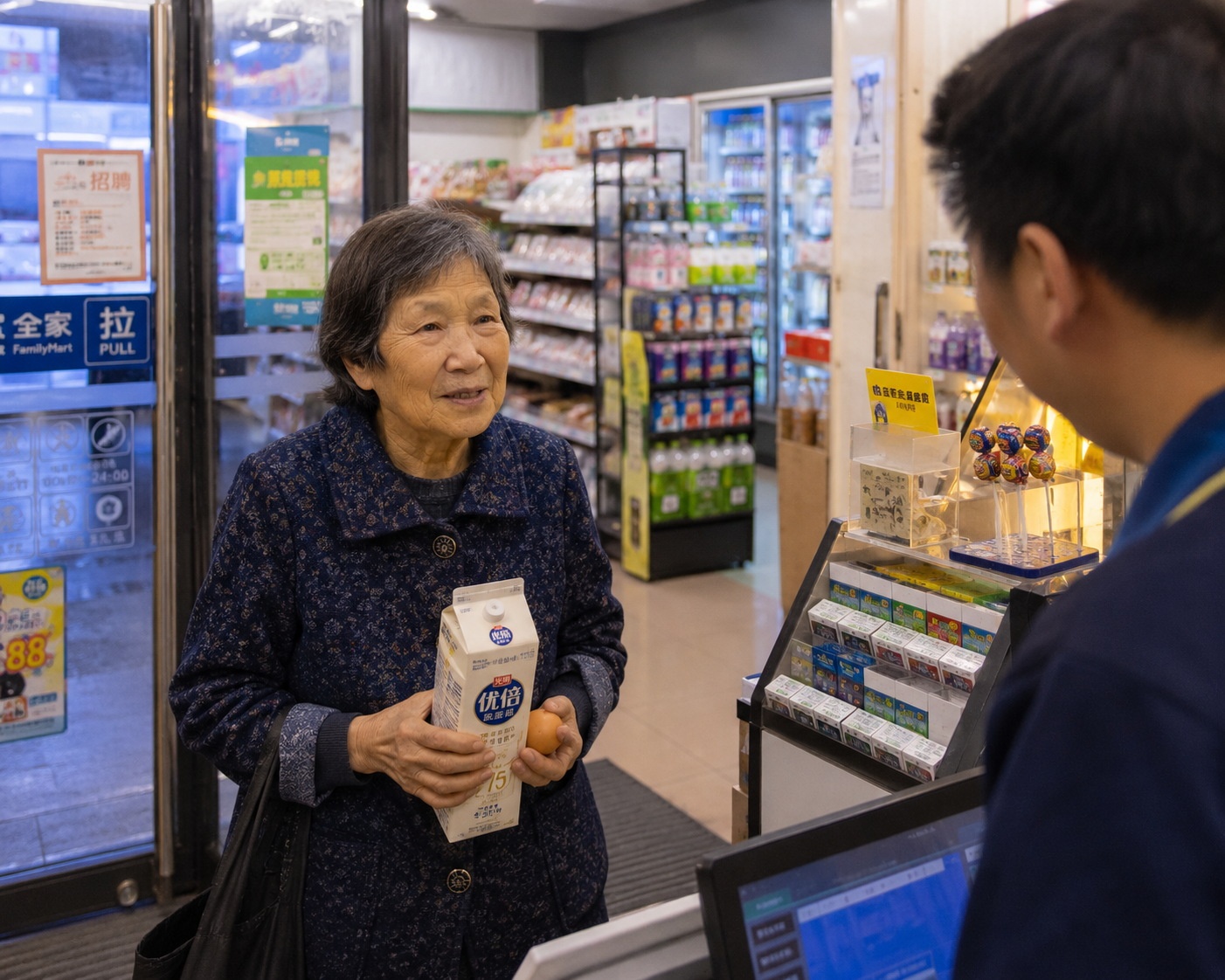
Yet, these moments also breed unique connections. A regular customer, an elderly woman who lives nearby, comes in at 5:00 AM to buy a single egg and a carton of milk. She doesn’t need to speak much. She nods at Chen; he nods back. In the chaos of modern life, this silent acknowledgment is a form of intimacy. It is a recognition that both are part of the same machine, keeping the city running.
Chen reflects on this dynamic. “People think I’m just selling things,” he says, wiping down the counter. “But I’m actually selling time and space. For these few hours, this store is a safe harbor. It’s warm. It’s bright. And it’s open for anyone who needs it.”
A Microcosm of Urban Life
As the sun begins to rise, painting the sky in hues of orange and grey, the first wave of morning commuters appears. The rhythm of the store speeds up. The door chimes constantly. The air fills with the sounds of transactions and greetings.
Chen Wei’s story is not unique. Across China, millions of convenience store managers are starting their days as others go to sleep. They are the unsung guardians of urban infrastructure. Their stores are testaments to a society that values convenience, efficiency, and the subtle dignity of nighttime labor.
For the outside world, these brightly lit boxes might seem like symbols of consumerism. But for those who live inside them, they are something deeper: a testament to resilience, a place of rest in a relentless city, and a home that never closes its door.