

Introduction: The Heartbeat of Sichuan
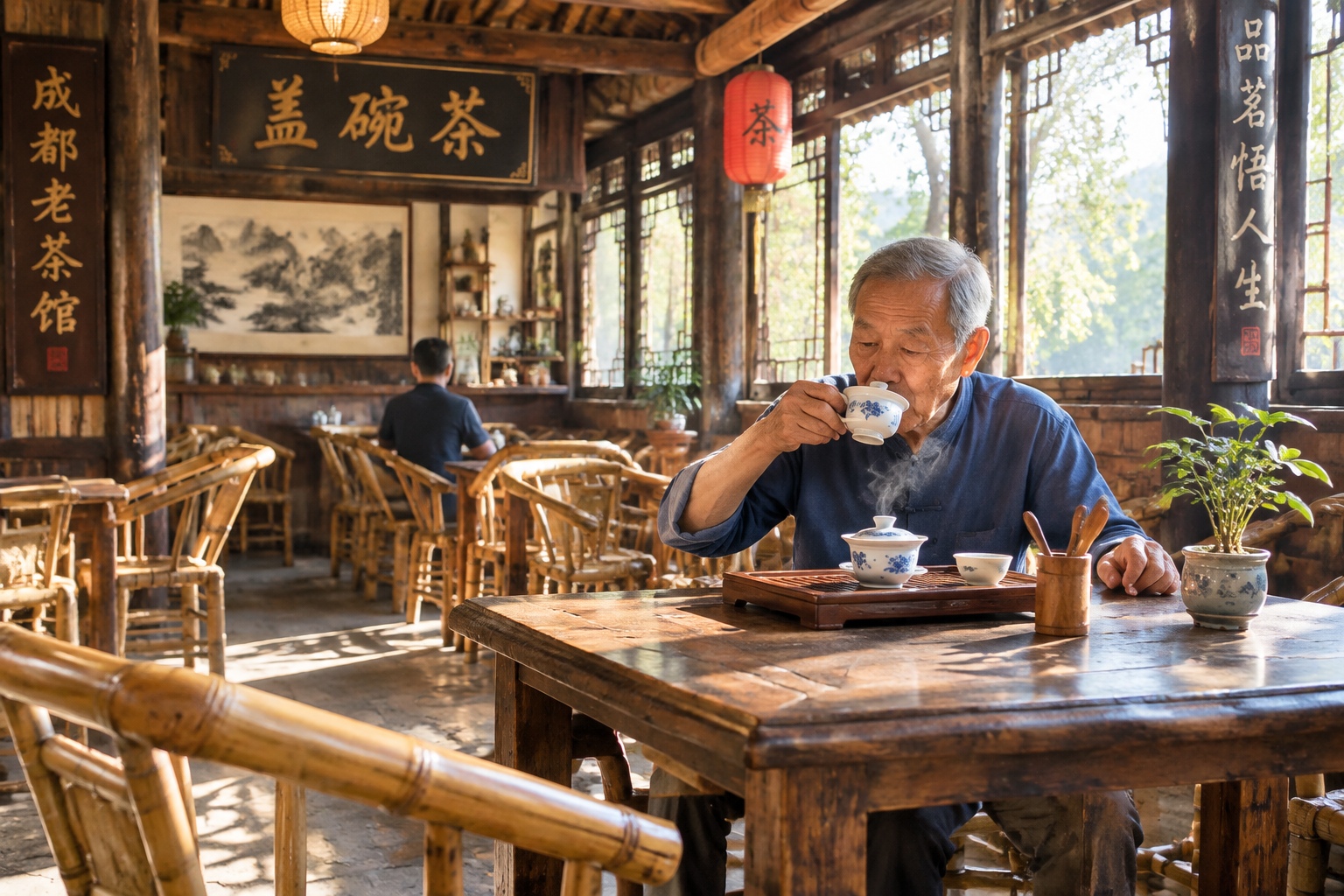
The door slides open, and a wave of warm, humid air — laced with the scent of jasmine tea and tobacco — washes over you. It’s 9 a.m. in Chengdu, and the teahouse is already half full. An elderly man in a faded blue shirt settles into a bamboo chair, nods to the tea master, and within seconds a steaming Gaiwan appears on his table. No menu, no order — just a ritual repeated a thousand times. This is the Sichuan teahouse: a place where time slows down, and the day begins not with coffee but with a cup of loose-leaf tea and the first round of gossip, or longmenzhen.
Bamboo Chairs: Comfort and Tradition
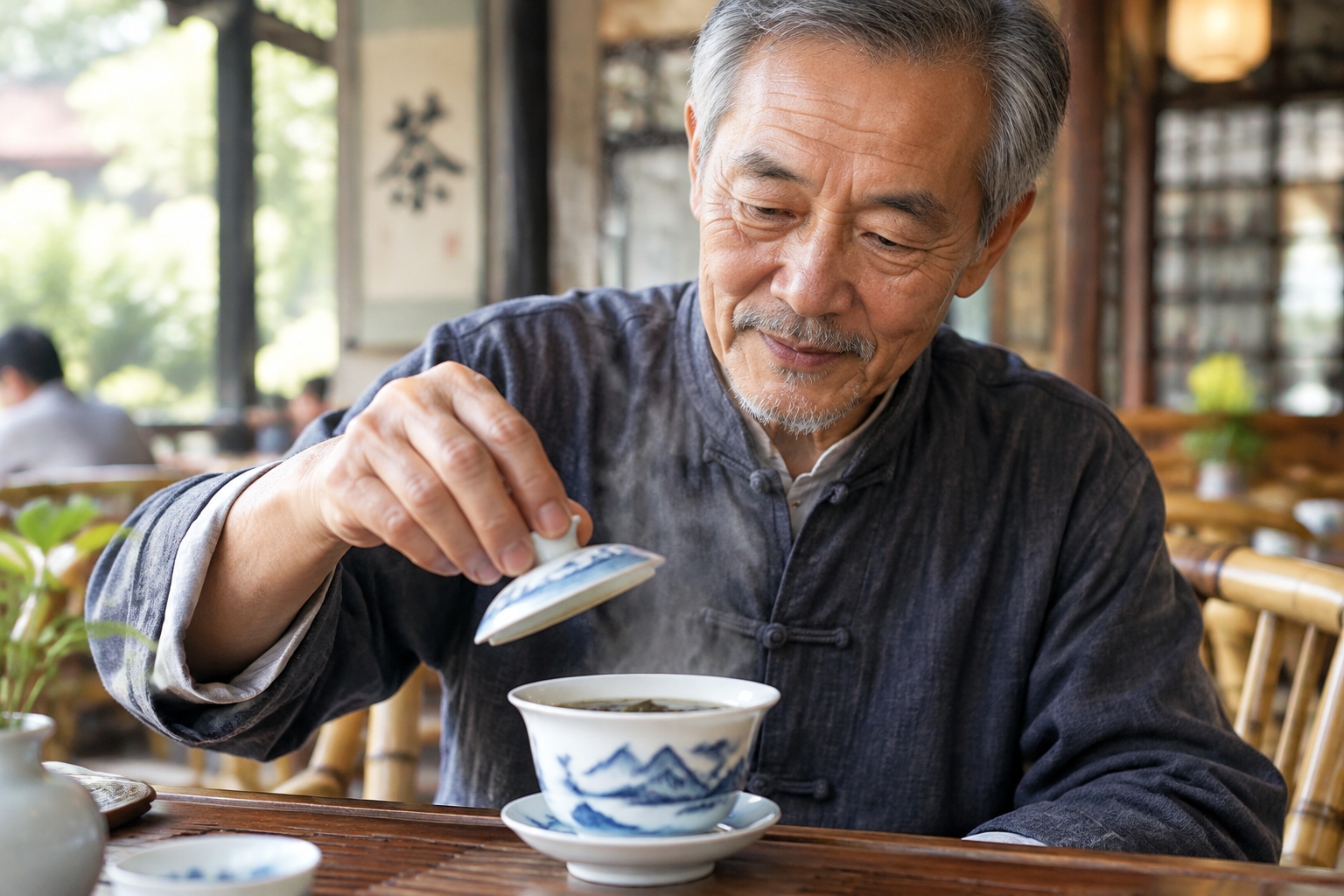
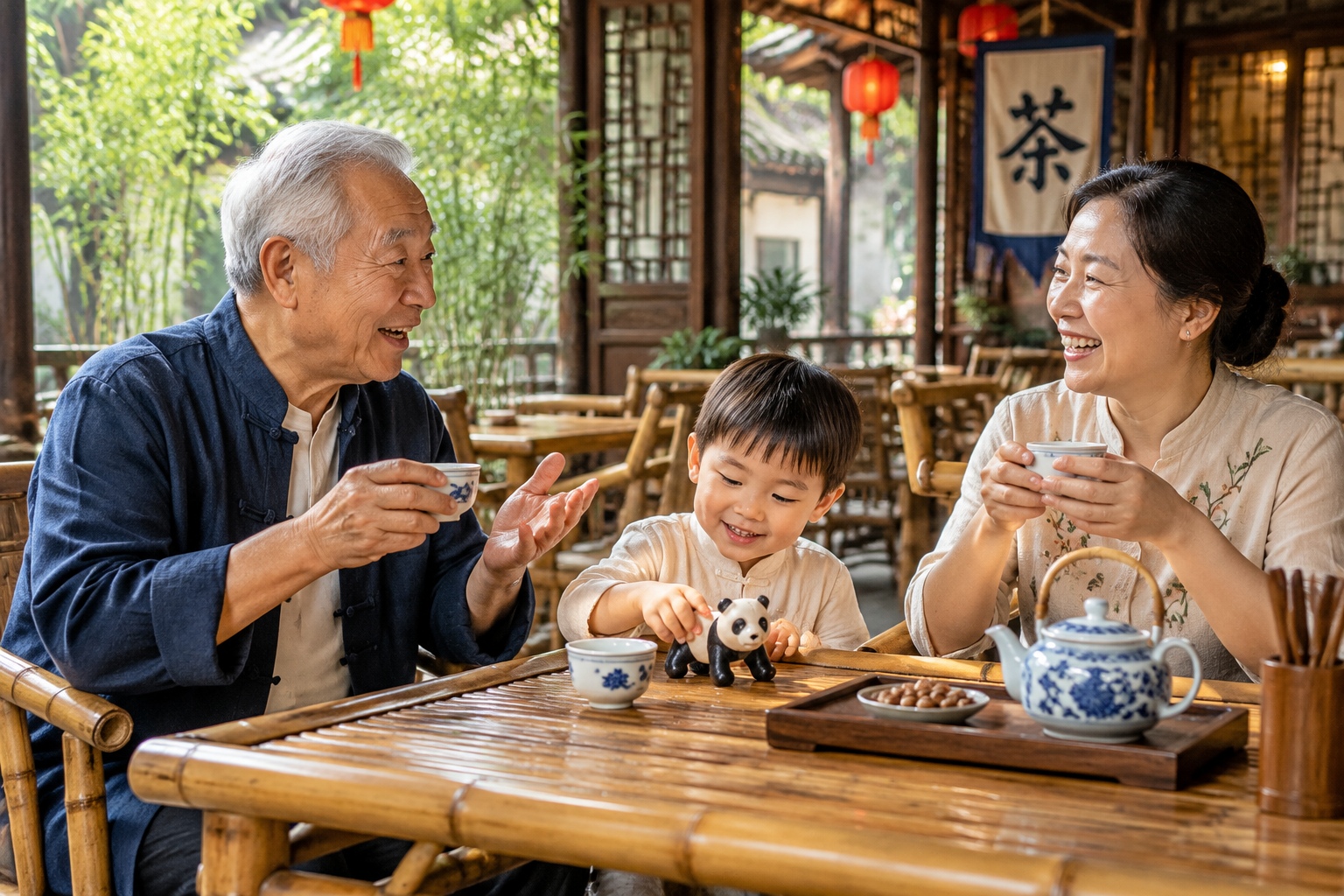
The bamboo chair is the undisputed throne of the Sichuan teahouse. Lightweight, creaky, and perfectly angled for leaning back, these chairs have changed little in centuries. They are often paired with small bamboo tables, stained dark from endless cups of tea. The design is simple but deliberate: the wide armrests invite you to rest your elbows, while the curved back supports a lazy slouch. In summer, the bamboo stays cool against the skin; in winter, a cushion might be added. For many locals, the chair is as much a part of the experience as the tea itself — a symbol of a culture that values ease and conversation over haste.
Gaiwan: The Ritual and Flavor of Tea
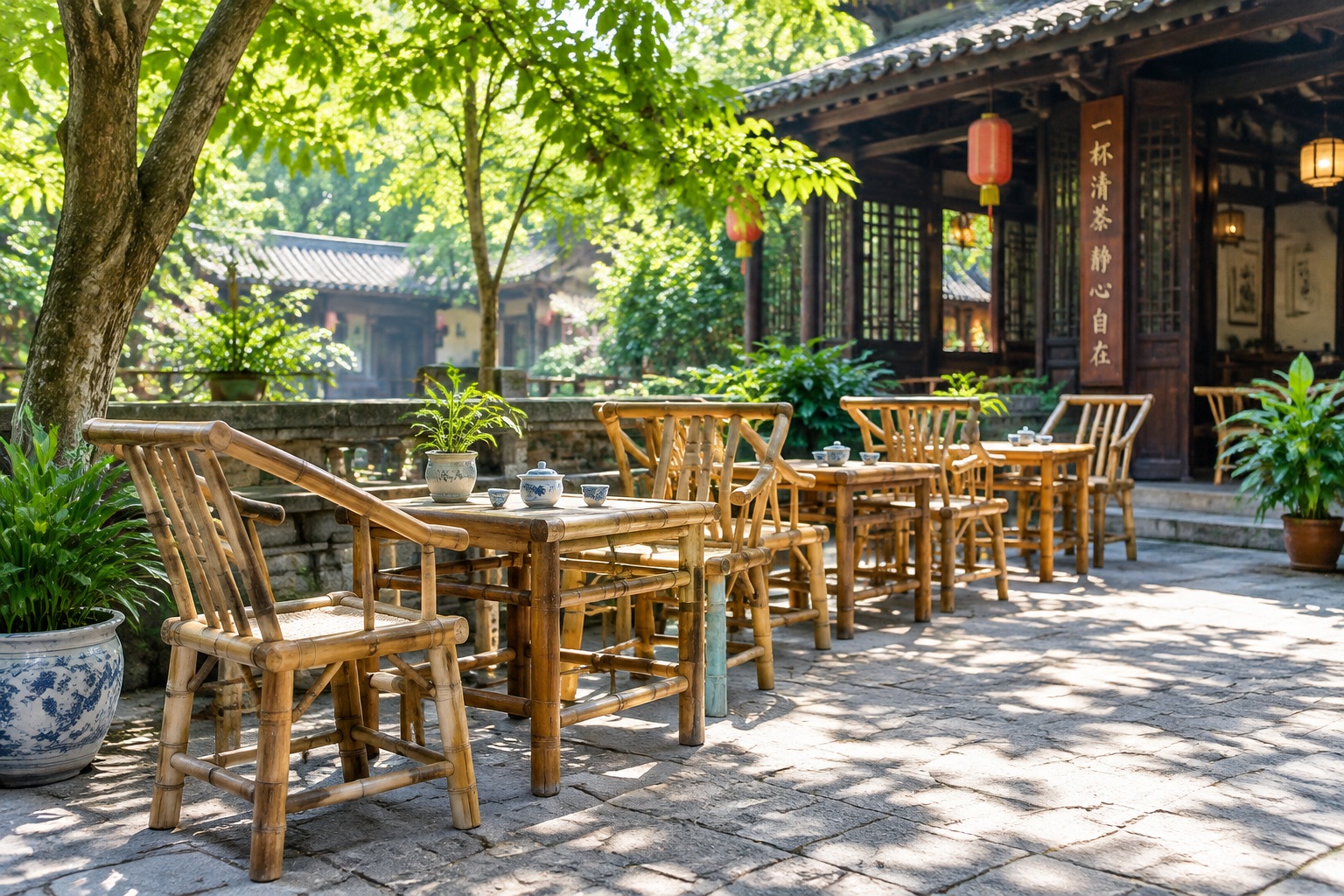
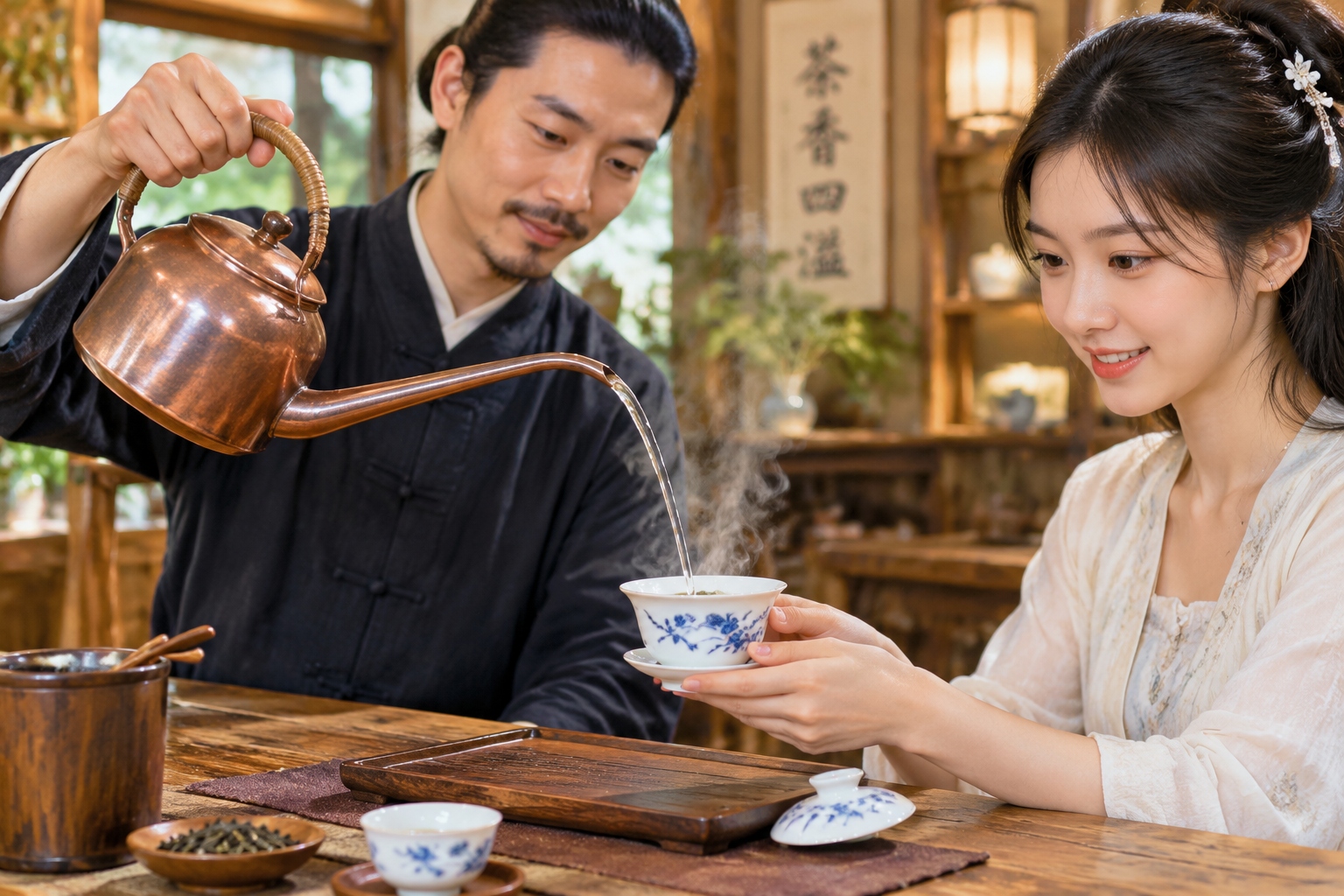
At the center of every table sits the Gaiwan — a lidded bowl with a saucer. The tea master fills it with loose leaves — often jasmine green tea or the local mengding ganlu — and pours hot water from a long-spouted copper kettle. The lid is used to gently push the leaves aside before sipping. The Gaiwan is not just a vessel; it’s an instrument of ritual. Holding the saucer in one hand and lifting the lid with the other, you create a small space between lid and rim to control the strength of each sip. The first infusion is light, the second stronger, the third mellow. No two cups are exactly alike, and the tea master’s skill lies in knowing when to pour — and when to let the leaves rest.
Longmenzhen: Gossip and News
The real heart of the teahouse, however, is the longmenzhen — the casual, freewheeling conversation that flows as freely as the tea. The term literally means “dragon gate formation,” but in practice it refers to the art of chatting, arguing, and storytelling. In the corner, two men debate local politics; near the window, a group of retirees discuss the price of pork; at another table, a young couple scrolls through their phones but still joins the laughter when a joke lands. The teahouse is a microcosm of society — a place where news spreads faster than the Wi-Fi, and where opinions are freely exchanged without agenda. For generations, Sichuanese have used these gatherings to make business deals, settle disputes, and simply pass the time.
Teahouses as Community Centers
Teahouses in Sichuan are not just for old men with birdcages. They are multi-generational community hubs. On weekends, families bring children who play under the bamboo trees while parents sip tea and play mahjong. Young professionals meet here to escape the sterile atmosphere of coffee shops — the noise of clattering tiles and chatter providing a comforting backdrop. Even the tea masters, often called chaitong, are local characters who know everyone’s name and preferred tea. The teahouse is a leveling ground: a businessman and a street vendor can sit side by side, sharing the same pot. In a fast-changing China, these teahouses remain anchors of continuity.
Conclusion: The Enduring Culture Amid Change
Chengdu now boasts more teahouses than any other city in China — over 10,000, by some estimates. Yet modernity is creeping in: some teahouses now offer Wi-Fi and iced tea, and young baristas sometimes replace the old tea masters. But the bamboo chairs remain. The Gaiwan remains. And the longmenzhen continues, unabated. The Sichuan teahouse is not a museum piece; it is a living tradition, adapting without losing its soul. So next time you find yourself in Chengdu, pull up a bamboo chair, order a Gaiwan, and join the conversation. The tea is always hot, and the gossip is always fresh.
Start the discussion at forum.chinacomes.com