
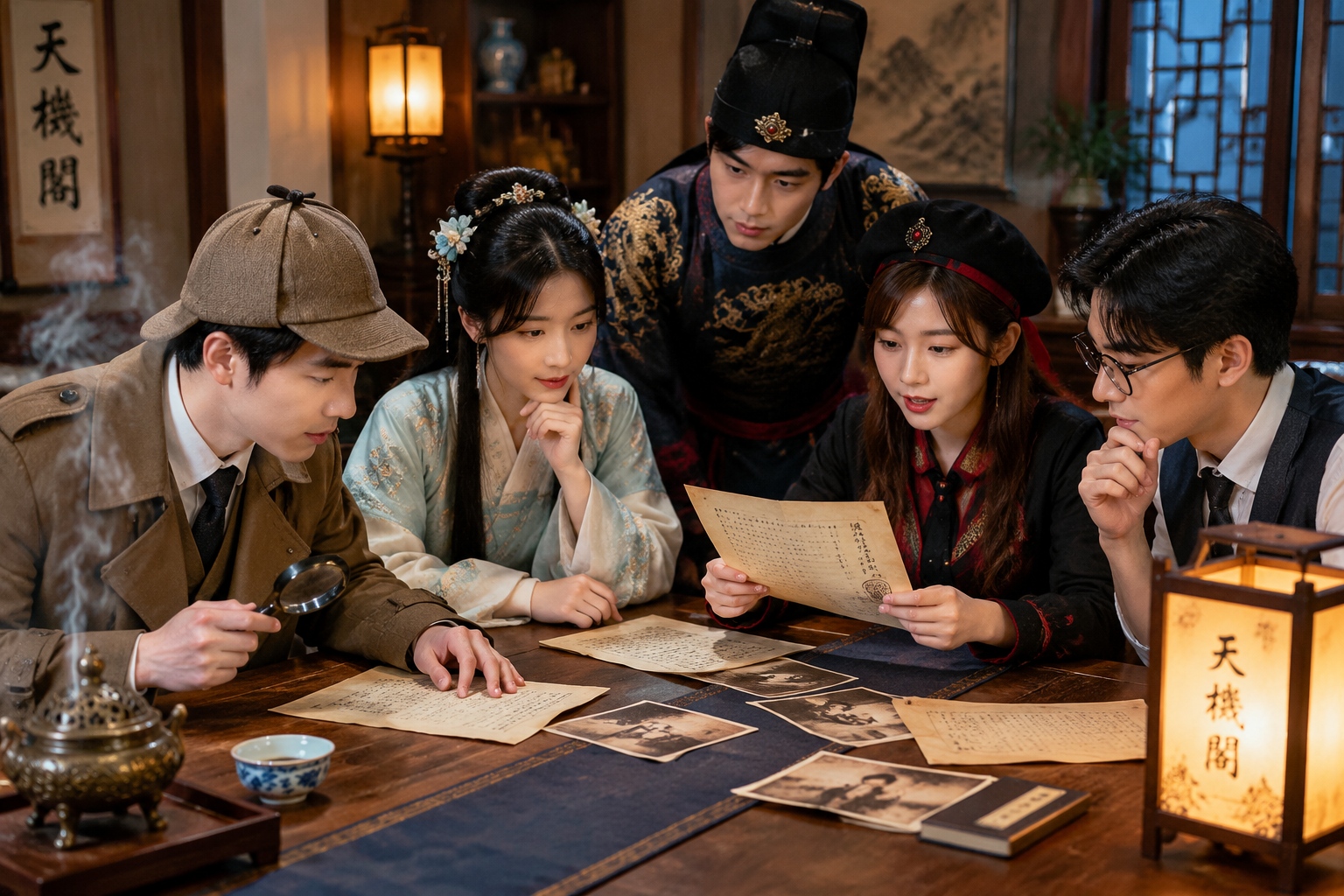

What Exactly Is ‘Script-Killing’?
If you haven’t heard of ‘jubensha’ (剧本杀) – literally ‘script killing’ – you might picture a dark room, candles, and people accusing each other of murder. You’re not far off. It’s a form of live-action roleplaying (LARP) where 6–10 players gather around a table, each assigned a character with a secret backstory. Together, they must unravel a crime – usually a murder – through conversation, evidence gathering, and logical deduction. The game lasts three to five hours, and you don’t just talk; you become someone else: a grieving widow, a cunning detective, a mysterious heiress. Costumes, props, and even custom sets are part of the deal.

Unlike traditional board games that rely on luck or strategy, script-killing is driven by narrative and performance. Think of it as an interactive theatre where you are both actor and audience. The game master (GM) narrates the plot, controls the pace, and reveals clues, but the players carry the story forward. No two sessions are ever the same because every player brings their own interpretation.
Why Young Chinese Can’t Get Enough of It
Walk into any game store or dedicated script-killing venue on a weekend in Beijing, Shanghai, or Chengdu, and you’ll find rooms packed with 20-somethings. According to a 2023 industry report, the Chinese script-killing market was valued at over 15 billion yuan, with more than 30,000 venues nationwide. Why the craze?
For one, it fills a void in social life. In big cities, young professionals often feel isolated – work consumes most of their time, and making new friends isn’t easy. Script-killing offers a structured yet intimate way to meet people. You’re forced to talk, to negotiate, to accuse, and to comfort – all within a safe fictional frame. ‘During a game, I can cry, laugh, or yell at someone, and it’s okay because it’s just a role,’ says Wang Xin, a 26-year-old marketing manager from Hangzhou. ‘Afterwards, we grab dinner and talk about real life.’
Another draw is the adrenaline rush. Solving mysteries taps into a universal human curiosity, and the competitive element – who is the killer? – keeps everyone engaged. Unlike online games where you stare at a screen, here you look into people’s eyes, read their body language, and pick up on subtle tone shifts. That human interaction is exactly what many feel they’re missing in the digital age.
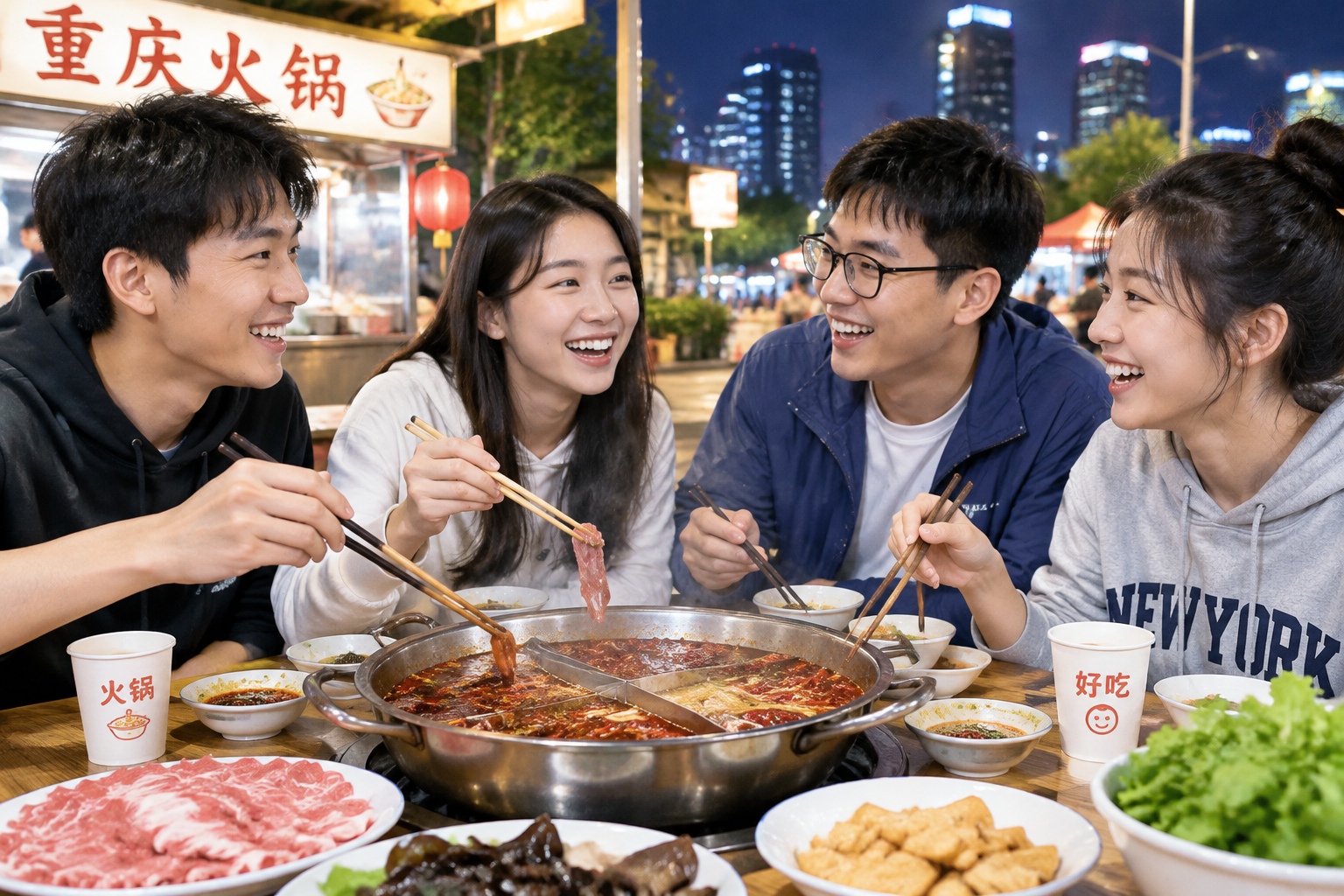
Finally, script-killing is an affordable escape. A typical session costs 100–300 yuan (about $14–$42), which includes costumes, drinks, and a fully decorated room. For a few hours, you forget your rent, your boss, your deadlines. You become a 1920s gangster or a fantasy wizard. ‘It’s like a mini-vacation from yourself,’ says Zhang Lei, a 24-year-old graduate student.
Inside a Typical Script-Killing Store: A Night Out
I visited ‘Mystery Manor’ (神秘庄园), a popular venue in Guangzhou’s Tianhe district. The moment you step in, the concrete city melts away. The reception area is dimly lit, with vintage lamps and velvet curtains. A shelf holds dozens of thick binders – each one a script. You flip through descriptions: ‘Romance in Republican-era Shanghai’, ‘Haunted mansion on a stormy night’, ‘Sci-fi conspiracy aboard a space station’. My group of friends chose ‘The Last Banquet’, a historical drama set in the Tang Dynasty.
The host, a young woman named Mei, ushers us into a changing room. We trade jeans and sneakers for silk robes and embroidered shoes. She hands each of us a sealed envelope containing our character bio, goals, and secret tasks. We are introduced as a disgraced general, a court musician, a foreign diplomat, a concubine, a merchant, and an imperial chef. All suspects in the poisoning of the emperor.
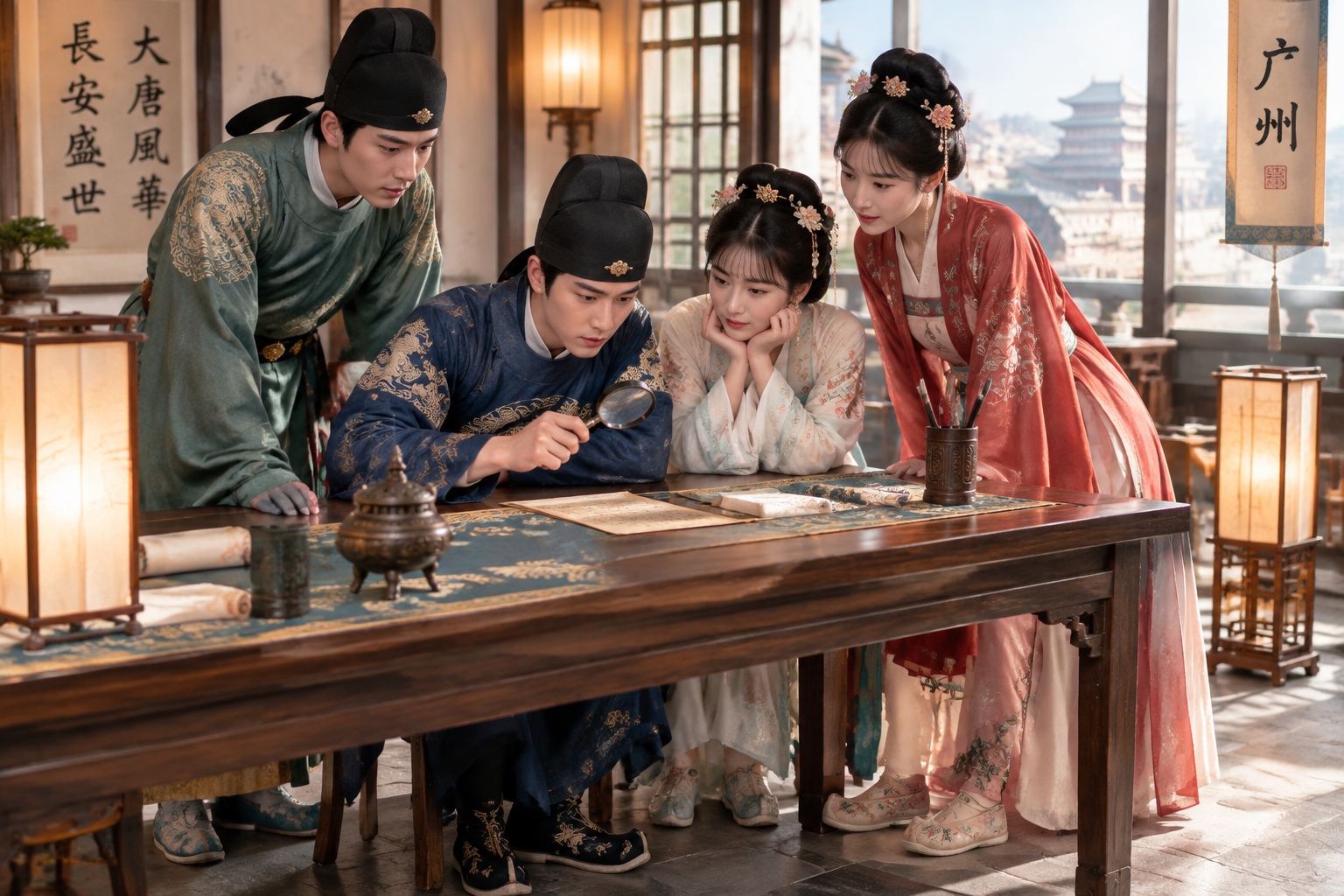
The game takes place in a replica Tang dynasty hall – painted beams, calligraphy scrolls, and a long rosewood dining table lit by paper lanterns. Mei lights incense, a low drumbeat plays, and the story begins. For the next three hours, we argue, flirt, bluff, and uncover hidden relationships. My character had a secret affair with the general, which I had to hide while also planting evidence against the merchant. The tension was real – I caught myself sweating under my robe.
At the climactic reveal, everyone gasped when the true killer was exposed. We laughed and replayed our best moments over hotpot afterwards. ‘It’s better than a movie,’ my friend Chen Lin said. ‘Because we made the story.’
Blending Mystery, Performance, and Social Connection
Script-killing is more than a game; it’s a cultural phenomenon that sits at the intersection of mystery fiction, improvisational theater, and social networking. Top-tier scripts are written by professional novelists and screenwriters, with branching storylines and multiple endings. Some scripts have been turned into novels and even short films.
Social media fuels the trend. On platforms like Xiaohongshu (Little Red Book) and Douban, players share after-game reviews, character analysis, and costume photos. Hashtags like #剧本杀 not only promote the game but also create a community of enthusiasts who organize meetups and even propose to partners met through games. The industry has spawned full-time writers, game masters, prop designers, and themed cafes.
But the very success of script-killing exposes its vulnerability. The market is flooded with copycat or poorly written scripts. A bad script – with illogical plots, flat characters, or unbalanced clues – can ruin an evening. Many venues struggle to maintain quality and original content, especially as rent and licensing costs rise. ‘We have to curate our library carefully,’ says Xiao Li, owner of a store in Chengdu. ‘Players are getting pickier – they’ve played dozens of games already, so they want fresh experiences.’
Challenges and Future Trends
The biggest hurdle facing the industry is intellectual property. Popular scripts are often pirated and sold online for a fraction of the price, hurting creators and stores alike. Some cities have also introduced regulations to ensure safety and content standards – for example, banning violent or sexually explicit scripts and requiring game masters to have basic training. The pandemic dealt a blow, but the industry bounced back quickly in 2023.
Looking ahead, expect to see more immersive experiences. High-end venues now offer ‘full-dive’ script-killing, where the entire store is transformed into a single story world – actors play NPCs (non-player characters), and the game lasts entire weekends. Technology will also play a role: augmented reality glasses that overlay clues onto real objects, apps that help you track evidence, and even cross-city online games where players interact via video link. However, the core appeal – emotional connection and storytelling – will remain analogue.

Script-killing reflects a generation’s yearning for authentic connection in an increasingly digital world. It’s not just about finding the killer; it’s about finding yourself in someone else’s shoes – and making real friends along the way. So next time you’re in China, ask a local to take you to a script-killing session. You’ll leave with a story to tell, and maybe a group of new friends.
Start the discussion at forum.chinacomes.com