
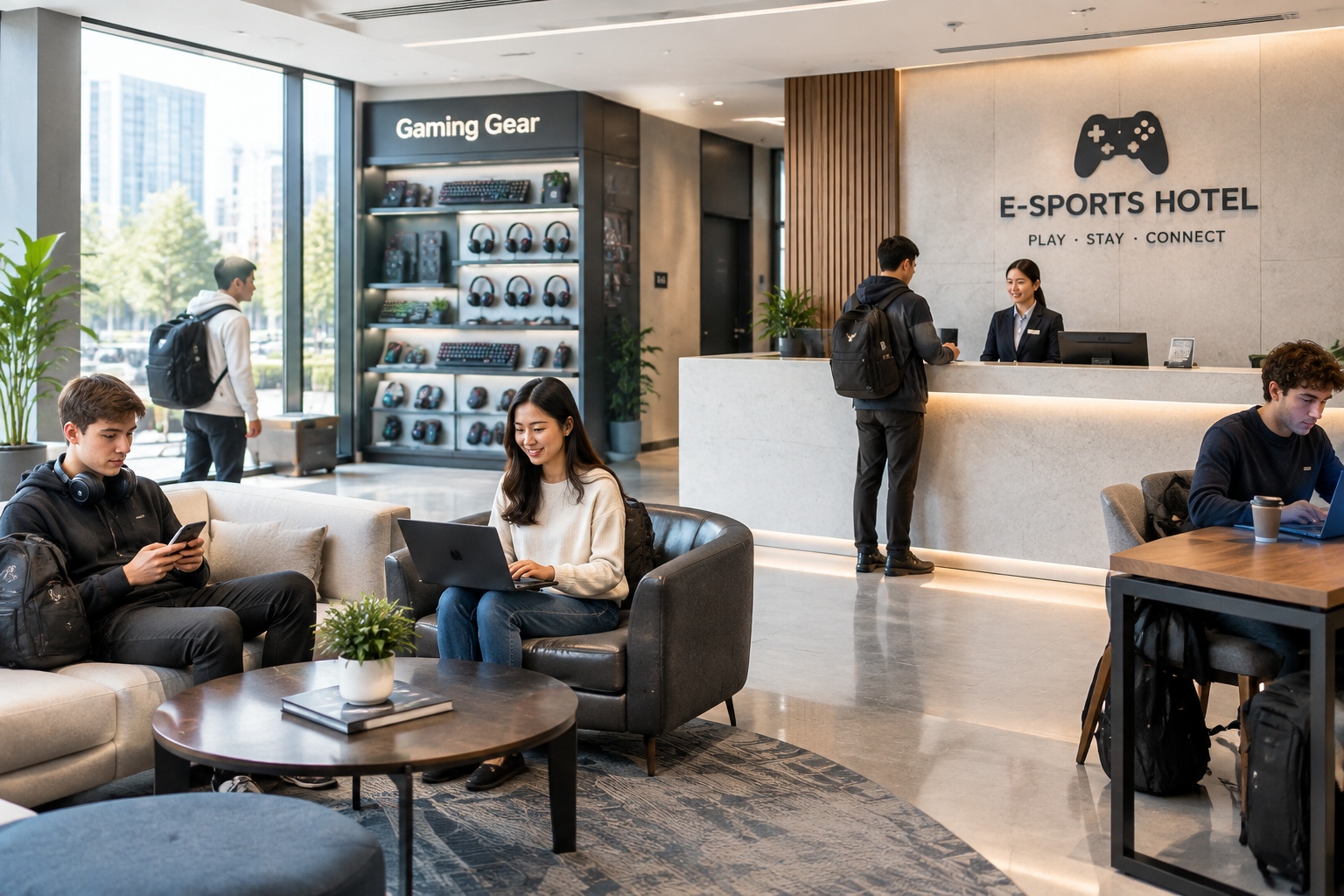

Beyond a Gaming Room: What an E-Sports Hotel Actually Is
When Lin Wei checks into a hotel in Chengdu, he does not look for the standard “gaming package” that some traditional chains still market. He looks for a dedicated e-sports room. The difference is structural and operational. A standard gaming room often means one mid-range PC tucked into a corner of a regular bedroom, paired with thin curtains and poor ventilation. An e-sports hotel, by contrast, treats the computer setup as the core product. Each room is designed around acoustics, ergonomics, and equipment reliability. Floors are carpeted to dampen noise. Walls use acoustic panels. The beds are separated from the desk zone, allowing players to run a marathon session without sacrificing sleep quality. This shift from novelty to standardized accommodation reflects how gaming has moved from a niche hobby to a daily routine for millions of young Chinese adults.
The Hardware on Display
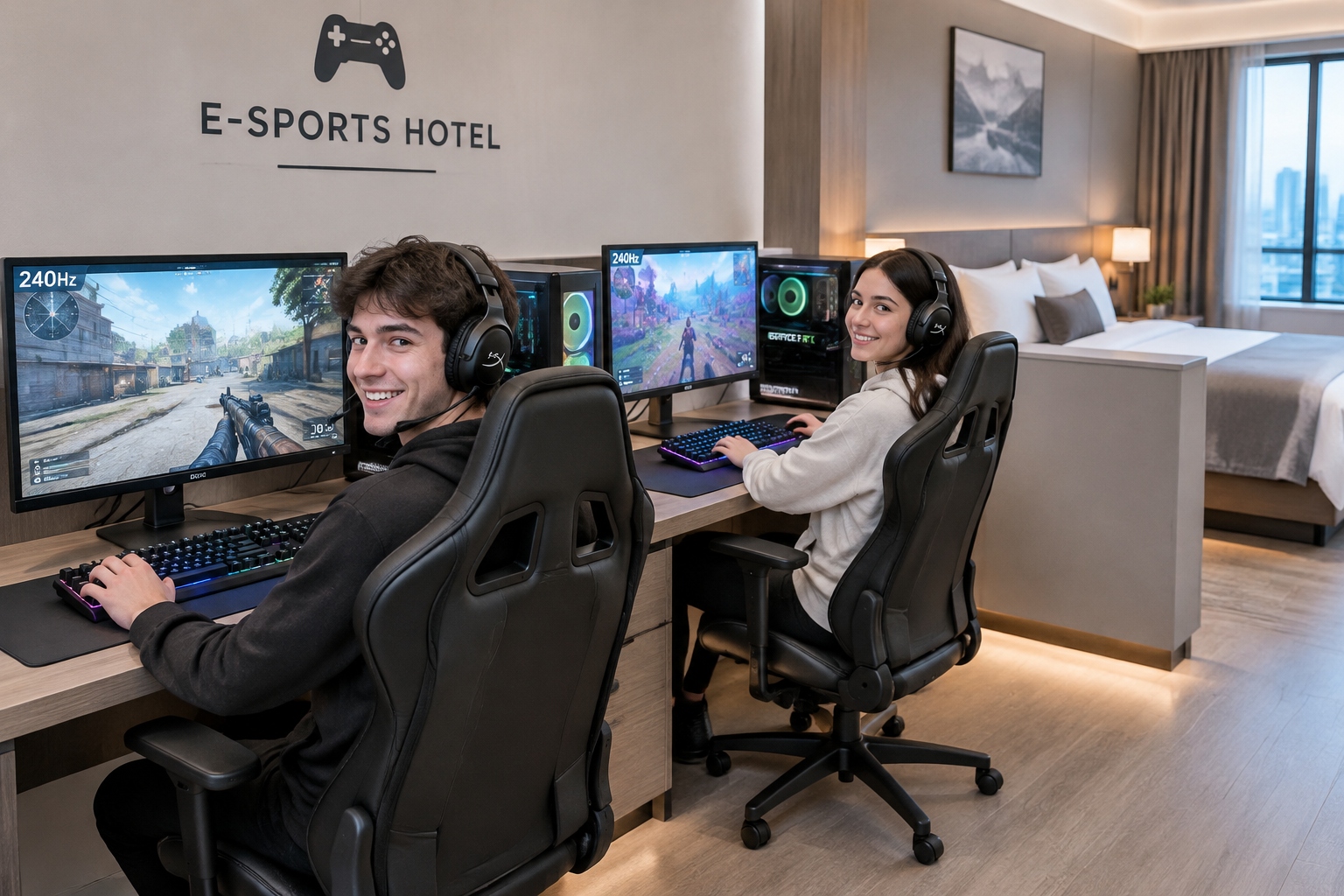
Step inside a typical room in a major chain like Huoying or Yijia E-Sports Hotel, and the first thing you notice is the consistency of the hardware. Most rooms feature dual or quad setups running NVIDIA RTX 40-series graphics cards, paired with 240Hz monitors. Keyboard and mouse stations are stocked with mechanical switches and ergonomic chairs designed for eight-hour sessions. Beyond PCs, many properties now include PlayStation 5 or Xbox consoles, and a growing number offer VR headsets for casual group play. What distinguishes these hotels from a home gaming rig is the maintenance cycle. IT staff rotate equipment weekly, run stress tests overnight, and replace peripherals before latency or input lag becomes noticeable. For players who travel frequently, this predictability matters as much as the gear itself. You know exactly what performance you will get, whether you are in Shenzhen or Xi’an.
Who Books These Rooms?
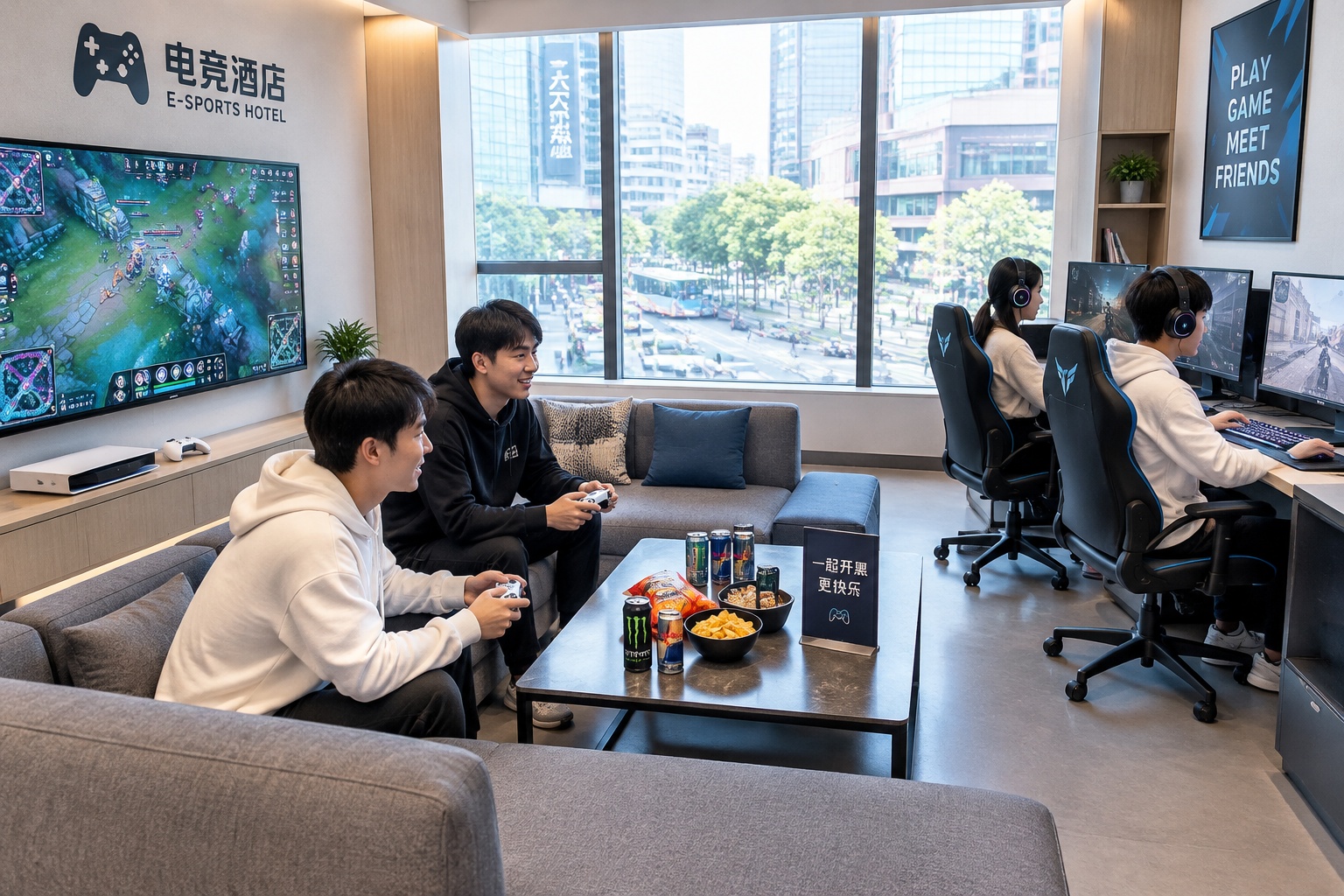
The guest profile has evolved alongside the hardware. Early e-sports hotels catered mainly to college students sharing cramped bunk beds. Today, solo travelers make up a significant portion of bookings. Young professionals attending conferences or client meetings in other cities often reserve a room for the evening to unwind with familiar titles. Small friend groups booking two or three adjacent rooms have also become common, especially during holiday weekends. Tournament players and academy teams use these spaces for scrims and strategy sessions, leveraging the stable fiber connections that most chains now guarantee at 500 Mbps or higher. The market has clearly segmented into privacy-focused suites for individuals and larger multi-room packages for groups, moving away from the crowded LAN hall model of the past.
Pricing, Occupancy, and the Business Model
The economics of e-sports hotels differ from traditional hospitality. A standard four-person gaming room in a tier-two city typically ranges from 200 to 350 RMB per night. Premium suites with top-tier rigs and private lounges can exceed 600 RMB. While this places them slightly above mid-range business hotels, the value proposition lies in the hardware depreciation cycle and ancillary revenue. Chains replace graphics cards and monitors every 18 to 24 months, a cost factored into room pricing. Occupancy rates consistently sit between 70 and 85 percent in major cities, spiking above 90 percent during national holidays or when major leagues like the LPL or KPL schedule regional finals. Revenue also comes from in-room snack bars, branded peripherals, and corporate bookings for team-building events. Unlike traditional hotels that rely on long-term real estate appreciation, e-sports hotels operate on high turnover and technology refresh cycles, making cash flow management and guest retention critical.
More Than Sleeping: LAN Parties and Community Hubs
The physical layout of these properties is shifting to support social play. Many chains now dedicate ground-floor space to a shared gaming lounge or small tournament arena. These areas host weekend bracket tournaments, watch parties for major esports titles, and casual drop-in sessions where guests can test new peripherals or join public lobbies. Some hotels partner with local streamers to host weekly meetups, turning the property into a recurring venue rather than a one-night stopover. This community layer addresses a gap in urban life: young professionals who game regularly often lack a third space that combines comfort, reliable internet, and like-minded players. The hotel model fills that void without the noise or security restrictions of traditional internet cafes.
The Reality Check
The model is not without friction. Rapid expansion has led to market saturation in first-tier cities, triggering price competition that sometimes compromises maintenance standards. Hygiene remains a common concern; shared keyboards and headsets require strict cleaning protocols that vary across independent operators. Fire safety and content moderation also face stricter scrutiny, as local authorities monitor occupancy logs and screen time to comply with regulations on youth gaming. Additionally, the hardware-heavy business model leaves little margin for error during economic slowdowns, when discretionary spending on premium accommodation drops. Chains that survive will likely be those that standardize operations, invest in sustainable tech refresh cycles, and build loyalty programs rather than relying on short-term hype.
Start the discussion at forum.chinacomes.com