

When Beauty is Just a Label
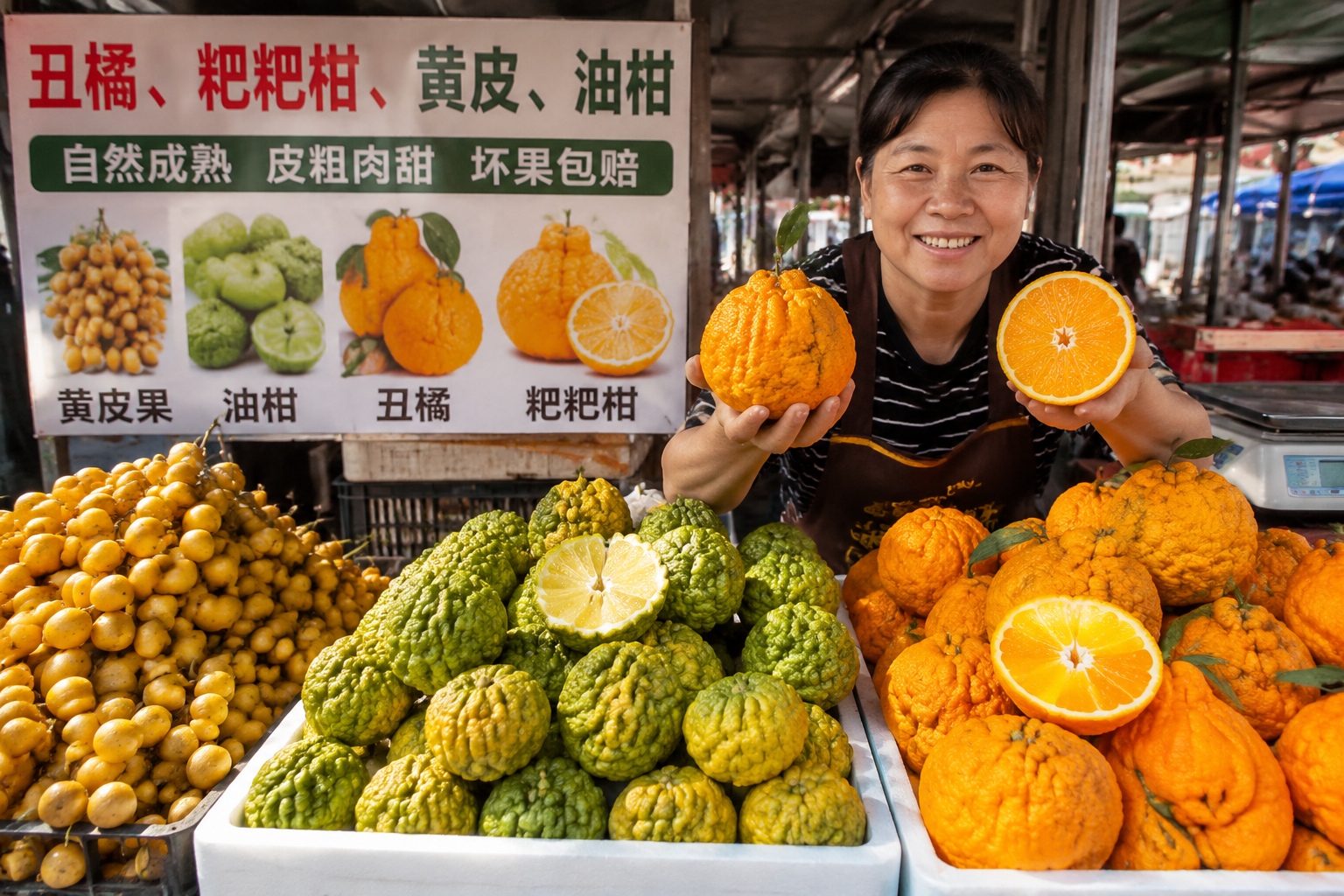
In Western supermarkets, you are trained to pick the perfect apple: smooth skin, no blemishes, symmetrical shape. It looks like it was carved by a machine. But walk into a wet market in Guangzhou or Chengdu, and you will see something different. Here, the most prized fruits often look messy, bumpy, or strangely shaped.
Take the Huangpi (Chinese Hovenia). It looks like a cluster of tiny, wrinkled green grapes that haven’t ripened yet. To a Western eye, it might look underdeveloped or even slightly rotting. But peel back that rough skin, and you find translucent flesh bursting with a complex honey-and-floral sweetness.
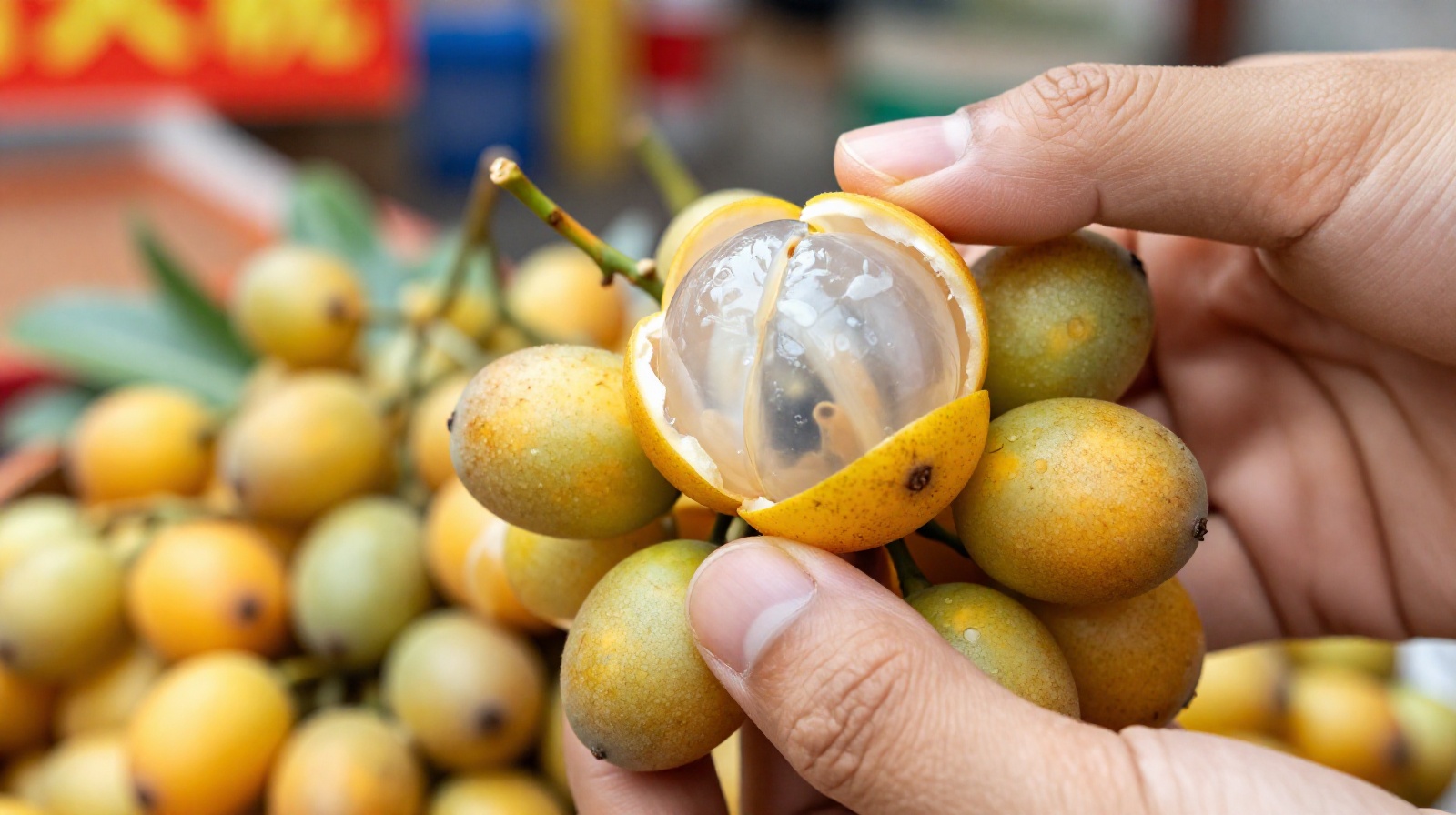
Then there is the Nance (often called Rampan in English contexts), known locally for its bumpy, yellow-orange skin. It doesn’t look like the pristine peaches you see in grocery stores back home. Yet, inside lies a creamy, custard-like texture with a sugar punch that leaves you craving more.
The ‘Ugly’ Orange Phenomenon
Perhaps the most famous example is the ‘Chou Ju’ (Ugly Mandarin). These oranges are lumpy, covered in thick, rough skin, and often have a distinct orange hue that looks almost muddy compared to their California cousins. They don’t fit the standard export mold of being shiny and uniform.
But for anyone who has tried one, the ‘ugliness’ is actually a sign of quality. The thick skin protects the fruit during its long journey from remote farms in Sichuan or Hunan to bustling cities. Inside, the segments are so juicy and sweet that they melt in your mouth without any bitterness.
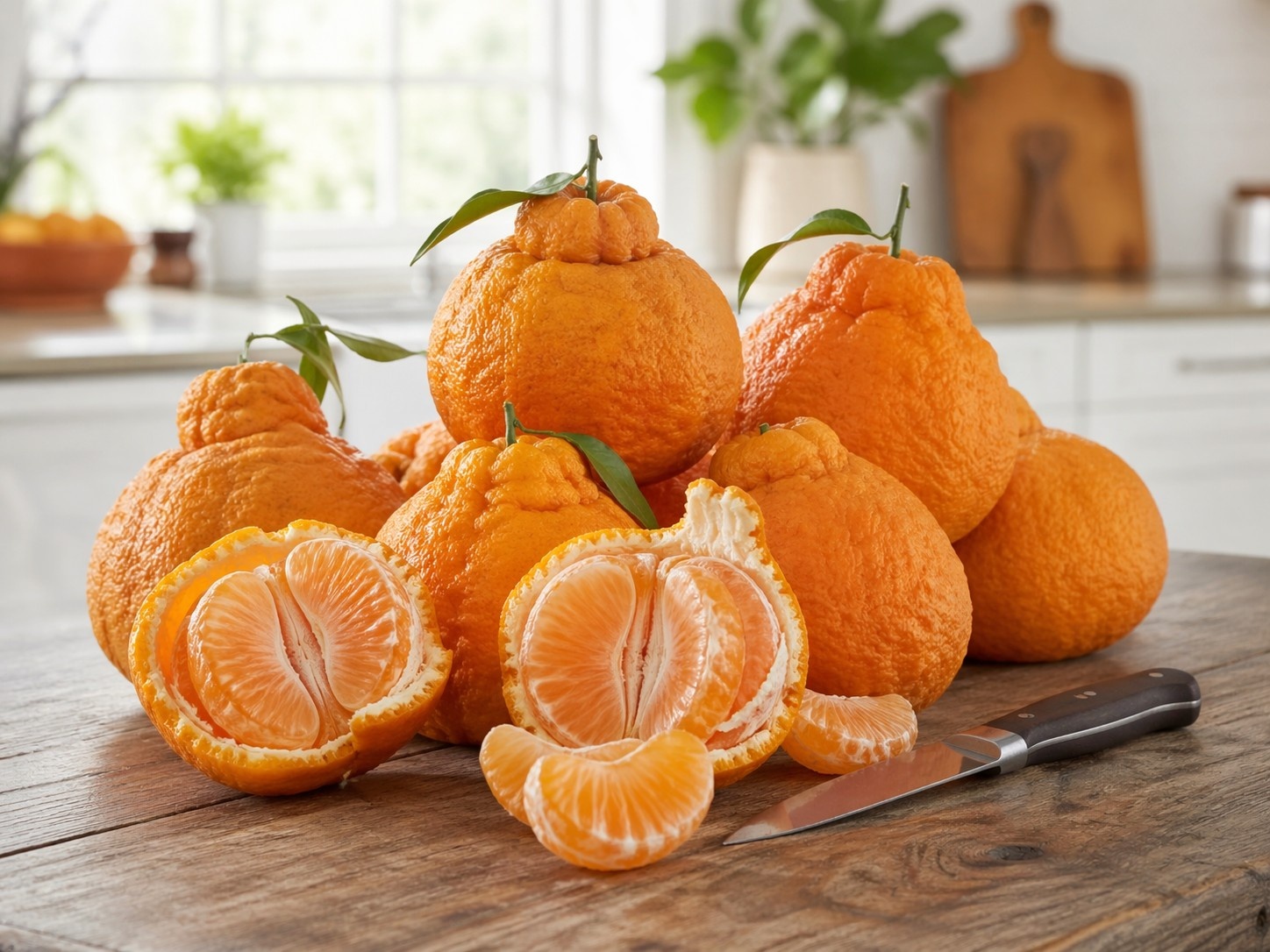
Why do Chinese consumers love these ‘ugly’ fruits? It comes down to a simple truth: taste wins. For decades, China’s agricultural focus shifted from quantity to quality. Farmers began breeding varieties that prioritized sugar content and aroma over perfect symmetry. In the past, export markets dictated what looked good. Now, domestic demand drives innovation.
Why They Get Left Out of Export Boxes
If these fruits taste so amazing, why don’t you find them in your local supermarket? The answer lies in logistics and strict cosmetic standards for international trade.
Fruits like Huangpi are too delicate. Their thin skins bruise easily during long ocean voyages. The ‘Ugly Orange’ has thick skin that resists damage but is hard to machine-sort because of its irregular shape. International buyers often demand uniformity, rejecting entire batches of delicious fruit just because they aren’t perfectly round.
However, a shift is happening. As China’s middle class grows and food culture becomes more sophisticated, local consumers are less willing to accept ‘ugly’ produce that tastes bland. They are demanding flavor first. This has encouraged farmers to grow these unique varieties specifically for the domestic market, creating a vibrant scene of ‘flavor-focused’ agriculture.
A Story of Values
I remember visiting a small fruit stall in Wuhan last summer. The vendor was selling crates of Huangpi that were rejected by wholesalers for being too wrinkled. He wasn’t sad about it; he was proud. “These,” he told me, holding up a cluster, “are the sweetest because they grew slowly on the tree. The smooth ones? They are usually grown in greenhouses and taste like water.”
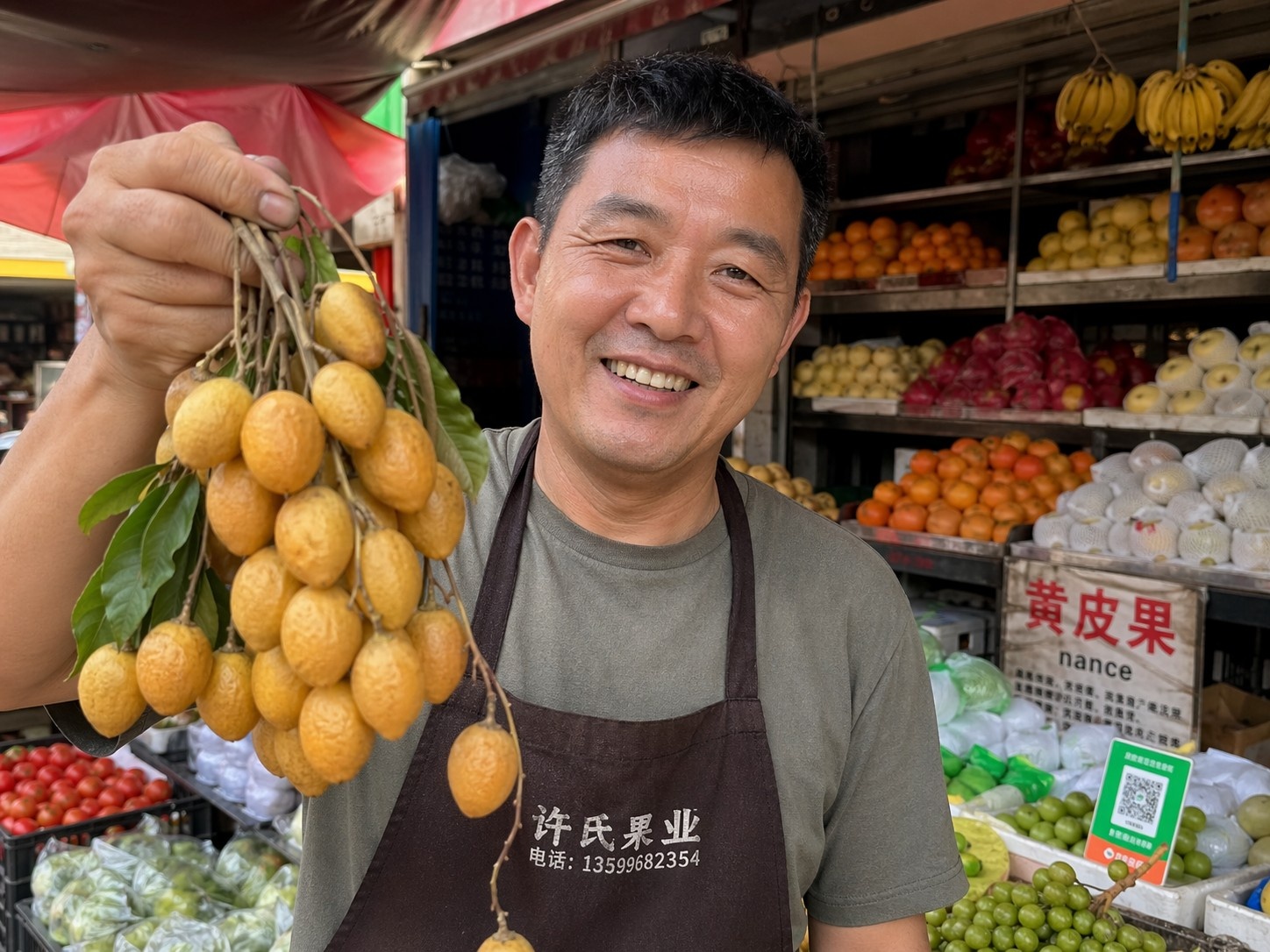
This story captures a broader trend in modern China: a rejection of superficial perfection. Just as young people are redefining beauty standards, food culture is moving away from polished appearances toward authentic experiences. The ‘ugly’ fruit represents a return to nature’s unpredictability, where the reward for patience is an explosion of flavor.
What This Says About China Today
The love for Huangpi, Nance, and Ugly Mandarins is more than just about snacking. It reflects a country that values substance over style. In a rapidly modernizing society, there is a growing appreciation for the unique characteristics of local terroir.
These fruits remind us that perfection is often an illusion created by industrial processing. Real food, grown in diverse climates from tropical Hainan to temperate Sichuan, carries the marks of its journey. For those willing to look past the rough skin, China offers a taste experience that is impossible to find in a perfectly symmetrical apple.
Start the discussion at forum.chinacomes.com