
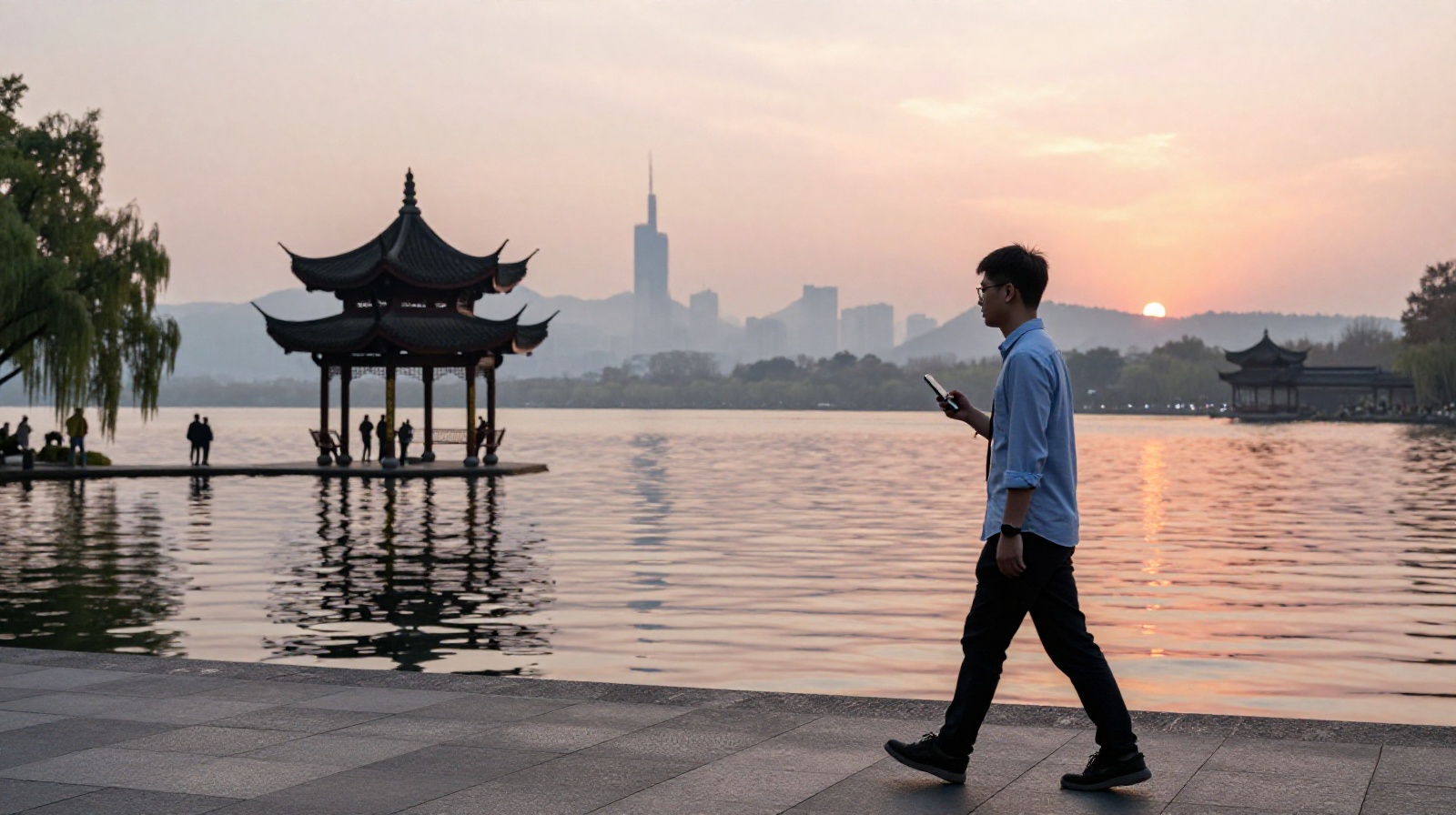

Li Wei’s Morning Commute: A World Heritage in Motion
Li Wei, 34, a software engineer working for an e-commerce giant, doesn’t start his day with a view of the West Lake. He starts it on Line 6 of the Hangzhou Metro. As the train glides silently past modern glass towers and into the shadow of ancient pagodas, he checks his phone to see if the delivery drones in his neighborhood have arrived.
This is not a scene from a tourist brochure. This is Tuesday morning in Hangzhou. The city recently gained renewed global attention, but its UNESCO World Heritage status—granted for the “West Lake Cultural Landscape”—is about something far deeper than just scenery. It represents a unique social contract: how to keep 3,000 years of poetry and philosophy alive while building one of China’s most dynamic digital economies.
More Than a Postcard: The Living Landscape
If you look at the official UNESCO criteria, Hangzhou stands out because it isn’t a frozen museum. It is a working city where ancient aesthetics dictate modern planning. When Li Wei walks from his subway station to West Lake, he passes tea plantations that are still tended by families in traditional attire, yet next door, a startup office buzzes with developers coding AI algorithms.
The heritage status forces the city to be careful. You won’t find a 100-story skyscraper blocking the view of the Broken Bridge (Duan Qiao). Instead, strict height limits ensure that every corner still feels like a painting from the Song Dynasty. This isn’t just about saving old stones; it’s about preserving the feeling of “harmony between man and nature” that has defined Chinese culture for millennia.

A Scene Where History Meets Modernity
Locals call this balance a daily practice. Take Auntie Zhang, 62, who sells lotus seeds by the lake every morning. She uses her smartphone to accept digital payments from tourists, but she still wears the traditional straw hat her grandmother wore. “The UNESCO tag doesn’t change my heart,” she says. “It just means the government has to listen more when I say the air is getting too smoky.”
The Digital City: Tech in a Heritage Zone
Hangzhou is often called China’s Silicon Valley, and for good reason. It is the home of Alibaba and the birthplace of many digital innovations that now power daily life across Asia. But here, technology doesn’t erase history; it overlays it.
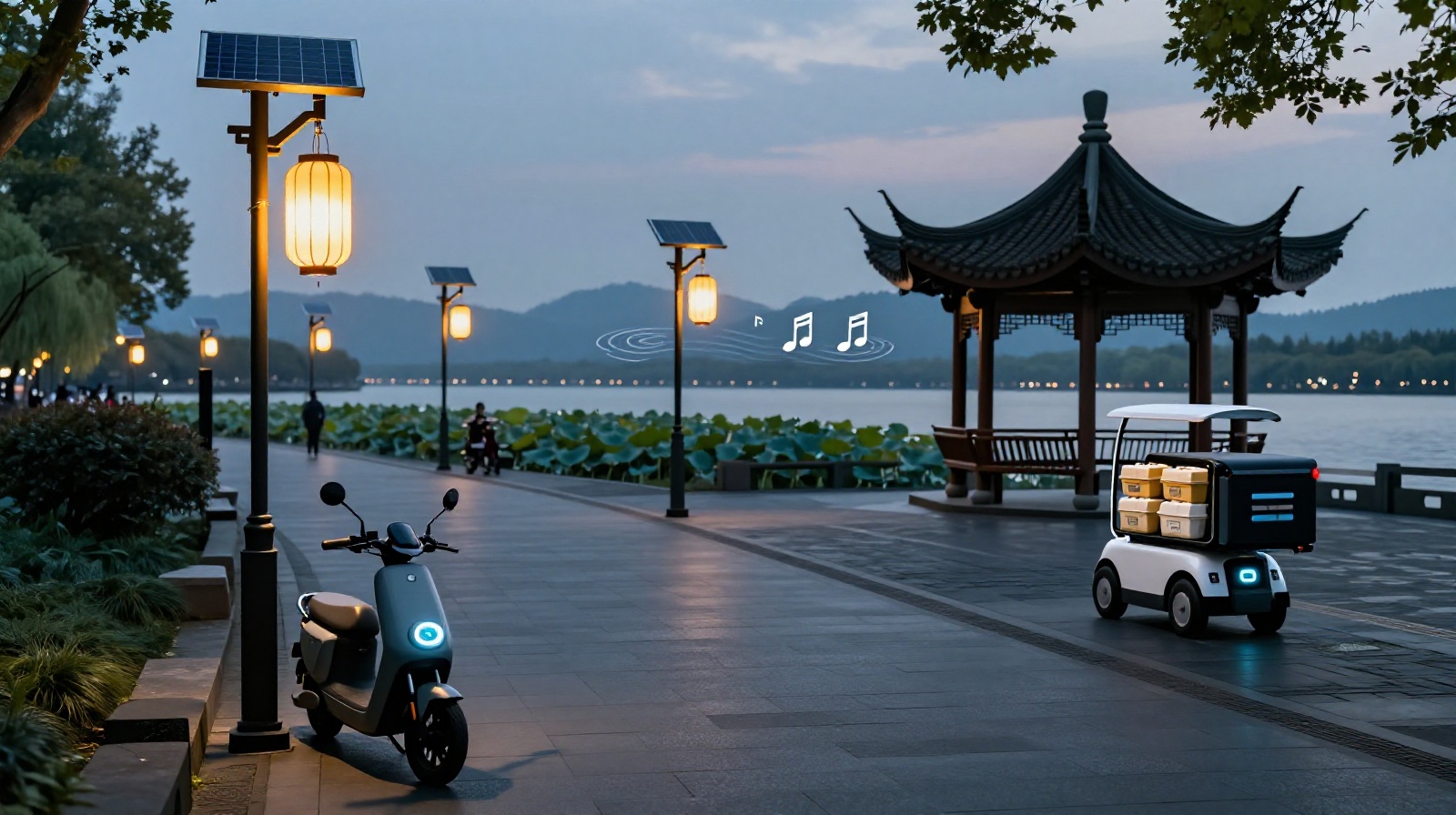
Imagine walking along a path in West Lake at night. The streetlights are solar-powered, designed to mimic ancient lanterns. A nearby kiosk lets you rent an e-bike with a tap of your phone, but the bike’s route is guided to avoid disturbing the quiet temples hidden in the hills.
Tech That Respects Tradition
This integration is why Hangzhou was able to secure and maintain its heritage status. It shows that development doesn’t have to mean destruction. The city uses big data to manage tourist flows, preventing overcrowding that could damage the fragile cultural ecosystem. When you visit, you might see a robot delivering food to a cafe near the lake, but you’ll also hear the sound of traditional Guqin music drifting from a nearby pavilion.
Challenges Beneath the Beauty
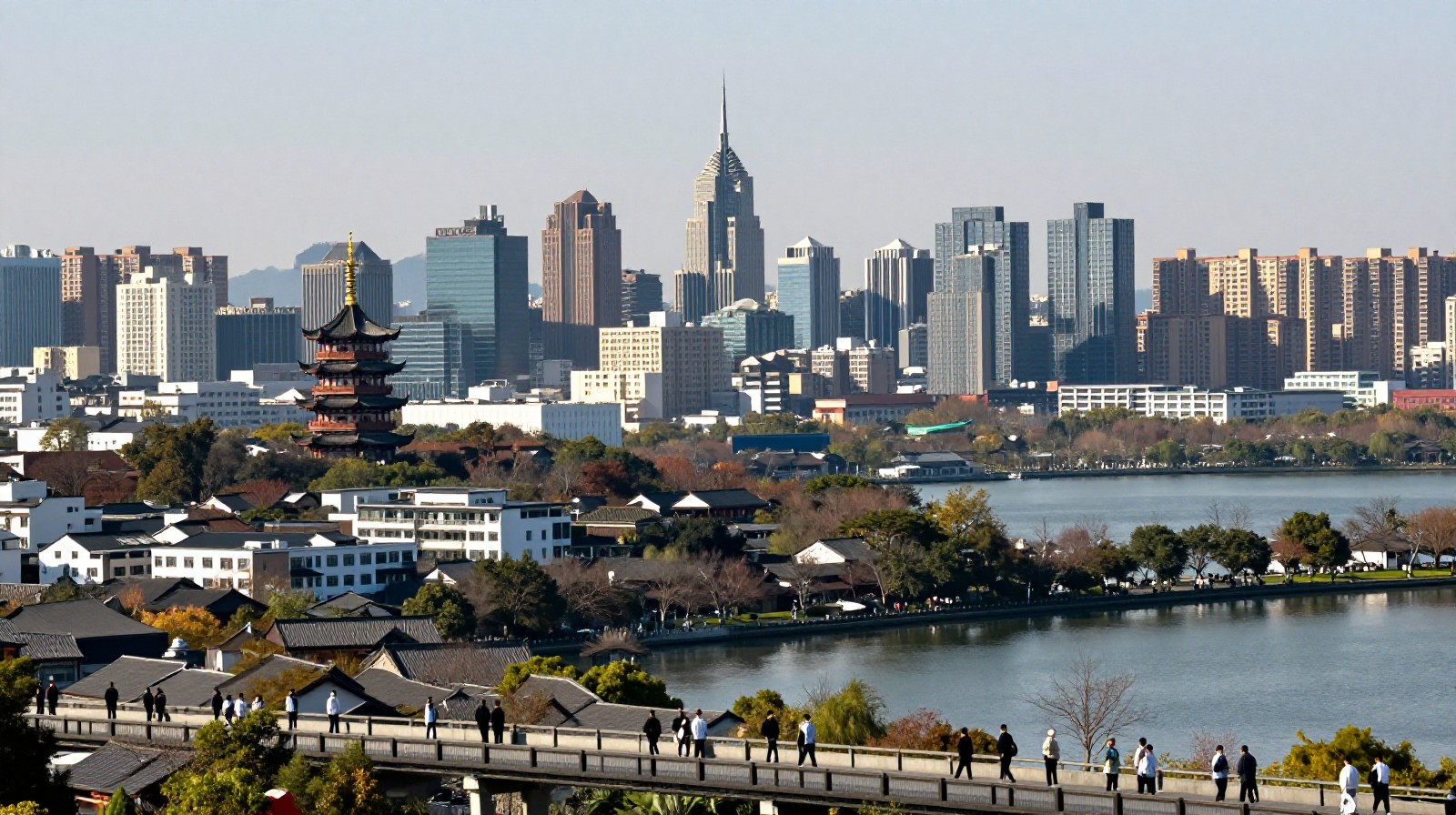
It is not all perfect harmony. The pressure to balance tourism, housing, and heritage preservation creates real tension for residents. Property prices near the lake are among the highest in China, pushing young professionals like Li Wei further out to the suburbs.
The Cost of Preservation
There is also the constant challenge of pollution control and managing millions of visitors who want to take selfies at the same spot. The UNESCO committee has repeatedly praised Hangzhou’s efforts, but they have also issued warnings about over-development in surrounding areas. The city must constantly prove that its growth serves the culture, not the other way around.
Why This Matters to the World
For international readers wondering what “China” looks like today, Hangzhou offers a crucial answer. It is a place where ancient tradition and hyper-modernity are not enemies but partners. The UNESCO status isn’t just a medal for history; it’s a framework for the future.
It tells us that a city can be a global tech hub without losing its soul. It shows that progress doesn’t require wiping the slate clean. When Li Wei finishes work and takes a walk by the lake, he sees his own reflection in the water alongside the moonlight on the pagoda. That is the real story of Hangzhou: a living, breathing testament to how humanity can evolve without forgetting its roots.