

The City Before Dawn
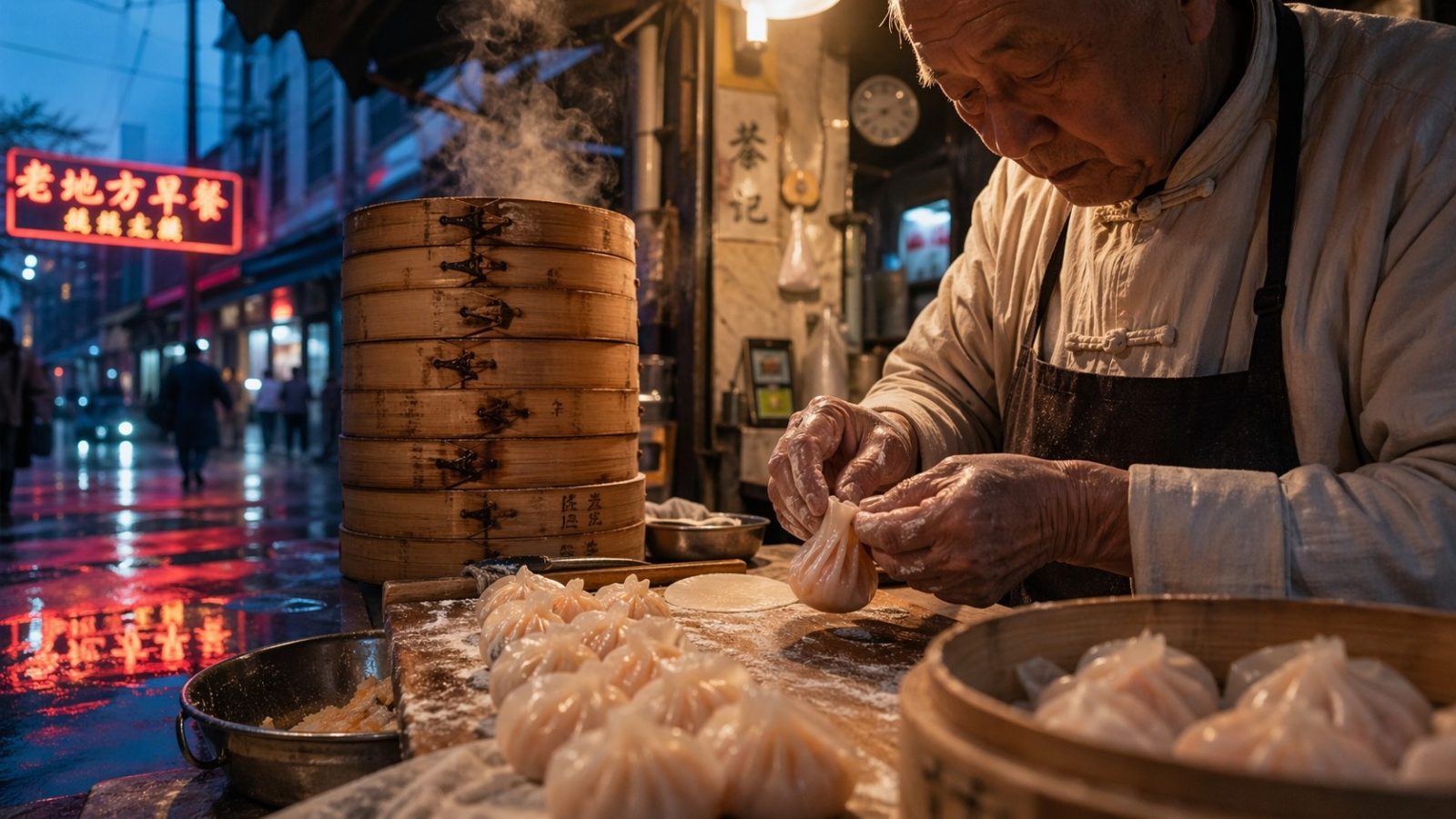
It is 4:15 AM. The streets of Guangzhou are still wrapped in a thick, cool mist, the kind that clings to silk jackets and dampens the sound of footsteps. Under the flickering fluorescent light of a small corner stall, Li Wei kneels at a wooden table covered in flour dust. He is 58 years old, his hands moved by muscle memory honed over forty years. The only sounds are the rhythmic thwack-thwack of dough being slapped against the board and the hiss of steam rising from a towering bamboo steamer.
Outside, the city is silent, save for the distant hum of a garbage truck. But inside this 20-square-meter space, a different kind of energy is waking up. Li isn’t just making food; he is preparing the fuel for thousands of lives that will soon begin on these streets.
The Pre-Dawn Ritual
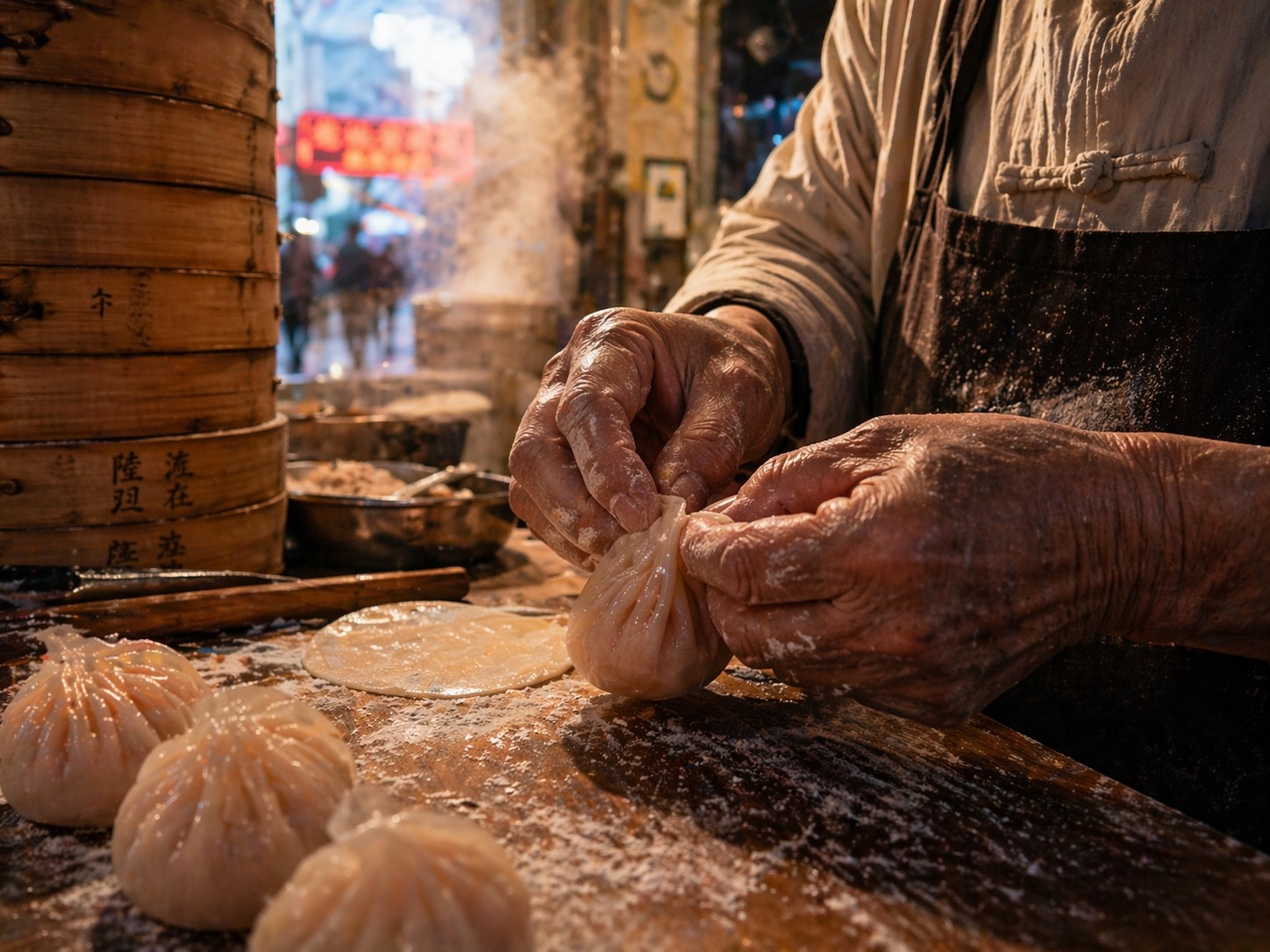
Li’s day started at 3:00 AM. By then, his hands were already in motion. The process of making har gow, or shrimp dumplings, is a masterclass in speed and precision that cannot be rushed without losing quality.
He takes a ball of translucent dough the size of a walnut. With a swift pinch of his thumb and forefinger, he flattens it into a delicate skin so thin you can see the pink hue of the shrimp filling through it. Then comes the pleating—twenty-two folds on one side, each one requiring a specific tension to create that signature ‘crab claw’ shape. He doesn’t measure; he feels.
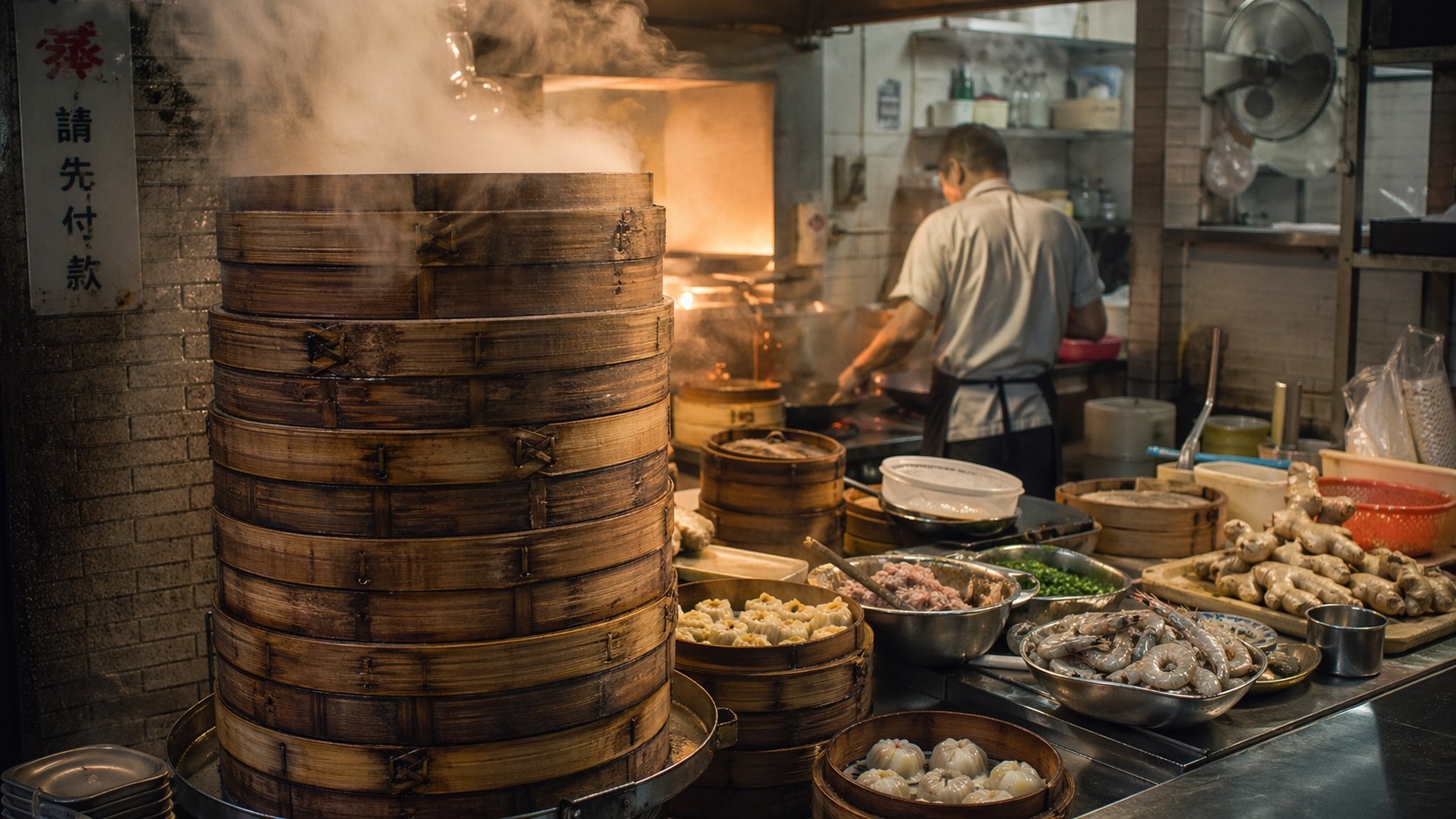
Once filled with fresh river prawns and bamboo shoots, the dumplings are placed in the steamer. The fire is stoked high. In ten minutes, the raw ingredients will transform into glistening pearls of food. The steam carries a scent that is uniquely Chinese: the briny sweetness of seafood mixed with the earthy aroma of ginger and scallions.
The First Morning Rush
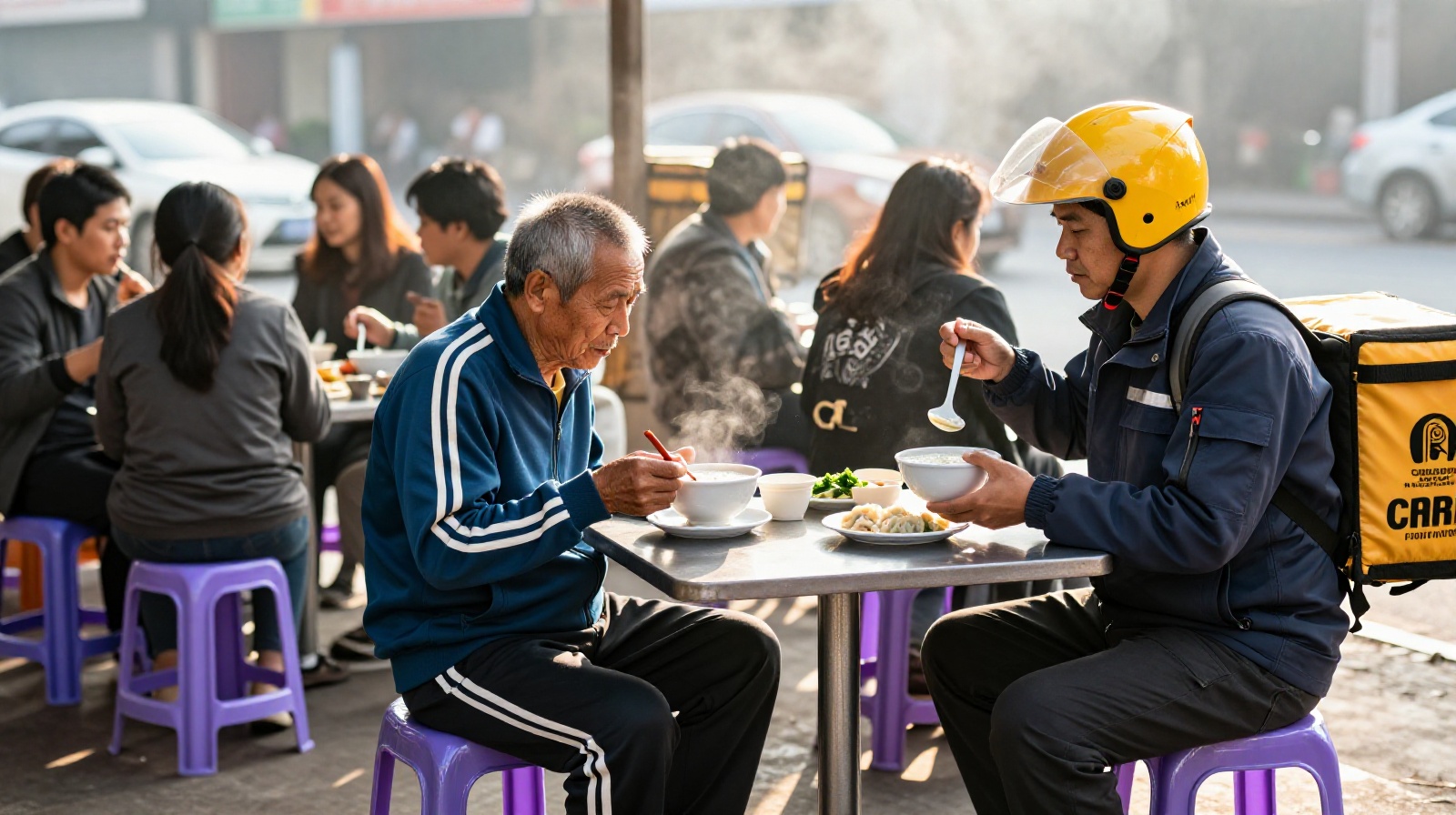
By 6:30 AM, the mist has lifted slightly. The first customers arrive. They are not tourists taking photos; they are locals who have done this for decades.
A retired teacher in a faded tracksuit sits on a plastic stool, ordering two baskets of dumplings and a pot of pu-erh tea. Next to him, a delivery driver wearing a yellow helmet wipes sweat from his forehead after a long night shift. He slurps down the congee quickly before heading back out. A young office worker in a crisp shirt checks her phone while waiting for her order.
The atmosphere is quiet but not lonely. There is a shared understanding here. These people know that if Li’s stall opens at 5 AM, they can get their breakfast before work. If he closes at 2 PM, the rush is over. It is a silent contract of reliability that holds this neighborhood together.
More Than Just Breakfast
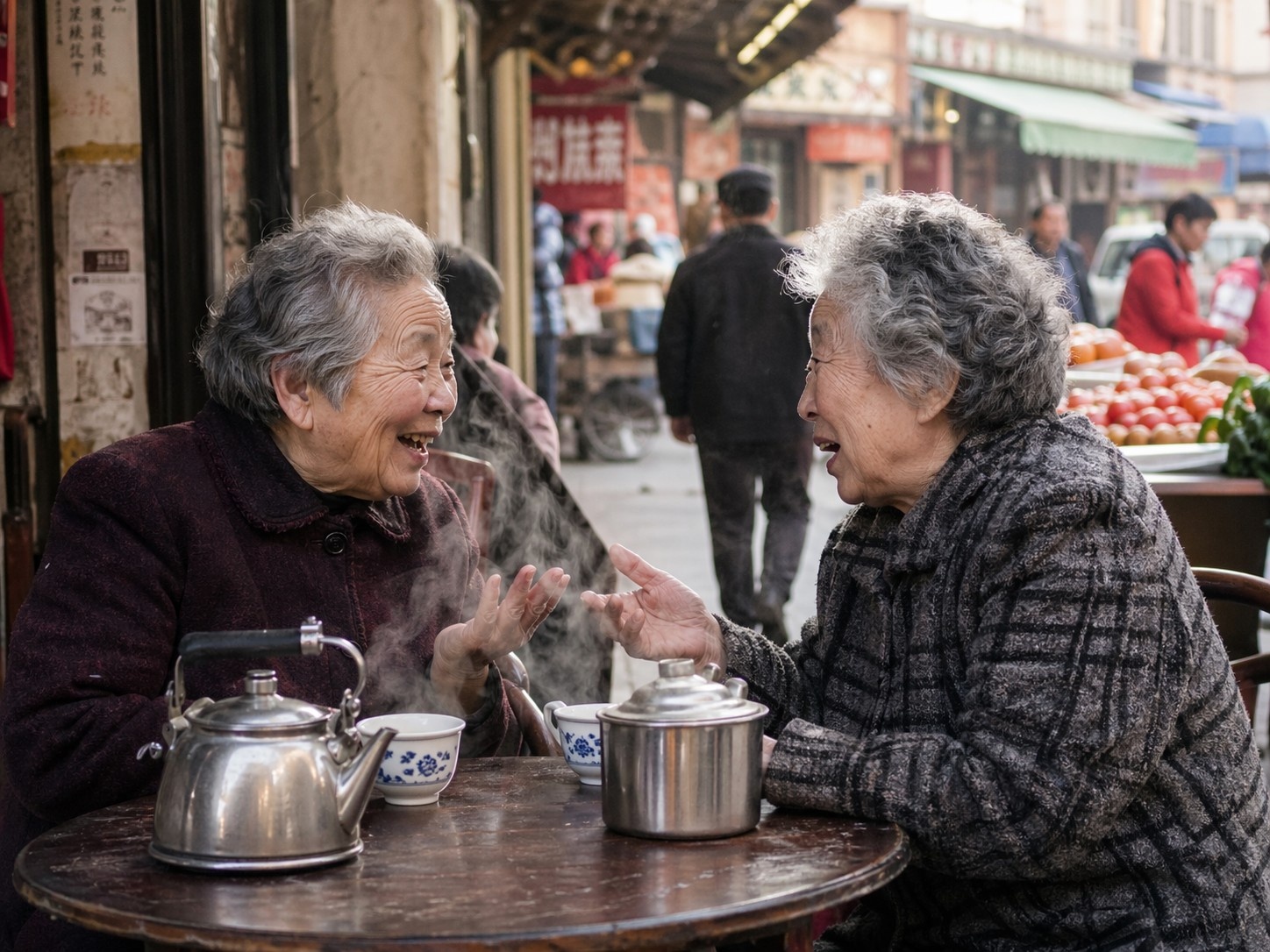
In Guangzhou, yum cha (drinking tea) is not merely about eating; it is a social institution. For many elderly residents, this morning stall is their version of a community center.
Li often hears local news here before the newspapers are printed. A neighbor complains about a noisy renovation; another shares that his grandson passed an exam. The tables become informal town squares where gossip and advice flow as freely as the tea. In a city of 18 million people, this small stall offers a sense of intimacy that high-rise apartments and corporate offices often lack.
There is no pressure to linger or spend more than you can afford. It is a space of belonging. The vendor knows your name, your usual order, and how much sugar goes in your tea. This personal connection transforms a simple transaction into a human interaction.
The Rhythm of Modern China
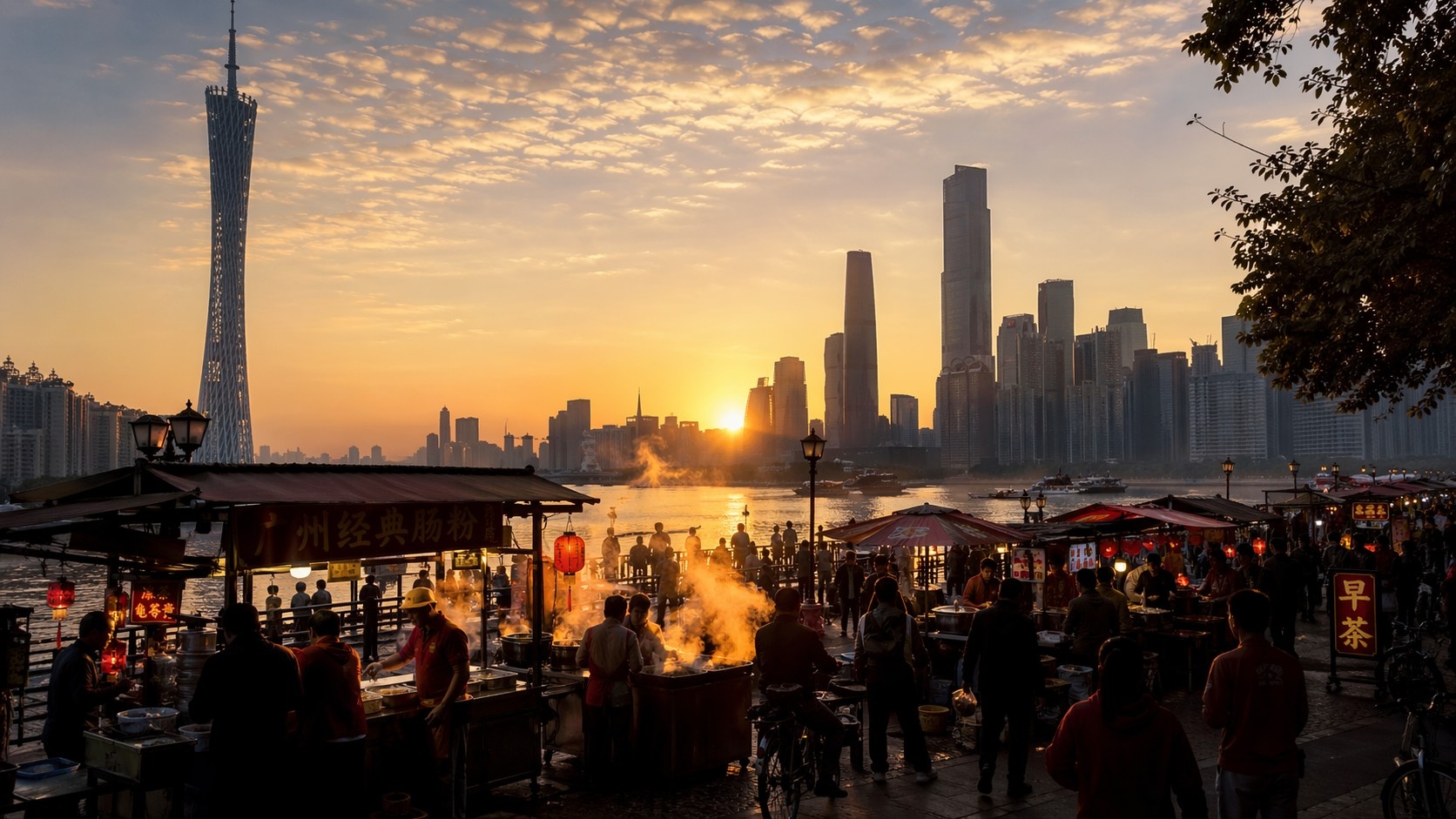
It is easy to view China through the lens of skyscrapers and high-speed trains. But the true pulse of the country beats in moments like this, where tradition meets the modern rush.
Li’s stall represents a resilient thread in a rapidly changing fabric. While delivery apps and digital payments dominate the city’s skyline, the steam from bamboo baskets remains unchanged. The technology has evolved—the customers pay by scanning QR codes on their phones—but the core ritual of gathering over hot food remains ancient.
This duality defines contemporary Guangzhou: it is a global metropolis that still values the slow art of folding dumplings at dawn. It shows that progress does not always mean erasing the past; sometimes, it means carrying it forward into the future.
A Lesson in Resilience
As the sun finally crests over the Pearl River at 7:00 AM, Li’s steamer is empty. He wipes down the sticky wooden table, packs away his tools, and prepares for the afternoon lull before dinner service.
The city outside is now fully awake, buzzing with traffic and commerce. But inside that small stall, a quiet victory has been achieved. Thousands of people have started their day fed, warm, and connected. For Li Wei, this is not just a job; it is his way of anchoring the chaos of modern life to something simple, tangible, and human.
Next time you think about China, imagine the steam rising at 4 AM in Guangzhou. It is a reminder that beneath the headlines and the speed, there are millions of ordinary people keeping the lights on, one dumpling at a time.