

The Sound of Snow Falling on Noodles
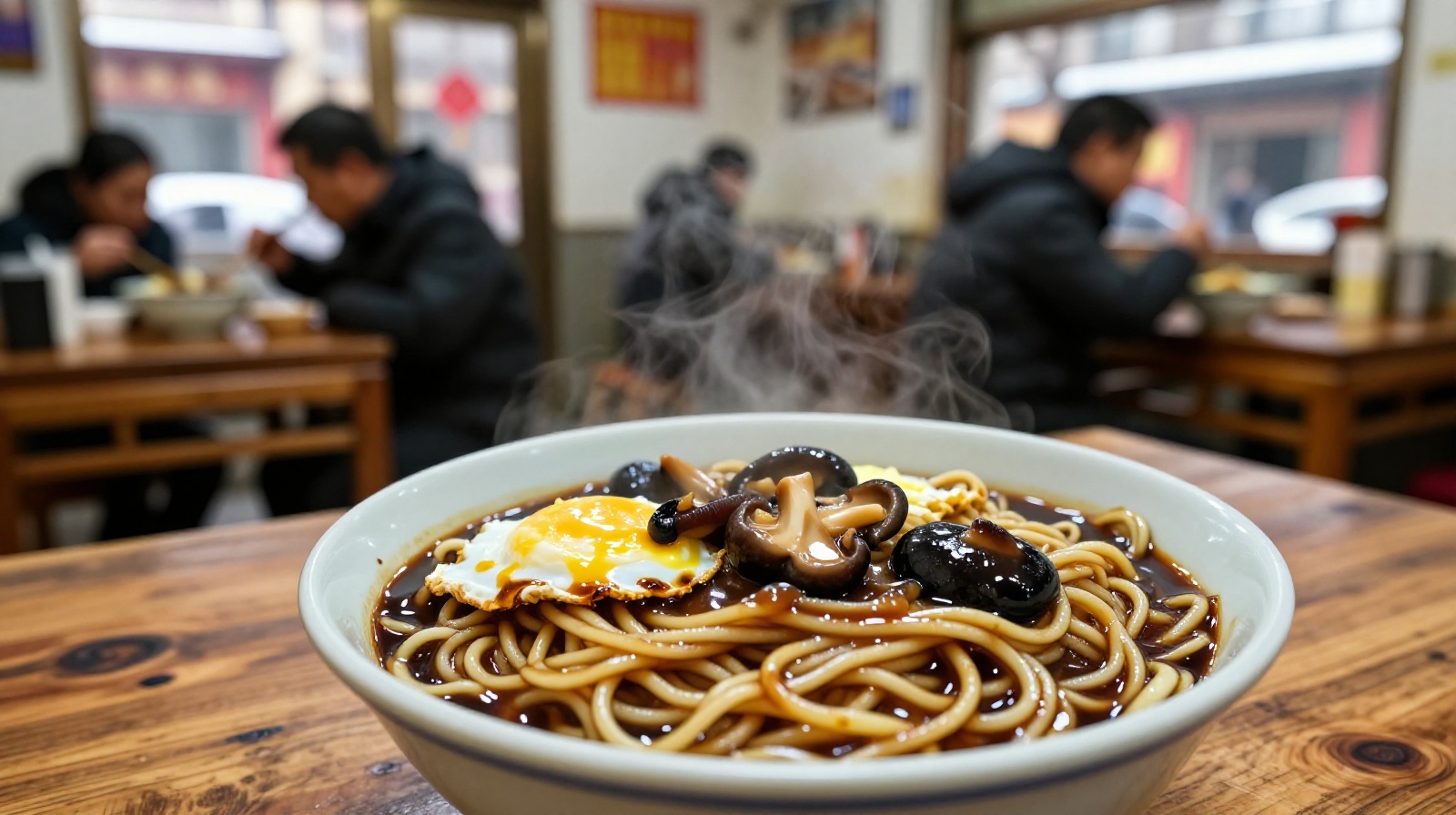
It is -15°C outside in Shenyang. The wind cuts through your coat, but inside the small noodle shop on Dongling Street, the air is thick with steam and the smell of garlic oil. I sit at a plastic table next to Mr. Zhang, a retired factory worker who has eaten here for thirty years.
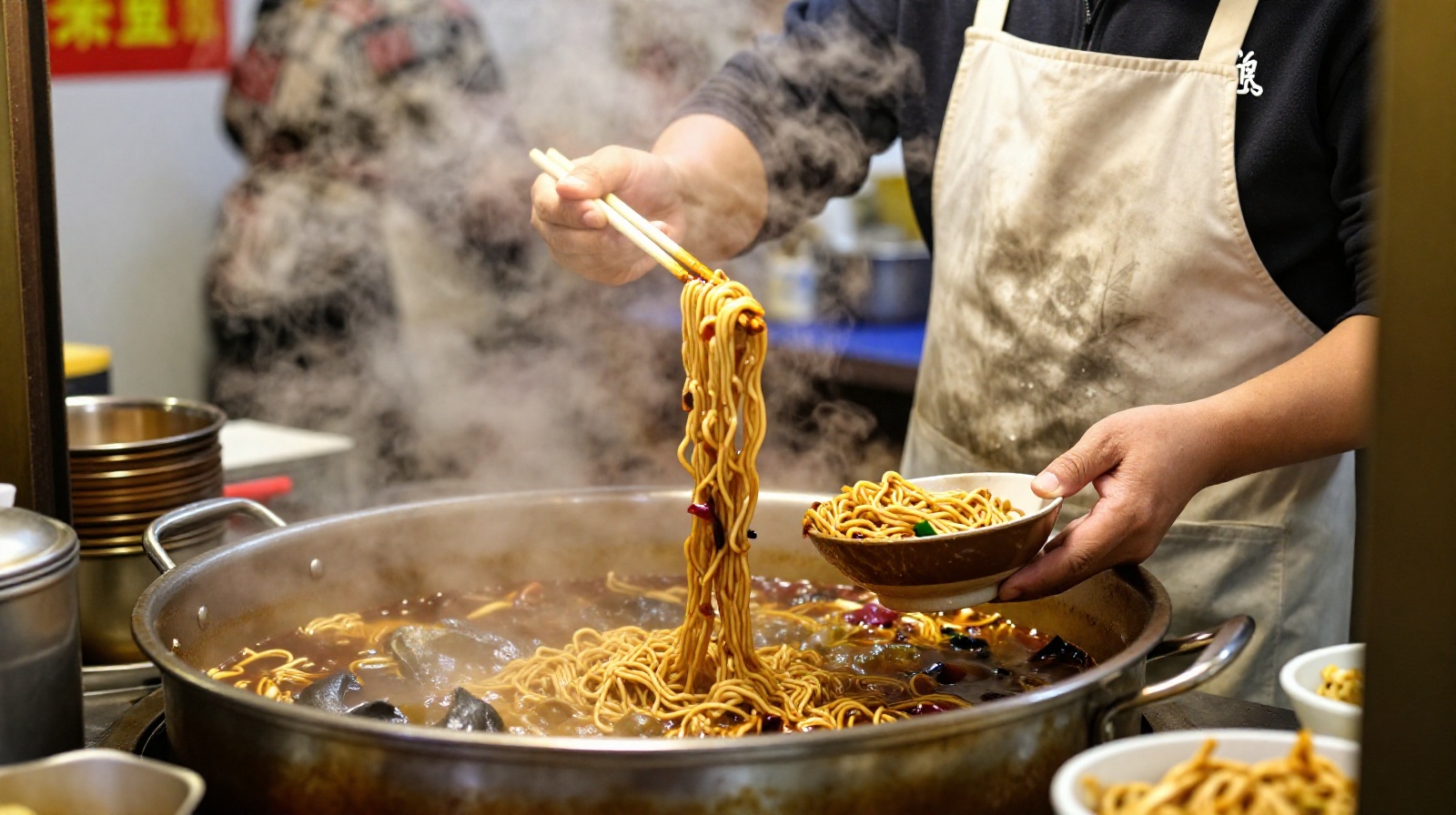
“This is da lu mian,” he says, pointing to the bowl in front of me. It looks simple: thick wheat noodles swimming in a dark brown gravy made from eggs, tomatoes, and wood ear mushrooms. But there is no rush. The chef ladles the sauce slowly. In Liaoning, time moves at the speed of boiling water.
For visitors from the south or abroad, this dish might seem like just comfort food. But for locals in Northeast China, it is a ritual. The gravy must be thick enough to coat every strand; if it’s too thin, the cook has failed. Eating it requires focus. You lift the noodles with chopsticks, let them cool slightly in your mouth, and then swallow. It grounds you against the cold.
When Winter Turns Fruit into Candy
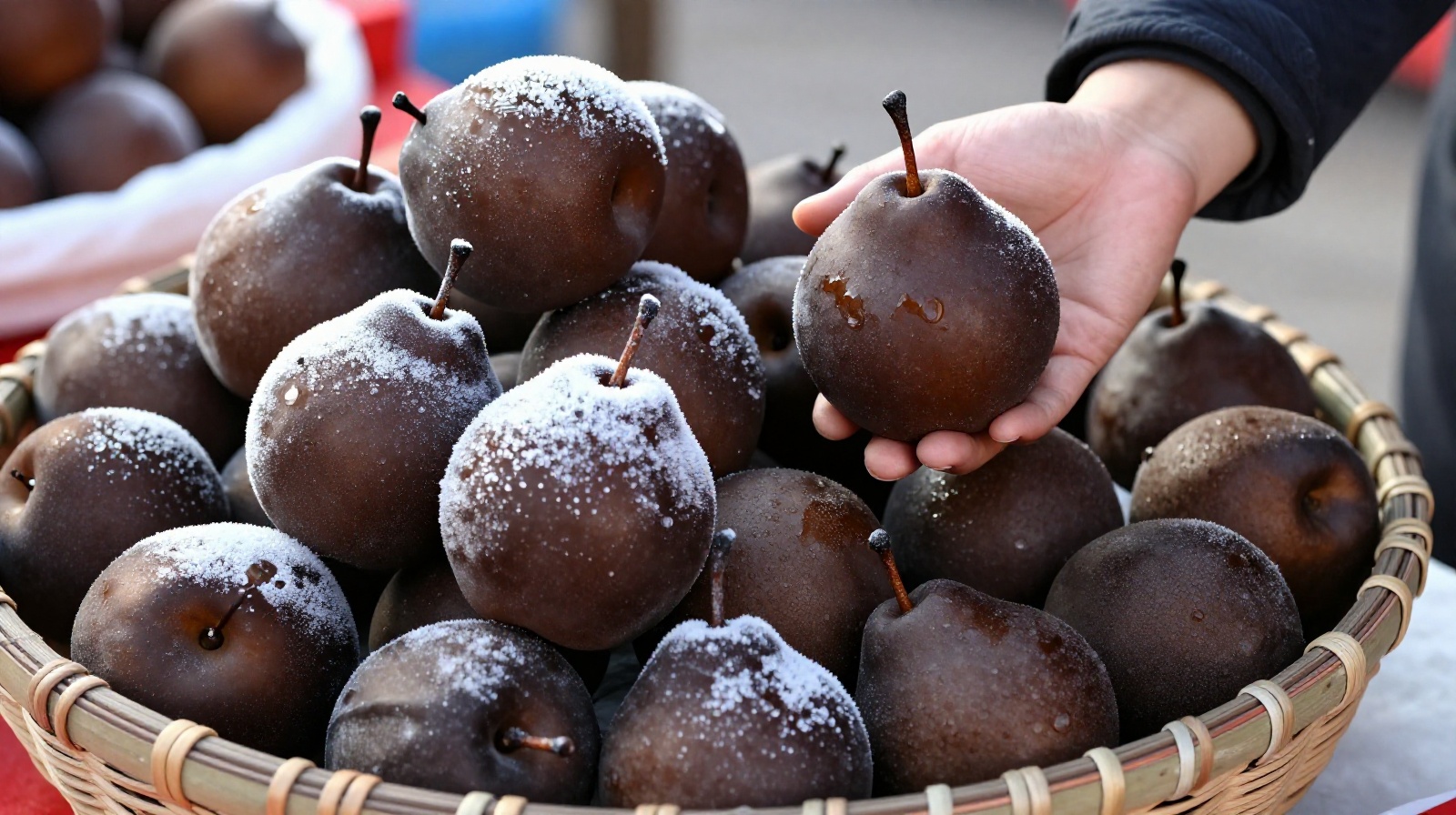
A few weeks later, I visit a wet market near the Liao River. The temperature has dropped to -25°C. Here, the most popular fruit isn’t fresh apples or oranges, but dong li—frozen pears.
They look uninviting at first glance: dark brown, hard as rocks, covered in a rime of frost. You cannot bite into them while they are frozen; your teeth would shatter. Instead, vendors place large baskets of them on outdoor tables to thaw naturally in the winter air for an hour or two.
“You have to wait,” says Auntie Liu, selling the fruit from a stall wrapped in heavy wool blankets. She hands me a pear that is half-melted. “The cold turns it sweet. It’s like nature’s candy.”
I take a bite. The outside is still crunchy with ice crystals, but the inside has turned into a slushy, honey-sweet nectar. It tastes nothing like a fresh pear. It is intense, cooling in a paradoxical way that makes your mouth feel warm from the inside out. This is the secret of Northeast cuisine: using the extreme cold not as an enemy, but as an ingredient.
A Calendar Written on Plates
In many Western countries, seasons are marked by holidays or weather forecasts. In Liaoning, they are marked by what you eat.
Summer brings pickled vegetables and cold noodles to cut the heat. Autumn is for storing vast quantities of cabbage and soybeans in root cellars. But winter? Winter is about preservation and patience. The dong li phenomenon teaches a specific lesson: sometimes, you must freeze something to make it better.
This philosophy extends beyond food. It reflects the history of the region. For generations, people here lived through harsh winters where survival depended on preparation and trust in the cycle of nature. The da lu mian is not just a meal; it is a reminder that warmth can be created even when everything outside is frozen.
The Rhythm of Modern Life
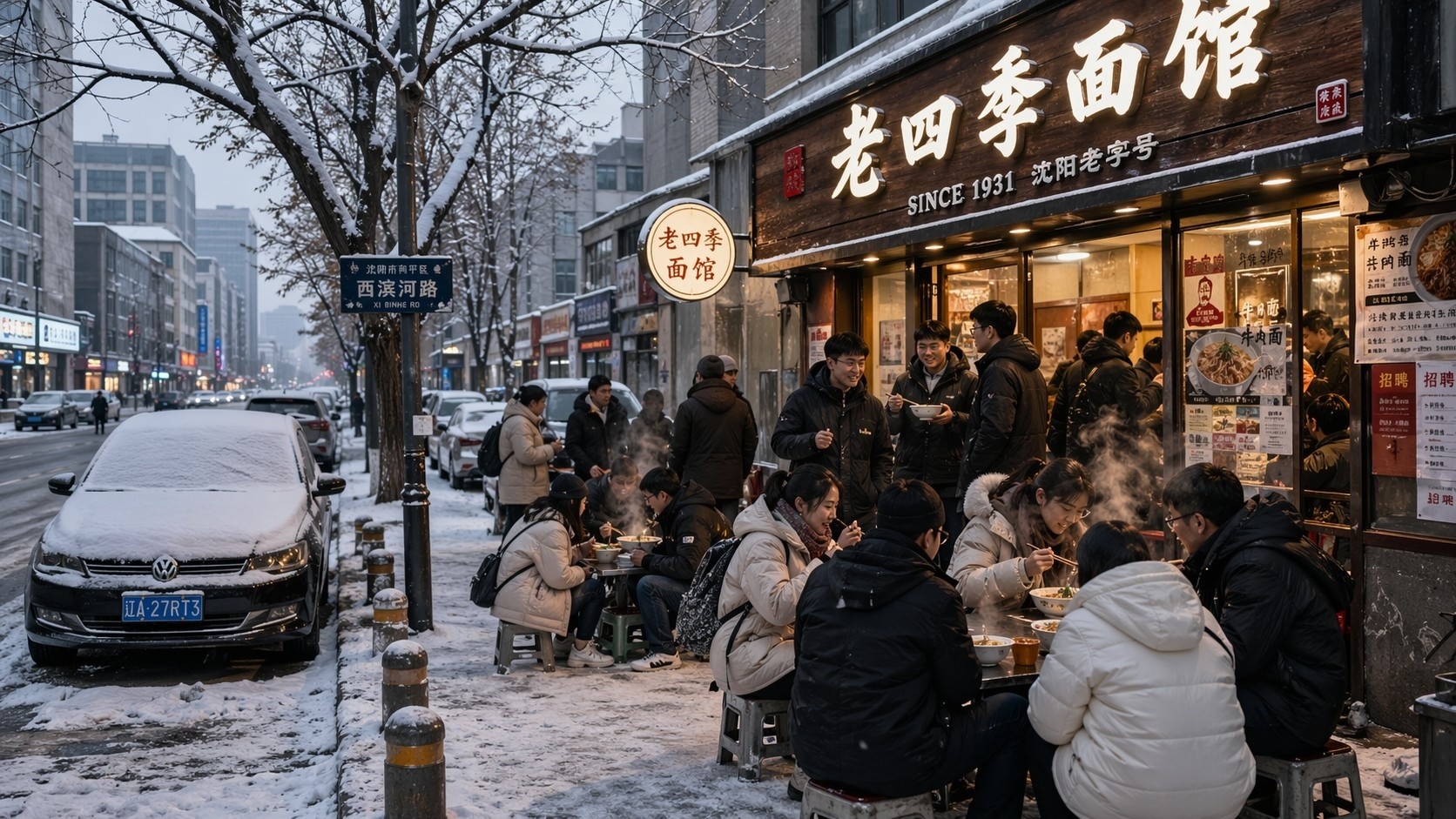
Today, Shenyang and Dalian are modern cities with subways, skyscrapers, and high-speed internet. But in the kitchens and street stalls, the old rhythm remains unchanged.
I watch a young delivery driver take his lunch break at 1 PM. He eats da lu mian just like Mr. Zhang did thirty years ago. The sauce is slightly different now—maybe more tomatoes for color—but the act of eating remains the same. They stop, sit down, and let the steam warm their faces.
This continuity offers a strange comfort in a rapidly changing world. In Liaoning, time is not just money or efficiency; it is the slow thawing of a pear, the thickening of a sauce, and the shared silence over a hot bowl of noodles.
As I walk home through the snow-covered streets, watching my breath turn into white clouds, I realize that the true flavor of Liaoning isn’t just in the food. It’s in the patience required to enjoy it.