

The ‘Third Space’ on Wheels
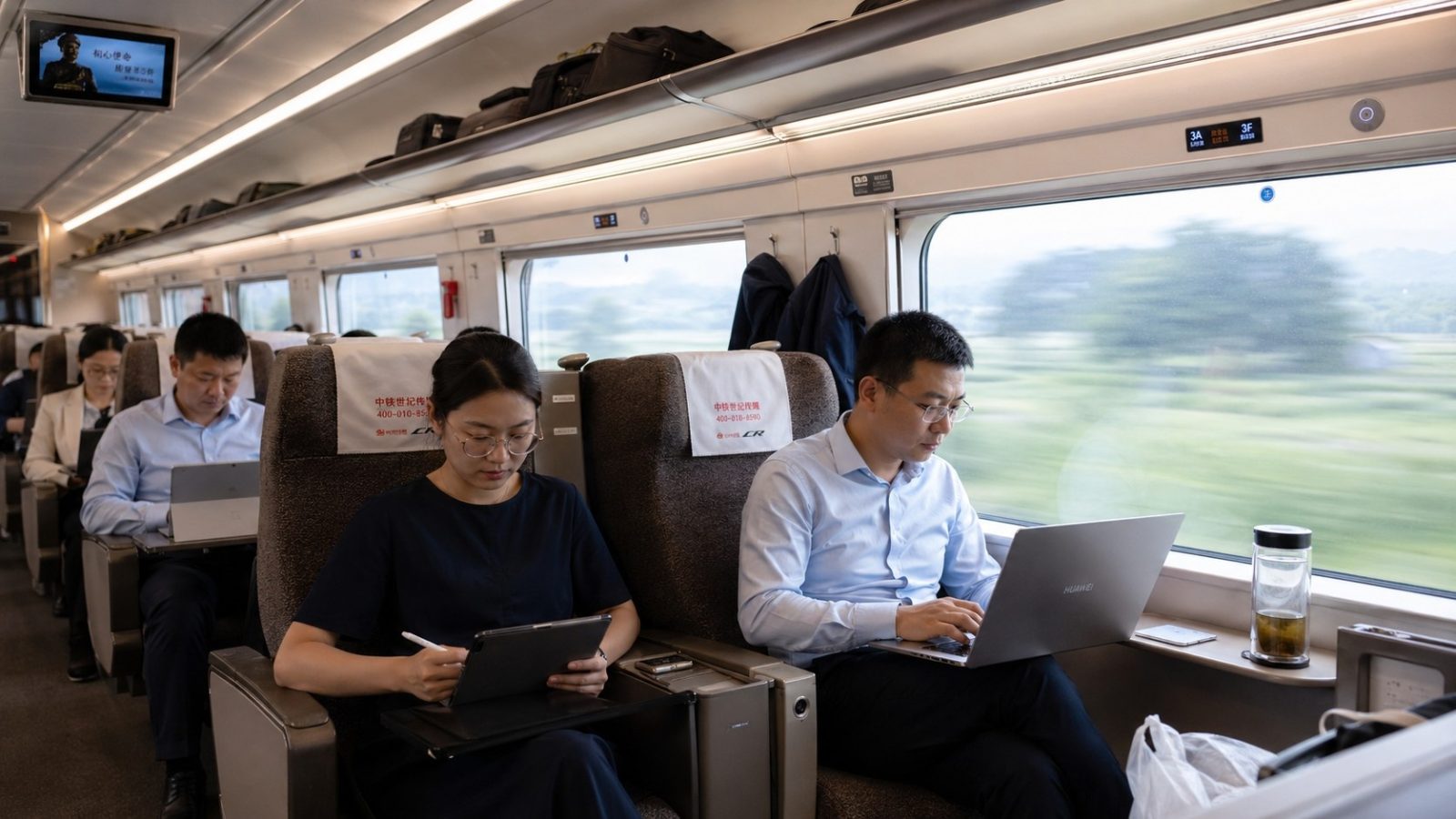
At 7:30 AM, the G-series train glides out of Hangzhou East Station. Inside Carriage 4, the silence is not empty; it is focused. Passengers are not sleeping or scrolling through short videos as they might on a long-haul flight. Instead, laptops are open, heads are bent over tablets, and quiet phone calls about supply chains are whispered into headsets.

For millions of Chinese professionals, the high-speed rail carriage has become a ‘third space’—a mobile office that bridges the gap between home and the corporate headquarters. This is not a nostalgic look at early railway days. Today, China operates the world’s largest high-speed rail network, spanning over 45,000 kilometers (28,000 miles). More importantly, it has compressed time in a way that fundamentally alters how business gets done.
Shrinking Distances, Expanding Horizons
The core change is the emergence of the ‘one-hour business circle.’ In the past, traveling between major cities meant flying or enduring 10+ hour train rides. Today, a trip from Shanghai to Nanjing takes just 60 minutes; Beijing to Tianjin, 30 minutes.
This speed has decoupled residence from workplace in many cases. A software engineer might live in Suzhou, where housing is more affordable and life is less congested, but work in Shanghai’s tech hub. The commute becomes a productive part of the day rather than lost time.
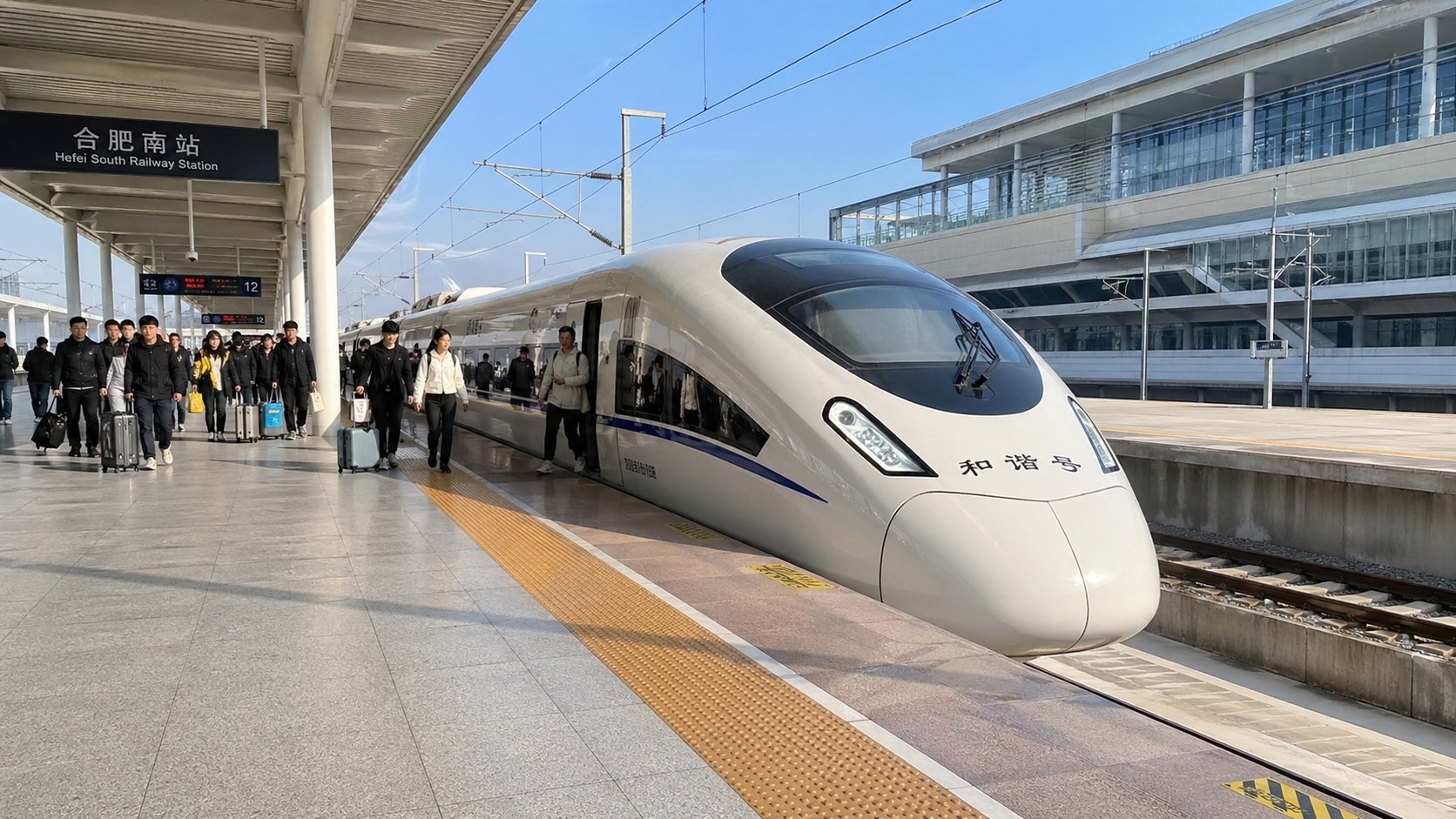
This shift is reshaping urban dynamics. It creates a polycentric metropolitan area where talent flows freely between cities. For overseas readers familiar with the congestion and exorbitant housing costs in global hubs like London or New York, this ‘commuter integration’ offers a different model of urban efficiency. It allows economic centers to retain workers without forcing them into expensive city-center apartments.
The Tech-Enabled Workflow
How is this mobile office possible? It relies on infrastructure that often goes unnoticed until it fails. In China, high-speed rail stations and trains are treated as digital public utilities.
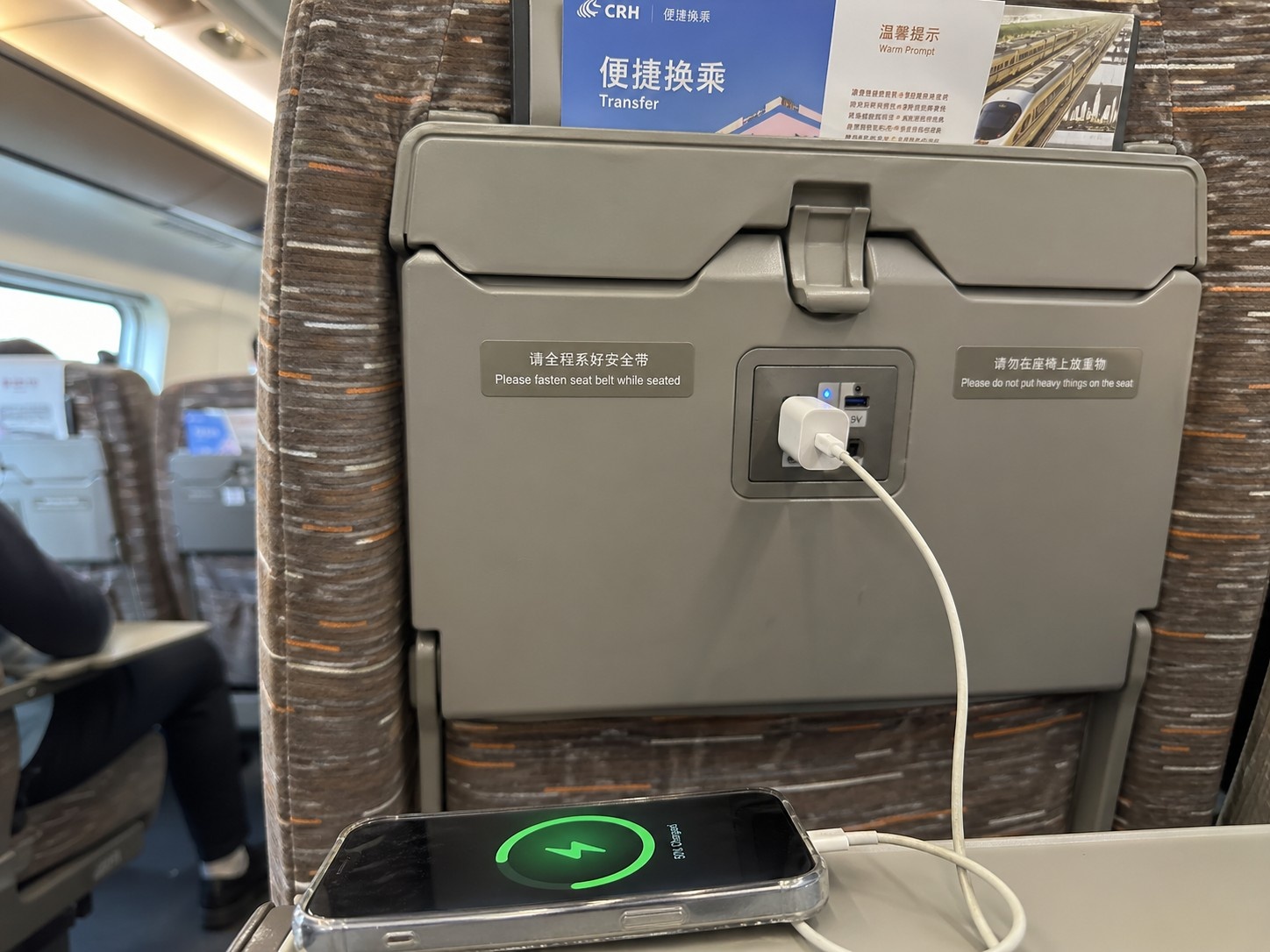
- Connectivity: While 5G signals can drop in tunnels, the integration of Wi-Fi 6 on most G-series trains ensures stable connections for video conferencing and cloud collaboration.
- Power: Unlike older rail systems where finding an outlet was a scavenger hunt, modern Chinese high-speed trains provide power outlets at every seat, often including universal USB ports.
- Environment: The concept of ‘quiet carriages’ (usually Carriage 5) enforces strict no-phone-call policies, creating a library-like atmosphere essential for deep work.
This level of service reliability is a result of China’s digital governance. The seamless integration of ticketing, security checks, and real-time crowd management allows millions to move daily without the chaos often associated with mass transit in other parts of the world.
Real Stories of Mobility
To understand the human impact, consider two personas who define this new rhythm:
The Tech Commuter: Lin Wei, a data analyst, travels between Hangzhou and Shanghai twice a week. ‘I used to stay in hotels on weekdays,’ he says. ‘Now, I take the 7 AM train. By the time I arrive at Hongqiao Station, I’ve finished my morning report and had breakfast. The train is my quietest office.’

The Regional Sales Manager: Zhang Min visits clients in tier-2 cities like Wuxi and Changzhou daily. ‘In the past, I spent half my day driving,’ she explains. ‘Now, I can visit three clients in a morning and be back home for dinner. It’s not just about speed; it’s about reclaiming my evenings.’
Beyond Efficiency: The Culture of Agile Living
The impact extends beyond mere time-saving. This mobility fosters a culture of ‘agile living.’ Professionals are no longer isolated in their immediate neighborhoods. They build professional communities that span entire regions.
For the average person, this means a higher quality of life without sacrificing career ambition. It challenges the old notion that you must endure long, exhausting commutes or live in cramped spaces to succeed in a major economic hub. Instead, China’s high-speed rail network offers a tangible solution: work where the opportunity is, and live where life is good.
As global businesses look for efficiencies, China’s approach shows that transportation infrastructure is not just about moving people—it’s about connecting lives, opportunities, and economies in real-time.