
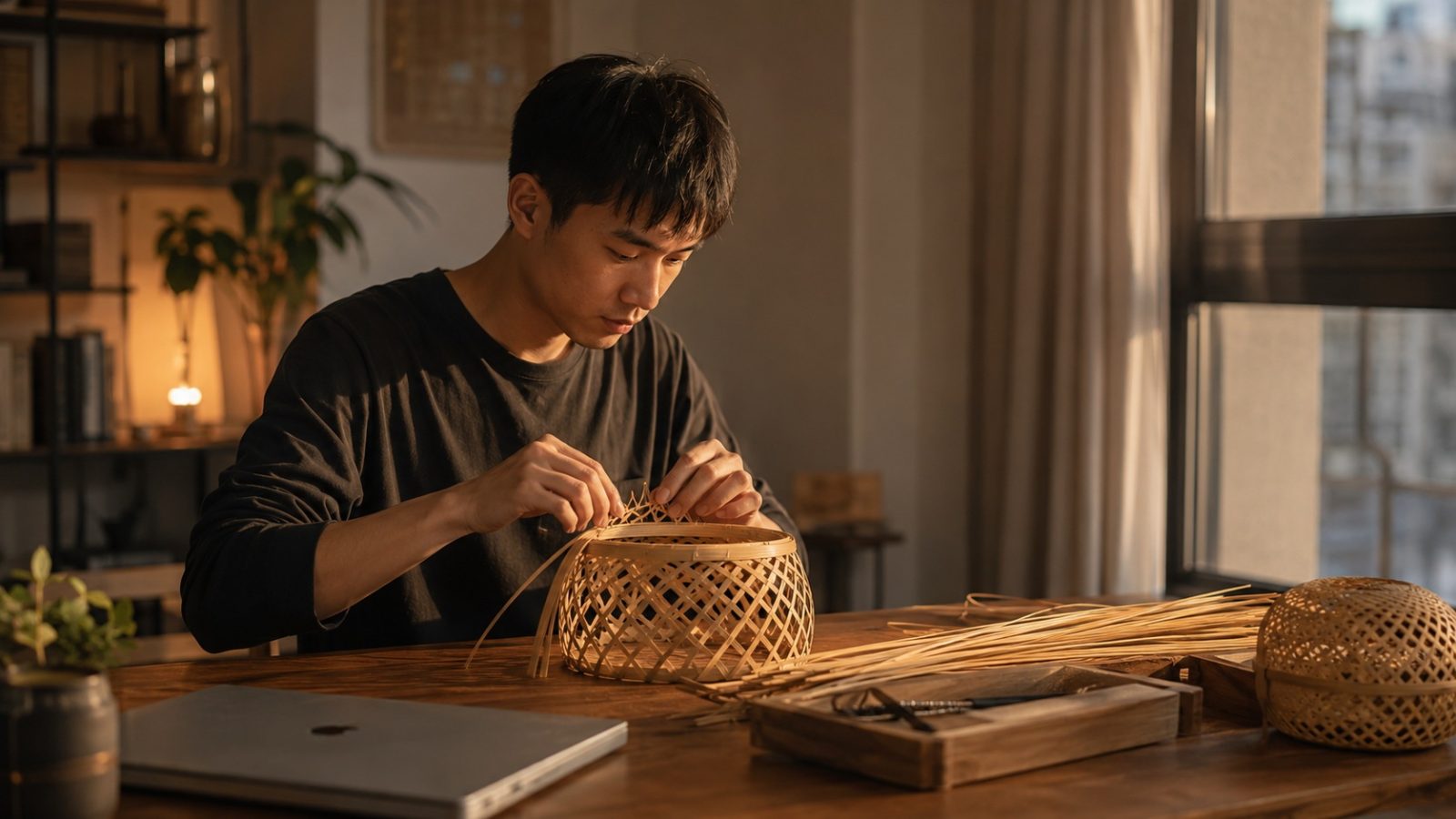

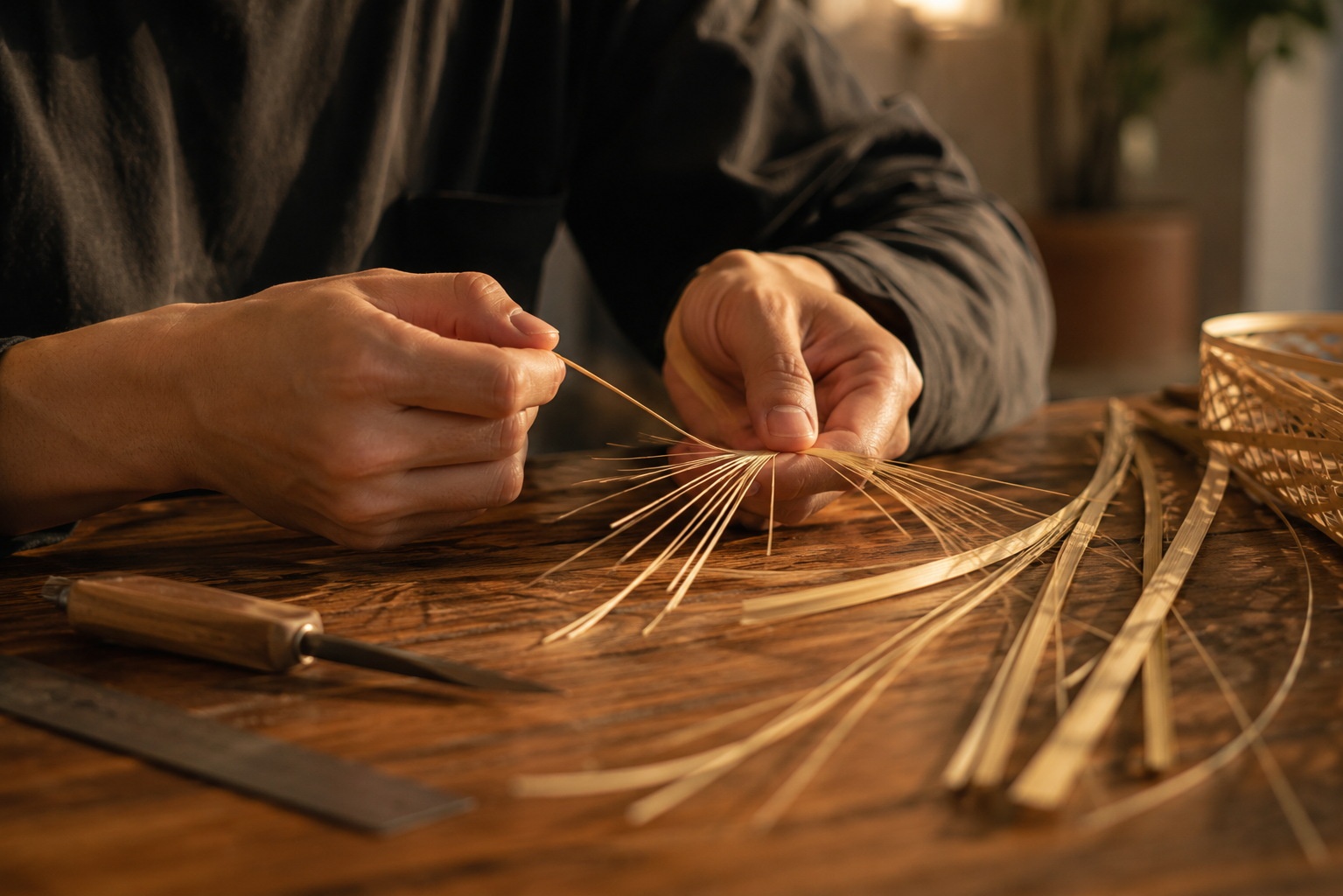
Imagine the smell of damp bamboo shoots in a Sichuan village, mixed with the sharp scent of pine resin. It is 9 PM on a Tuesday. While most of Chengdu’s office workers are still stuck in traffic or scrolling through social media to numb their fatigue, Lin Wei, 26, is sitting at his desk, fingers moving rhythmically as he splits thin strips of bamboo into strands finer than hair.
Lin is not a master artisan from a remote mountain village. He is a software engineer by day. But in the evenings and on weekends, he is one of thousands of young Chinese people turning “intangible cultural heritage” (ICH) skills—like bamboo weaving, embroidery, or paper cutting—into a serious side hustle.
The Quiet Revolution: Beyond the Museum Glass
For decades, China’s intangible cultural heritage was often viewed through two lenses: either as fragile relics behind museum glass or as fading traditions doomed by modernization. But a quiet shift is happening on the ground. For the post-95 and post-00 generations, these crafts are no longer just history; they are economic opportunities.
The stereotype of Chinese youth is often dominated by images of overworked tech employees facing the infamous “996” work schedule (9 AM to 9 PM, 6 days a week). In contrast, Lin Wei’s story represents a growing counter-movement. It is about finding solace in slow creation and generating income from creativity rather than just labor hours.
“When I code, I solve problems given by others,” Lin tells me, adjusting his glasses while inspecting a half-finished bamboo basket. “When I weave, I create something that didn’t exist before. The frustration of a bug is replaced by the tactile satisfaction of a tight knot.”
From Hobby to Income: The Reality of the Side Hustle
Turning a hobby into income is easier said than done. Lin’s journey started three years ago when he visited his grandfather in Sichuan and watched him weave traditional baskets. Intrigued, Lin bought a bamboo weaving kit online. What began as a weekend distraction quickly became an obsession.
The sensory experience is distinct. Unlike the sterile environment of an office, bamboo weaving involves rough textures, natural oils, and the occasional sting of splinters. But for Lin, this physical connection to materials is healing.
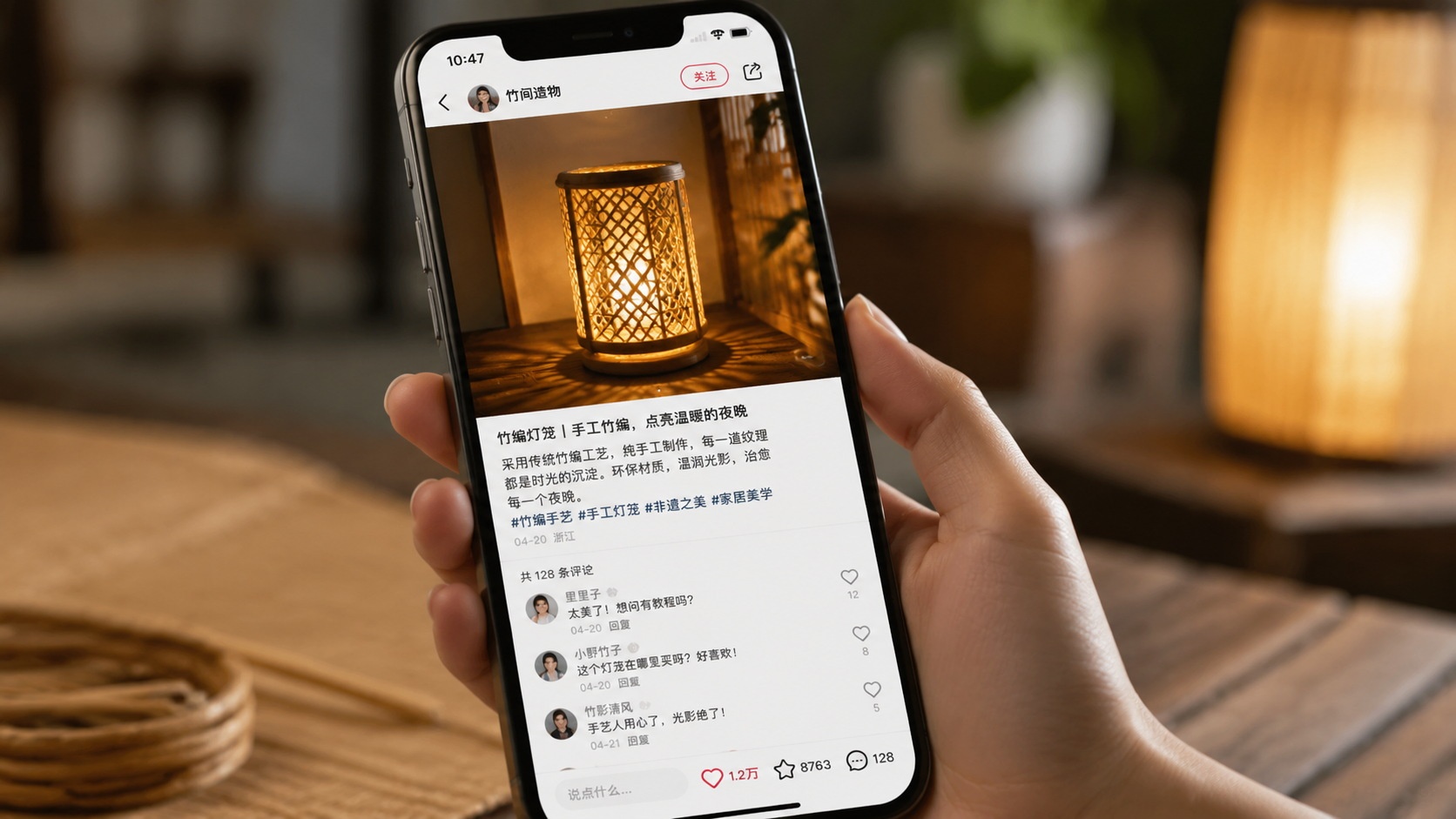
His first sale came on Xiaohongshu (Little Red Book), China’s leading lifestyle platform. He posted a time-lapse video of himself crafting a delicate bamboo lantern. The comment section filled with questions: “Where can I buy this?” “Is it durable?” “Can you customize it for my home?”
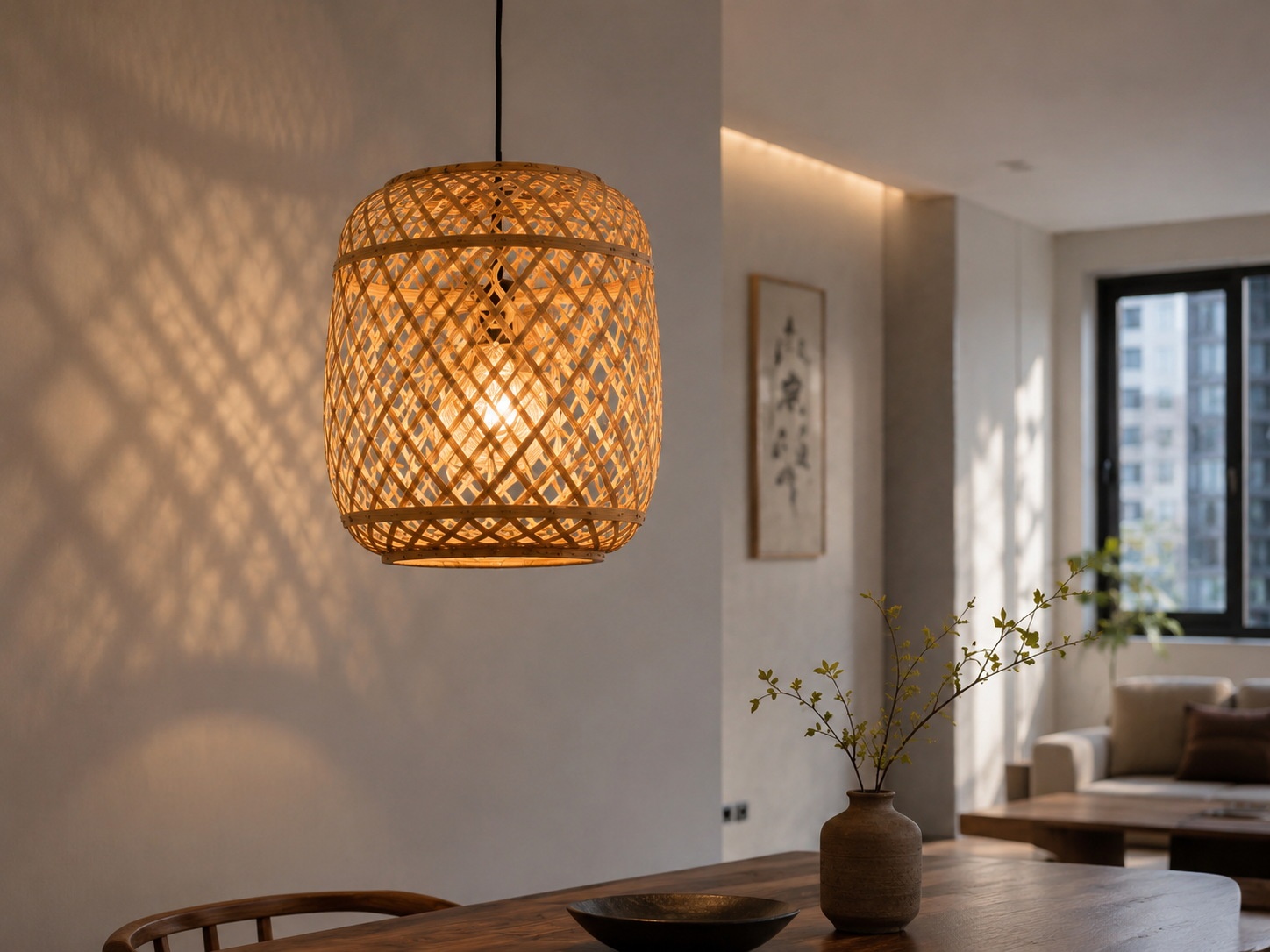
Within six months, Lin had built a small client base. He now sells custom lighting fixtures and decorative items, earning enough to cover his rent in Chengdu. However, the reality is not fairy-tale perfect. The learning curve is steep. A single piece can take days to complete, and mistakes are costly. “I threw away hundreds of failed attempts,” Lin admits. “But each failure taught me how the bamboo wants to bend.”
The Digital Bridge: How Social Media Changed Everything
What makes this trend scalable is not just skill, but technology. Platforms like Xiaohongshu and Douyin (the Chinese version of TikTok) have democratized access to global markets for rural artisans and young revivalists.
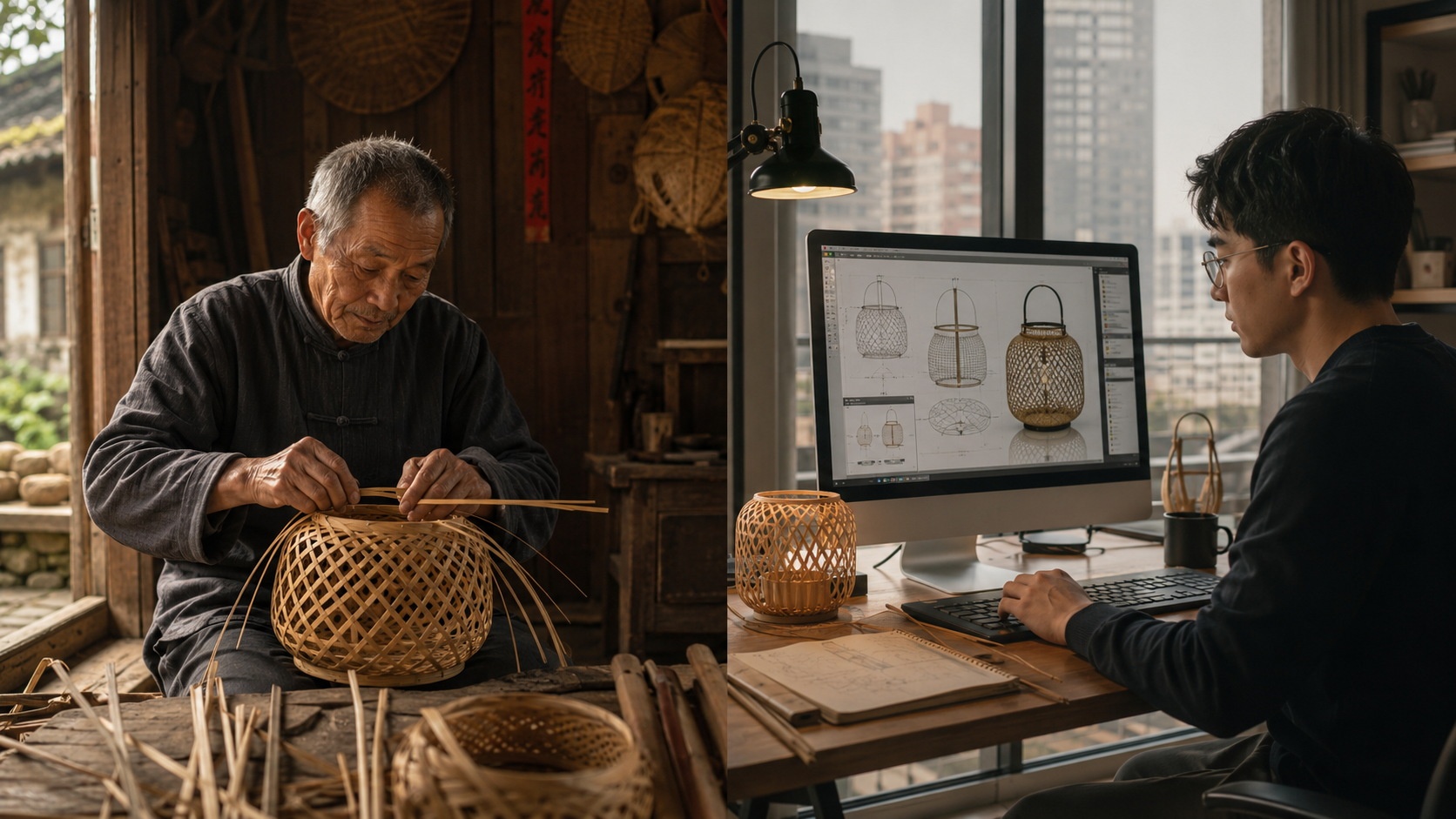
In the past, a skilled weaver in a remote county might struggle to sell beyond their local market. Today, a well-crafted video can reach millions. The key is storytelling. Consumers don’t just buy a bamboo basket; they buy the story of the artisan, the patience required, and the cultural heritage embedded in every weave.
“People are tired of mass-produced plastic,” says Sarah Chen, a marketing analyst specializing in Chinese consumer trends. “They want authenticity. When young people like Lin document their learning journey—the failures, the late nights, the small victories—it feels real. It builds trust.”
This digital bridge also allows for rapid feedback. Young artisans can see exactly which designs resonate with buyers and adjust their styles accordingly. Some have even collaborated with modern designers to create minimalist home decor that fits contemporary urban apartments.
Cultural Identity vs. Economic Reality
Is this trend purely financial? For many, it is a blend of economic necessity and cultural search. In a rapidly changing society where traditional community bonds have weakened, these crafts offer a sense of rootedness.
For Lin, the motivation is both. “I started for extra money,” he says. “But now I feel responsible for keeping this skill alive. If no one learns it, my grandfather’s knowledge disappears with him.”
However, challenges remain. Scaling production without losing quality is difficult. Many young artisans struggle to balance their day jobs with the demands of custom orders. There is also the risk of “cultural appropriation” or dilution of tradition when crafts are simplified for mass appeal.
Yet, the resilience of these young makers suggests a deeper shift in values. They are redefining success not just by salary or corporate title, but by autonomy, creativity, and connection to heritage.
A New Definition of Success
The rise of intangible cultural heritage as a side hustle is more than a niche trend; it is a reflection of China’s evolving youth culture. It shows that young people are actively seeking alternatives to the high-pressure, homogeneous career paths of the past.
They are proving that tradition and modernity are not opposites. A software engineer can be a bamboo weaver. A city dweller can maintain ancient skills. And in doing so, they are keeping these crafts alive—not as static museum pieces, but as living, breathing parts of daily life.
As Lin finishes his latest basket, he smiles. “Maybe one day I’ll quit my job,” he jokes. “But for now, I like having two lives. One where I fix code, and one where I build worlds.”