
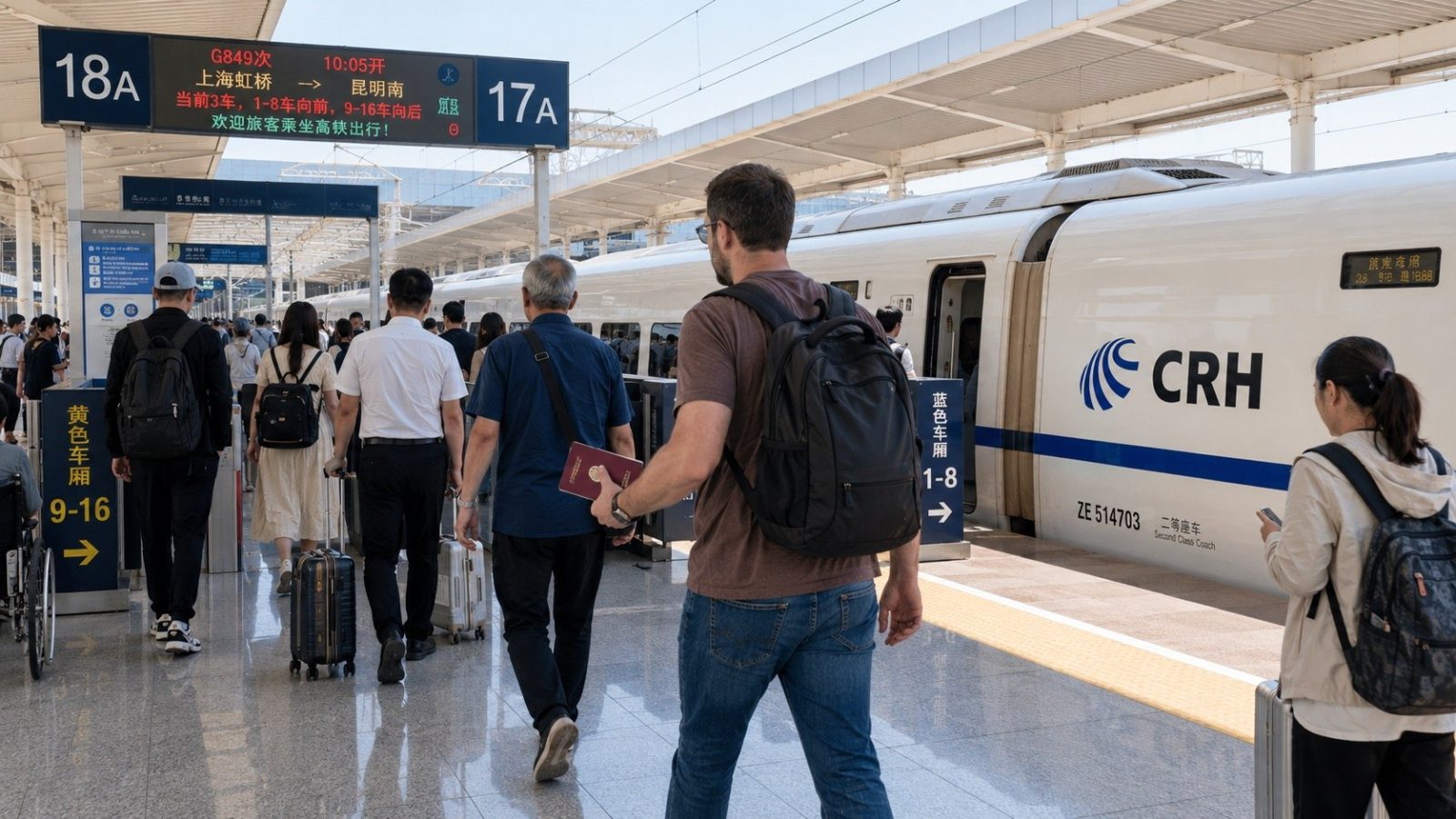

The Reality of Speed and Scale
When I tell my friends abroad that I’m taking a train from Shanghai to Beijing, their first reaction is often disbelief. It sounds like science fiction: crossing half the country in four hours. But for millions of Chinese people, this isn’t a special event; it’s just Tuesday.
The China High-Speed Rail (HSR) network is the world’s largest, spanning over 45,000 kilometers. More importantly, it has become deeply integrated into daily life. Whether you are a student commuting to class, an engineer rushing between factory sites, or a family visiting relatives for the holidays, the train is the artery of modern China.
If you’ve heard about the ease of travel in China but feel anxious about language barriers or complex systems, don’t worry. The process has become remarkably streamlined, especially for foreigners. Here is how to navigate it without stress.
Booking Without Stress: Digital vs. Physical
In the past, buying a train ticket meant standing in long lines at station counters. Today, nearly everything happens on your smartphone. But unlike Western apps that might feel like guesswork, China’s system is rigidly efficient—if you know where to look.
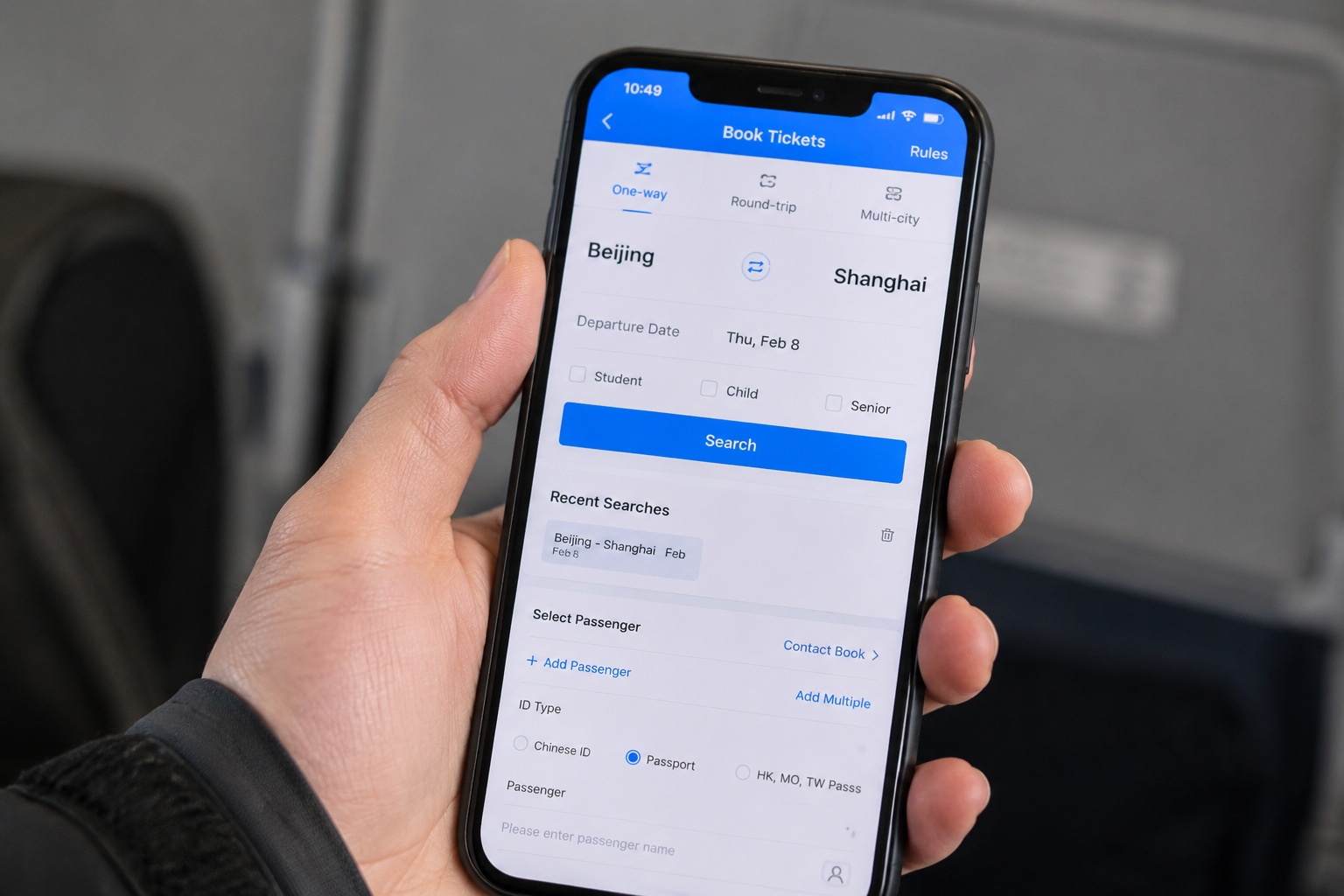
The Official App: 12306
The official railway app is called 12306. It has an English interface and accepts international credit cards (Visa, Mastercard) as well as foreign passports for ID verification. The process is straightforward:
- Download the app and select “International Passport” during registration.
- Complete facial recognition verification once at a station kiosk or via the app (this step can take a few days to approve).
- Book your ticket. You will see real-time seat availability and prices.
The downside? The interface, while functional in English, can sometimes be clunky with translation nuances, and customer service is difficult to reach if things go wrong.
The Foreigner-Friendly Bridge: Trip.com
For most international travelers, I recommend using Trip.com (the global brand of Ctrip). It’s a third-party platform that acts as a bridge. While you pay a small service fee, the English interface is polished, customer support responds in English, and they handle the complex ID verification for you. If your 12306 booking fails due to a glitch, Trip.com often has alternative solutions ready.
What If You Don’t Have a Chinese Phone Number?
You don’t need one. Both 12306 and Trip.com accept international mobile numbers for SMS codes. The key is to have your passport data handy—name exactly as it appears in the book, date of birth, and passport number.
At the Station: Navigating the Flow
Airports are designed to confuse you with sprawling terminals; Chinese high-speed rail stations are designed to move you. They are vast, airy, and surprisingly quiet compared to Western counterparts.
The Security Check
Arrive at least 45 minutes before departure for domestic trips (90 minutes for international connections). The security process is similar to airports but faster:
- Liquids: You must remove all liquids and electronics from your bag. Place them in separate trays.
- Power Banks: Crucial tip—your power bank must have clear labeling with its capacity (mAh). Unlabeled or damaged batteries will be confiscated. Capacity limits are strict (usually under 20,000 mAh).
Finding Your Gate
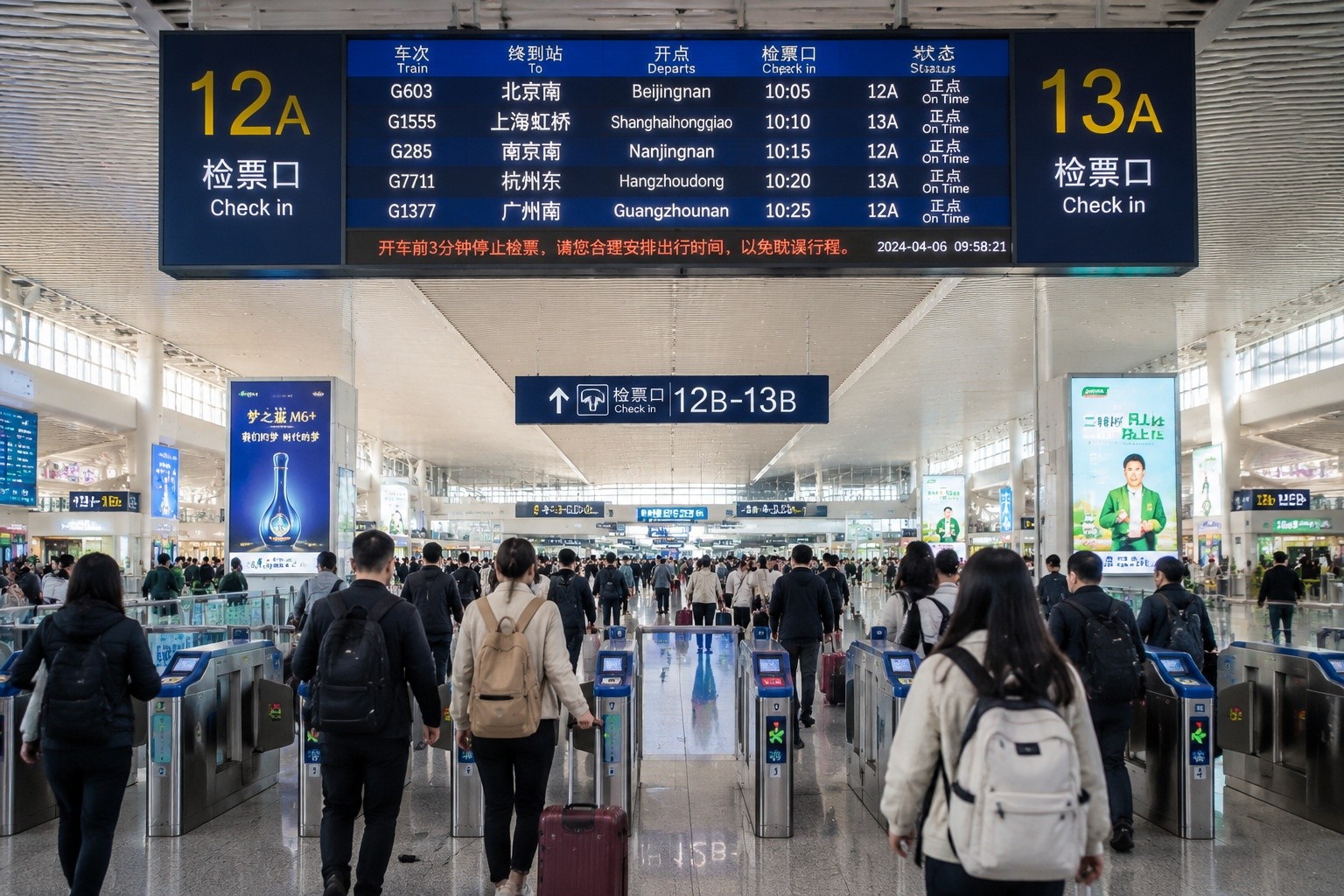
Once through security, look for the large digital screens. They list trains by destination, time, and gate number. Note: In China, we say “Gate” (检票口), but it’s often just a numbered entrance to the platform, not a tunnel like in airports.
Watch out for the clock: Ticket gates close 3–5 minutes before departure. If you are running late, show your ticket to the staff at the gate; they can sometimes let you through if the train is still boarding.
Boarding and Onboard Etiquette
You no longer need a paper ticket. Your passport (or Chinese ID) is your ticket. Just scan it at the automatic gates, and the door opens.
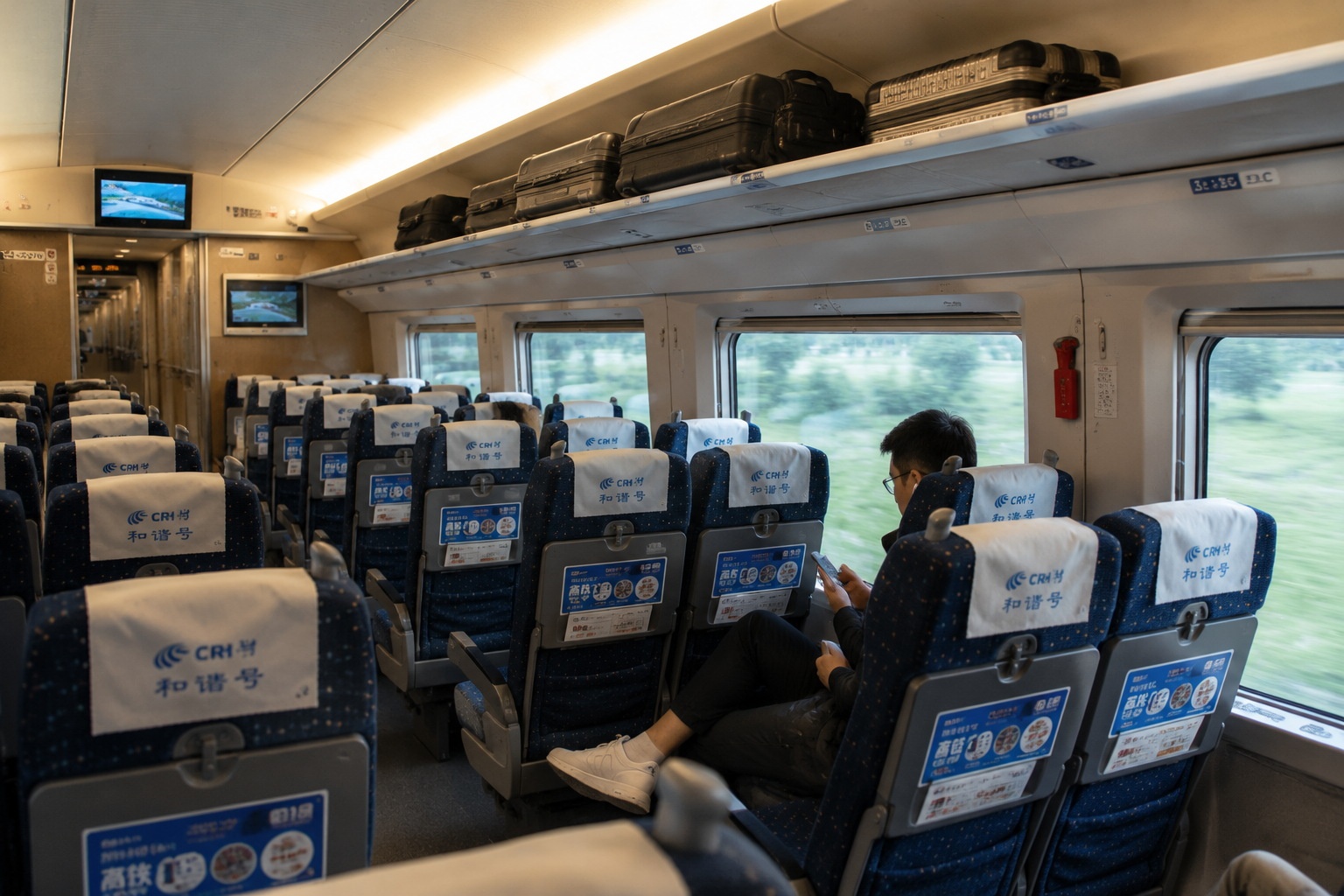
Seat Comfort: Second vs. First Class
Most travelers ride in Second Class. It’s clean, comfortable, and spacious—wider than most economy seats on airplanes. Rows are about 90cm apart. First Class offers wider seats (2-2 configuration vs. 3-2) and a quieter atmosphere, while Business Class features fully flat beds and lounge access.
Cultural Norms on Board
- The Quiet Carriage: Some trains have a designated quiet car (usually Coach 5). Here, phone calls are prohibited, and voices should be kept low. If you’re sensitive to noise, seek this out.
- Eating: Eating is allowed, but avoid strong-smelling foods like durian or stinky tofu. Instant noodles are common, though many locals now prefer boxed meals (bento boxes) sold on board.
- Interacting with Staff: Train attendants are helpful and used to foreigners. If you need help finding your seat or adjusting the window shade, a simple smile and pointing works wonders.
Practical Tips for Smooth Travel
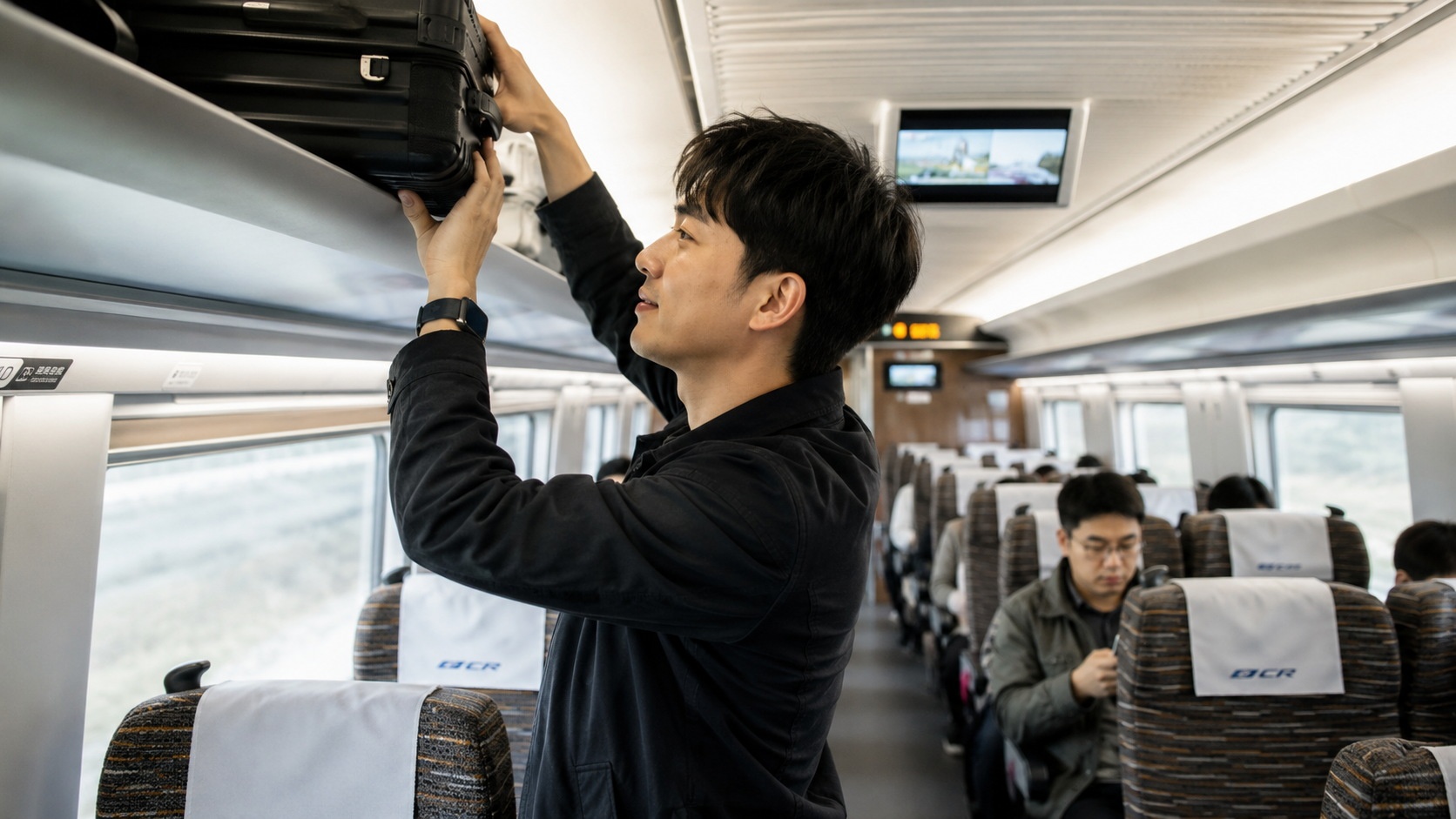
Luggage Management
Overhead racks are standard. Heavy items go on the bottom rack; lighter bags on top. If you have large suitcases that don’t fit, look for areas at the end of the carriage marked for luggage. There is usually space there.
Connectivity: Wi-Fi vs. Data
Onboard Wi-Fi exists but can be slow and unstable when moving at 300 km/h. Your best bet is a local SIM card or an international roaming plan. Most HSR trains pass through areas with excellent 4G/5G coverage, so you’ll likely stay connected via mobile data.
What If You Miss the Train?
If you miss your train due to traffic or confusion, don’t panic. Check the app: if there are seats available on a later train that same day, you can often change your ticket for free or for a small fee at the station window or via the app.
Traveling by high-speed rail in China is less about the mechanics and more about the rhythm. Once you’ve done it once, you’ll find yourself planning trips around these efficient, clean, and surprisingly peaceful journeys. It’s not just transport; it’s a glimpse into how fast-paced yet orderly modern Chinese life really is.