


The End of the ‘Check-Fighting’ Dance?
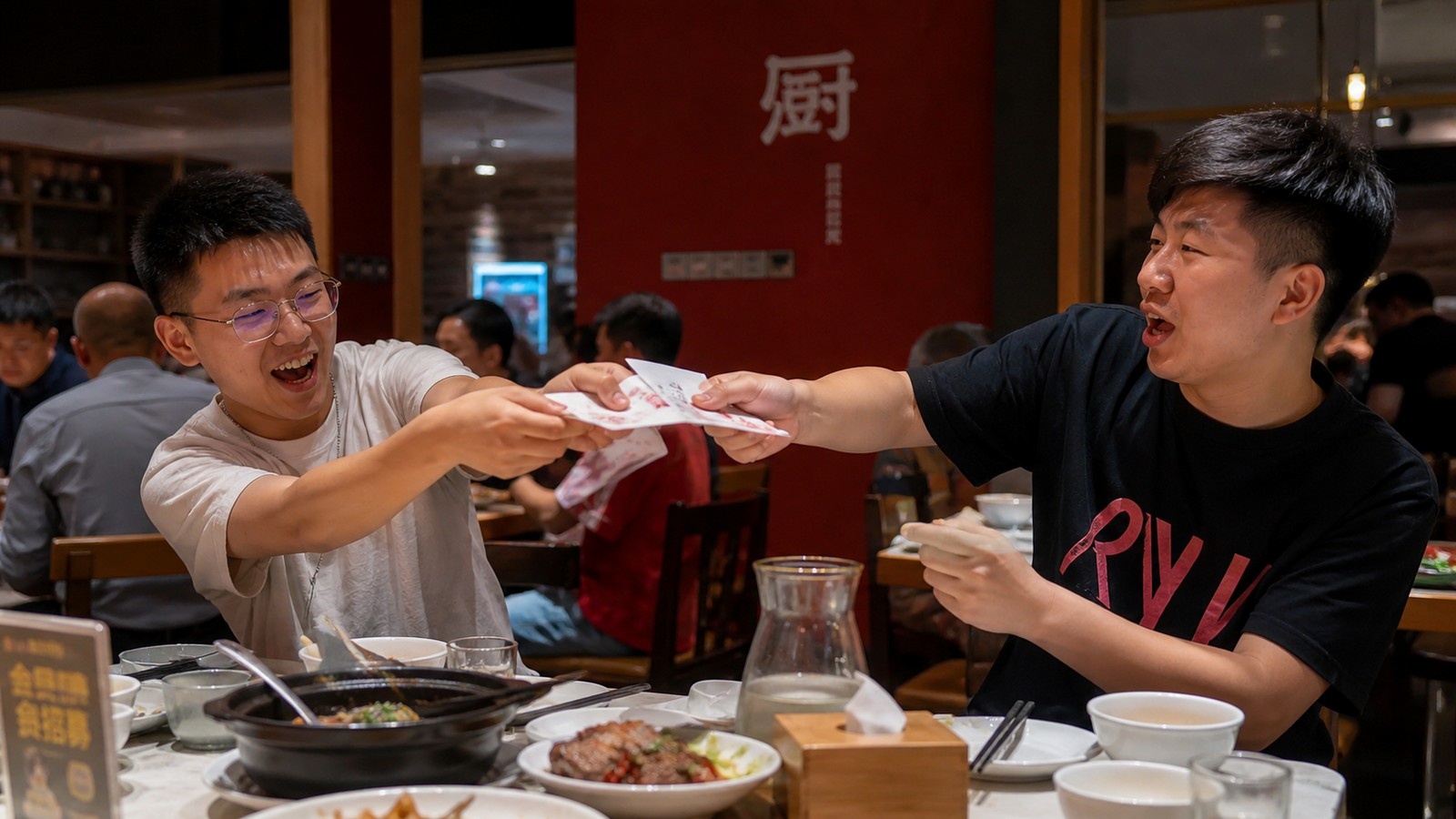
Walk into a casual restaurant in Shanghai or Chengdu, and you might witness something that confuses visitors from Europe or North America. The bill arrives, but instead of one person calmly sliding it to the waiter, three friends suddenly stand up, reach across the table, and tug at the checkbook like they are playing tug-of-war.
This is qiang zhangdan, or “fighting for the bill.” For decades, it was a mandatory social performance. Refusing to fight for the bill could be seen as stingy or socially inept. But today, that dance is becoming less common among young people.
Why the Shift? Rationality Over Ritual
The shift isn’t about a loss of generosity. It’s about a change in how young Chinese view money and relationships. For Gen Z and younger Millennials, AA zhi (going Dutch) is no longer seen as cold or distant. Instead, it’s viewed as fair, respectful, and sustainable.
In the past, treating someone was often tied to building long-term social capital—”I buy lunch now; you owe me later.” But today’s urban professionals are busy, independent, and financially pressured by housing and career goals. They prefer clear boundaries. Paying your own way removes the “social debt,” making interactions lighter and more genuine.
The Tech Solution: How WeChat Solves Social Awkwardness
Here is where China’s digital infrastructure changes everything. In many Western countries, splitting a bill can be an awkward moment of calculator-punching or currency confusion at the restaurant counter. In China, this social friction has been almost entirely eliminated by super-apps like WeChat and Alipay.
The “Split Bill” Feature
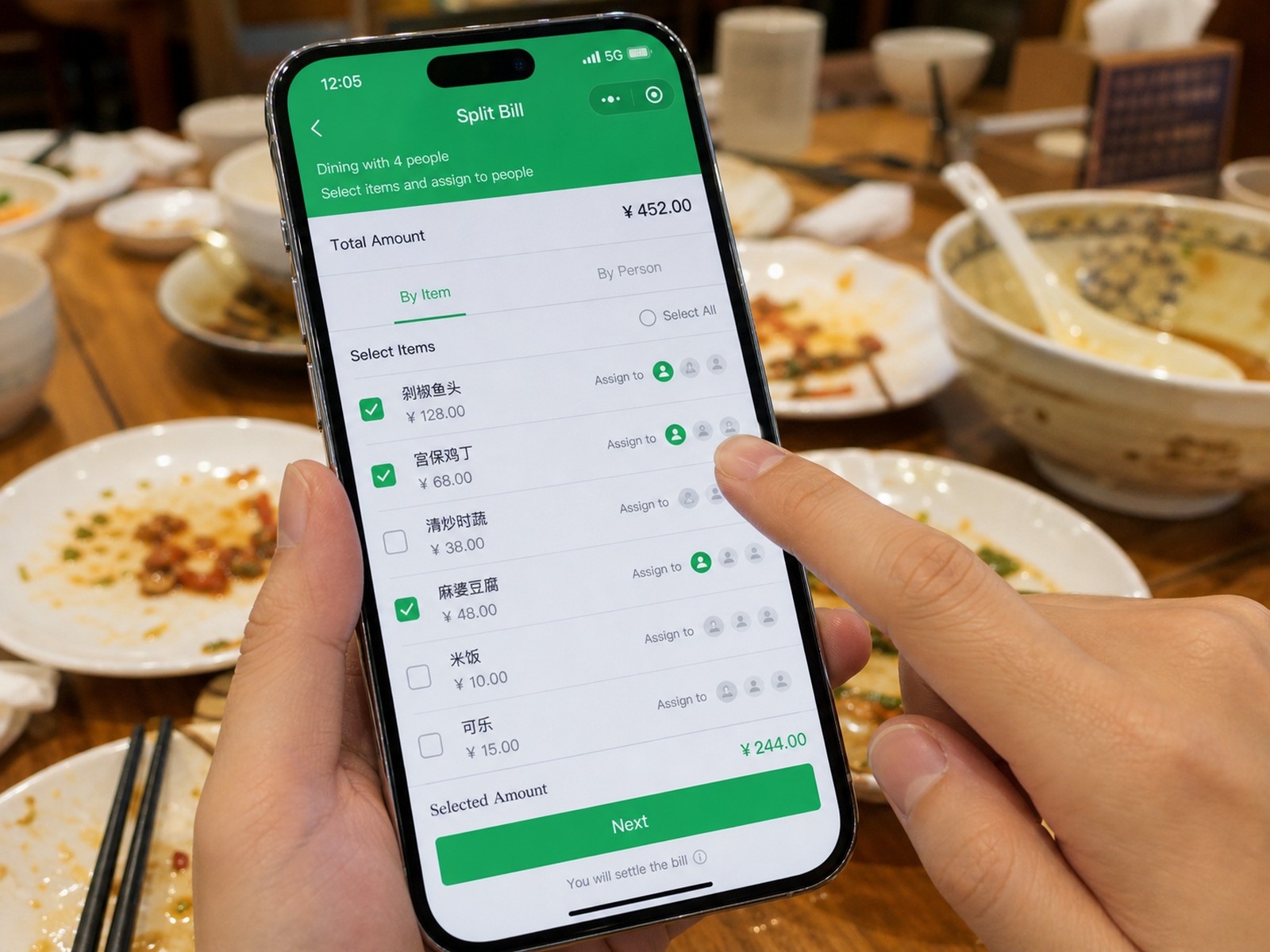
Most young Chinese don’t even pull out their phones to calculate who owes what. They simply open the chat group for the meal, tap a feature called Fen Dan (Bill Split), and select the items each person ordered. The app automatically calculates the total, including tax and service charges if applicable.
The result? A clean invoice is sent to everyone’s phone. Friends can pay with one tap. No one has to stand up. No one has to pretend they are reaching for the check when they aren’t. It is efficient, transparent, and surprisingly polite.
A Guide to Modern Bill-Paying Etiquette
If you are visiting China or making friends with Chinese locals, here is how to navigate bill-paying without causing offense:
1. With Close Friends: Let the Tech Do the Work
Among close peers, AA is the norm. If someone orders significantly more alcohol or expensive dishes than others, they might voluntarily cover that extra cost. But generally, expect a digital split. Don’t be offended if your friend sends you a 15-yuan payment request five minutes after dinner. It’s not personal; it’s just how the system works now.
2. With Colleagues: The “Host” Dynamic
In a workplace context, AA is less common for group lunches unless agreed upon in advance. Usually, one person (often the organizer or senior member) pays, and then uses WeChat to collect contributions from the team afterward. This maintains hierarchy while keeping costs shared.
3. On Dates: The Evolution
Dating etiquette is complex. Traditionally, the man paid. Today, many young women expect men to offer, but also prefer to pay for their own share or treat for dessert/drinks later. A balanced approach—where one person pays for dinner and another treats for coffee—is increasingly seen as the ideal modern dynamic.

What This Says About Chinese Society
The move from “fighting for the bill” to “digital AA” reflects a broader societal shift: from collective obligation to individual autonomy. Young Chinese are redefining intimacy. They believe that true friendship doesn’t require financial entanglement or performative generosity.
Technology has not just made payments faster; it has freed social interactions from rigid rituals. For the first time, paying for lunch is about the food and the company, not the drama of who wins the tug-of-war over the checkbook.