

The $10,000 Lens in the Park
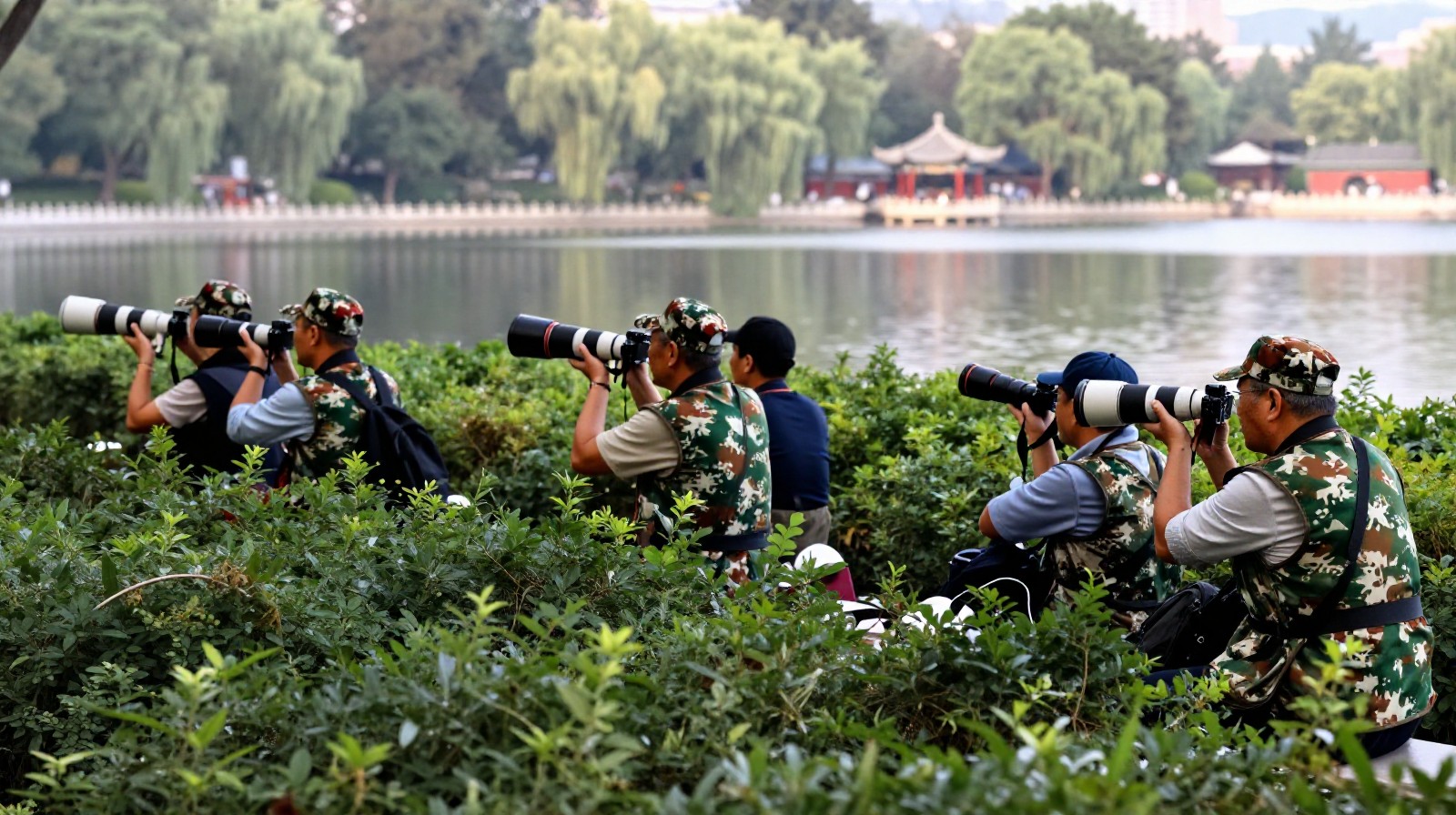
At 7:30 AM, before the rest of Beijing wakes up, a group of men in their late sixties and seventies are already positioned along the lake in Chaoyang Park. They are not exercising or playing mahjong. They are crouching behind trees, hidden by camouflage nets, staring through viewfinders.
These are the “Lens Uncles” (lao fashi), a colloquial term for retired Chinese men who are deeply passionate about photography. While the term can sometimes be used humorously to describe amateur enthusiasm, these men are serious hobbyists. Their gear is the first thing you notice: massive telephoto lenses, often white in color, protruding from professional camera bodies like the Canon EOS R3 or Nikon Z9. A single lens can cost $5,000 to $10,000. For many of these retirees, that lens is not just a tool; it is a statement.

More Than Just a Hobby
The phenomenon of the “Lens Uncle” is a distinct slice of contemporary Chinese social life. It reflects three converging trends: an aging population with disposable income, the rise of consumer-grade professional technology, and the need for community in rapidly urbanizing cities.
Many of these men worked in state-owned enterprises or government roles during China’s reform era. They now have pensions, free time, and a desire to maintain a high standard of living. Photography offers a structured way to spend their days. But it also serves as a powerful social currency.
In the park, status is not determined by job title but by the quality of your images and the rarity of the shots you have taken. A photo of a common sparrow might earn a nod; a sharp, clear image of a rare kingfisher or a migrating crane can spark hours of conversation. The lens becomes a badge of honor, signaling patience, discipline, and financial stability.
The Discipline of Waiting
Photographing birds requires a unique blend of physical endurance and technical skill. The “Lens Uncles” wake up at dawn, often before 5 AM, to catch the “golden hour” light. They carry heavy equipment for hours, sometimes standing still for four or five hours in humid weather, waiting for a single second when a bird flies into the perfect frame.
“My back hurts every evening,” says Lao Li, a regular at the park with a 600mm f/4 lens. “But when I see the eye of the bird in focus, everything else disappears.”
This dedication contrasts sharply with the snap-and-share culture of younger generations. While young people use smartphones to document daily life instantly, the “Lens Uncles” embrace slowness. They learn to read wind direction, understand bird migration patterns, and master manual exposure settings. It is a form of active observation rather than passive recording.

A Community Built on Sharing
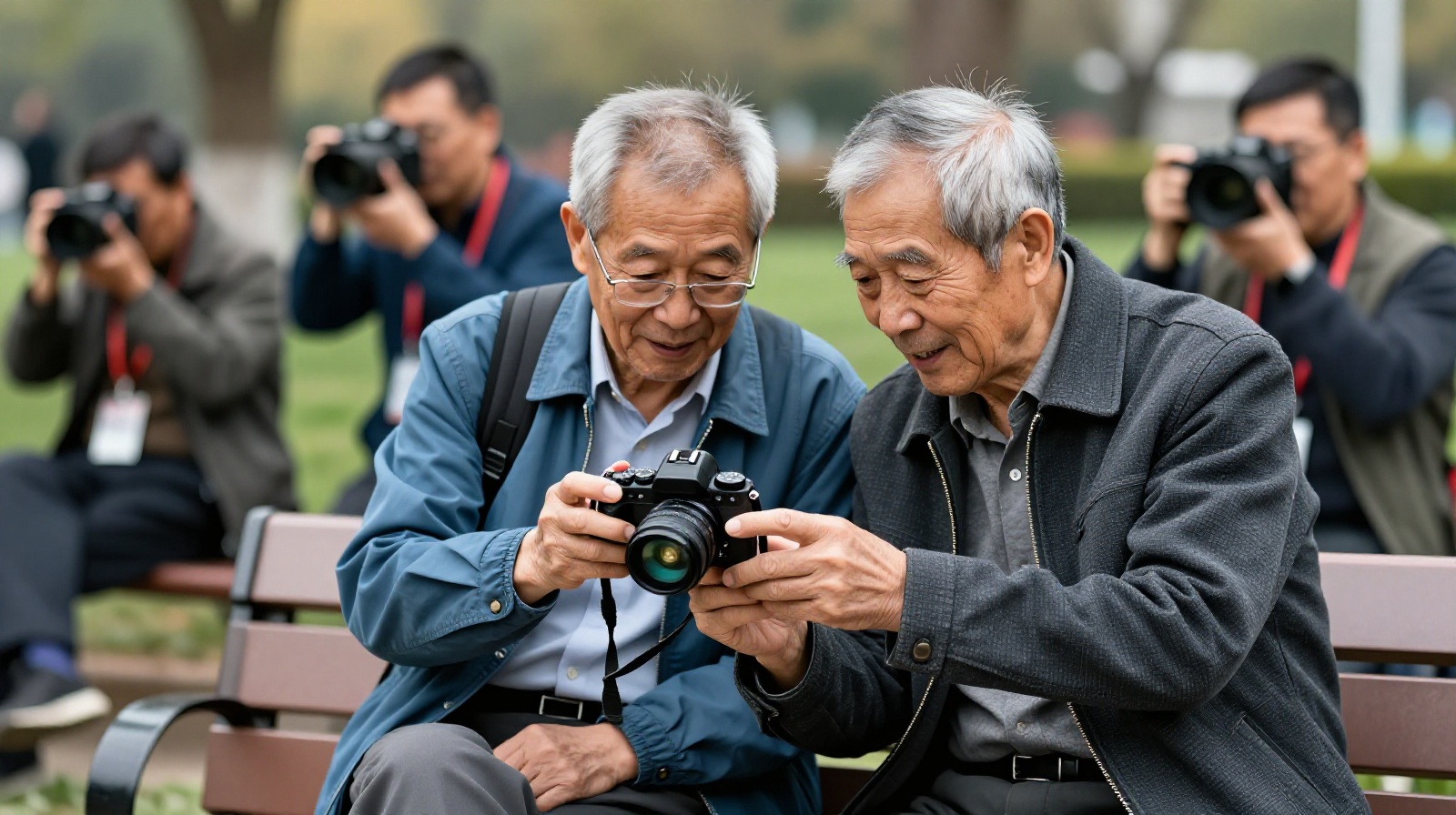
Despite the competitive nature of securing the best vantage points, these photographers form tight-knit communities. They share tips on where birds are migrating, review each other’s photos on large LCD screens, and sometimes even help younger enthusiasts set up their gear. In an era where digital interaction often replaces face-to-face connection, this group maintains a tangible, local network.
For many, this community is a vital part of retirement life. It provides a sense of purpose and belonging. The park becomes a classroom, a gallery, and a social club all in one. They are not just capturing images of nature; they are constructing a shared identity rooted in respect for the natural world and mutual appreciation among peers.
Conclusion
The “Lens Uncles” represent more than just a quirky hobby. They are a testament to how retired citizens in China are navigating their later years with vitality and purpose. Through their expensive lenses and patient waits, they show that retirement is not an exit from society, but a new chapter of engagement. In a fast-paced world, they remind us of the value of stillness, focus, and the simple joy of watching the sky.