
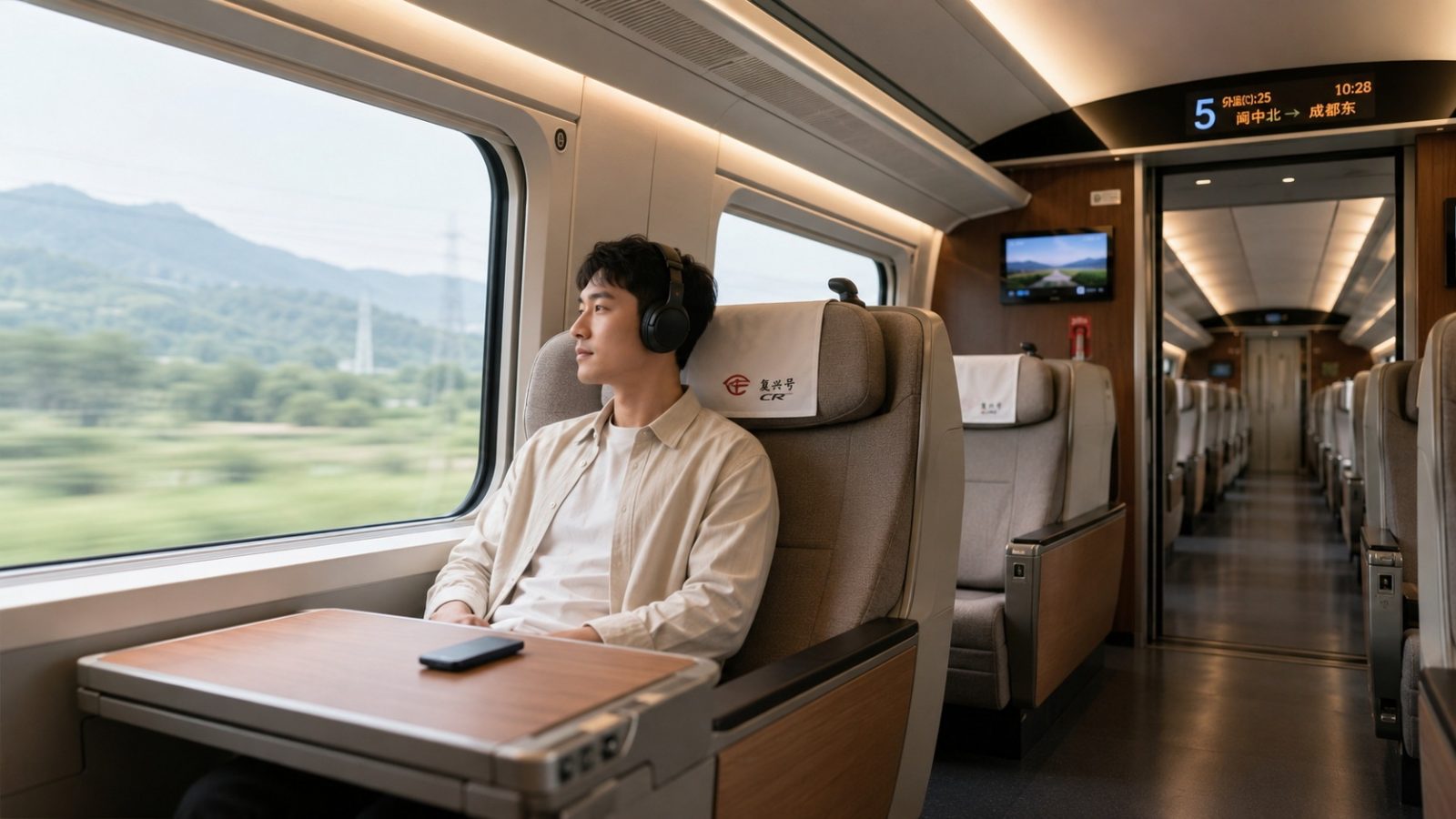

The Noise Problem on Chinese High-Speed Rail
China’s high-speed rail network is the world’s largest, connecting vast distances in just hours. For many travelers, it is a miracle of modern engineering. But for others, it can be a test of patience.
Step onto a typical third-class carriage during rush hour, and you might find yourself sandwiched between a passenger watching videos without headphones, another taking loud phone calls about business deals, and perhaps a young child crying. In the past, complaining to staff or confronting other passengers was often futile. The culture of shared public space sometimes clashed with individual needs for rest.
Introducing the “Silent Carriage”
To address this growing demand for quiet, China State Railway Group has introduced a new service: the “silent carriage.” This is not just a designated area for sleeping passengers; it is a strictly enforced zone where noise is minimized by design.
Similar to business class or first-class sections, silent carriages are usually located at the beginning and end of the train. However, what sets them apart is the behavioral contract passengers must agree to upon booking. It represents a shift in how Chinese public services handle diverse traveler needs—moving from a “one-size-fits-all” approach to personalized, segmented experiences.
How to Book a Silent Carriage
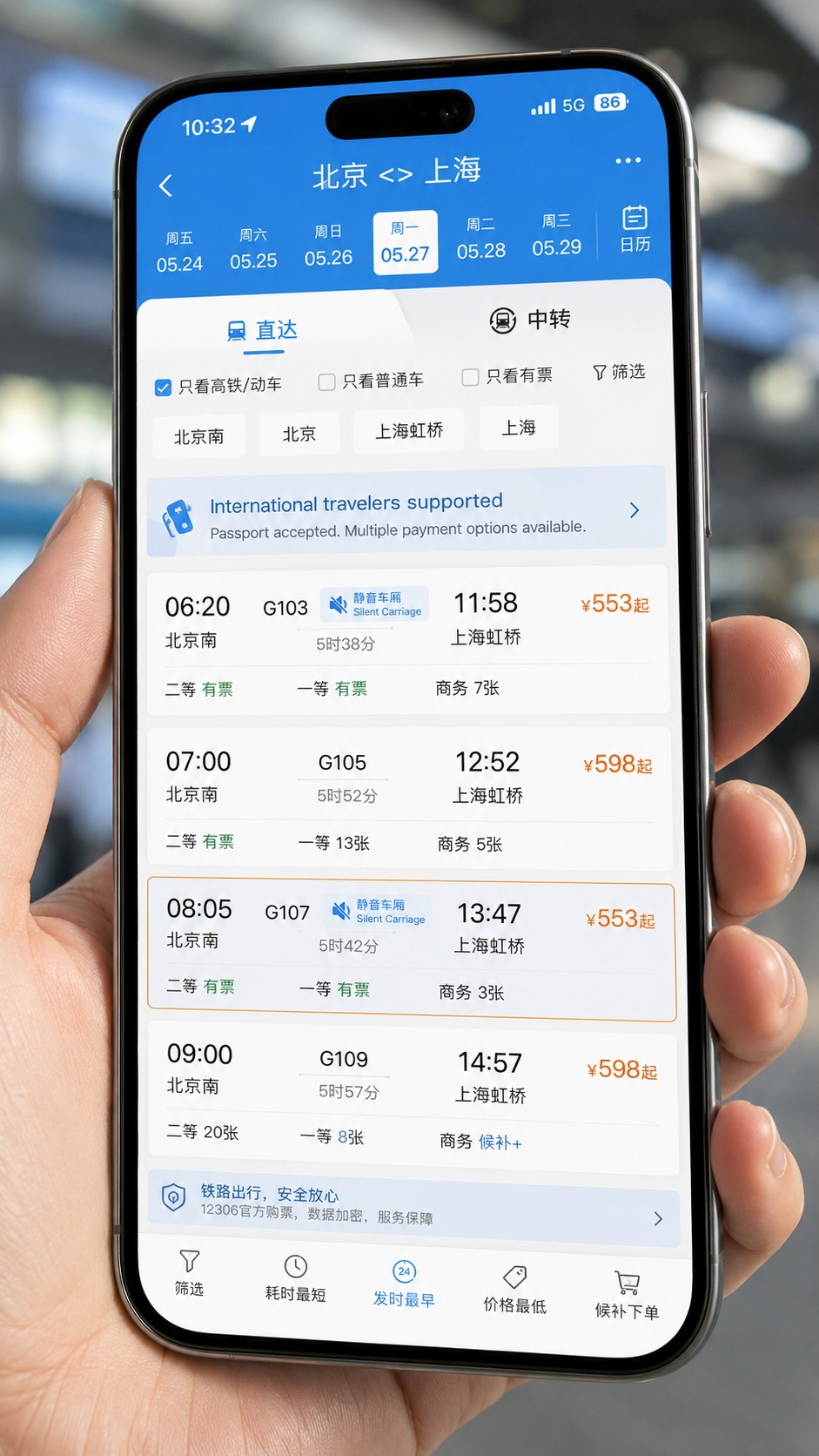
Booking a silent carriage is straightforward if you know where to look. The primary channel is the official China Railway 12306 app or website.
- Select Your Route: Enter your departure and arrival cities as usual.
- Identify the Service: When viewing available trains, look for a “Silent” (静音) tag next to the train number. Not all high-speed trains offer this service yet; it is currently rolling out on many, but not all, routes.
- Choose the Seat: During the seat selection step, you will see specific carriages marked with a small “Silent” icon (usually a crossed-out speaker symbol). You can only select seats within these designated carriages.
Rules of the Silent Carriage
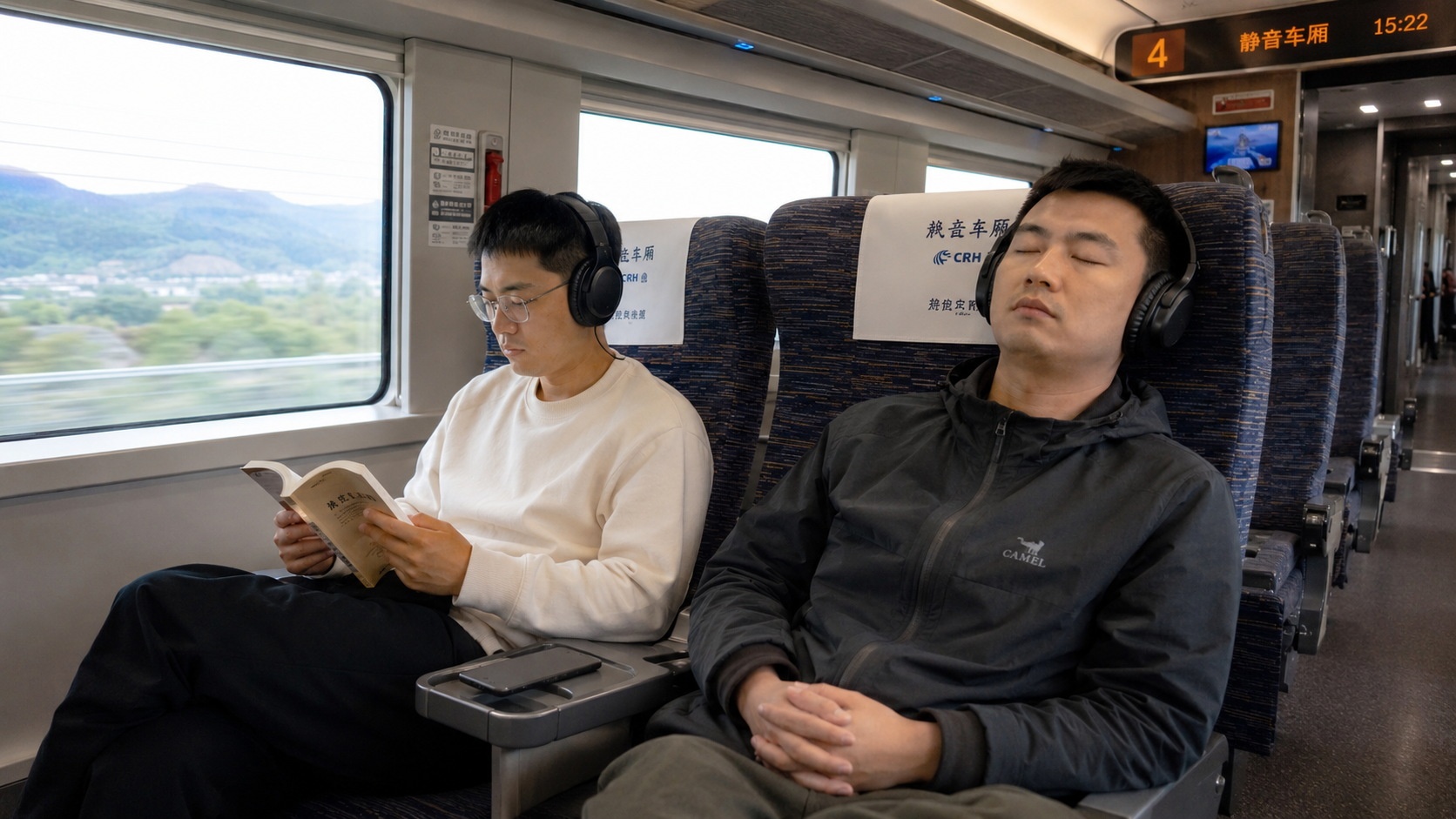
Booking is only half the battle. Once inside, passengers must adhere to strict behavioral guidelines. These rules are enforced by train staff and sometimes through subtle reminders on seat back pockets or digital displays.
- No External Sound: All electronic devices must be used with headphones. Video playback without audio output is prohibited.
- Keep Voices Down: Conversations should be kept to a whisper, if possible. Phone calls are strongly discouraged and may require you to move to another carriage.
- Quiet Movements: Even mundane actions like unzipping luggage, clicking pens, or eating crunchy snacks can disturb others. Passengers are expected to exercise caution.
What Happens If You Break the Rules?
The system relies on social pressure and staff intervention. Train attendants frequently patrol silent carriages. If a passenger is found violating the rules—such as speaking loudly or playing music—the attendant will first issue a gentle reminder. If the behavior continues, the passenger may be asked to relocate to another carriage or, in extreme cases of repeated disruption, face penalties.
This enforcement mechanism highlights a unique aspect of Chinese public transport: while not legally binding in most cases, the social expectation of compliance is high. Most passengers respect the agreement because they also value their own peace and quiet.
Why This Matters
The introduction of silent carriages is more than just a travel hack; it reflects a broader trend in China’s service economy. As living standards rise, consumers increasingly expect services to cater to specific needs rather than generic norms. Whether it’s vegan options in canteens or quiet zones in libraries, the push for “precision service” is reshaping daily life.
For foreign travelers and expats alike, understanding this nuance can make a significant difference in comfort. China’s high-speed rail is not just about speed; it is becoming increasingly sophisticated in how it manages the human experience of travel.