

The $1 Question
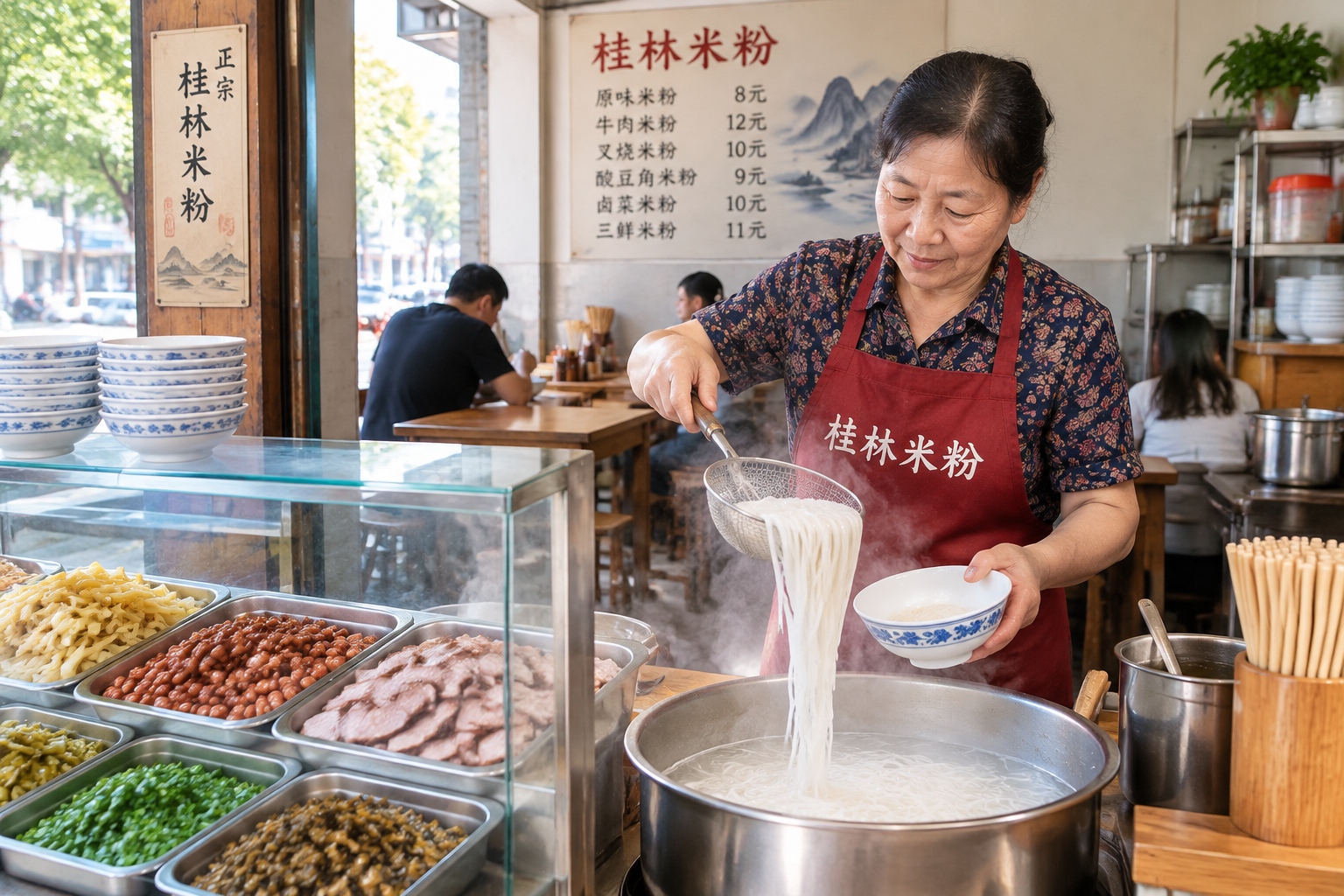
Walk into any small, windowless eatery in Guilin at 7:00 AM, and you will see a scene that defies Western logic. There are no menus on the walls. No apps to scan. Just a glass display case filled with dozens of small bowls containing pickled bamboo shoots, fried peanuts, roasted meat slices, and dried tofu.
You point to what looks good. The auntie behind the counter scoops fresh rice noodles from a steaming pot, adds broth, and tops it with your choices. Total cost: 6 to 8 RMB. In today’s exchange rate, that is roughly $0.85 to $1.10.
In many global cities, this price might not even cover the napkin. Yet in Guilin, it buys you a full, hearty meal that takes an hour to eat properly. This is not poverty food; it is a culinary standard that has remained stable despite China’s rapid economic growth over the last two decades.
More Than Just Noodles
To understand Guilin rice noodles (Guilin Mixian), you have to look beyond the starch. The noodles themselves are made from local rice and spring water, giving them a unique elasticity that holds up under heavy sauces. But the soul of the dish is the topping bar.
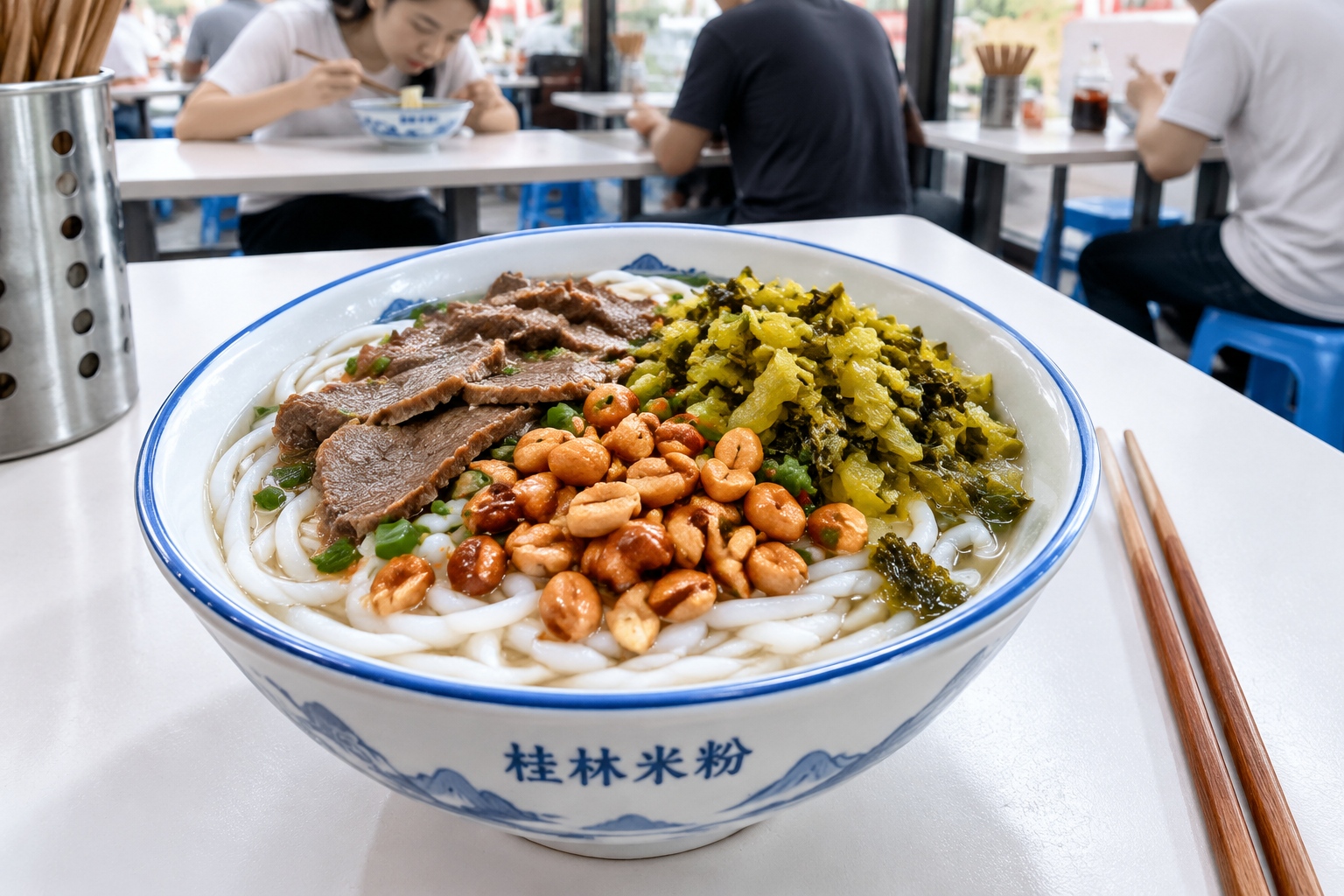
The “topping bar” is where the social magic happens. You don’t just buy a bowl; you build it. The variety is staggering—over 20 options. The most critical ingredient? Pickled mustard greens (suanye). Without them, the dish is incomplete. They provide a sharp, acidic crunch that cuts through the richness of the bone broth and fatty meats.
For the outsider, the process can feel chaotic. Locals move with practiced efficiency, shouting orders in the local dialect while balancing three bowls on one hand. But this chaos is orderly. It reflects a culture where food is communal, fast, and deeply integrated into the daily rhythm of life.
A Taste of History
Guilin rice noodles have a history spanning over 2,000 years, dating back to the Qin Dynasty. Legend says the noodles were invented by soldiers who missed their homeland’s rice cakes. Over centuries, the recipe evolved, influenced by the region’s geography—mountainous terrain and abundant water sources.
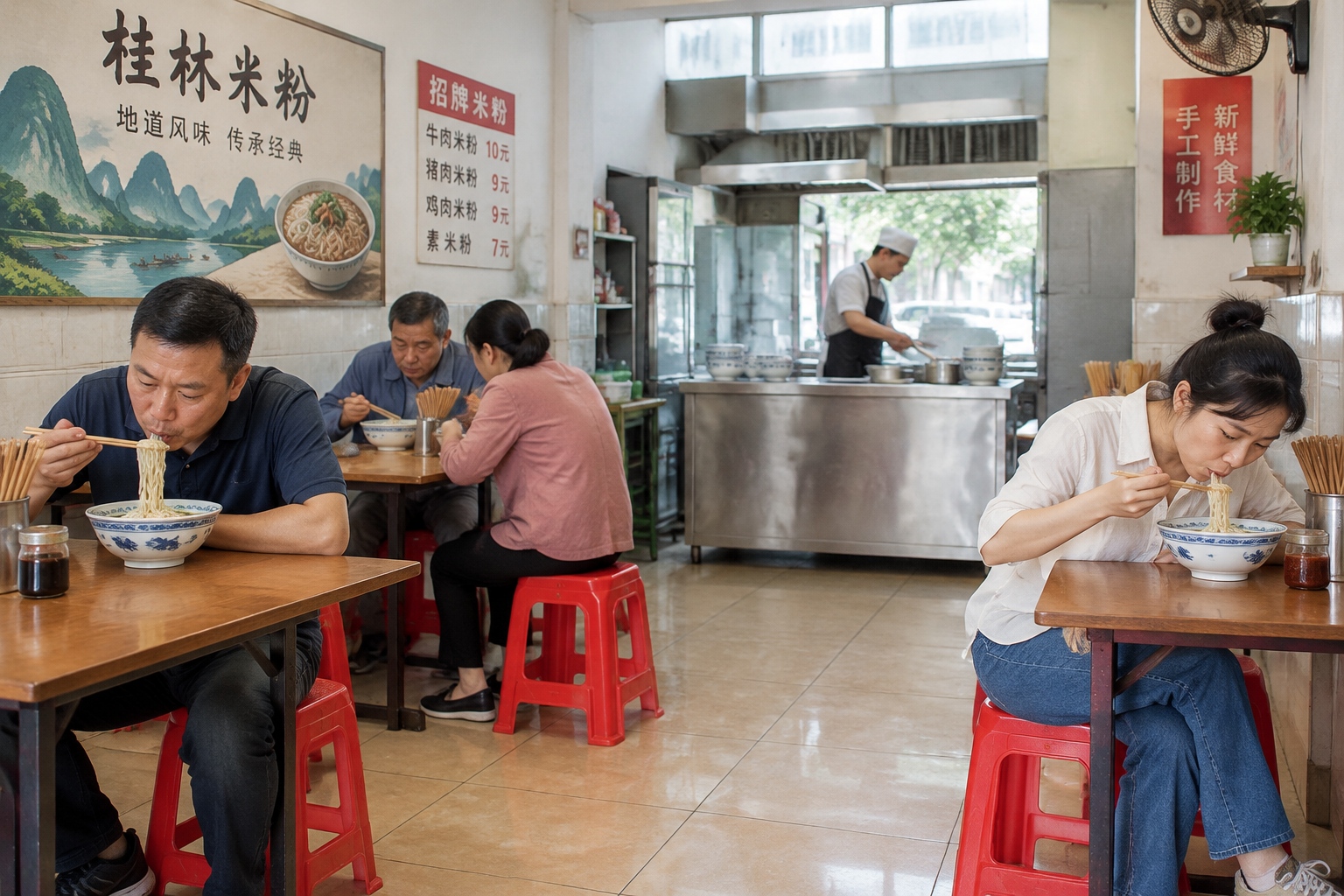
Today, this ancient dish faces modern challenges. Chain restaurants have tried to standardize the taste, but purists argue that true Guilin noodles can only be found in those small, unassuming shops. The broth is usually made from pig bones and a secret blend of spices, simmered for hours. This commitment to slow cooking in a fast-paced world is what makes it a “comfort food” in the truest sense.
The Economic Reality
Why does this bowl still cost so little? It’s not just tradition; it’s economics. China has achieved massive efficiencies in its agricultural supply chain. Rice is abundant, and the labor costs for small-scale food preparation remain lower than in many Western countries, though rising.
However, the price stability is also a result of local policy. Guilin’s government promotes rice noodles as a key part of its cultural identity and tourism economy. By keeping staple foods affordable, they ensure that the dish remains accessible to everyone, from construction workers to office managers.
Why It Matters to the World
For travelers from Europe or North America, Guilin rice noodles offer a different perspective on Chinese life. They show that China is not just about skyscrapers and high-speed rail. It is also about the small, persistent details of daily life that bring people together.
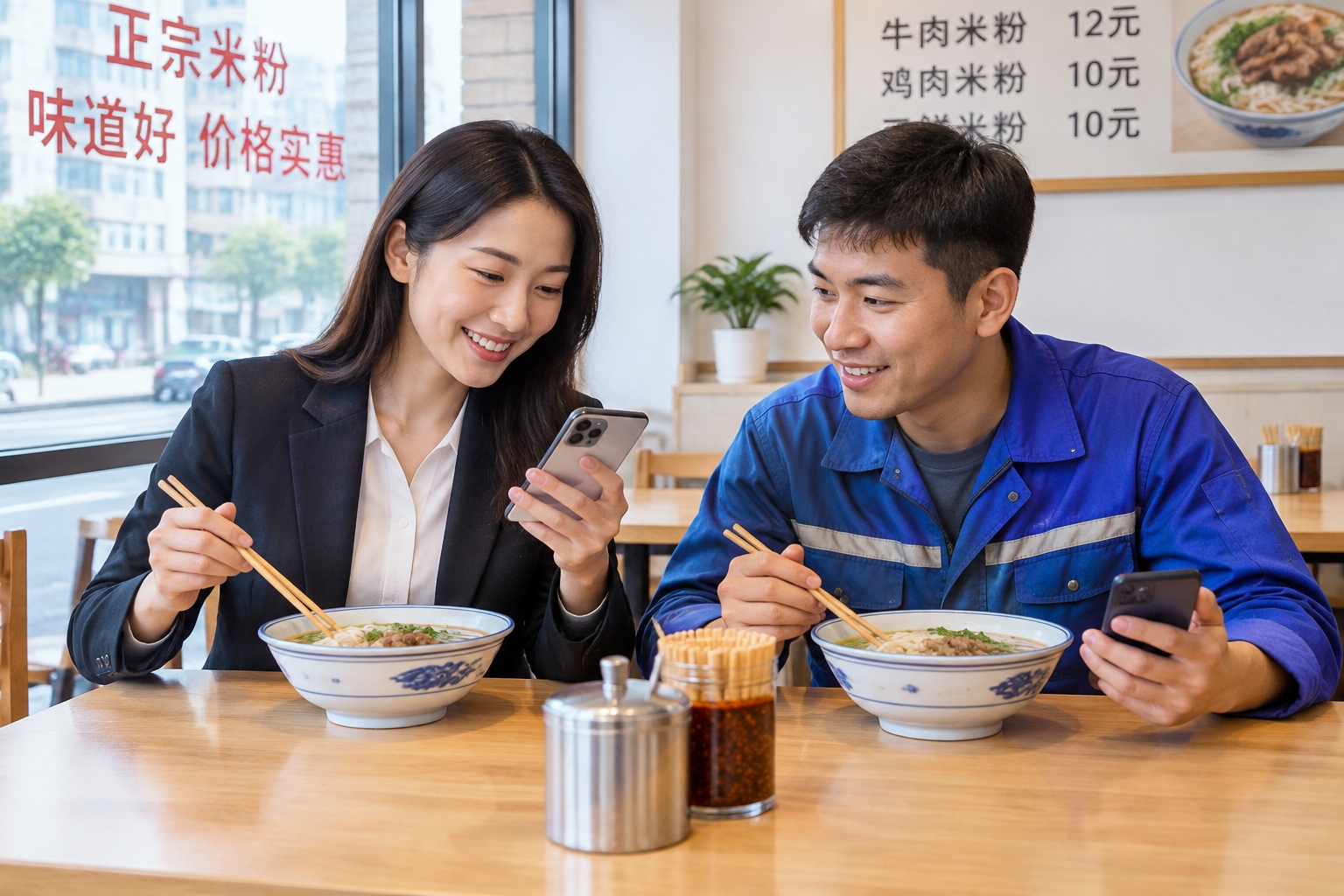
Eating here is an exercise in humility. You sit on a plastic stool, possibly next to someone wearing work boots, sharing the same steamy table. There is no pretense. It is honest, flavorful, and incredibly satisfying.
In a world where dining out has become increasingly expensive and performative, Guilin rice noodles remind us that food’s primary purpose is nourishment and connection. That is why this $1 bowl is China’s most underrated comfort food.
Start the discussion at forum.chinacomes.com