


The “Auntie Mediator” in Your Building
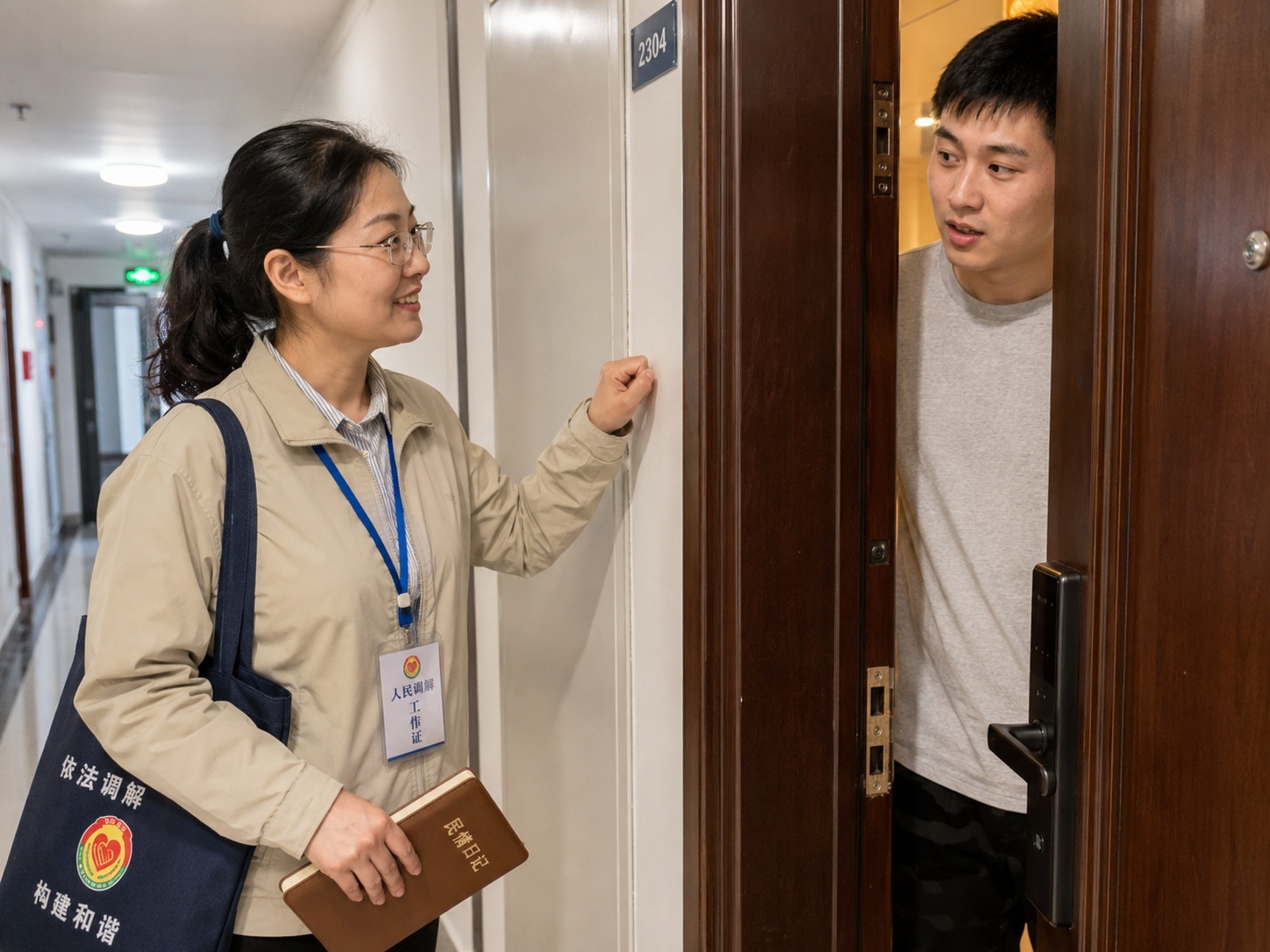
Imagine this: You live on the third floor of an apartment complex in Shanghai or Beijing. The person upstairs is moving furniture at 10 PM. Then, water starts leaking through your ceiling. In many Western countries, your first instinct might be to call the police, document everything for insurance, or hire a lawyer. In China, you are more likely to knock on the door of your building’s “Dispute Resolution Center” (人民调解委员会), where an experienced local mediator—often affectionately called “Auntie Mediator”—will step in.
This is not a courtroom. It looks more like a community living room or a small office with tea cups and comfortable chairs. The goal isn’t to declare a winner and a loser, but to find a solution that lets everyone save face and move on. For foreign readers used to adversarial legal systems, this approach can seem surprisingly informal, yet it handles the vast majority of neighborhood disputes.
A Case Study: The Leaky Ceiling
Let’s follow a real scenario. Mr. Zhang, a retired teacher, notices water stains on his ceiling. His upstairs neighbor, Mr. Li, a young IT worker, is often away for business trips. When they finally connect, tensions rise. Mr. Zhang wants immediate repairs and compensation; Mr. Li insists the leak is from the main pipe, not his apartment, and refuses to pay.
Instead of filing a lawsuit—which could take six months or more—they visit their local People’s Mediation Committee. The mediator, Ms. Wang, visits both units. She brings a technician to check the pipes. She finds the leak is actually from a joint in Mr. Li’s bathroom floor, likely due to aging waterproofing.
Ms. Wang doesn’t just quote laws. She sits them down for tea. She acknowledges Mr. Zhang’s frustration about his ruined ceiling but also reminds Mr. Li that while the building is old, maintaining good neighborly relations is a social norm in China. She explains the legal liability clearly but frames it as “mutual understanding” rather than “punishment.” Eventually, Mr. Li agrees to repair the floor and share half the cost of restoring Mr. Zhang’s ceiling. The whole process takes three days, not three months.
Why Mediation Beats Litigation for Small Conflicts
For many foreign readers, the idea of resolving legal disputes without a judge might seem inefficient. However, in China’s context, litigation is expensive and slow. A small civil case can cost thousands of yuan in legal fees and tie up your life for months. Mediation is free, fast, and flexible.
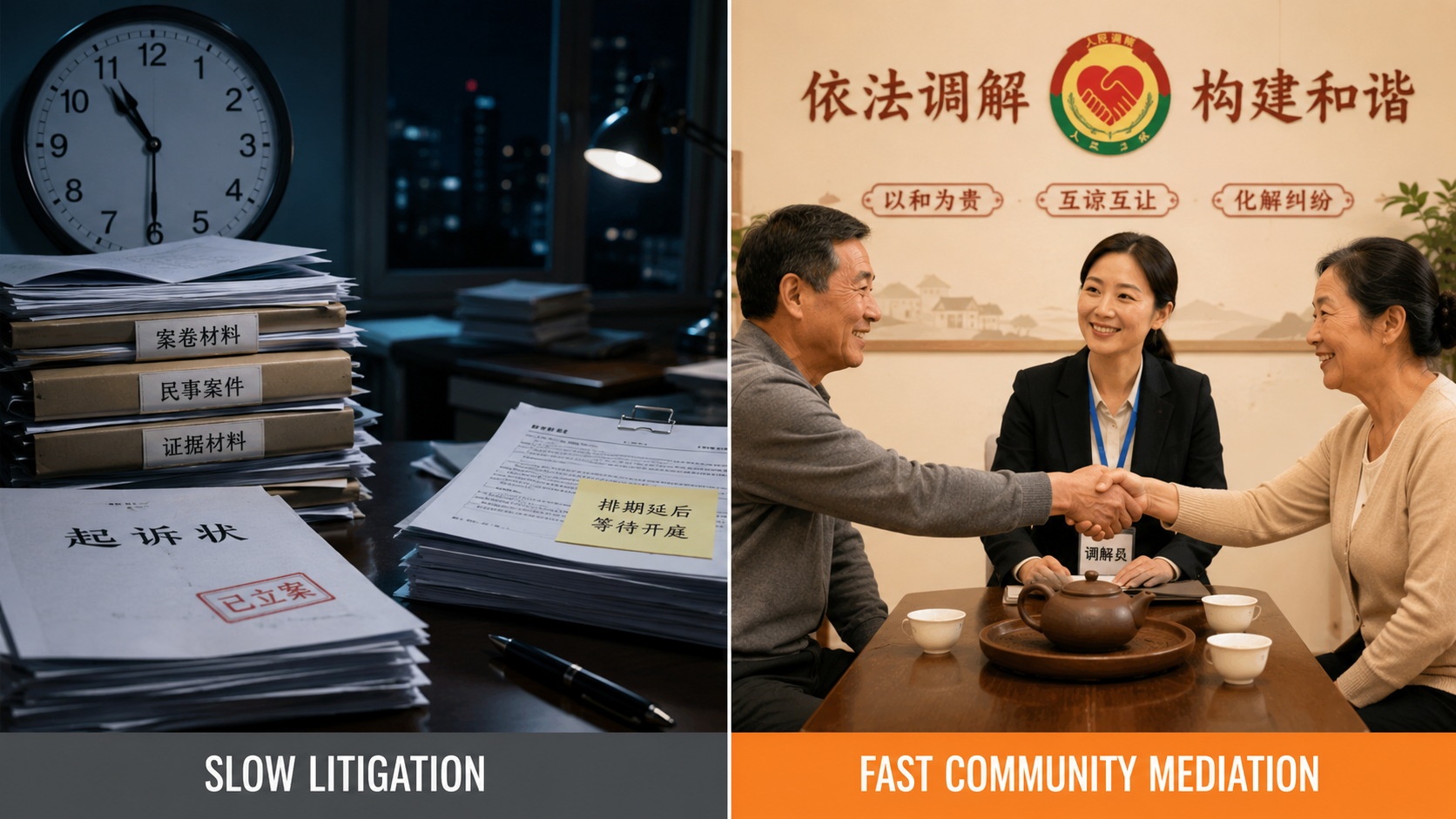
But there’s a deeper cultural reason. Chinese society places a high value on “harmony” (he). In a densely populated country where people live close together, burning bridges with neighbors can make daily life miserable. A lawsuit destroys relationships; mediation tries to repair them. The mediator acts as a bridge, balancing the rigid bottom line of the law with the soft flexibility of human emotion.
Face, Law, and the “Middle Ground”
The success of this system relies on two pillars: “Face” (mianzi) and the “Bottom Line” (faxian). “Face” is about social reputation. If you refuse to negotiate in a mediation room, you might be seen as unreasonable by your community. The mediator uses this social pressure gently. Meanwhile, the “bottom line” ensures that the agreement is legally binding. Once signed, if one party backs out, the other can take the agreement to court for enforcement.
This blend of traditional ethics and modern legal backing is unique. It doesn’t replace the courts; it filters out the minor cases so the courts can focus on serious crimes and complex commercial disputes.
A Modern Institution with Ancient Roots
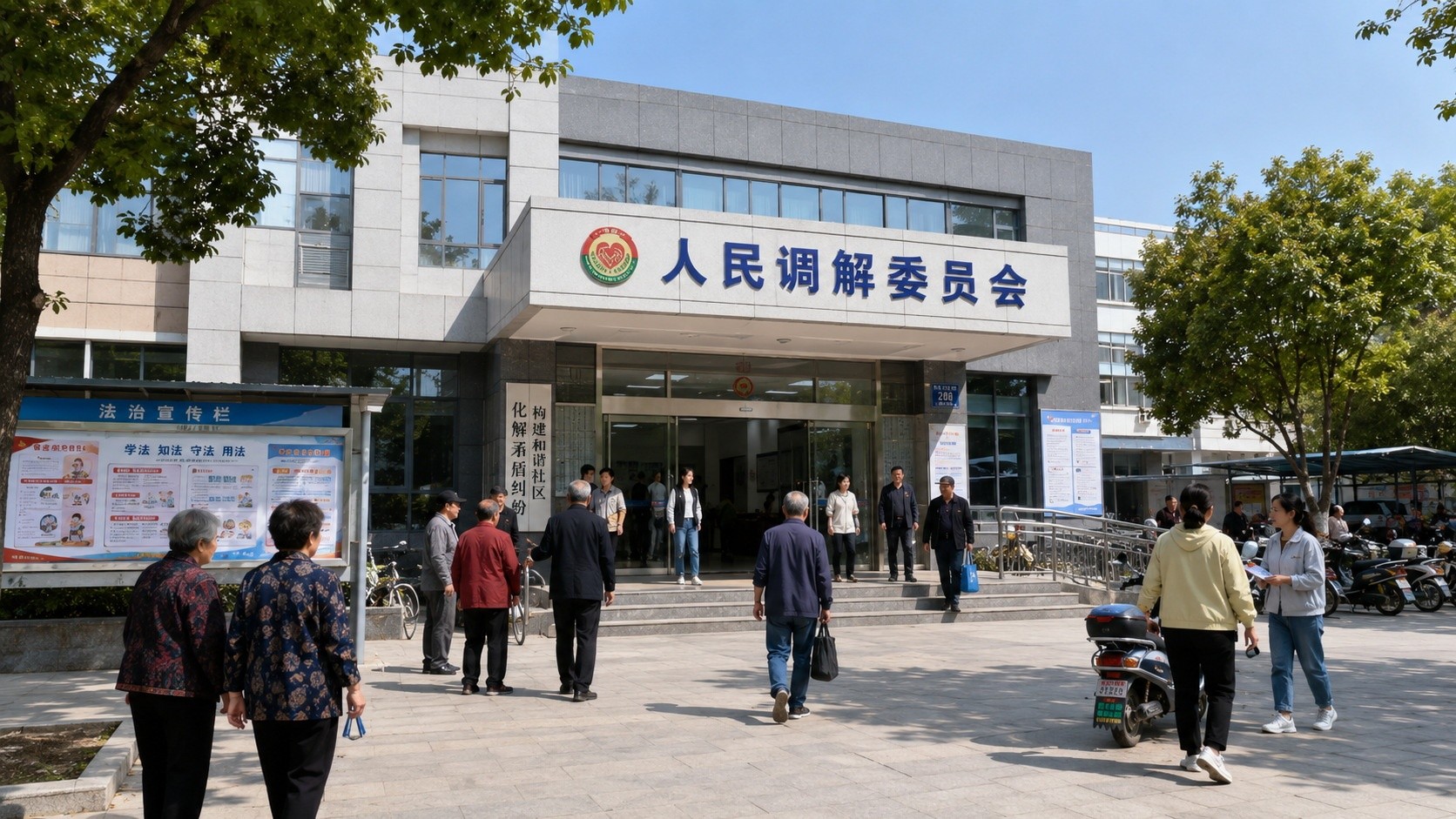
The People’s Mediation Committee isn’t just a tradition; it’s a formal part of China’s governance system, supported by the government. It reflects a pragmatic approach to social management. Instead of relying solely on punishment, it encourages self-regulation and community responsibility.
For those from individualistic societies, this might feel like an intrusion into private matters. But for many Chinese people, it represents a safety net. It ensures that even the elderly or those with limited resources can resolve conflicts without being overwhelmed by the legal system. In a rapidly changing society, these community centers provide a stable, human touch to everyday life.
The Limits of Harmony
Of course, mediation isn’t a magic wand. It only works when both parties are willing to talk. In cases involving domestic violence, severe property damage, or criminal acts, the legal system takes over immediately. Mediation is for civil disputes where there is room for compromise.
Yet, for the everyday friction of city life—noise, parking spots, shared spaces—this system offers a gentler alternative. It reminds us that law is not just about rules; it’s also about how we live together. In China, resolving conflict often means finding a way to keep the peace, one cup of tea at a time.