
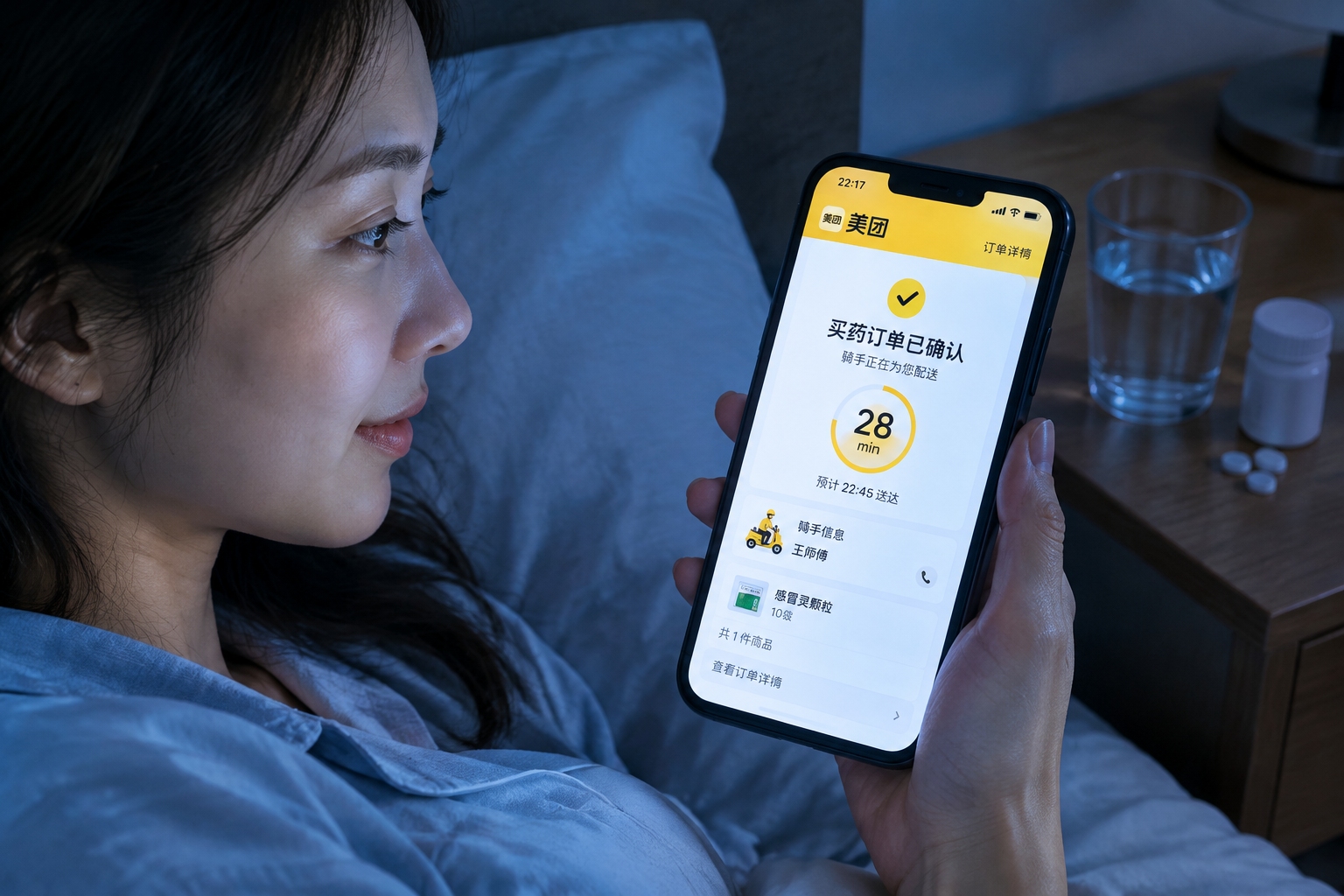

The 2 AM Emergency
It is 2:13 AM. The only sound in the room is the hum of the air conditioner and the occasional cough from the bedroom next door. My wife, Li, wakes up suddenly, clutching her stomach. “I think I ate something bad,” she whispers, her face pale.
It’s not a life-threatening emergency, but it’s uncomfortable enough to disrupt sleep. In many countries, this is when you’d be stuck: either waiting for an ambulance or braving the cold streets to find a 24-hour pharmacy that might still be locked. But in Shenzhen, where we live, the solution doesn’t require leaving the bed.
I grab my phone from the nightstand and open the Meituan app. Within thirty seconds, I’ve located a nearby pharmacy, selected an antacid and some painkillers, and paid. The estimated delivery time? 28 minutes. No hospital visit required. No waiting in line. Just quiet relief.
How Meituan Pharmacy Works
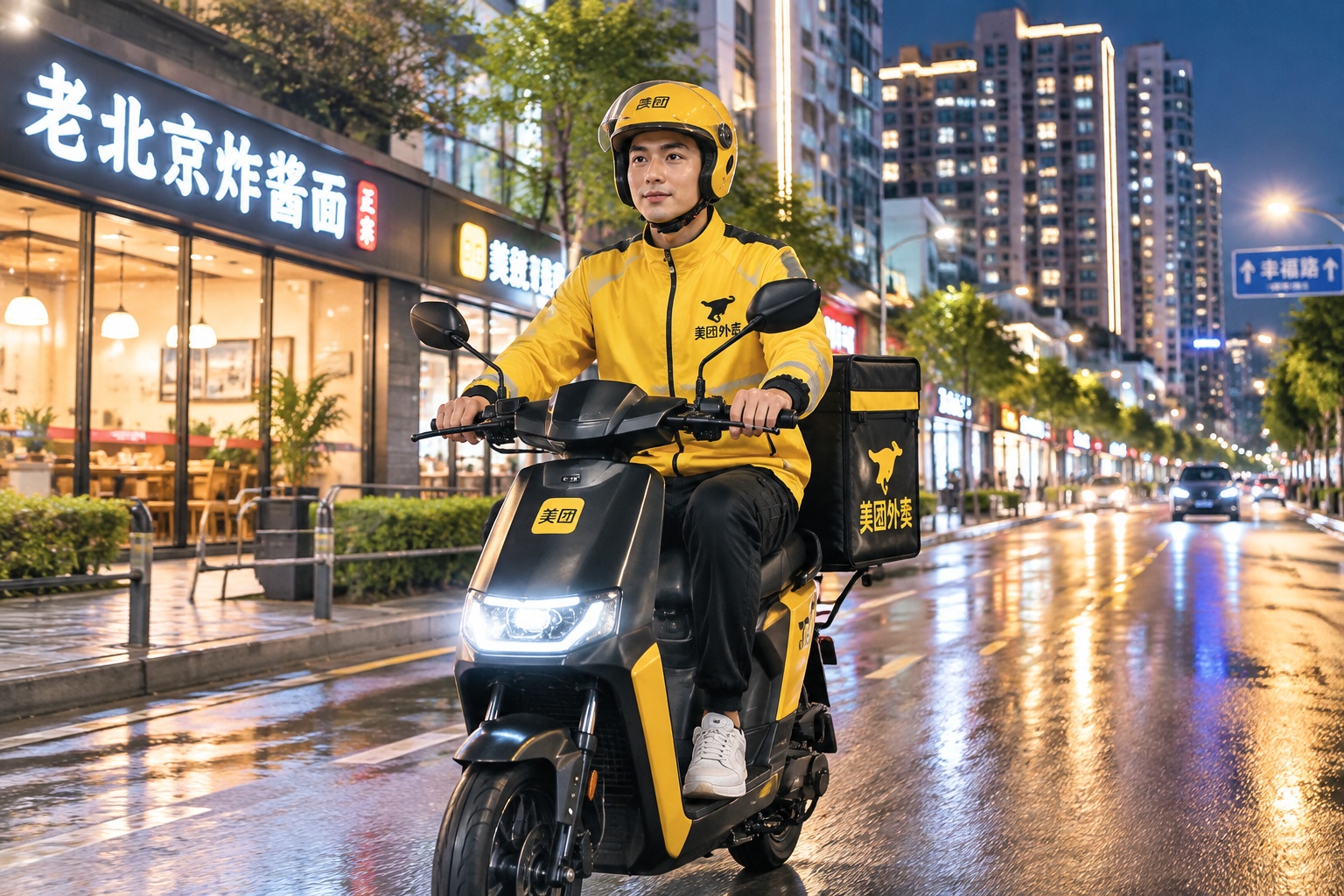
To understand why this is possible, you need to look at the infrastructure behind the screen. Meituan isn’t just a food delivery service; it’s one of China’s largest logistics networks. At any given hour, thousands of riders are patrolling city streets, ready to fulfill orders ranging from bubble tea to electronics.
Meituan Pharmacy (美团买药) leverages this existing network. Instead of relying on central warehouses that take days to ship, it connects you with local brick-and-mortar pharmacies within a 3-kilometer radius. These partner pharmacies are required to stock essential OTC (Over-The-Counter) medications and keep inventory updated in real-time.
The “instant delivery” model typically promises arrival within 30 minutes. For urgent needs—like the stomach ache example above—this speed transforms a potential night of suffering into a minor inconvenience. It’s not magic; it’s optimized urban logistics.
Step-by-Step: Ordering at Midnight
If you are visiting China or living here and want to use this service, the process is remarkably straightforward. Here is what you need to know:
1. Access the Platform
You don’t necessarily need a standalone “Meituan Pharmacy” app. The feature is embedded in the main Meituan Super App (or Alipay, which also offers similar services). If you are a foreigner without a Chinese phone number, this can be tricky. Most users rely on WeChat Mini Programs or integrated payment systems linked to their phones.
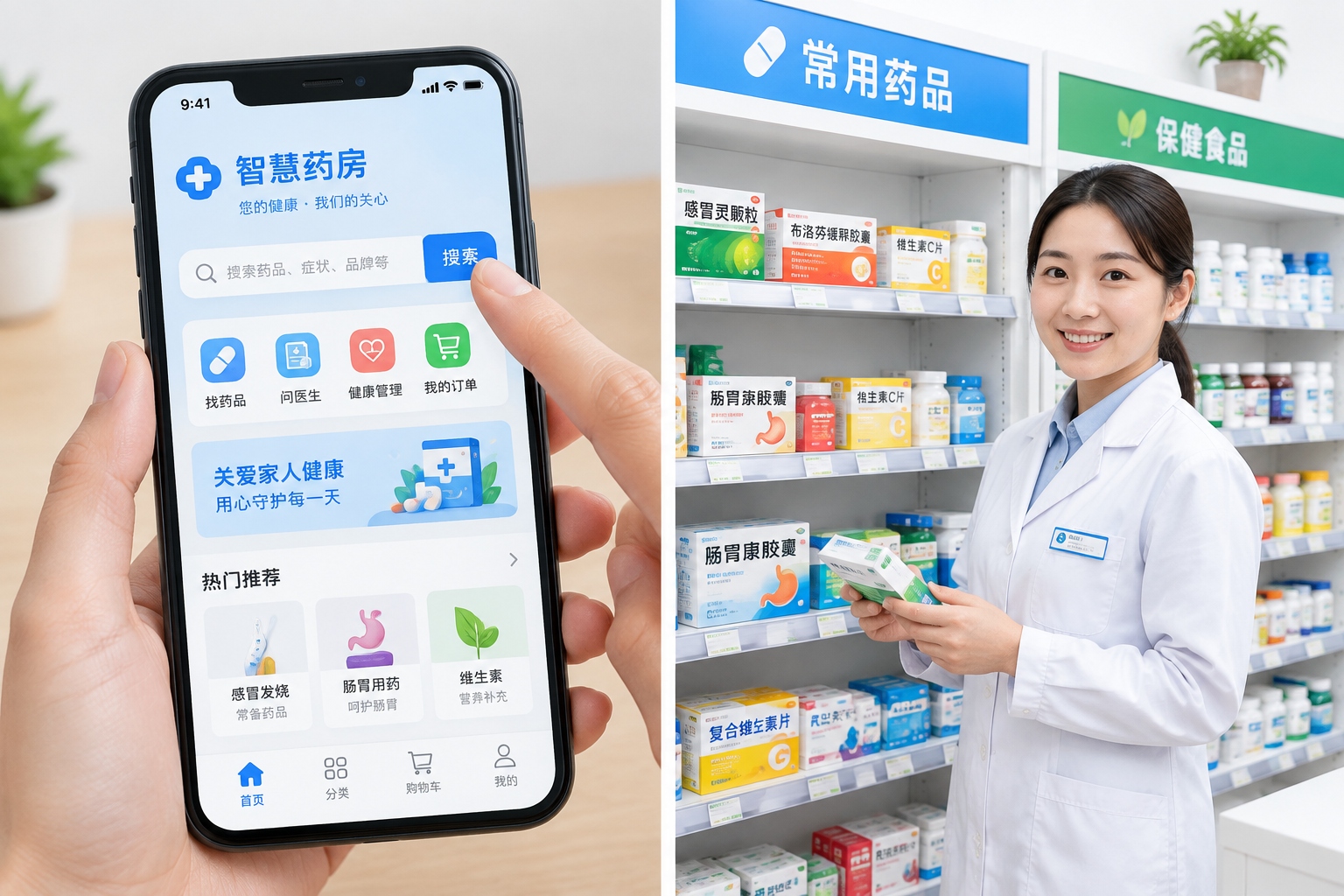
2. Locate and Search
Once inside the “Medical” section of the app, GPS automatically locates nearby pharmacies. You can search for specific drugs (e.g., “ibuprofen,” “cough syrup”) or browse categories like “Cold & Flu” or “Digestive Health.” The app will clearly display which shops are open 24/7 and their current stock levels.
3. Checkout and Delivery
Select your items, add them to the cart, and check out. Payment is seamless via WeChat Pay or Alipay. You will receive real-time tracking of the rider’s location on a map. In dense urban areas like Beijing or Shanghai, you might see the little blue dot moving through alleyways toward your building.
The Rules: Prescriptions and Privacy
There are important distinctions between what you can buy easily and what requires medical oversight.
- OTC Medications: Items like painkillers, vitamins, stomach medicine, and first-aid supplies are available immediately without a prescription. This is the most common use case for midnight emergencies.
- Prescription Drugs: For antibiotics or stronger medications, you cannot simply buy them off the shelf online. However, Meituan offers a digital consultation service. A licensed doctor will review your symptoms via chat and issue an electronic prescription if appropriate. This process usually takes 10–15 minutes.
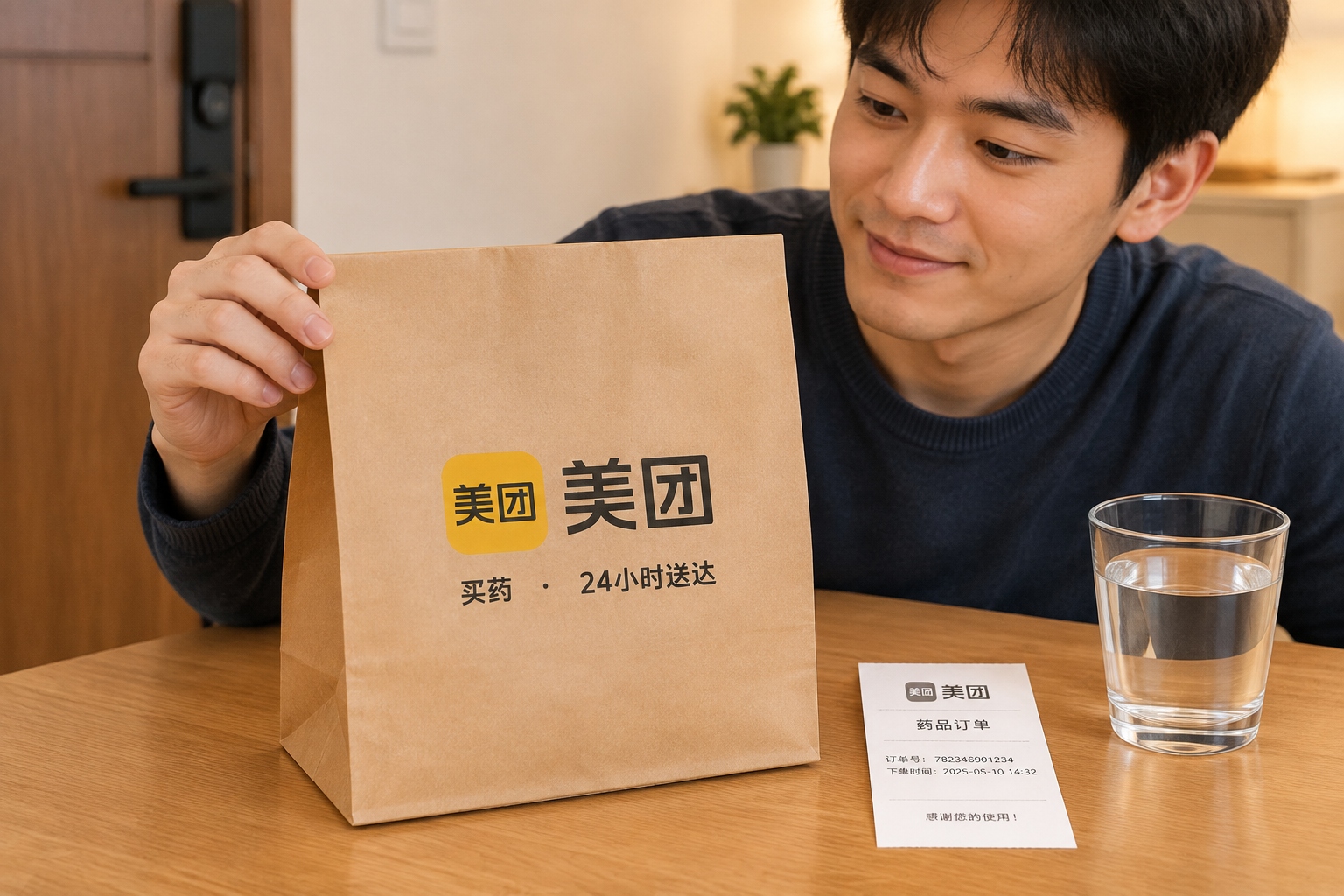
Privacy is also a key design feature. Medications are delivered in opaque packaging. The rider does not know what is inside the bag, and there is no label on the outside that reveals your health condition. For many users, this anonymity reduces the stigma or embarrassment associated with buying sensitive items like sexual health products or mental health supplements.
Why This Matters: A Shift in Urban Safety
Critics might argue that this convenience encourages self-medication over professional care. There is some truth to that; people often use it for minor ailments they could otherwise ignore. However, for the average urban dweller, this service fills a critical gap.
In cities with vast sprawl or sparse public transport at night, getting to a hospital can take an hour or more. Emergency rooms are often overcrowded and expensive for non-critical issues. The “30-minute medicine delivery” model offers a middle ground: professional-grade relief without the systemic friction of the healthcare system.
It represents a broader shift in Chinese urban life. Technology is no longer just about shopping faster; it’s about managing daily risks more efficiently. For Li, and for millions like her, knowing that help can arrive before dawn provides a subtle but profound sense of security.
Start the discussion at forum.chinacomes.com