


The Art of Indirectness: Why “No” Is Hard to Say
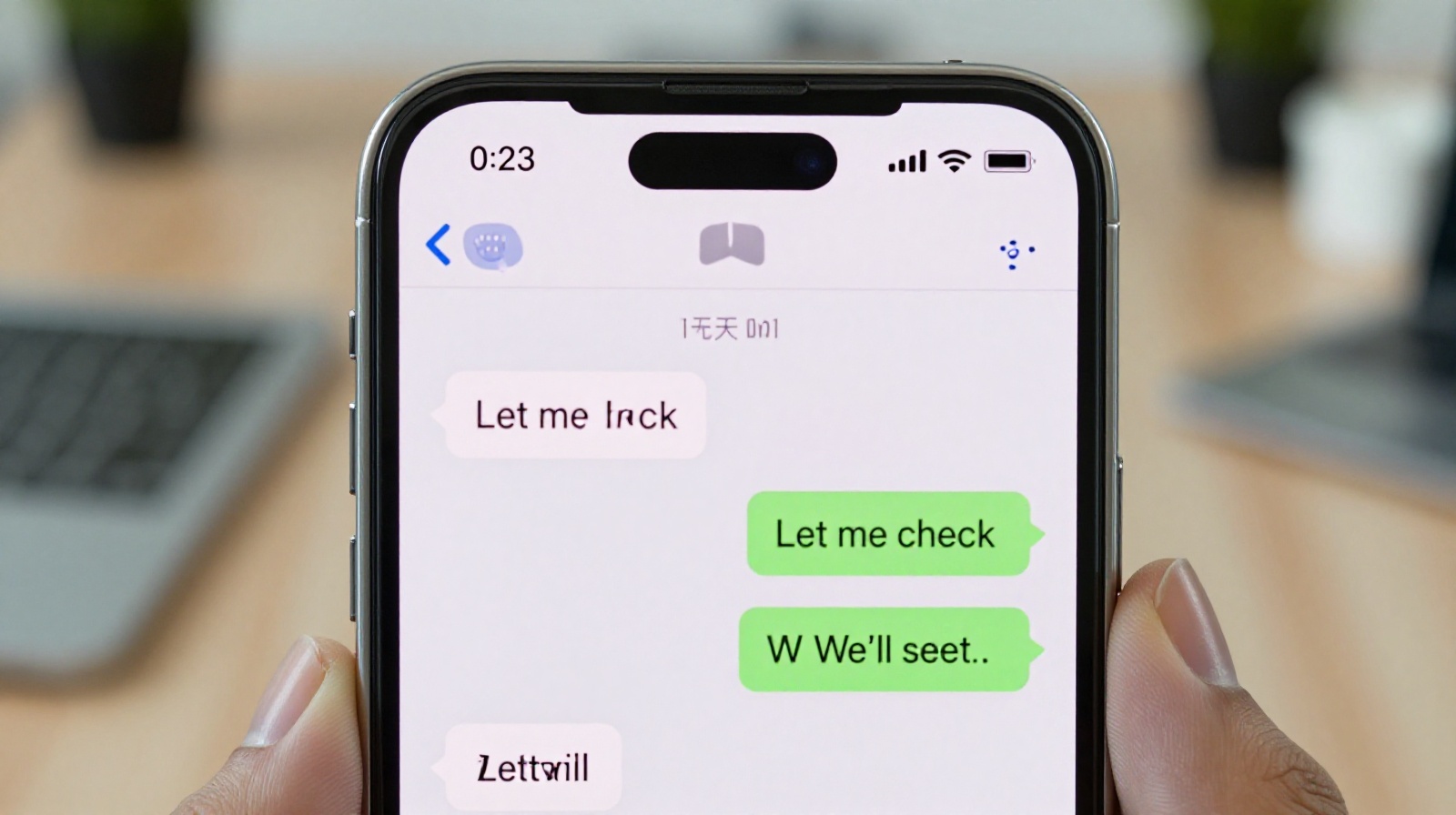
Imagine this scenario: You invite a Chinese colleague, Li Wei, to dinner next Friday. He smiles warmly and says, “That sounds great, but let me check my schedule first.” Two days later, you send a reminder. He replies, “I might be working late; we’ll see how it goes.” On the day of the event, he does not show up.
For an outsider, this feels like a broken promise. In China, it is usually a polite refusal. Understanding this dynamic is crucial for anyone trying to build genuine relationships in Chinese society. It is not about deception; it is about preserving harmony and “face” (mianzi).
Decoding the Language of Ambiguity
In many Western cultures, clarity is valued above all. A clear no saves time. In Chinese social logic, however, a direct rejection can cause the other person to lose face and damage the relationship permanently. Therefore, “no” is rarely spoken directly. Instead, it is buried in vague phrases that require interpretation.
To navigate this effectively, you must treat these phrases as code. Here are the most common forms of indirect refusal:
- \”I’ll try\” (Wo shi shi kan): This rarely means genuine effort. It usually translates to \”No, but I don’t want to hurt your feelings.\” If he really wanted to go, he would confirm immediately.
- \”Let’s see\” or \”We’ll look into it\” (Kan qingkuang): This is a soft shutdown. It implies that the possibility exists but is unlikely to happen. Do not wait for a final answer; assume the event is cancelled.
- \”Next time\” (Xia ci zai shuo): When an invitation is met with \”Let’s do it next time,\” it often means there will never be a \”next time.\” It is a way to close the conversation gracefully without rejecting the person outright.

Practical Scripts for Common Scenarios
Knowing how to decline is just as important as knowing how to accept. If you are in China, or dealing with Chinese friends, here is how to say no without burning bridges. The key is to provide a reason that is external and unavoidable, shifting the blame away from personal unwillingness.
Scenario 1: Declining a Colleague’s Dinner
If you are tired after work or simply do not wish to socialize, avoid saying \”I don’t want to go.\” Instead, use a structural excuse:
\”Thank you for the invite! I really appreciate it, but I have some urgent personal matters to deal with tonight. Let’s catch up another day when things are quieter.\”
This approach respects their effort while clearly stating your absence.
Scenario 2: Declining a Loan Request from a Friend
Lending money is sensitive in China. A direct refusal can be seen as distrust. A common, safe deflection is to blame financial structure:
\”I would love to help, but my funds are currently tied up in fixed-term deposits/stock market investments that I cannot touch until next month. Let me know if there’s another way I can support you.\”
This removes personal choice from the equation, preserving the friendship.
Scenario 3: Handling Pressure from Relatives (Marriage or Jobs)
During family gatherings, questions about marriage or career are inevitable. Direct confrontation causes embarrassment for the whole table. A humorous, non-committal response is best:
\”Ah, you know how it goes! I’m working on it step by step. Don’t worry, when there’s news, I’ll definitely let everyone know first.\”
This acknowledges their concern without making any promises.

The Psychology: Harmony and Face
Why is this system so entrenched? It stems from a cultural priority on social harmony (he). In a high-context society, maintaining the emotional equilibrium of the group is often more important than individual transparency. By avoiding a direct \”no,\” you spare the other person the sting of rejection. You give them an “out,” allowing them to save face.
However, this system has a flip side: it requires high emotional intelligence from both parties. The inviter must be sensitive enough to read between the lines, and the refuser must be skilled enough to offer a plausible excuse that doesn’t sound like a lie.
Advice for Foreigners: Setting Boundaries
For foreigners living in or visiting China, navigating these nuances can be exhausting. Here are three tips to manage your boundaries:
- Don’t take ambiguity personally: When someone says \”maybe,\” accept it as a no. Don’t push for clarity, as this forces them into an uncomfortable position.
- Use the “Third Party” excuse: Blaming work, family obligations, or health issues is universally accepted in China. It is not seen as rude; it is seen as responsible.
- Be consistent but gentle: If you frequently decline, do so with warmth. Offer alternative solutions (e.g., \”I can’t have lunch, but I’d love to join the team chat later\”) to show that your refusal is about the activity, not the person.

Conclusion: The Unspoken Contract
The Chinese way of saying no is not a game of hide-and-seek. It is a social contract designed to keep interactions smooth and relationships intact. For outsiders, learning to decode these signals is less about mastering a language trick and more about understanding a different value system—one that prioritizes collective comfort over individual precision.
Once you learn to hear the \”no\” hidden inside the \”maybe,\” you will find that navigating social life in China becomes much easier. You no longer need to worry about offending people; you simply need to listen carefully.