

The One-Dish Shadow
Walk into almost any restaurant outside of Anhui province in China, and you will likely find one dish from Huizhou cuisine on the menu: Stinky Mandarin Fish (Chou Gui Yu). It’s famous for its pungent aroma and tender texture, a culinary paradox that has made it an Instagram favorite for travelers. But if you think this fermented fish represents the entire breadth of Huizhou cooking, you are missing the forest for the tree.
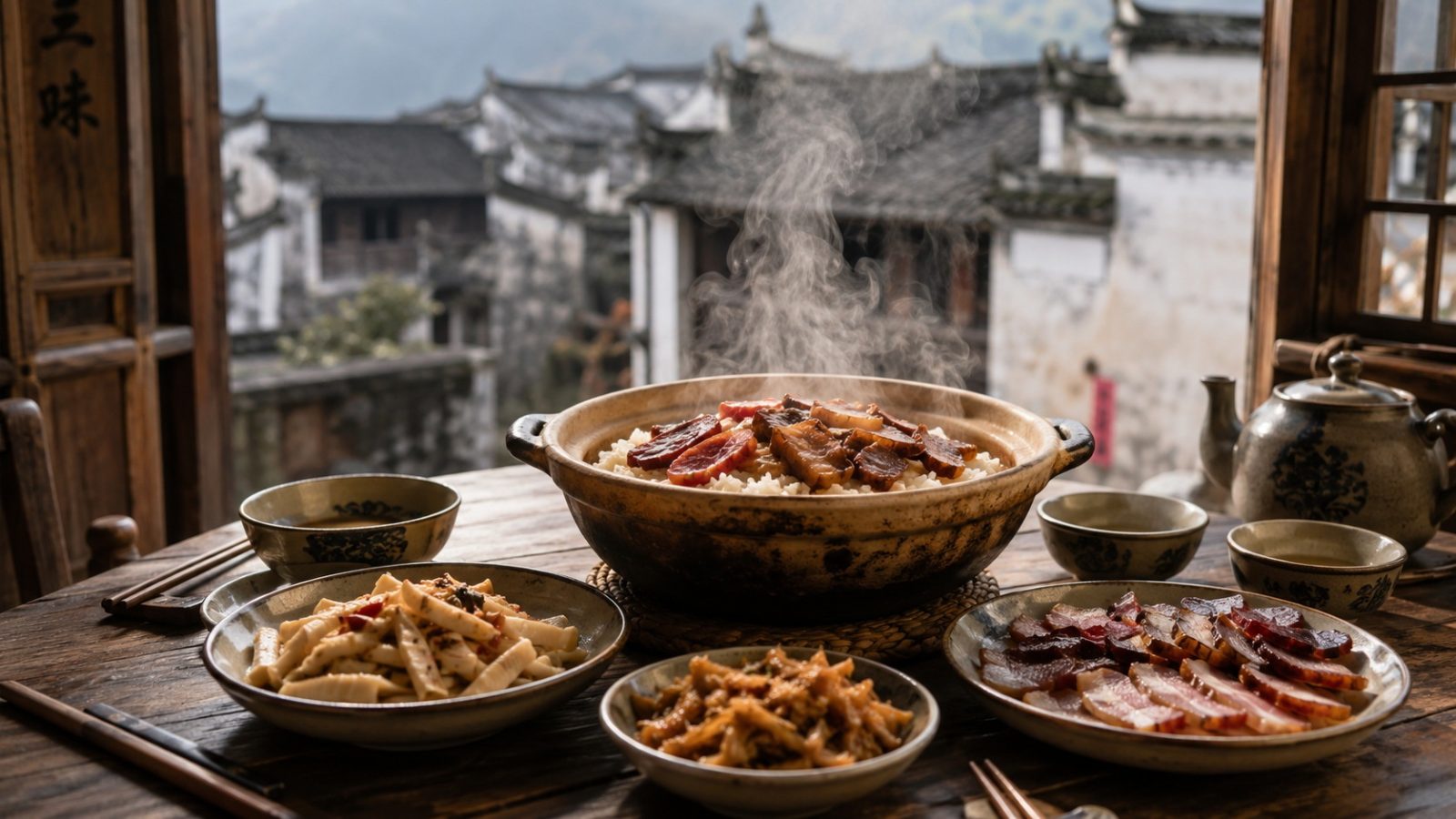
Stinky fish is the celebrity guest at a family dinner—loud, memorable, and impressive. But the real warmth of a Huizhou home comes from the quiet, unassuming dishes that sit in the center of the table, seasoned by patience rather than spectacle. For the locals in ancient villages like Hongcun or Xidi, these “hardcore home flavors” are not just food; they are a map of their history, survival, and identity.
The Philosophy of Preservation
To understand Huizhou cuisine (Hui Cai), you have to understand the geography. Historically, the Huizhou region was mountainous and isolated. Merchants from this area traveled thousands of miles for business, leaving their families behind for months or even years. The women at home needed a way to preserve meat and vegetables without refrigeration, while also creating meals that could withstand the long journeys of traveling merchants.
This necessity birthed a unique culinary philosophy: the art of transformation through time. Fermentation and curing were not just preservation techniques; they became methods to elevate humble, inexpensive ingredients into complex delicacies. The “stink” in stinky fish is actually the result of controlled protein breakdown, creating a savory umami bomb that fresh fish cannot match.
This approach defines the region’s daily diet. It’s not about expensive seafood or exotic spices. It’s about making the most of what the mountains offer—bamboo shoots, wild herbs, pork belly, and river fish—and letting time do the heavy lifting.
Hardcore Home Cooking: The Daily Table
Leave the tourist traps and step into a local kitchen in Huangshan or Shexian, and you’ll find dishes that are far more robust than the delicate banquets served to visitors. These are the “hardcore” flavors that define everyday life for Anhui residents.
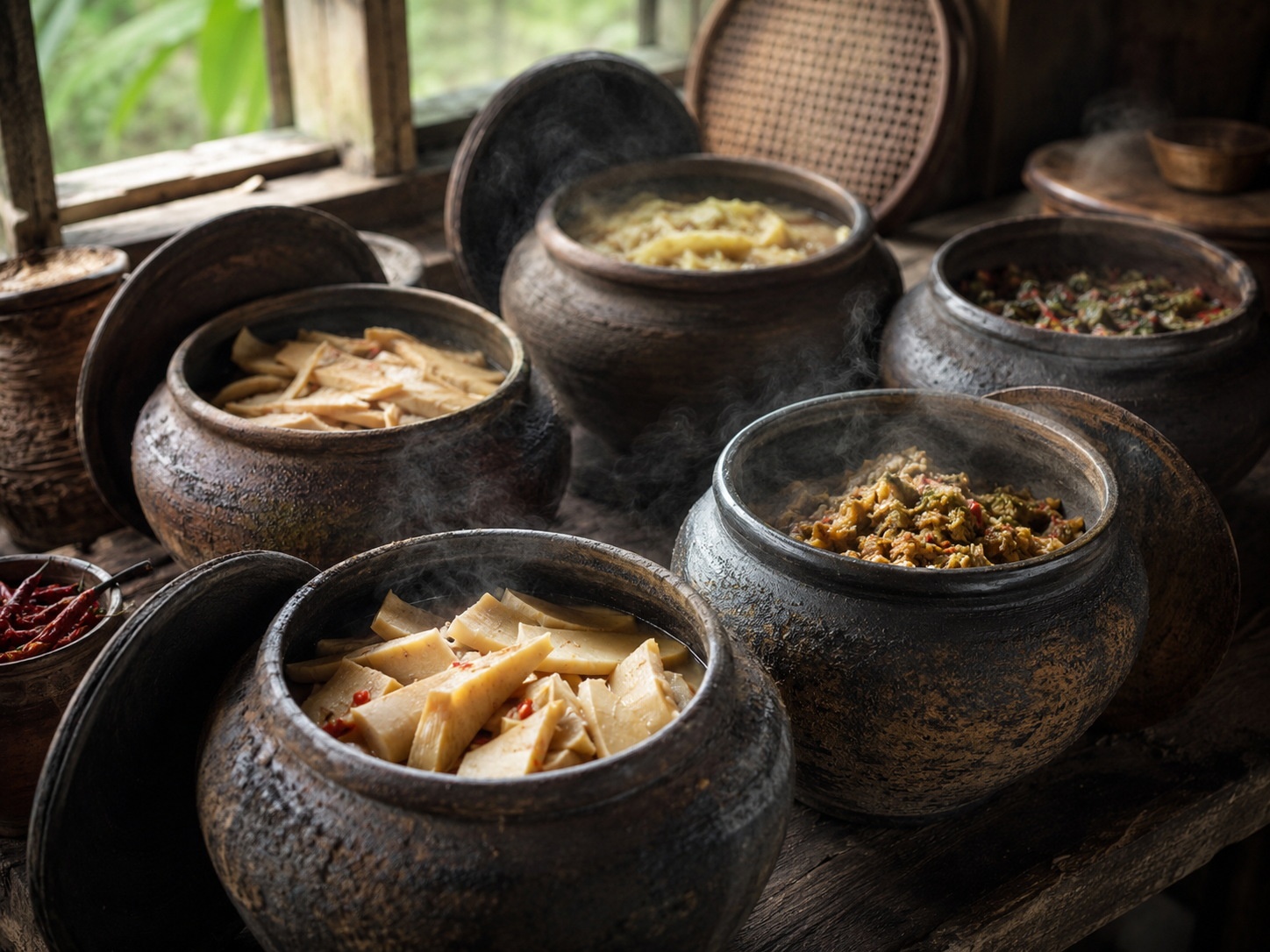
Consider Fermented Bamboo Shoots. In the misty forests of southern Anhui, bamboo is abundant. Locals harvest young shoots in spring, blanch them, and pack them into jars with salt and chili. The result is a crisp, sour, and slightly fermented side dish that cuts through the grease of heavy meats. It’s a staple in almost every Huizhou household, often served alongside steamed rice or used as a stir-fry base.
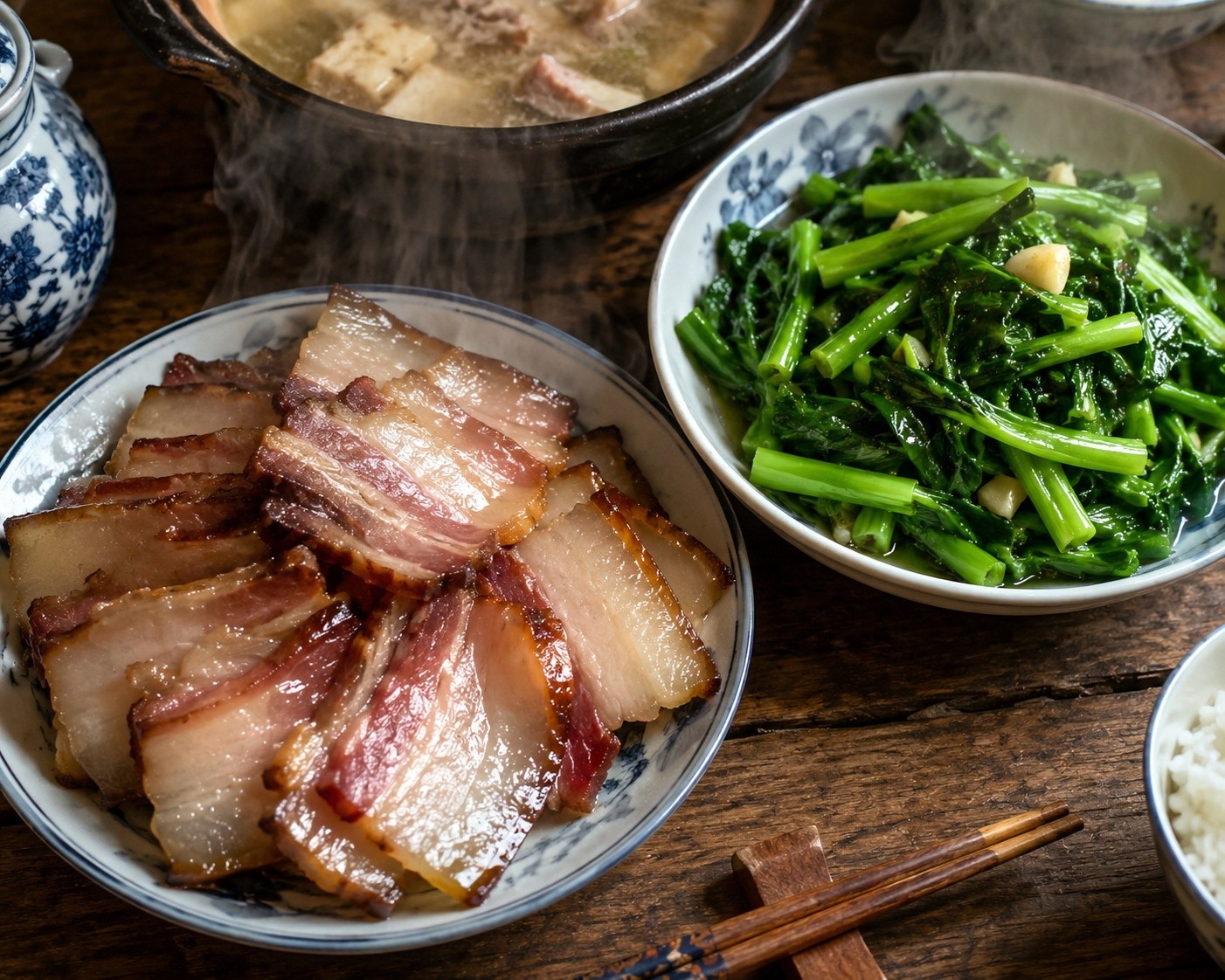
Then there is Preserved Meat with Fresh Vegetables. This is perhaps the most common “hardcore” dish. Thin slices of cured pork belly—seasoned with soy sauce, salt, and sometimes rice wine—are steamed until translucent. The fat renders out, soaking into the plate, while the meat becomes salty, sweet, and intensely savory. It is almost always paired with fresh seasonal greens, like bitter melon or water spinach, creating a balance of heavy and light that is characteristic of Chinese home cooking.
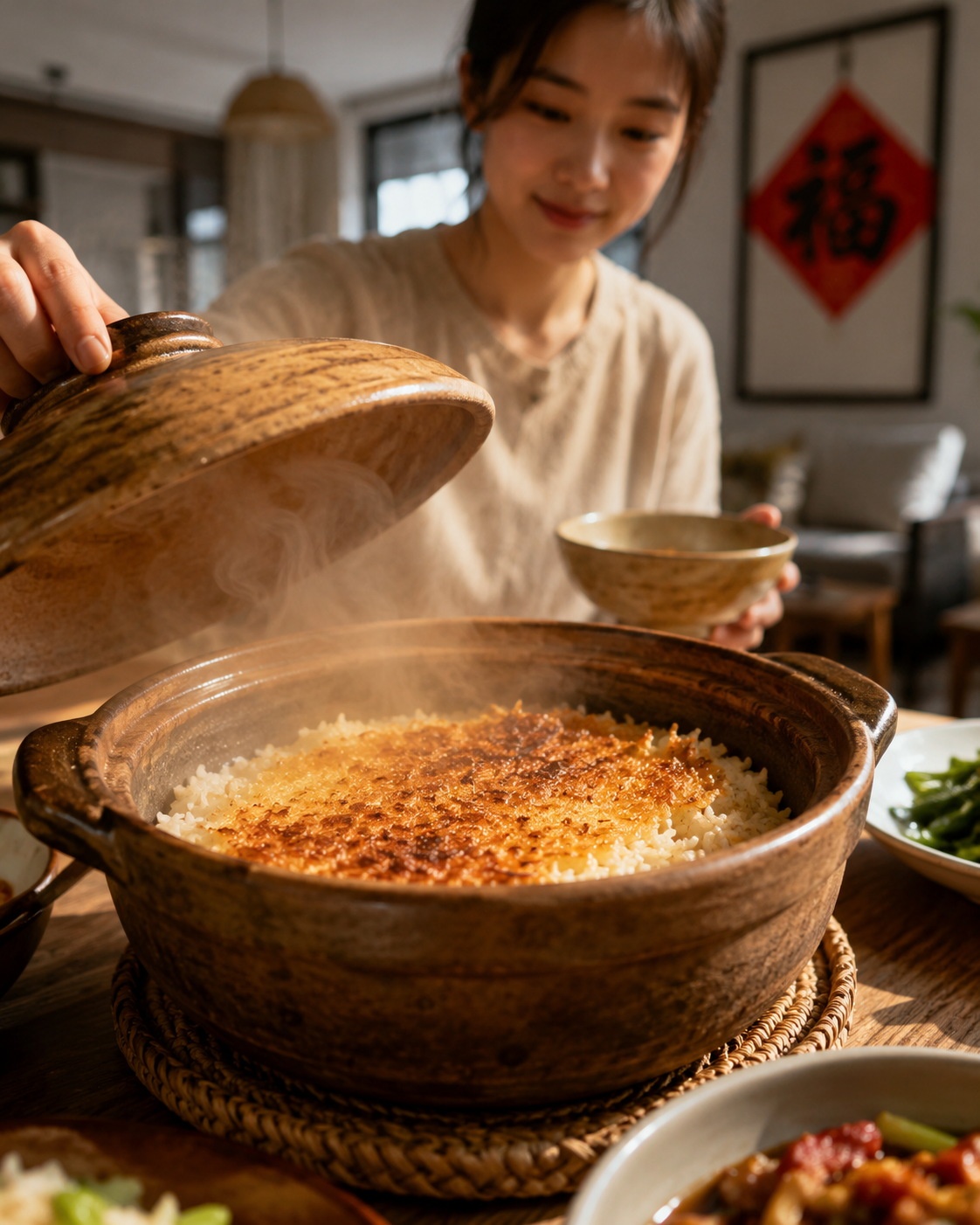
Another hidden gem is Clay Pot Rice with Preserved Meats. In many rural homes, dinner isn’t just about the main dish; it’s about the comfort of rice cooked in a clay pot. The bottom forms a crispy, golden crust (guoba), while the steam infuses the rice with the aroma of cured sausage and preserved vegetables. It’s simple, filling, and deeply satisfying—a perfect example of how Huizhou cuisine turns scarcity into comfort.
Flavors of Migration and Memory
These dishes are more than just recipes; they are edible archives. The Huizhou merchants were famous for their integrity and resilience, traveling across China to trade silk, tea, and ink. When they returned home, they brought back new ingredients and techniques, which were then blended with local traditions.
The “hardcore” nature of these foods reflects the character of the people who created them. They are bold, unapologetic, and enduring. The strong flavors were designed to stay on the palate, reminding travelers of home after months away. Today, in the renovated ancient villages, you can still see this blend of old and new. Young people are returning to these villages, not just to preserve heritage, but to reinvent it.
A Modern Huizhou Table
While the traditional methods remain, the modern Huizhou table is evolving. Younger chefs and home cooks are experimenting with lighter versions of these heavy dishes. They might use less oil in their stir-fries or balance the saltiness of preserved meats with more fresh, local vegetables. Yet, the core philosophy remains: respect for ingredients, patience in preparation, and a deep connection to the land.
So, the next time you hear about Huizhou cuisine, don’t just think of stinky fish. Think of the bamboo shoots fermenting in jars, the pork belly steaming in clay pots, and the families gathering around tables that tell a story of survival, trade, and love. These are the flavors that truly define China’s ancient south, hidden in plain sight.