
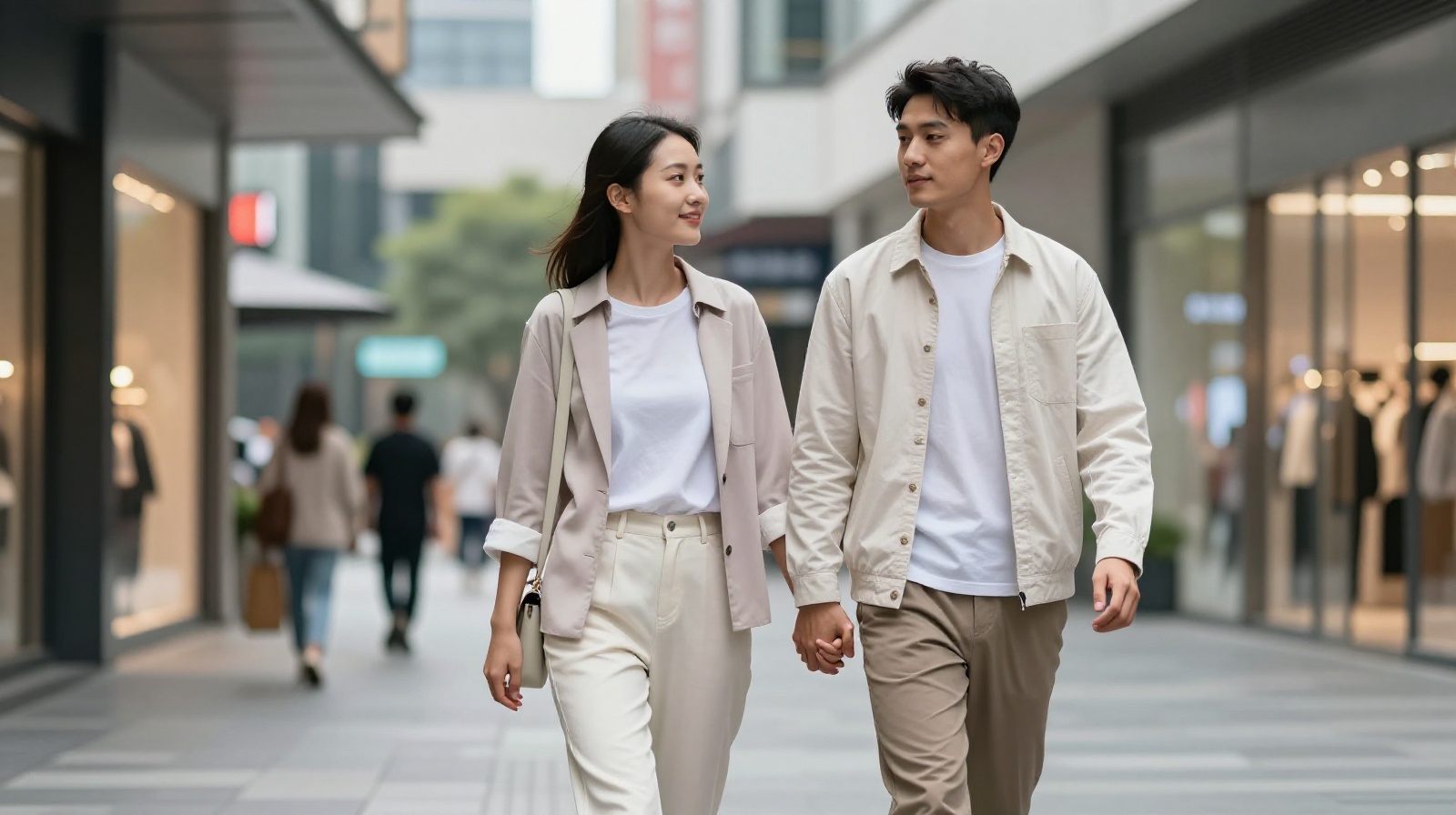

The Evolution of ‘Couple Uniforms’
Walk through any major shopping mall in Shanghai, Beijing, or Chengdu on a weekend afternoon, and you will spot them everywhere. They are not necessarily wearing identical shirts with the words “Mr. & Mrs.” printed on them. Instead, you might see a young man in a beige utility jacket paired with a woman in a matching-toned knit dress. Or perhaps they are both wearing sneakers from the same limited-edition drop. This is the modern face of Qinglv Zhuang (情侣装), or “couple outfits,” a phenomenon that has evolved far beyond the tacky, mass-produced uniforms of the past.
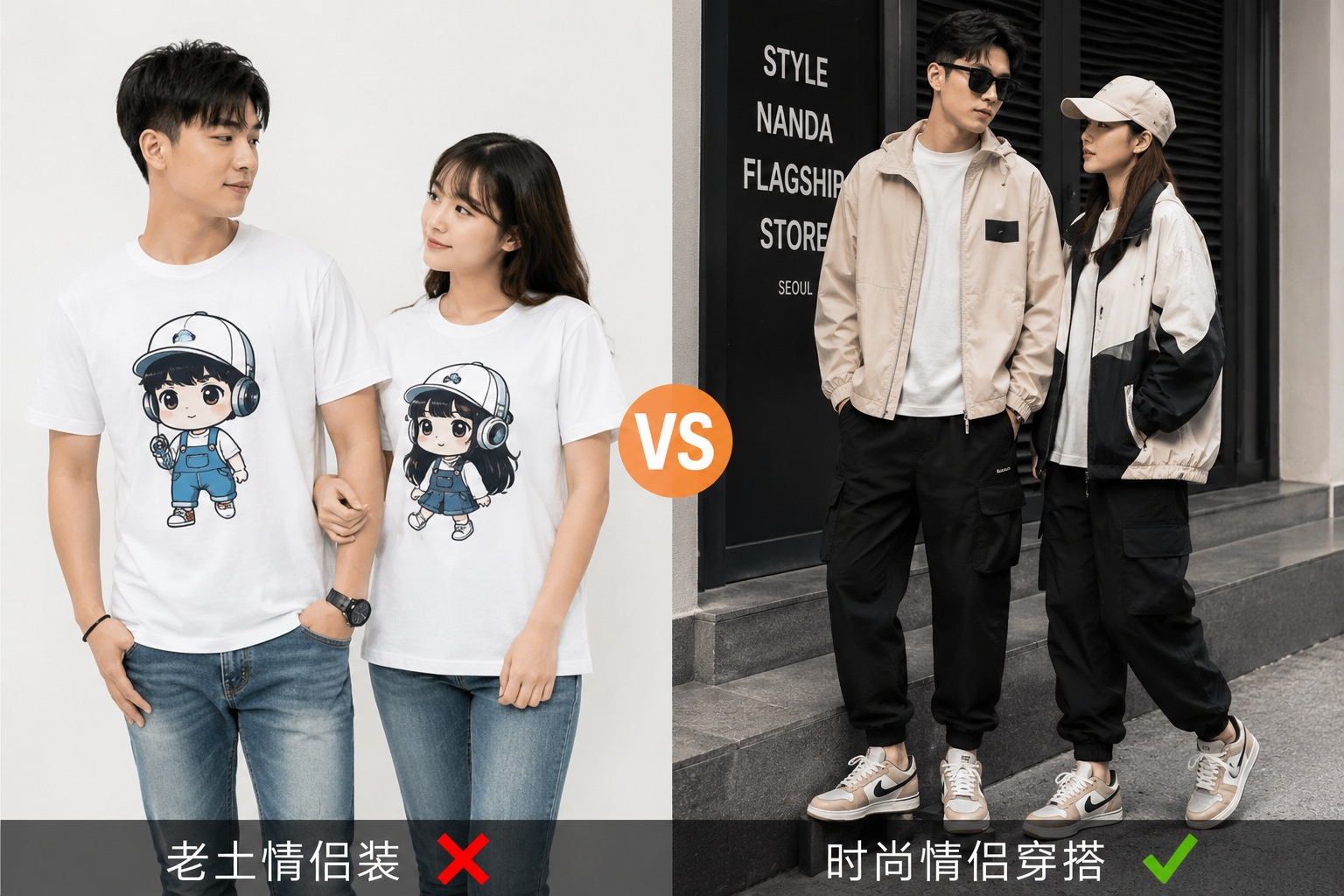
For older generations, “couple outfits” often conjured images of cheap, identical polo shirts or cartoon-print T-shirts bought off the rack. But for Gen Z and millennials in China, the aesthetic has shifted dramatically. It is no longer about looking exactly alike; it is about coordination. This subtle shift reflects a broader change in how young Chinese people navigate identity, intimacy, and public space.
More Than Just Fashion: A Social Signal
Why do so many young couples choose to dress in harmony? Sociologists and fashion observers point to several psychological drivers. In a rapidly urbanizing society where individuality is highly prized, wearing coordinated outfits serves as a soft but clear signal of belonging. It is a way to say, “We are a team,” without needing to speak.
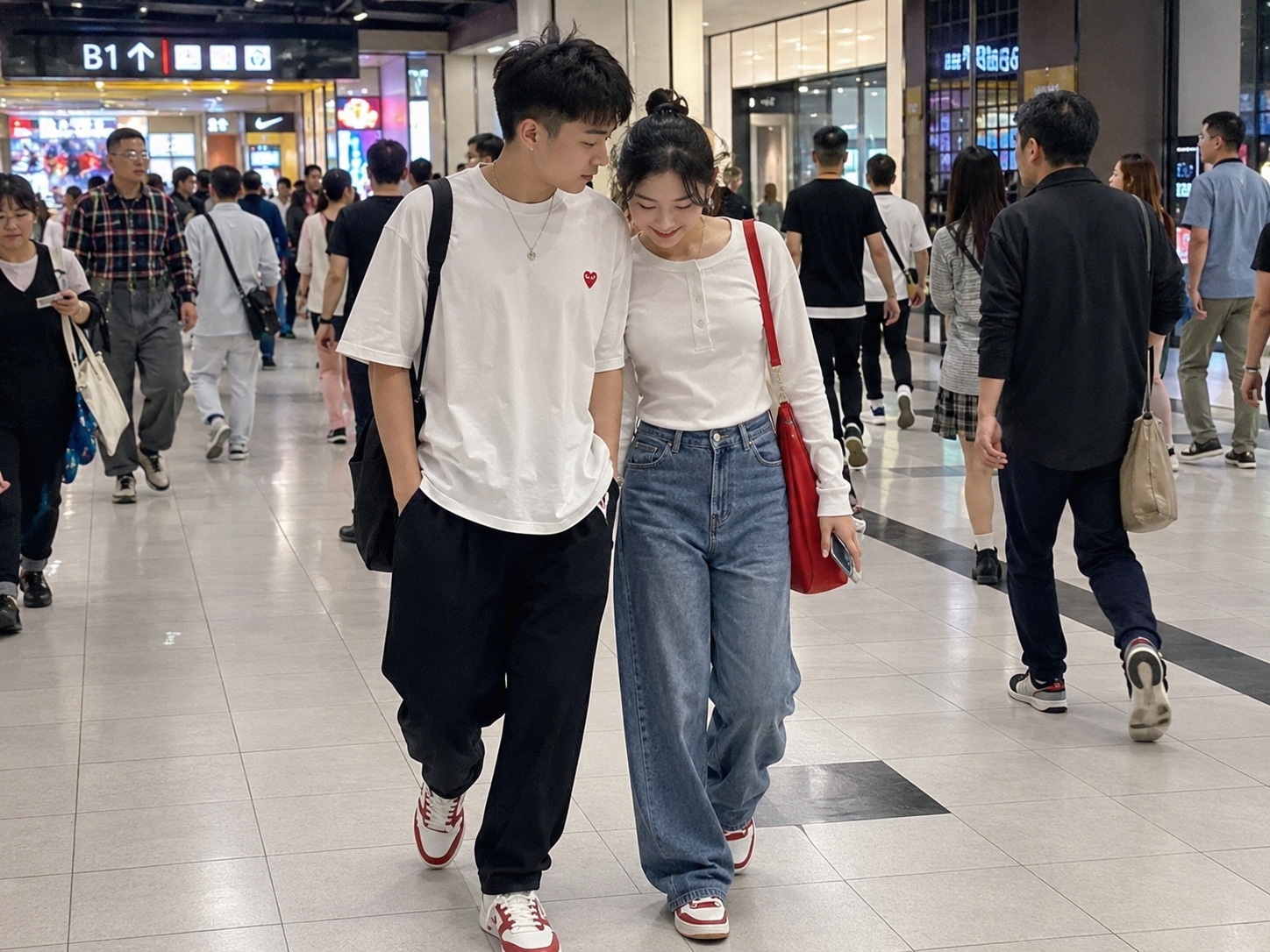
In China’s dense urban environments, public spaces can feel anonymous. Wearing matching colors or styles creates a visual bubble, establishing a boundary between the couple and the surrounding crowd. It is a form of low-key territorial marking. Unlike loud PDA (public display of affection), which can sometimes be frowned upon in more conservative settings, coordinated fashion is subtle. It allows couples to express their bond while still adhering to social norms of modesty.
The Rise of ‘Invisible’ Couple Outfits
A new trend within this movement is the “invisible couple outfit.” This concept relies on shared aesthetic codes rather than identical garments. For example, a couple might both wear minimalist white sneakers, or match their accessories—such as a specific brand of watch or a pair of sunglasses. The coordination is often so subtle that only those in the know, or perhaps the couple themselves, realize it’s intentional.
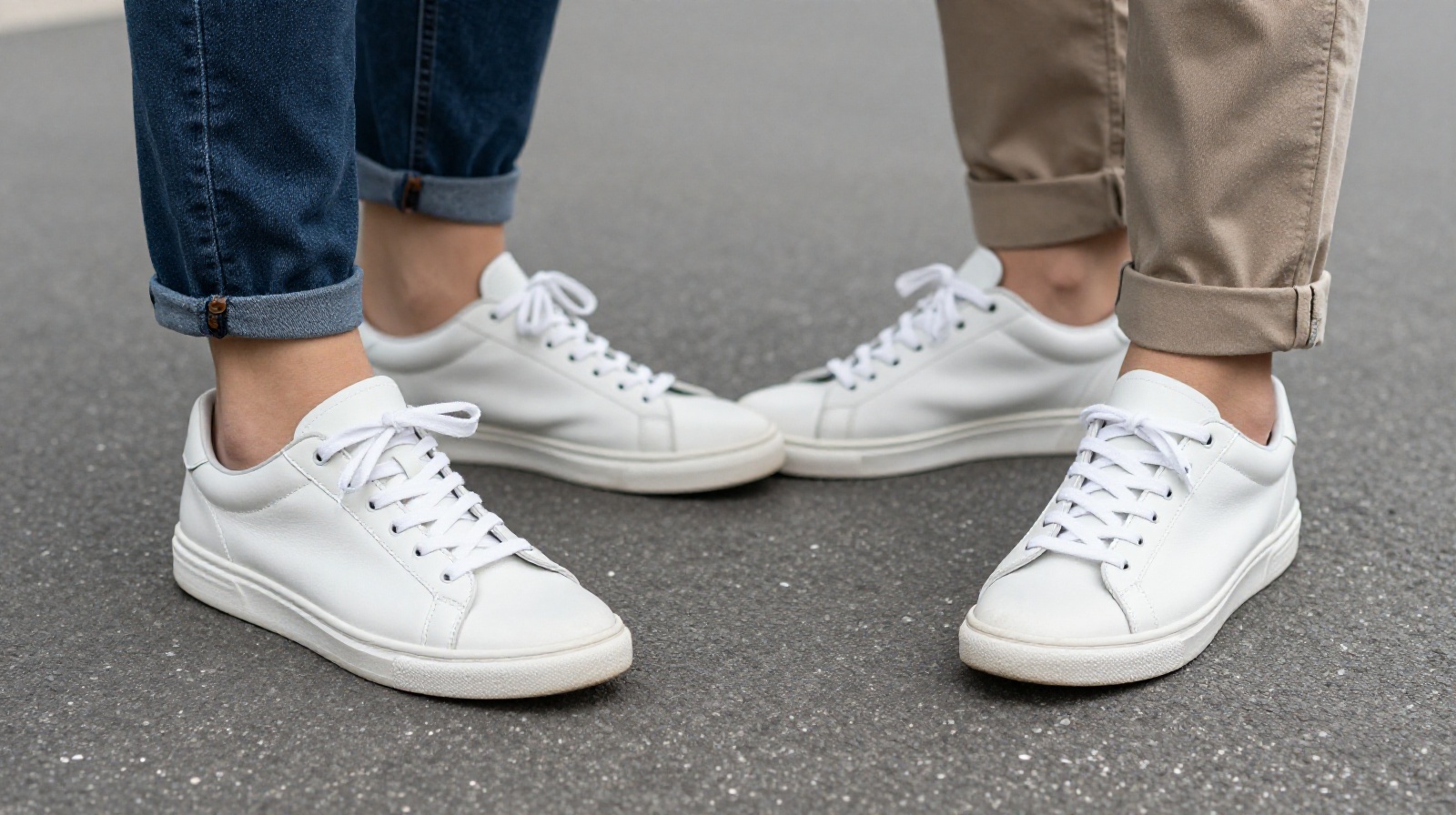
This approach appeals to young people who value personal style but still want to acknowledge their relationship. It strikes a balance between individuality and partnership. As one 24-year-old marketing professional from Hangzhou told me, “I don’t want to look like we’re trying too hard. But if someone notices our shoes match, it feels like our own little secret.”
Fast Fashion’s Role in the Match
The rise of Qinglv Zhuang is not just a cultural phenomenon; it is a highly commercialized one. Chinese fast-fashion giants like UR (Urban Revivo) and SHEIN have mastered the art of catering to this demand. They now regularly release dedicated “couple collections” that offer coordinated pieces across different sizes and styles, allowing partners to mix and match without looking like clones.
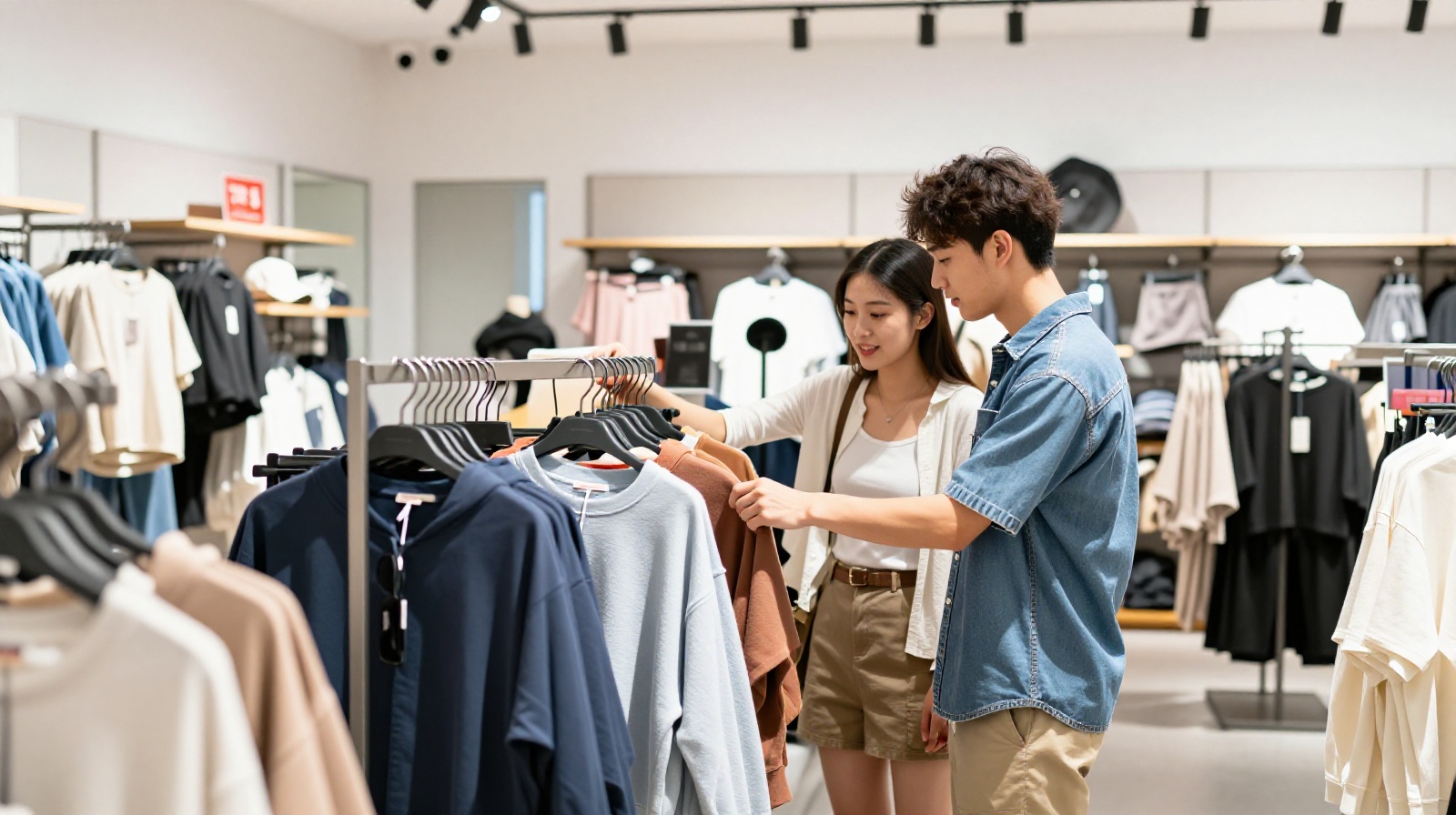
These brands understand that their customers are savvy. They know that young couples want to look trendy, not uniform. By offering complementary color palettes—such as earth tones for autumn or pastel shades for spring—these retailers turn dating into a shared shopping experience. It’s no coincidence that these stores often see higher foot traffic during Valentine’s Day or Qixi (Chinese Valentine’s Day), as couples flock to find the perfect “match.”\
Consumption vs. Connection
Is this obsession with matching outfits just another trap of consumerism? Critics might argue that it reduces romance to a product, encouraging couples to buy their way into looking harmonious. There is some truth to this. The pressure to look “couple-like” can sometimes feel performative, driven by social media feeds on platforms like Xiaohongshu (Little Red Book) or Douyin.
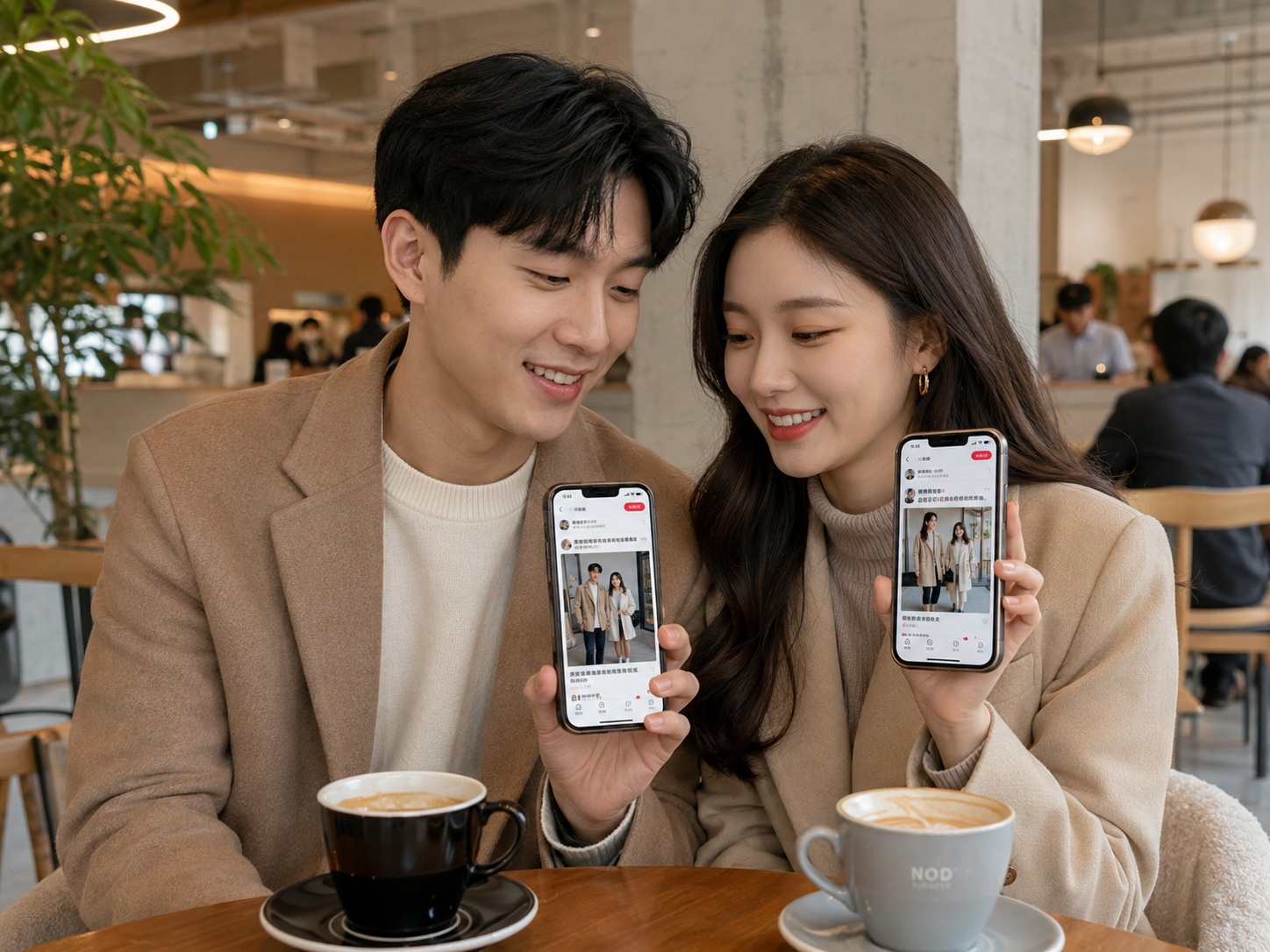
However, for most young people, it is less about the clothes and more about the ritual. The act of shopping together, deciding on a color palette, and presenting a united front is a form of bonding. It is a playful way to negotiate identity in a relationship. In a world where relationships can feel fleeting and digital, having a tangible, visual symbol of commitment—however small—can be grounding.
A New Language of Love
Ultimately, the modern Qinglv Zhuang is about communication. It is a non-verbal language that says, “I see you, and I choose to stand with you.” Whether it’s a subtle match in sneaker color or a coordinated streetwear look, these outfits reflect a generation that is confident in its individuality yet eager to connect. They are not erasing their differences; they are highlighting their harmony.
As you walk down the streets of China’s bustling cities, keep an eye out for these pairs. You might just spot the next big trend in love, one carefully coordinated outfit at a time.