
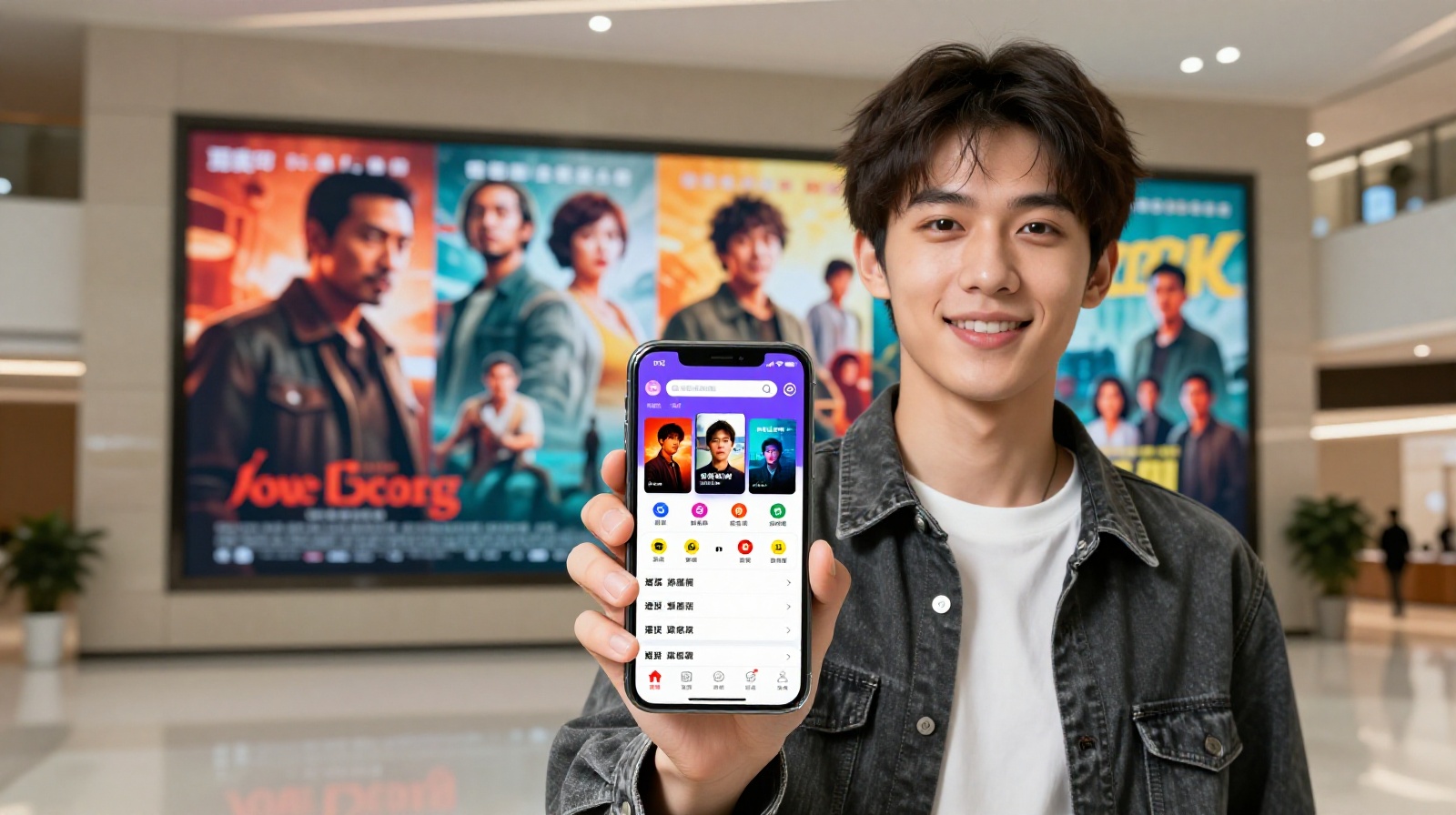

The End of the Ticket Window
Walk into any cinema in Shanghai, Beijing, or Chengdu today, and you will notice something striking: there are no long lines at the box office. There is barely a counter. Instead of handing cash to a clerk and asking for “two tickets for the 7 PM show,” everyone pulls out their smartphones.
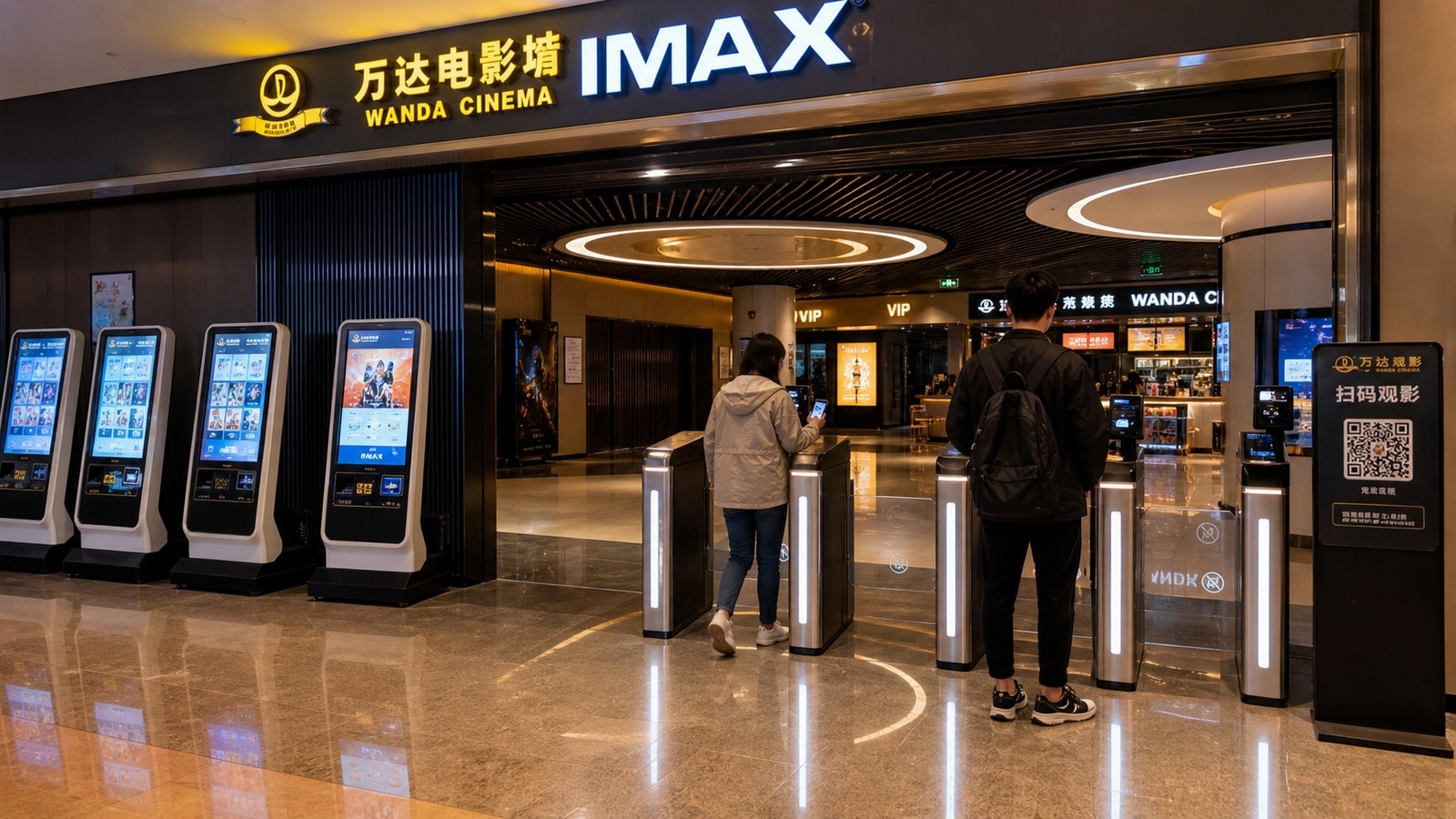
This isn’t just a convenience; it’s the default reality of Chinese entertainment. The physical ticket window has largely vanished, replaced by two dominant digital gateways: Maoyan (猫眼) for movies and Damai (大麦网) for live events like concerts, theater, and sports.
For a visitor or expat, this shift can be confusing. You might wonder if you need a Chinese bank account or a local phone number to buy tickets. The short answer is: yes, mostly. But the process itself is surprisingly streamlined once you know which app to use.
Maoyan vs. Damai: Knowing Your Tools
The first mistake many newcomers make is trying to use one app for everything. While both platforms are owned by tech giants (Maoyan by Tencent, Damai by Alibaba) and share similar interfaces, they serve different ecosystems.
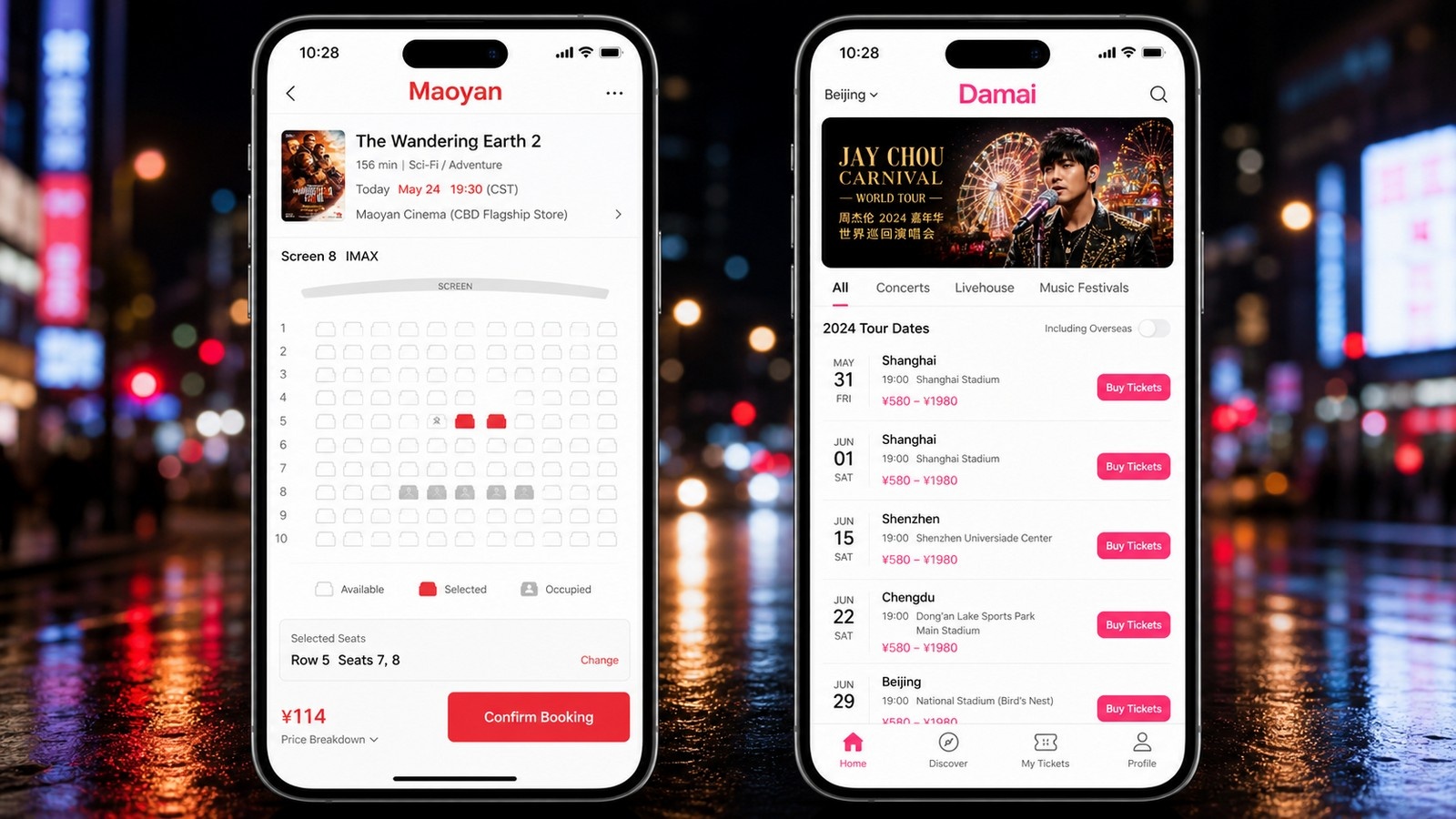
- Maoyan: This is your go-to for cinema. It integrates seamlessly with WeChat Pay and Alipay. You can see real-time seat maps, user reviews (which are often more honest than professional critics), and even order food to your seat in some premium theaters.
- Damai: Think of this as the Ticketmaster or Live Nation of China. If you want to see a popular singer, a Broadway-style musical, or a NBA game, Damai is where the inventory lives. It handles high-concurrency traffic better for large-scale events.
How to Buy Movie Tickets on Maoyan
Buying a movie ticket in China is faster than making coffee. Here is how the locals do it:
- Download and Verify: Get the Maoyan app (or use the mini-program inside WeChat). You will need to link a Chinese bank card or Alipay/WeChat Pay. Foreign credit cards are increasingly accepted on Alipay, which makes this step easier.
- Select the Showtime: Choose your cinema and time. Note that most theaters have “IMAX,” “4DX” (motion seats with water/spray effects), or “ScreenX.” Locals often prefer IMAX for blockbusters.
- The Seat Map: This is where it gets interesting. Unlike Western apps that color-code available seats, Chinese seat maps are usually a grid of numbers. Green means free; gray means taken. Pro tip: In the last 30 minutes before showtime, if you see many seats left, prices often drop significantly due to real-time dynamic pricing algorithms.
- Payment: Confirm and pay. You will receive an QR code or a numeric password on your phone. No printed ticket is needed. Just scan the code at the entrance.

The Concert Challenge: Surviving Damai
Movies are easy. Concerts are a battlefield. When a top-tier artist (like Jay Chou or G.E.M.) announces a tour, tickets for major cities sell out in seconds—not minutes. This is known as “snatching tickets” (qiang piao). Here is how to prepare:
1. Pre-Registration is Mandatory
You cannot just click “buy.” You must register your ID (Chinese ID or Passport, depending on the event policy) and set up a “Real-Name Ticket” binding in advance. This prevents scalping but adds friction for buyers.
2. Network Optimization
WiFi is risky during a launch because hundreds of thousands of people are hitting the same router. Use 5G mobile data. Ensure your background apps are closed. Some hardcore fans switch to airplane mode and then turn on data exactly at the drop time, though this is technically against terms of service.
3. The “Group Buy” Strategy
Damai often allows you to buy up to 4 tickets per order. Organize a group chat with friends beforehand. Assign specific sections (e.g., “I’ll take the lower bowl, you take the upper tier”) so that if one person fails, others might succeed.

Why Is It So Hard?
The scarcity isn’t just about demand; it’s about supply constraints. Venues have fixed capacities, and organizers often limit the number of tickets released to the general public to reserve some for corporate packages or VIPs.
There is also a secondary market. If you miss out on Damai, you might see prices tripled on resale platforms like Xianyu (Alibaba’s used goods app) or WeChat groups. However, be cautious: fake tickets and scams are common. Always verify the ticket transfer through official channels.
The Local Reality
Buying tickets in China is not just about accessing entertainment; it’s a glimpse into how digital infrastructure reshapes daily life. The friction of queuing has been replaced by the adrenaline of the countdown timer.
For locals, this system is efficient but demanding. It requires constant connectivity and quick reflexes. For visitors, it offers a front-row seat to China’s hyper-digital culture. Once you master Maoyan and Damai, you won’t just be watching from the outside—you’ll be part of the crowd.