

The New Currency of Friendship
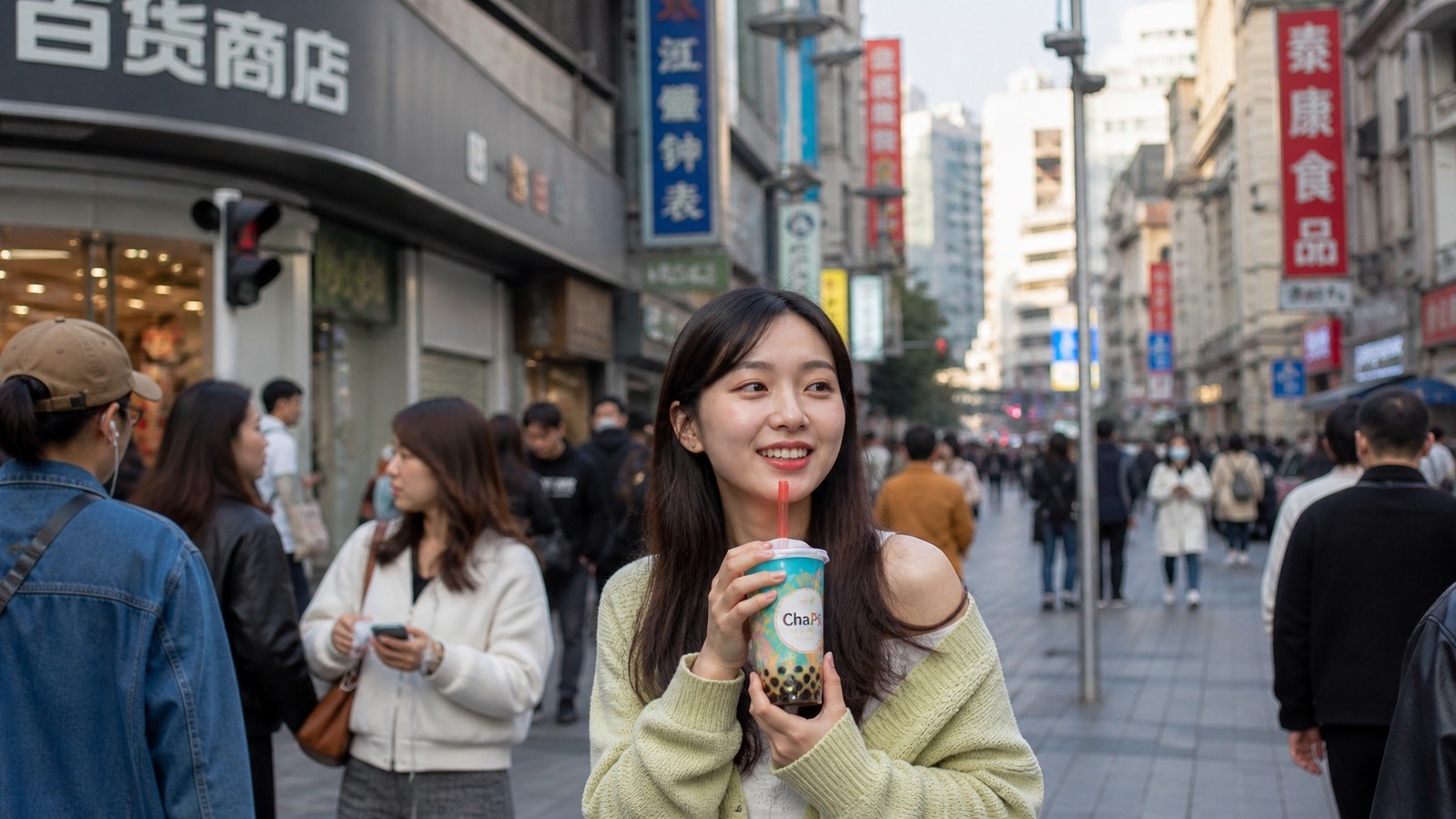
If you walk through any Chinese city on a Saturday afternoon, you will see them: young people standing in long lines outside small shops with bright neon signs. They are holding colorful cups that look more like laboratory beakers than coffee.
This is bubble tea (or naicha). It has become the social lubricant of modern China. Colleagues order it together to break the afternoon slump; friends meet at these counters just to chat. But here is the catch: unlike a Starbucks where you ask for “a medium latte,” ordering bubble tea in China feels like solving a puzzle.
The customization options are endless, and the terminology can be confusing for outsiders. Order wrong, and you might end up with a cup that tastes like liquid candy or watered-down syrup. Let’s decode the system so you can order with confidence.
Decoding Sugar Levels
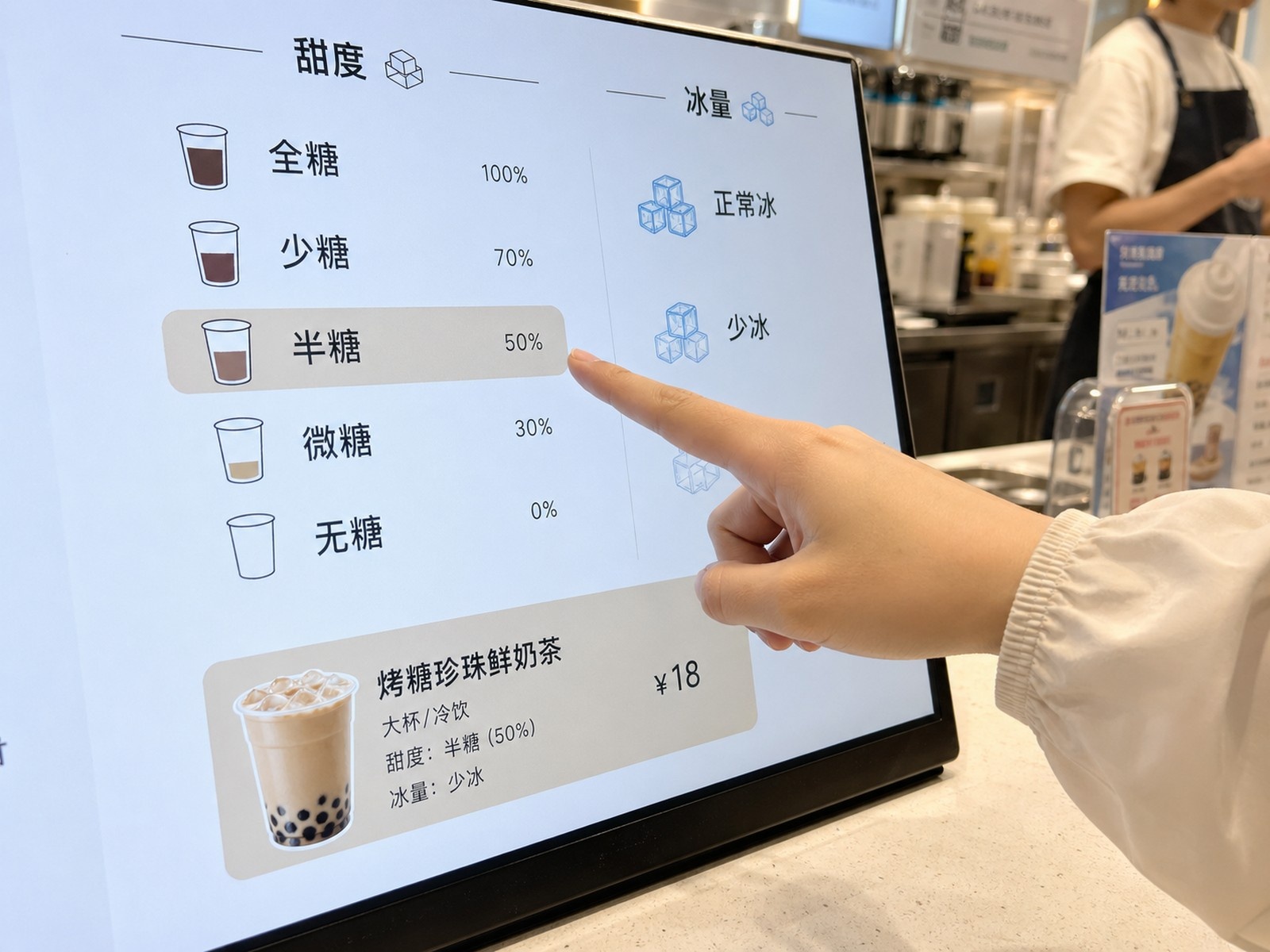
In the West, “sugar-free” usually means no added sugar, relying on the natural sweetness of fruit. In China, sugar levels are a precise scale. Most shops offer five standard options:
- 100% (Full Sugar / 全糖): Very sweet. This is often considered too sugary for daily drinking by locals.
- 70% (Less Sweet / 七分甜): Still quite sweet, but slightly more balanced.
- 50% (Half Sugar / 半糖): The golden standard. You taste the tea and fruit clearly, with just enough sweetness to round out the flavor.
- 30% (Light Sweetness / 三分甜): For those who want minimal sugar. Often recommended if you add sweet toppings.
- 0% (No Sugar / 去糖): Zero added sugar. Note: If the drink contains fruit puree, it will still be sweet from the fruit itself.
The Ice Hierarchy
Ice isn’t just about temperature; it’s about dilution control. In China, ice levels are directly tied to sugar perception because melting ice makes the drink taste less sweet over time.
- Full Ice (正常冰): The cup is packed with ice. Good for summer, but be prepared for a watery finish.
- Less Ice (少冰): About 70% of the volume is ice. A safe middle ground.
- No Ice / Cold (去冰): This does not mean hot. It means no ice cubes added, but the drink is still chilled with cold tea or water. The temperature will rise quickly once you leave the shop.
- Warm / Hot (温热/热): For winter months. Tea flavors are often more pronounced in warm drinks.
The Golden Rule: If you choose “No Ice” and “Full Sugar,” drink it immediately. The ice melts, the volume drops, and you are left with a concentrated syrup bomb.
Toppings: It’s Not Just About Pearls
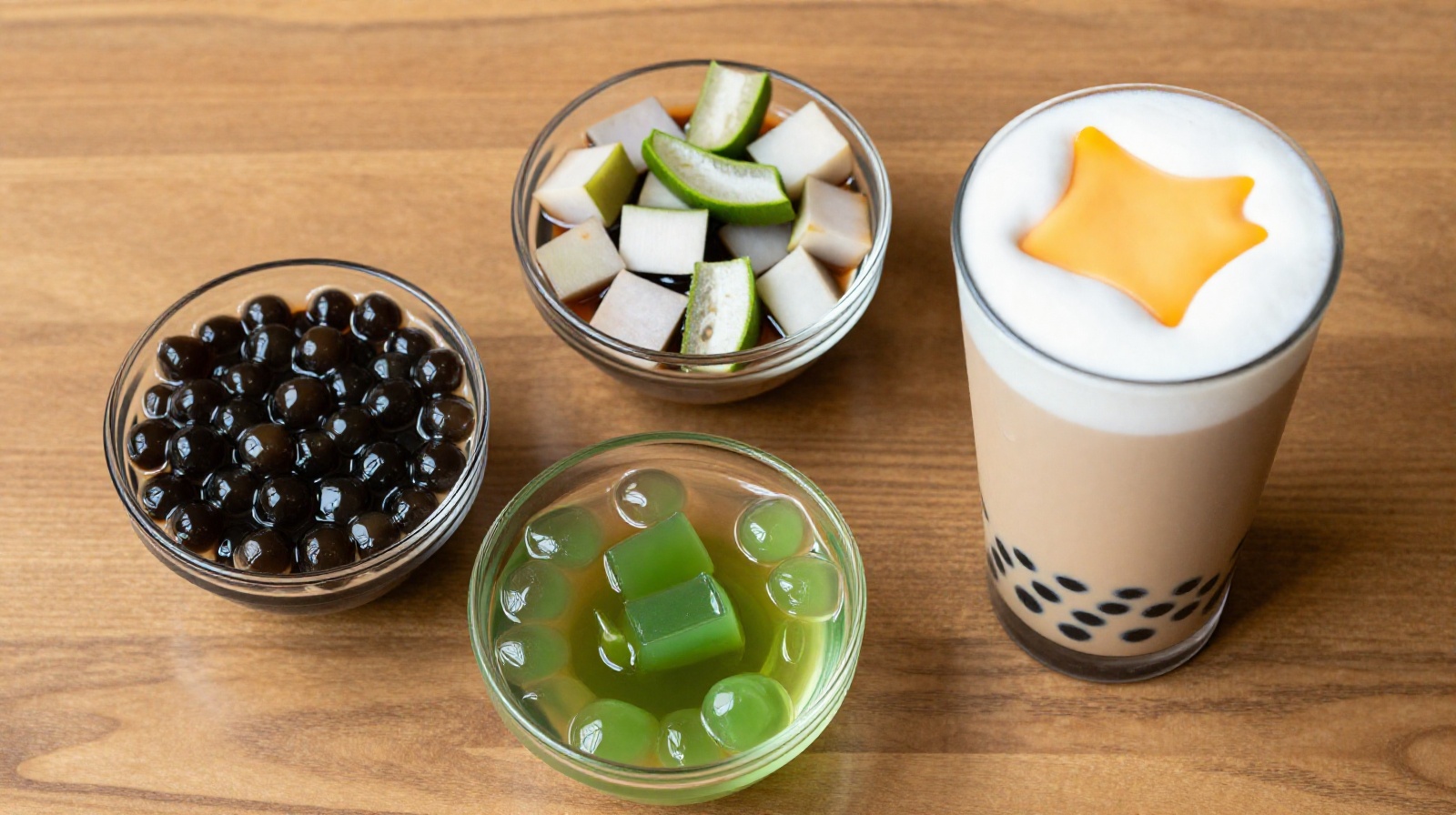
You know about tapioca pearls (boba), but Chinese bubble tea shops offer an array of textures. Here is what they are called in English menus:
- Tapioca Pearls (珍珠): The classic black balls. Chewy and soft.
- Boba/Popping Boba (波霸/脆波波): Larger pearls, sometimes made from agar or fruit juice that burst in your mouth.
- Aloe Vera (芦荟): Fresh chunks of aloe leaf. Crisp and hydrating.
- Jelly / Grass Jelly (仙草 / 果冻): Gelatinous cubes. Grass jelly has a slight herbal bitterness that balances sweet drinks well.
- Cheese Foam / Cheese Cap (奶盖): A salty, creamy foam on top. It creates a savory-sweet contrast with the tea below.
The “Normal” Trap for Foreigners
A common mistake new visitors make is ordering “100% sugar and full ice,” thinking it’s the standard. For Chinese palates, this is often too sweet. The local preference leans heavily towards 50% (half sugar) or even 30%.
Also, note that brands differ. A chain like Mixue Bingcheng, known for affordability, might use sweeter syrups as a base compared to premium chains like Heytea or Nayuki, which focus on fresh milk and fruit. When trying a new brand, start with 50% sugar.
Real-Life Scenario: Ordering at Heytea
Imagine you are at the counter of Heytea. Here is how to navigate it:
You: (Pointing to the menu) “I’d like the Mango Pomelo Sago.”
Cashier: “Sugar level?” (Tang fen?)
You: “Half sugar, please. And less ice.” (Ban tang, shao bing.)
Cashier: (Typing fast) “Any toppings?”
You: “Just a cheese cap, please. No extra charge for the topping if it’s on promotion.”
If the cashier speaks slowly or mumbles, don’t panic. It’s often because they are processing dozens of orders per minute. A polite smile and a nod usually suffice.
A Note on Health
Bubble tea is a treat, not a health supplement. A standard cup can range from 300 to 600 calories, mostly from sugar and tapioca starch. If you are watching your intake, stick to fruit teas with “No Ice” (to avoid extra water weight feeling) or “Less Ice,” and choose 30% sugar. It’s a small sacrifice for a big flavor payoff.
Conclusion
Ordering bubble tea in China is less about quenching thirst and more about personalization. Once you master the language of “half sugar” and “less ice,” you unlock a huge part of daily Chinese life. So next time you see that line, don’t be shy. Step up, take a deep breath, and say: “Half sugar, please.”