

More Than Just a Gateway City
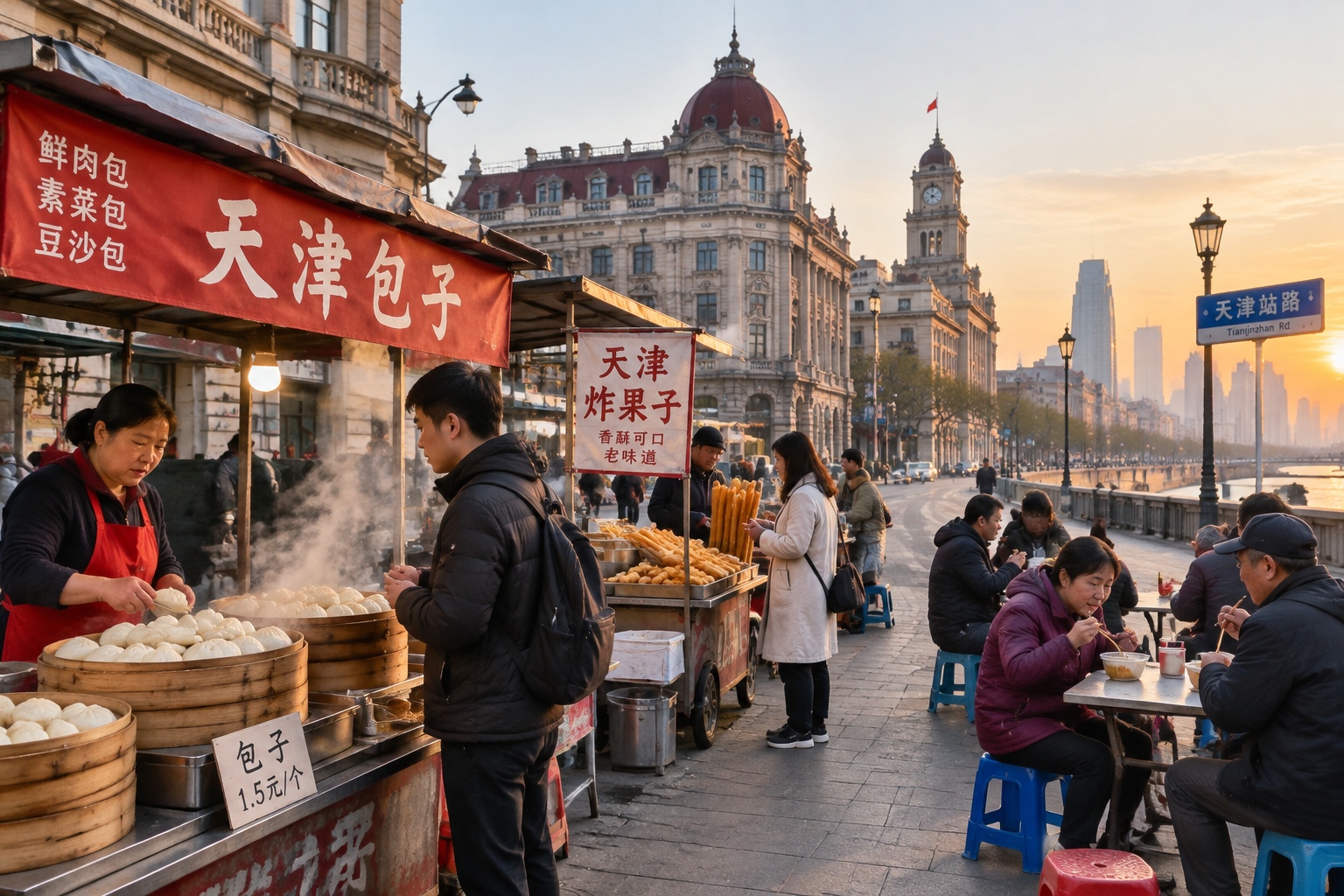
If you ask a foreigner about China’s cities, they might name Shanghai for its finance or Xi’an for its history. But ask where the country laughs hardest, and the answer is often Tianjin. Located just an hour from Beijing by high-speed rail, this port city has long been overlooked as a mere transit hub. Yet, spend two days here, and you’ll find a place defined not by skyscrapers, but by its unique blend of European architecture, a booming crosstalk (cuihua) scene, and a food culture that starts before sunrise.
06:30 AM: The Taste of Morning in Tianjin
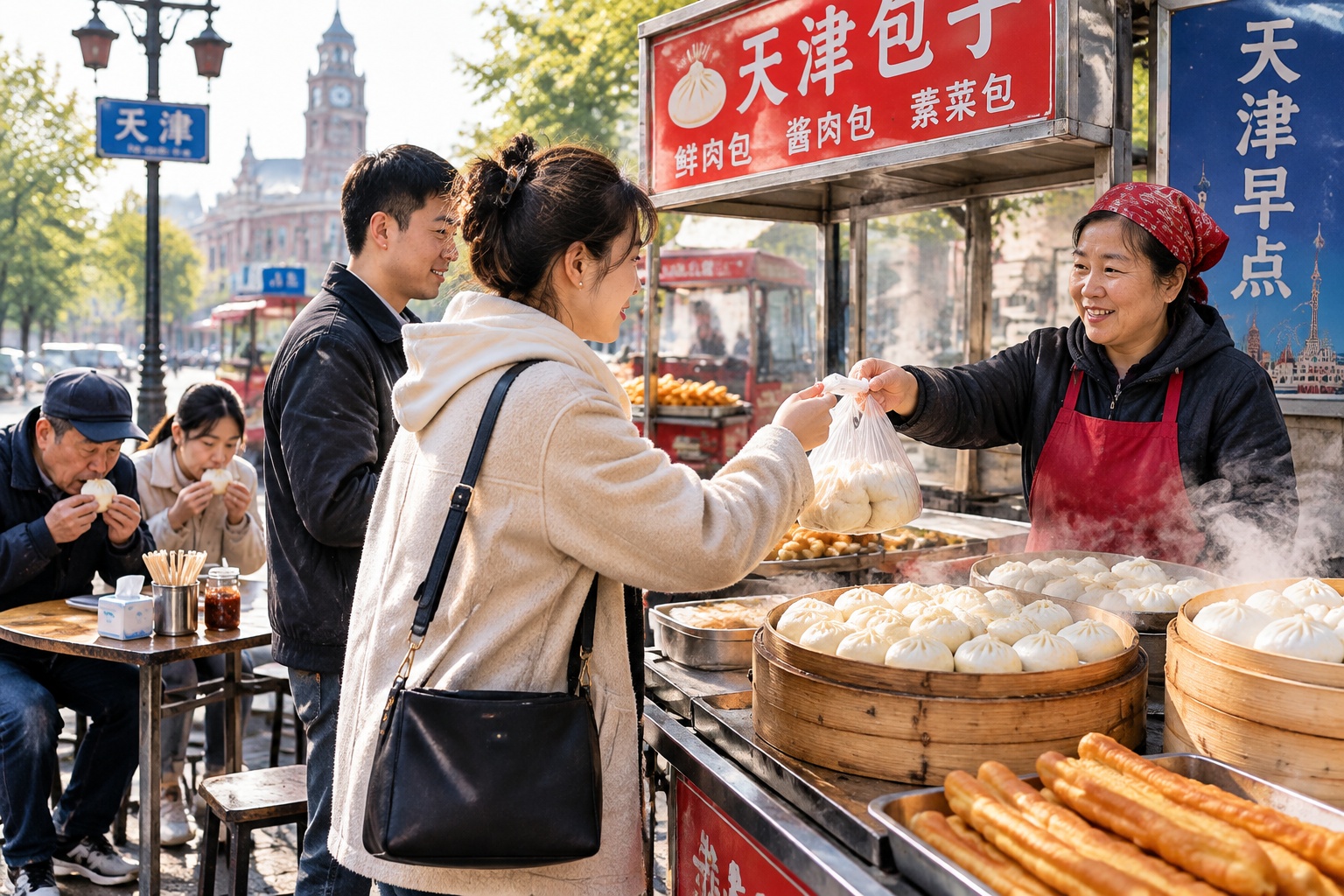
The day doesn’t begin with coffee at Starbucks. In Tianjin, it begins with the steam rising from a roadside stall. At 6:30 AM, neighborhoods are alive with the clatter of wooden boards and the smell of fried dough (youtiao) and savory baozi (steamed buns).
Locals call this “eating breakfast” (chi zaofan), but for many, it’s a ritual. I watched a man in his 70s sitting on a low plastic stool, dipping a fluffy soy milk bun into hot oil-dipped dough. He didn’t check his phone. He was just enjoying the moment.
What surprises travelers is how accessible this food culture is. You don’t need reservations or fancy utensils. A simple bowl of spicy soup (hu tian) and a fried cake can cost less than $2 USD. This isn’t just cheap eating; it’s a social contract where strangers share tables, talk about the weather, and laugh at each other’s misfortunes.
02:00 PM: The Art of Laughter in Teahouses
As evening approaches, the city shifts gears. The air grows thick with humidity and the sound of chatter. In Tianjin, comedy isn’t just entertainment; it’s a community pillar.
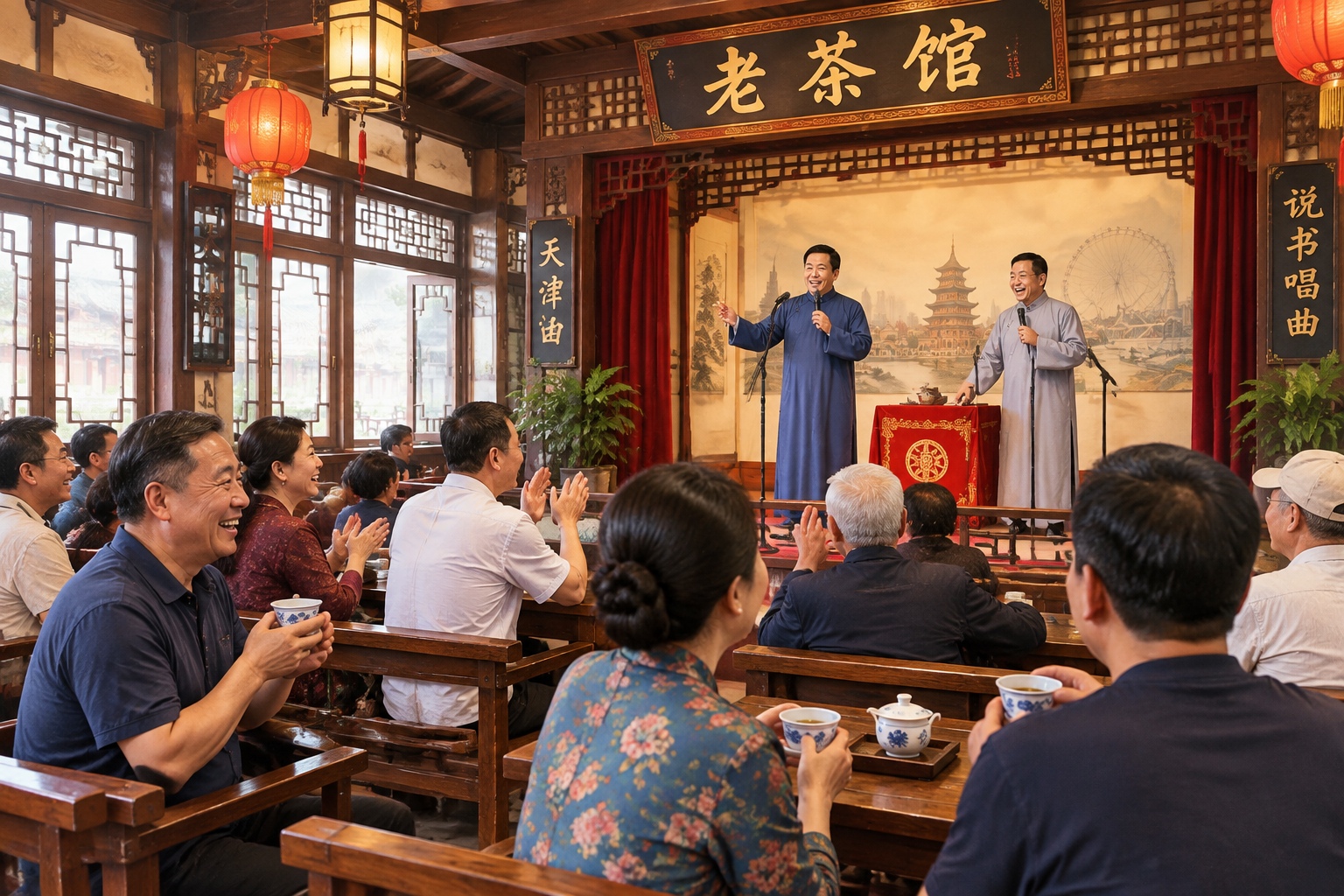
I entered a small teahouse in the old town for a crosstalk (xiangsheng) performance. Crosstalk is a traditional Chinese comedic form involving two or more performers exchanging witty banter. Unlike Western stand-up, which often relies on solitary storytelling, xiangsheng is a dialogue of call-and-response, full of wordplay and cultural references.
The room was packed. People sat on wooden benches, sipping tea from small bowls with lids (gaiwan). When the performers started their routine about modern dating or bureaucratic hurdles, the audience didn’t just listen; they roared back. Laughter erupted in waves, punctuated by the sound of clapping and whistling.
One local told me, “In Beijing, people are always rushing to work. In Tianjin, we have time to laugh.” The humor here is grounded, self-deprecating, and deeply connected to daily struggles. It’s a way for ordinary people to process the complexities of life together.
08:00 PM: Walking Through History
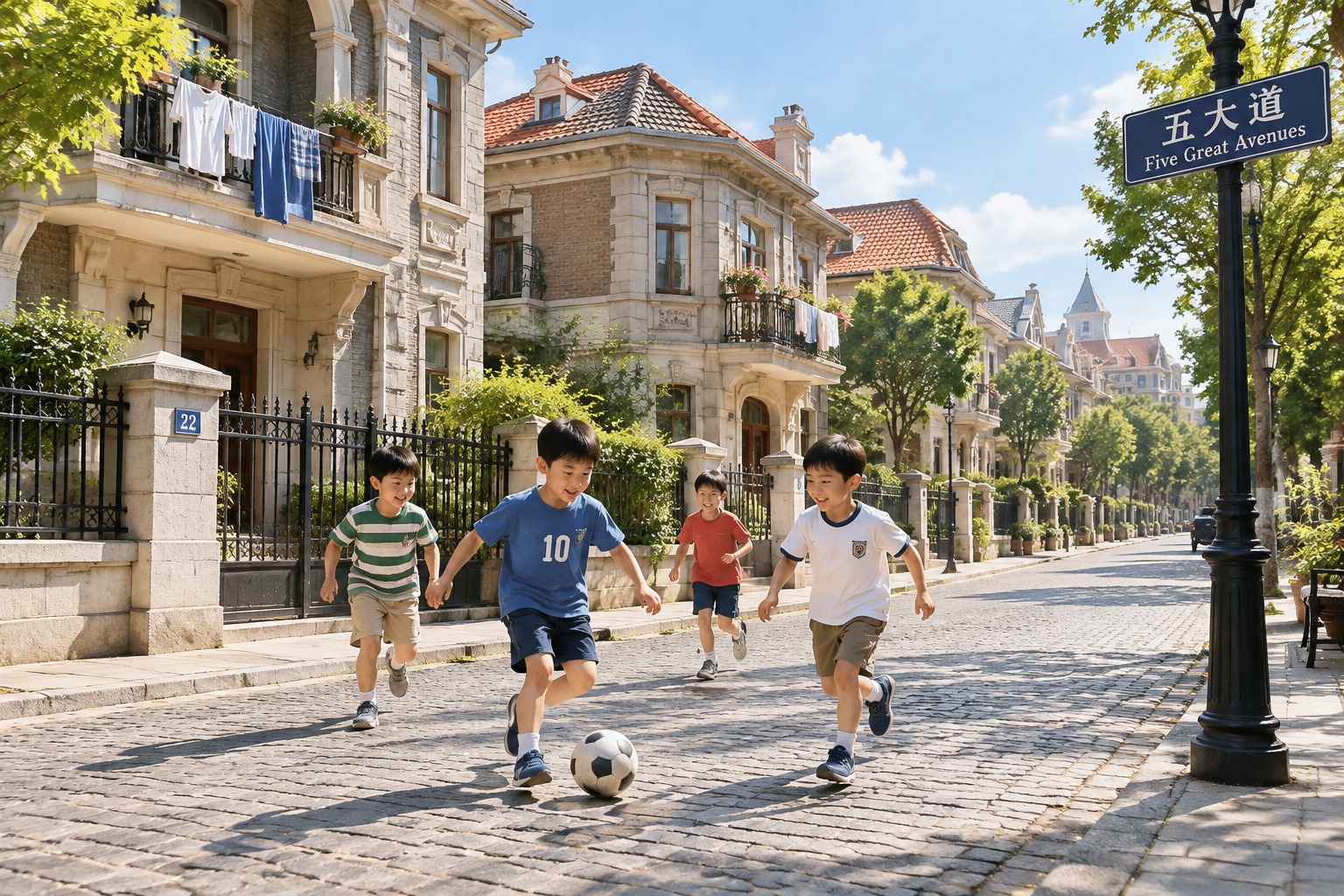
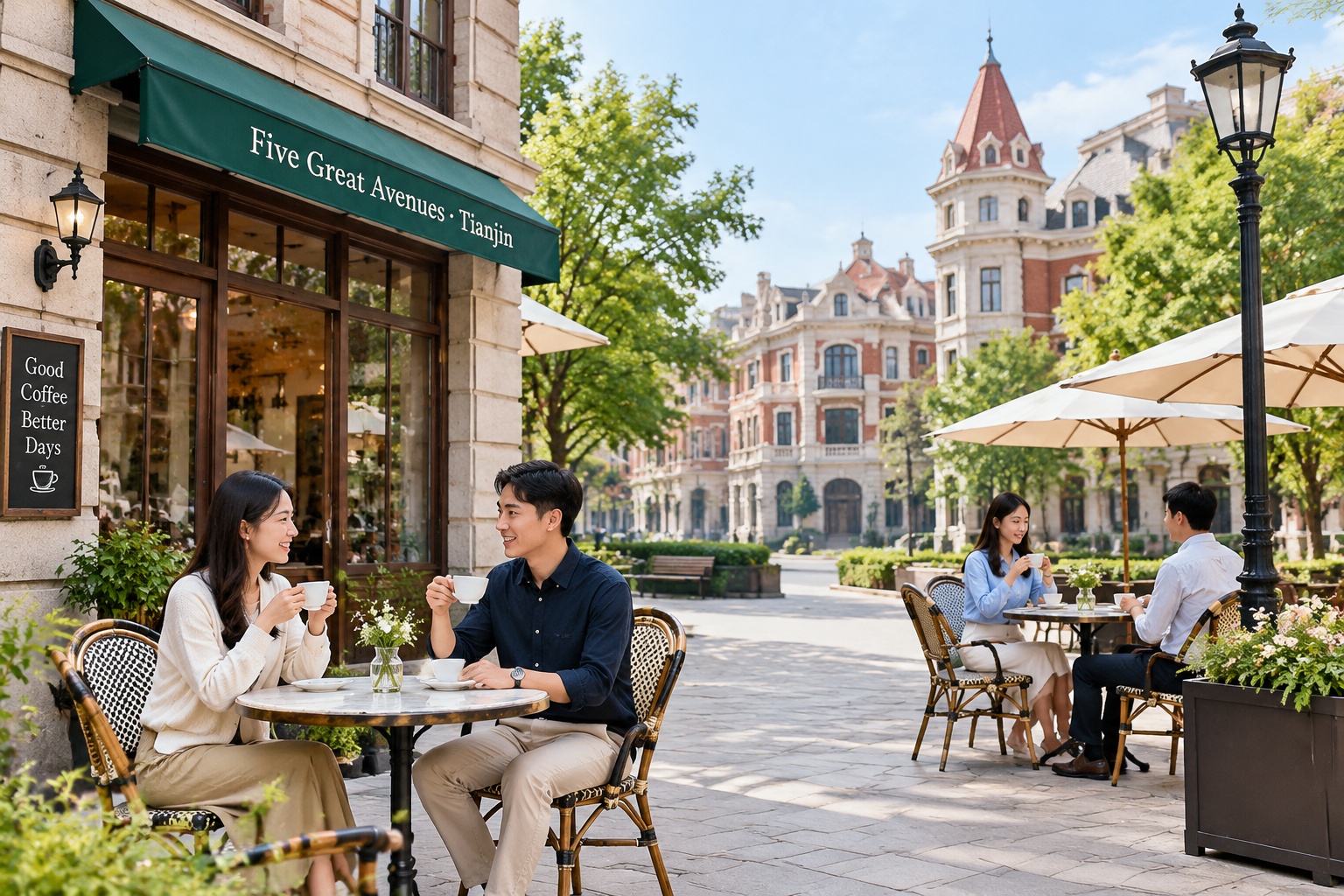
The next morning offers a stark contrast. I walked through the Five Great Avenues (Wu Da Dao), a district famous for its collection of over 1,000 villas built in European styles during the early 20th century.
Unlike many historic districts that have been turned into sterile shopping malls or tourist traps, this area feels lived-in. I saw children playing soccer on cobblestone streets, elderly women hanging laundry on balconies, and cats napping in doorways.
The architecture is a mix of Italian, French, British, and German styles. Some buildings are crumbling with charm; others have been meticulously restored into cafes or galleries. But the soul of the place isn’t the columns or the arches—it’s the people who still call it home. You can sit in a quiet courtyard cafe for an hour, watching the world go by without feeling like you’re on a stage.
The 48-Hour Itinerary: A Balance of Chaos and Calm
For those planning to visit, here is a realistic route that balances sightseeing with local life:
- Day 1 Morning: Start at a local breakfast stall for baozi and soy milk. Walk through the ancient city walls.
- Day 1 Afternoon: Visit the Tianjin Eye (a Ferris wheel on a bridge) or explore the Qianmen Street area for vintage shops.
- Day 1 Evening: Book a seat at a crosstalk theater. Arrive early to get tea and snacks, then enjoy the show.
- Day 2 Morning: Stroll through the Five Great Avenues. Rent a bike to cover more ground while avoiding crowds.
- Day 2 Afternoon: Visit the Binhai Library or a local museum to understand the city’s modern transformation.
The key is to embrace the rhythm of Tianjin. It’s not about rushing to check off landmarks. It’s about sitting on a plastic stool, listening to a joke that might take an hour to explain, and realizing that in this city, life itself is the main performance.
Start the discussion at forum.chinacomes.com