

The Sound of Solo Dining
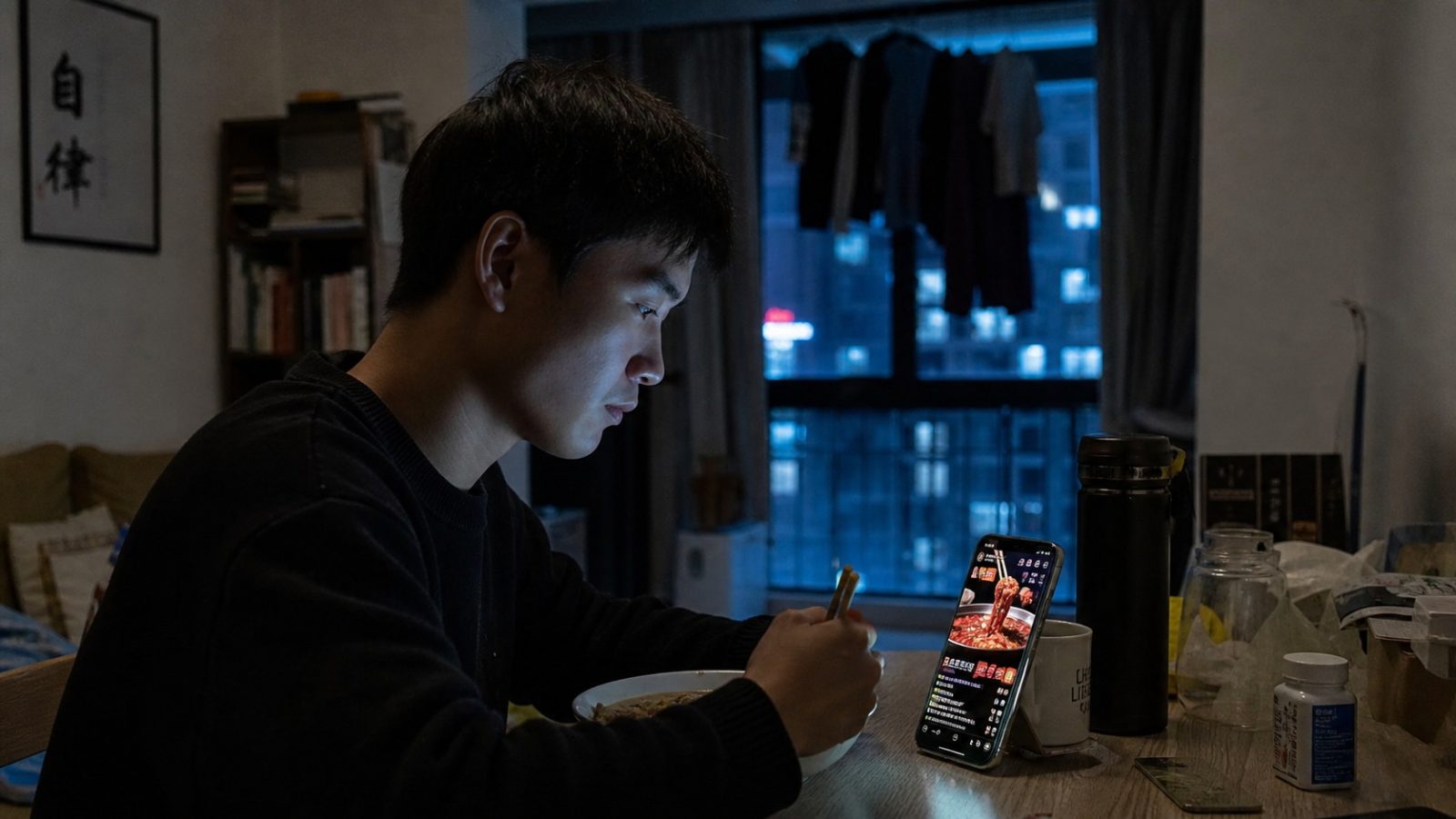
It is 8:00 PM on a Tuesday in Shanghai. In a cramped apartment, Li Wei, a 24-year-old data analyst, sits alone at his small dining table. On the screen of his phone, another young man is devouring a steaming pot of spicy hotpot, the camera zoomed in on the boiling broth and the rhythmic crunch of chewing sounds amplified by high-quality microphones. Li Wei eats his own simple dinner while watching. He isn’t hungry enough to finish the entire meal shown on screen, but the presence of the host makes his solitary evening feel less empty. This is the reality of mukbang (or chi huo bo in Chinese) for millions of ordinary viewers across China.
Mukbang originated in South Korea but has evolved into a massive, distinct ecosystem in China. Unlike the Western perception of it as mere shock value or extreme gluttony, the Chinese version is deeply intertwined with urban loneliness and the digital lifestyle. For single workers living in high-density cities, these streams provide a form of “digital companionship.” The host acts as a surrogate friend, sharing the mundane ritual of eating, which transforms isolated consumption into a shared social experience.
From Gluttony to Performance
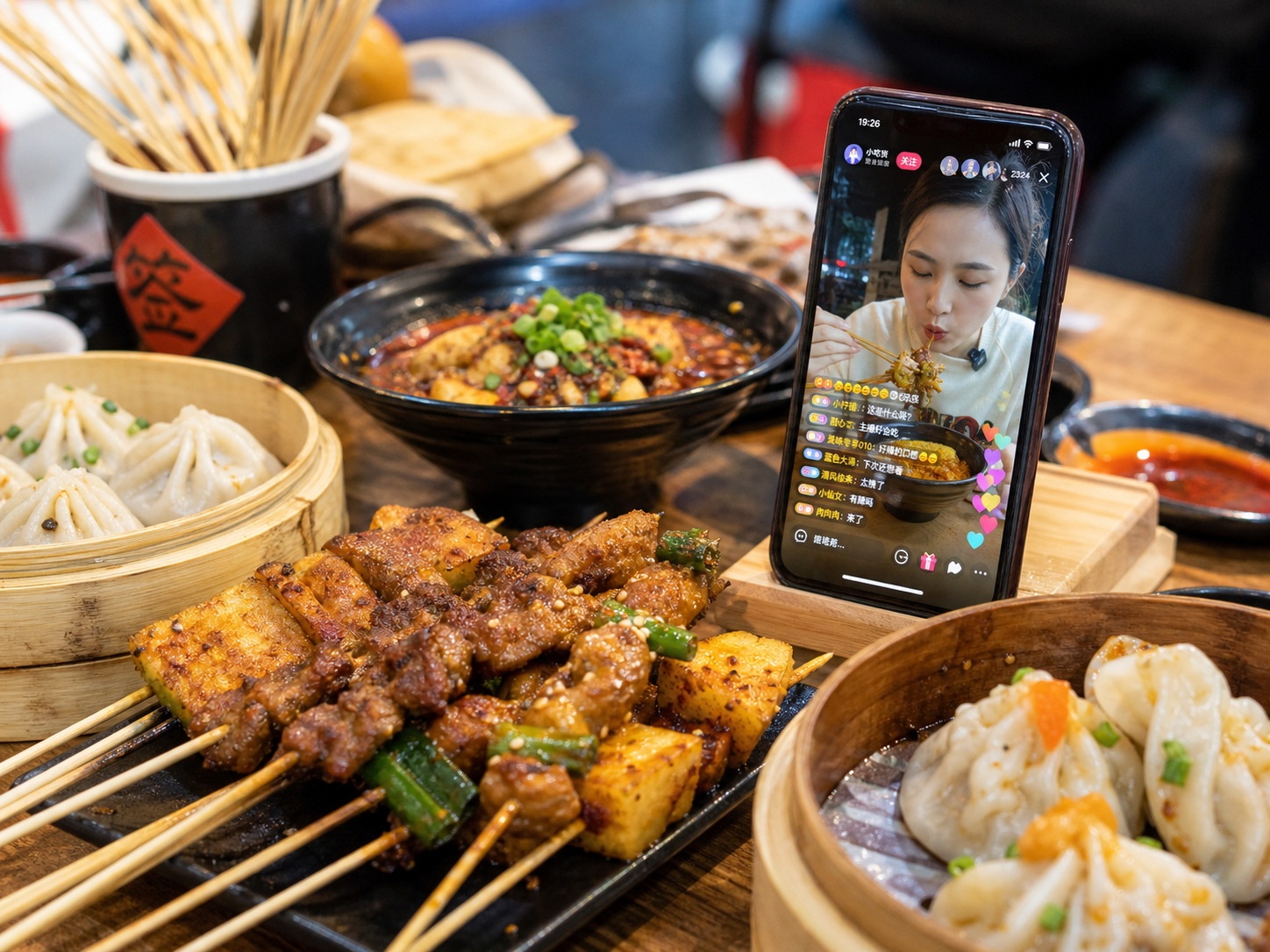
The scale and style of Chinese mukbang differ significantly from its Korean origins. While early trends focused on massive quantities—eating ten bowls of noodles or whole roasted ducks—the genre has diversified. Today, viewers see everything from hyper-realistic ASMR (Autonomous Sensory Meridian Response) recordings to “fast eating” challenges where hosts compete against the clock.
The appeal lies in the sensory detail. In a country with over 1.4 billion people and a rich culinary history, food is central to social life. For those who cannot gather around a round table due to work hours or family size, watching others eat satisfies a psychological need for connection. The sound of sizzling oil, the tearing of crispy duck skin, or the slurping of noodles triggers what psychologists call “vicarious consumption.” It allows viewers to experience the joy of food without the physical burden.
The Business of Being Watched
What began as a niche hobby has turned into a serious career path on platforms like Douyin (the Chinese version of TikTok) and Kuaishou. For many young creators, especially in smaller cities where job opportunities are limited, becoming a “food influencer” offers financial independence.
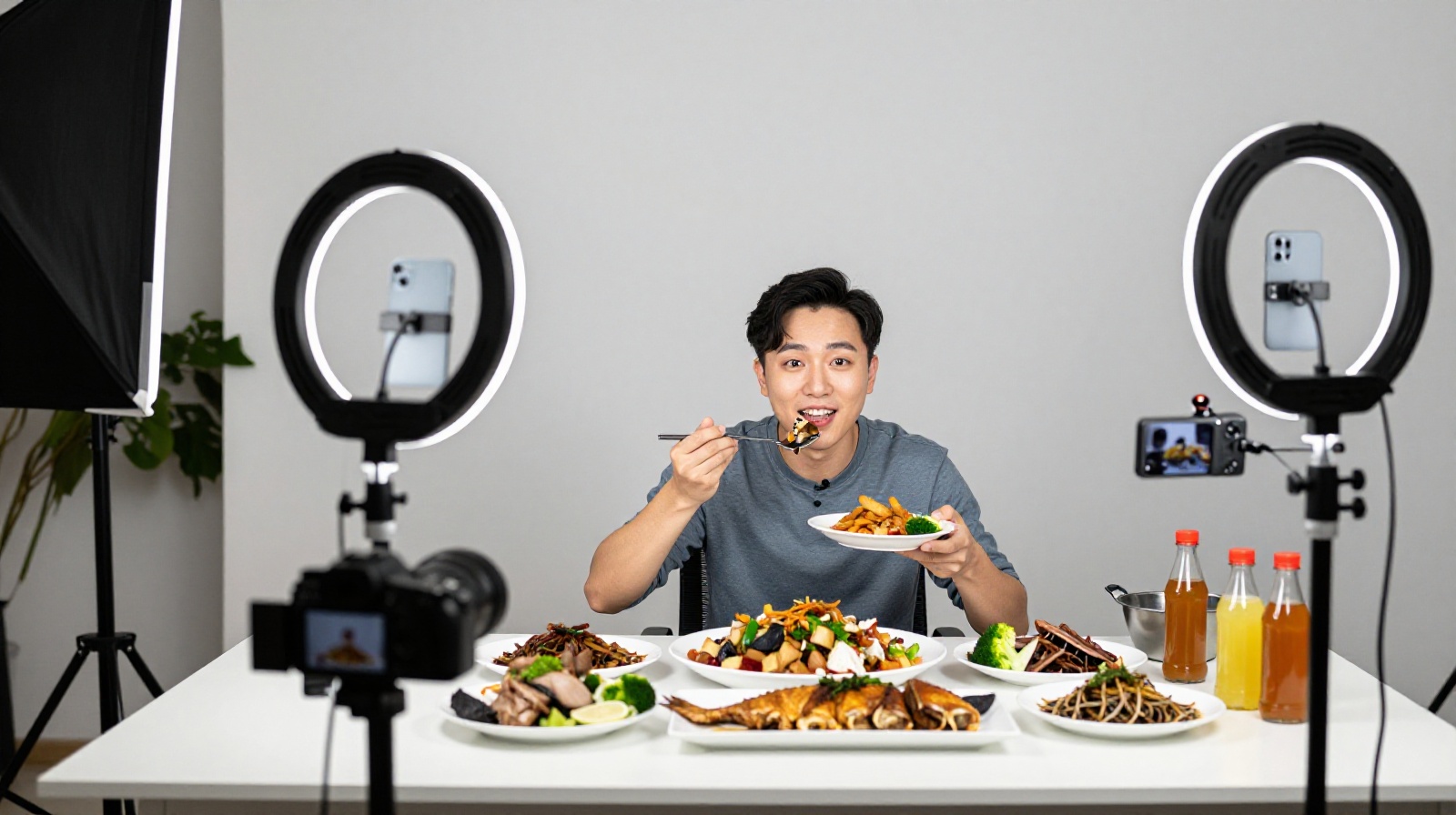
The monetization model is straightforward but intense. Viewers send virtual gifts during live streams, which can be converted into cash. A successful host might earn thousands of dollars a month, far exceeding local average salaries. This economic incentive has professionalized the industry. Studios now recruit and train hosts, optimizing lighting, camera angles, and even the timing of bites to maximize viewer retention.
The Turn Toward Quality
However, the era of extreme eating is fading. In recent years, Chinese regulators have cracked down on food waste. Following national guidelines against extravagance, platforms have adjusted their algorithms. Videos that glorify excessive consumption or induce vomiting after eating are often shadow-banned or removed.
This regulatory pressure has shifted the content toward quality over quantity. Modern Chinese mukbang favors “food reviews” and “cooking tutorials” rather than sheer volume. Creators now focus on the story behind the dish, the hygiene of the kitchen, or the cultural significance of regional cuisines. This shift aligns with a broader trend in Chinese consumer culture: young people are becoming more health-conscious and value-driven.
A Mirror to Urban Life
The mukbang phenomenon is not just about food; it is a mirror reflecting the social fabric of modern China. It highlights the tension between rapid urbanization, which isolates individuals in high-rise apartments, and the deep-rooted Chinese cultural emphasis on communal dining.
For Li Wei and millions like him, these videos are a bridge. They do not replace real human contact, but they soften the edges of loneliness in a fast-paced society. As China’s digital economy matures, the way people consume content—and what they consume—continues to evolve. The “big eater” is no longer just performing for shock value; they are feeding a collective need for connection in an increasingly digital world.