

Two Kilometers, Two Eras
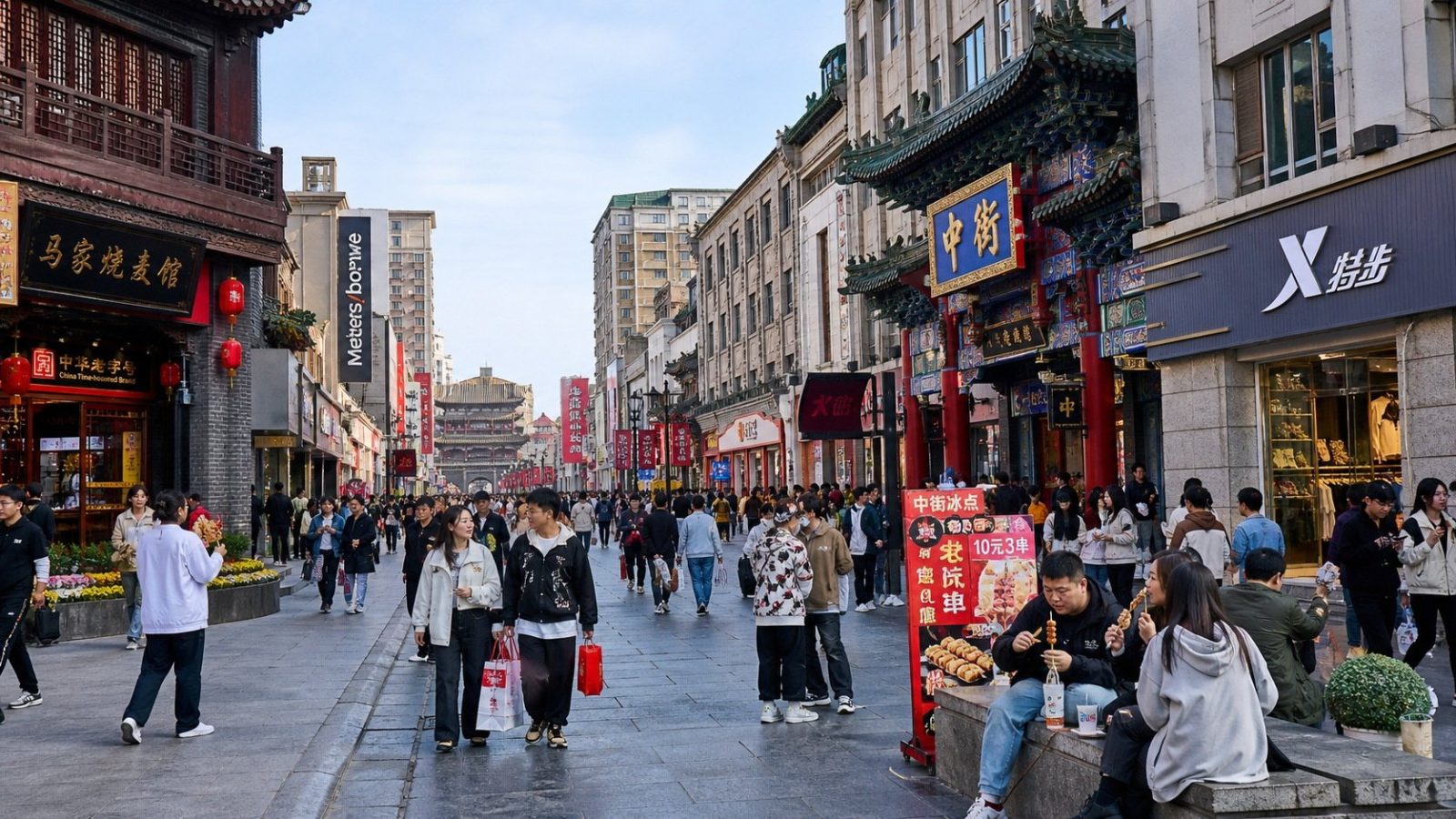
The distance between Zhongjie and Taiyuan Street in Shenyang is roughly two kilometers. To a tourist with a map, it’s a short walk. But to the locals who have watched this city evolve over decades, it feels like stepping through a time machine.
Shenyang is known globally as the cradle of Northeast China’s heavy industry—the “eldest son” of the republic. For years, Western narratives often focused on its rusting factories and economic stagnation. But if you walk these streets today, the story is different. It’s about adaptation, consumption, and a vibrant urban life that refuses to be defined solely by its industrial past.
Zhongjie: Where History Meets Daily Life
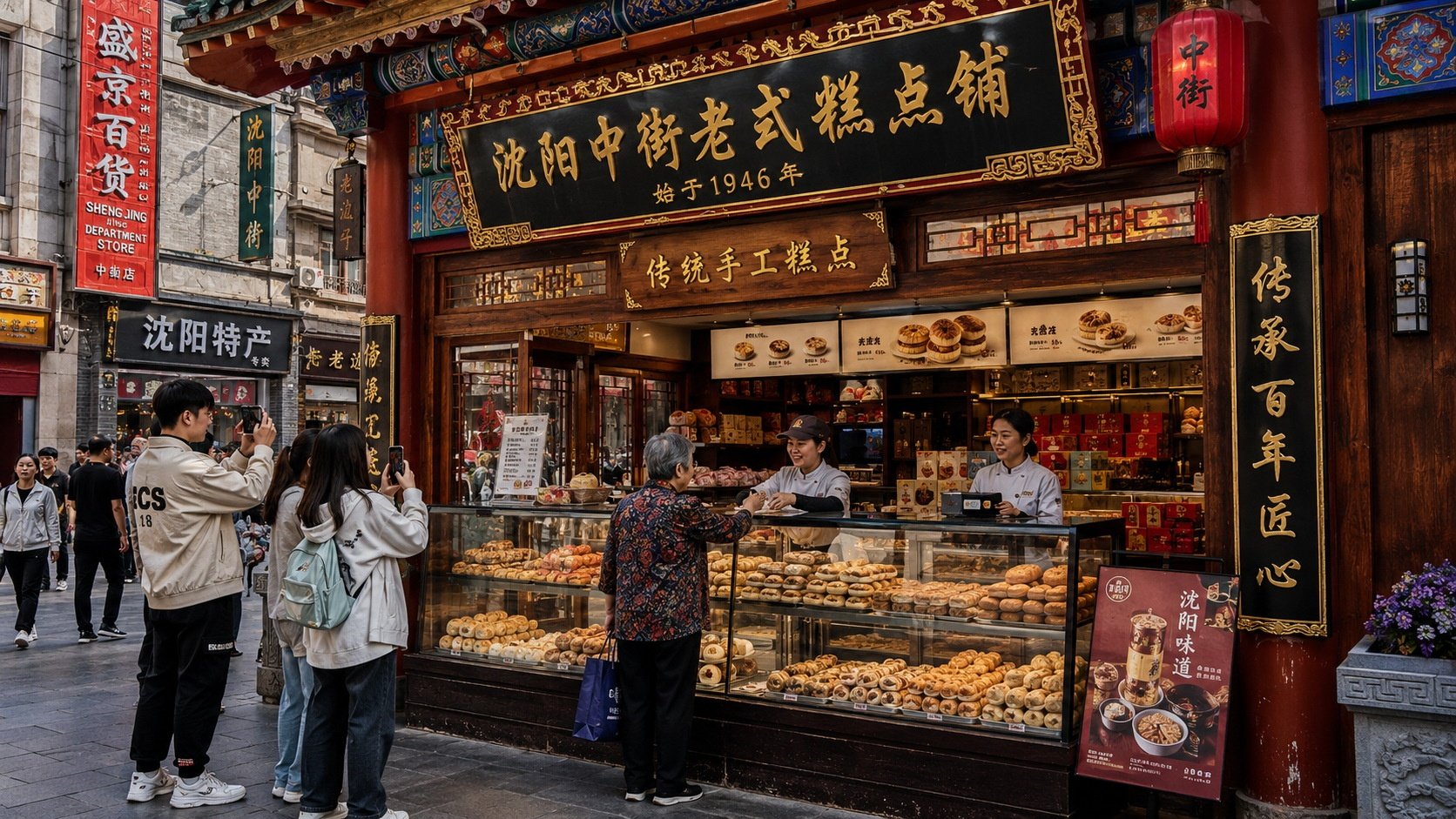
Start at Zhongjie (Central Street), one of the oldest commercial streets in China. Here, the air smells of roasted sweet potatoes and traditional Chinese medicine herbs. The architecture is a mix of Qing Dynasty-style buildings and Soviet-era blocks.
You’ll see elderly residents playing chess on folding tables outside century-old pharmacies. Just around the corner, young people are lining up for trendy tea shops or taking photos in Hanfu (traditional clothing) against historic backdrops. This isn’t just nostalgia; it’s a new way of engaging with heritage.
Traditional brands like Fu Xin Xing, a century-old pastry shop, still operate here. But they’ve adapted. The shop now sells mooncakes packaged for gifts as well as cheap snacks for students. It’s a microcosm of how old businesses survive: by respecting the past while serving modern tastes.
Taiyuan Street: The Pulse of Modern Consumption
Walk east, and the landscape shifts. Taiyuan Street is Shenyang’s answer to Shanghai’s Nanjing Road or Beijing’s Wangfujing. Here, glass facades reflect the winter sun (or summer rain). Giant shopping malls house international chains, but also a rising wave of Guochao—Chinese trendy brands that blend national identity with modern design.
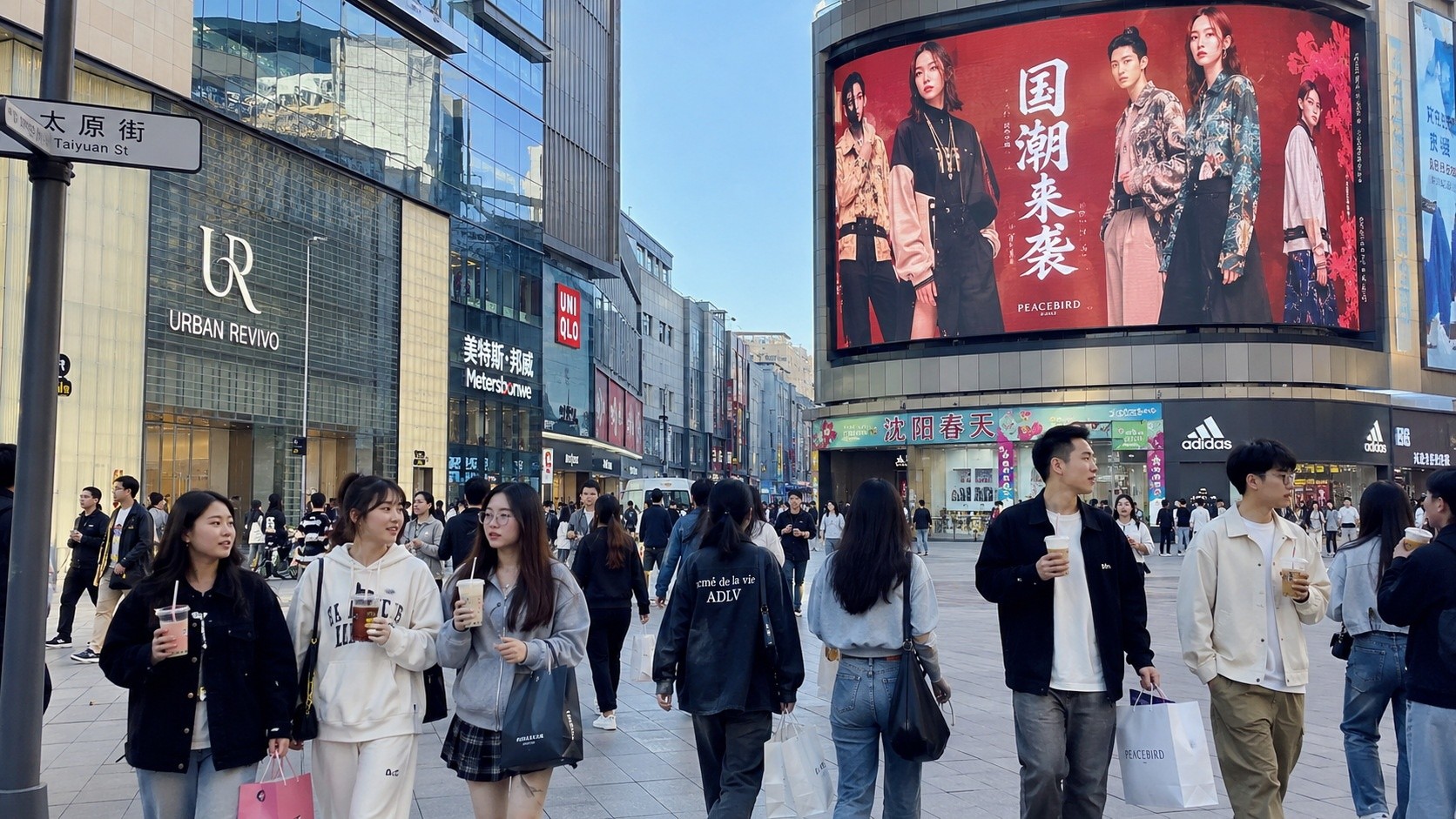
The youth in Shenyang are not just consuming; they are curating their lifestyle. You’ll see groups of friends gathering in experiential spaces: escape rooms, indoor skiing slopes, and themed cafes. The economy here isn’t about buying less because the industry is slow; it’s about spending smarter on experiences.
Data from local malls shows that foot traffic has remained robust, driven by a mix of locals seeking comfort after work and tourists exploring the region’s culture. The retail transformation reflects a broader trend across China’s second-tier cities: upgrading not just in scale, but in quality and cultural relevance.
The Yanhuoqi: Real Life on the Sidewalks
Beyond the malls lies what locals call yanhuoqi—the smoke and fire of daily life. This is where you find the true soul of Shenyang.
Step into a small alley near Taiyuan Street, and you’ll find street vendors selling Jianbing (savory crepes) or skewers grilled over charcoal. The prices are affordable, often less than $2 for a hearty meal. But it’s not just about cost; it’s about connection.
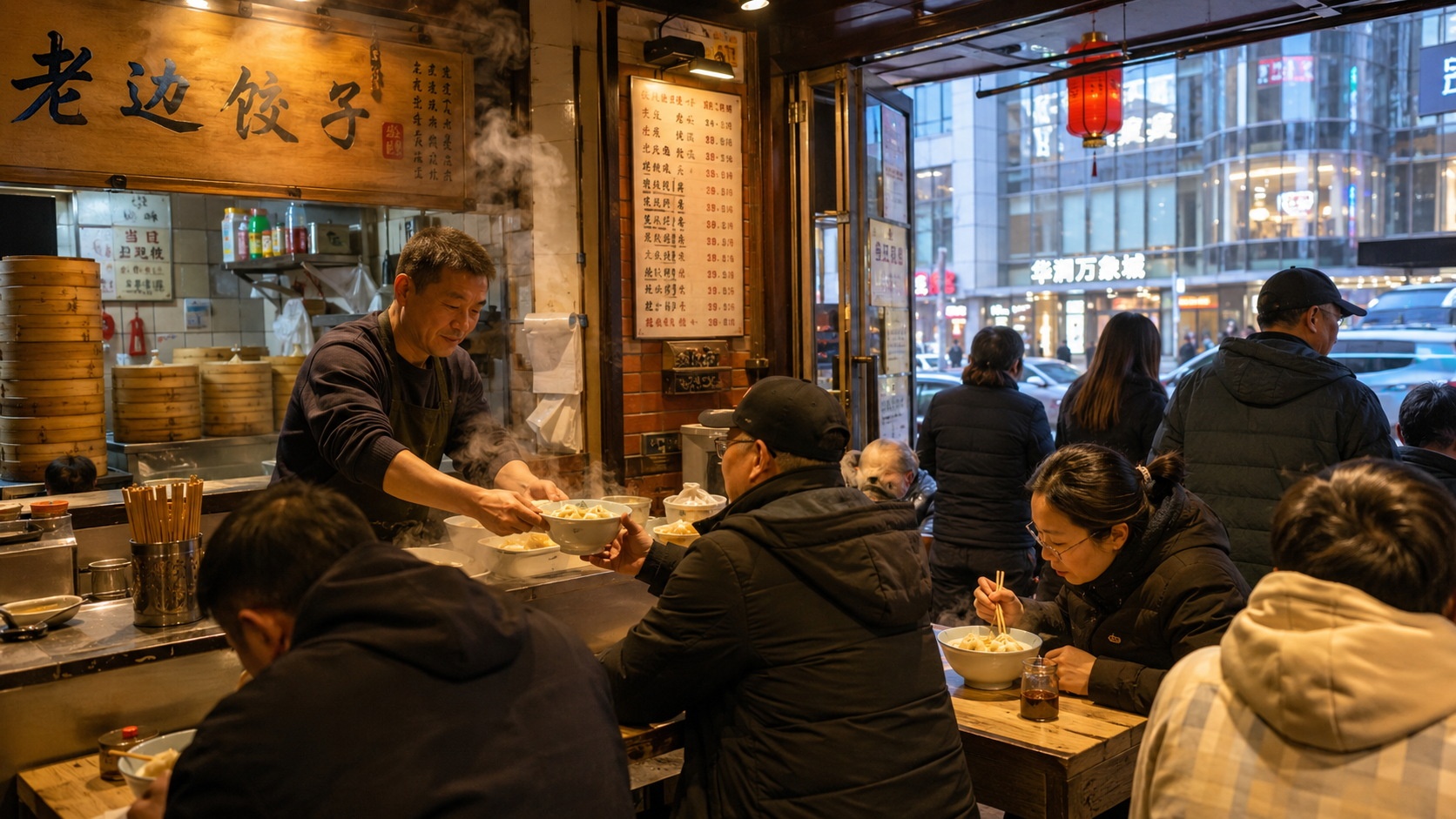
Meet Mr. Li, who has run a small dumpling shop near Zhongjie for 15 years. He remembers when the street was quieter, filled with factory workers on break. Today, his customers are a mix: office workers grabbing lunch, tourists looking for authentic taste, and students studying nearby. “The city changes,” he says, wiping sweat from his brow during the dinner rush. “But people still need good food and a warm place to eat.”
This resilience is visible everywhere. From the delivery riders weaving through traffic to the shop owners adjusting their inventory based on WeChat trends, Shenyang’s economy is dynamic. It’s not stuck in the past; it’s negotiating with the future.
Beyond the Stereotypes
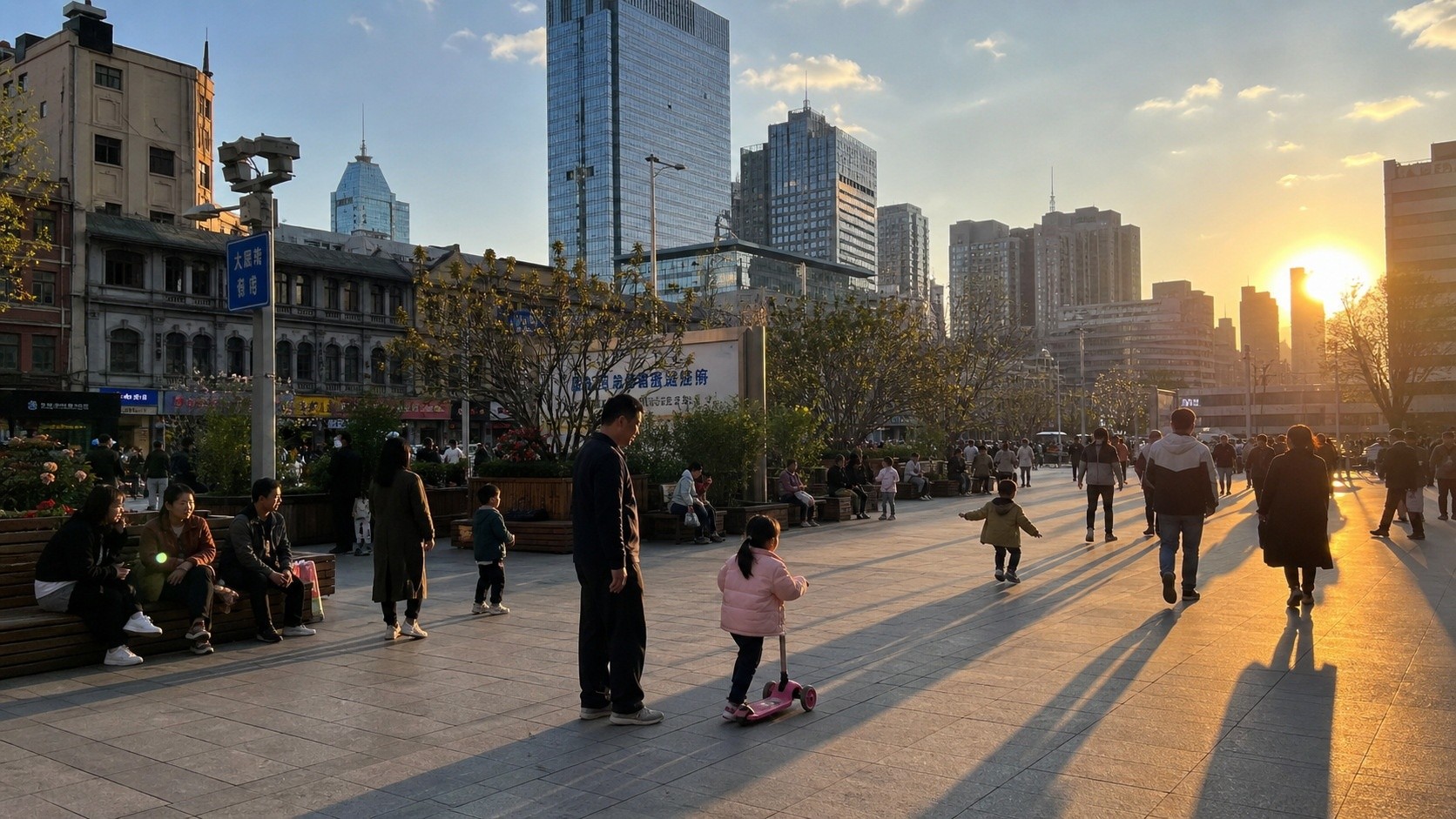
For international readers accustomed to images of abandoned factories, walking through Zhongjie and Taiyuan Street offers a corrective perspective. Yes, Shenyang was once the heart of China’s industrial might. But like many post-industrial cities worldwide, it is reinventing itself.
The consumption patterns here tell a story of optimism. Young people are staying, not leaving for Beijing or Shanghai. They are building careers in tech, culture, and services. The city is becoming a hub for cultural tourism, attracting visitors with its unique blend of cold weather warmth, rich history, and modern amenities.
Conclusion
The two-kilometer walk from Zhongjie to Taiyuan Street is more than a tour route. It’s a lens through which to view contemporary China. It shows that economic transition is not an end, but a beginning. The smoke and fire of Shenyang are still burning—just in different ways.
If you visit, don’t just look at the grand malls. Stop for a street snack. Talk to a shopkeeper. Listen to the local accent. That’s where you’ll find the real pulse of Northeast China: resilient, warm, and constantly evolving.