
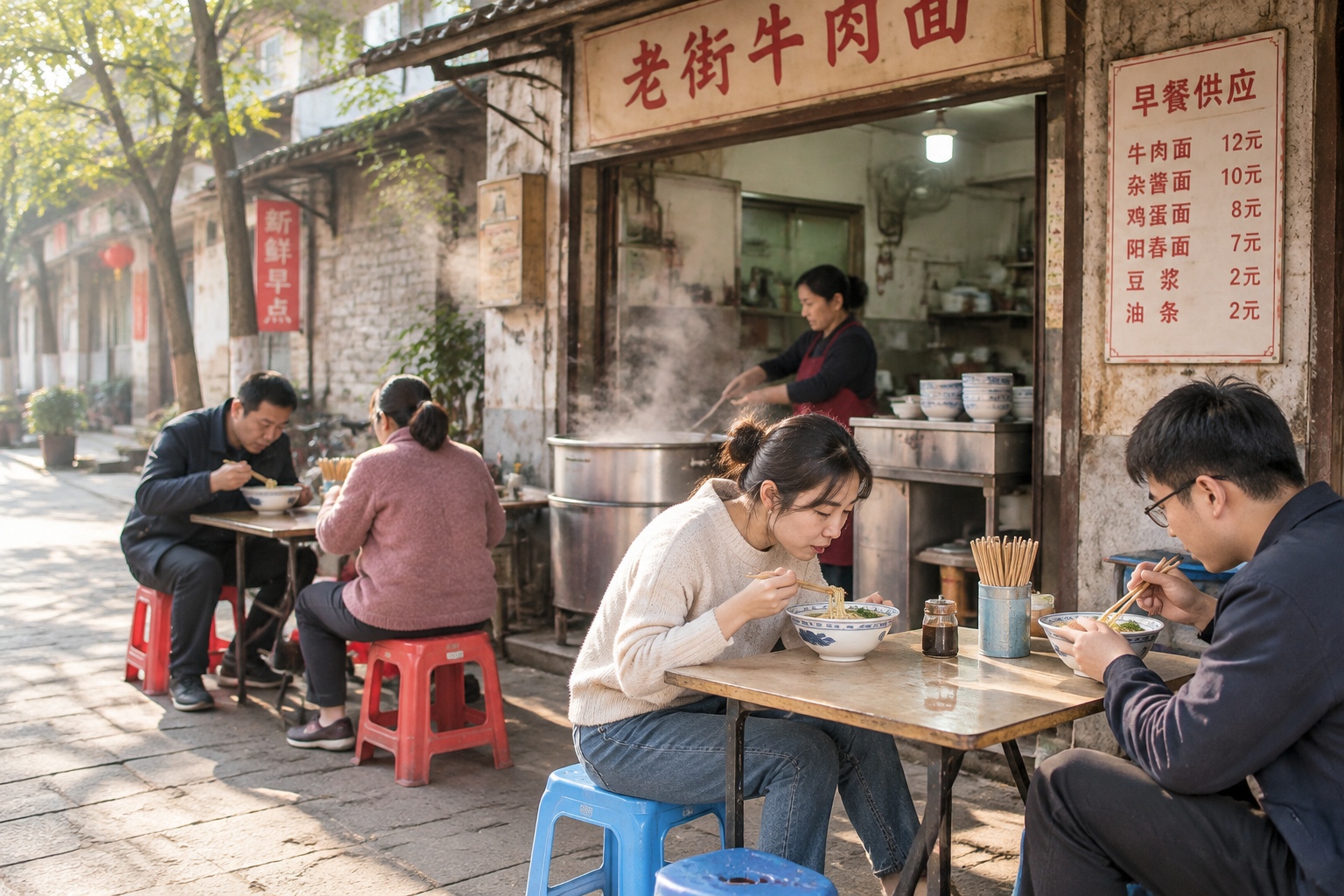

At 7:30 a.m., the air in this narrow alley in Chengdu is thick with steam and the sharp scent of chili oil. It doesn’t smell like a modern specialty coffee shop. Instead, it smells like history being cooked fresh. Lin, a 26-year-old software engineer, isn’t here for Instagram photos. She’s here because she knows that if she waits until 8:15, the famous ‘red oil noodles’ will be sold out.
She stands on a small, wobbly plastic stool next to Li, a retired teacher, and Wang, a delivery driver who just clocked in. They don’t know each other well, but they share a comfortable silence as they eat. This is not the curated ‘authentic experience’ sold to tourists in guidebooks. This is Tuesday morning for local Chinese youth.
The Shift from Glass Facades to Plastic Stools
For the past decade, China’s urban youth culture was defined by glass-walled cafes, minimalist design studios, and international fast-food chains. If you walked through a Tier-1 city like Shanghai or Shenzhen in 2015, every block seemed to host another new brand of coffee or bubble tea.
But today, the vibe is changing. Look around any major Chinese city: the long queues are no longer just at the latest pop-up store. They are forming outside unmarked storefronts that have been there for 30, 40, or even 50 years. The owners often don’t use menus. You point at what you see in the window, order by shouting a number to the cook inside, and eat while sitting on low stools.
“I used to go to Starbucks every morning,” Lin tells me later, wiping chili oil from her lip. “But lately, I feel like all those places taste the same. Here, the noodles have character. It feels… real.”
A Search for Authenticity in a Fast-Paced World
This shift isn’t just about food; it’s a search for identity. After years of rapid modernization and standardized consumption, many young Chinese feel a sense of ‘cultural fatigue.’ They are tired of generic brands that could be anywhere in the world.
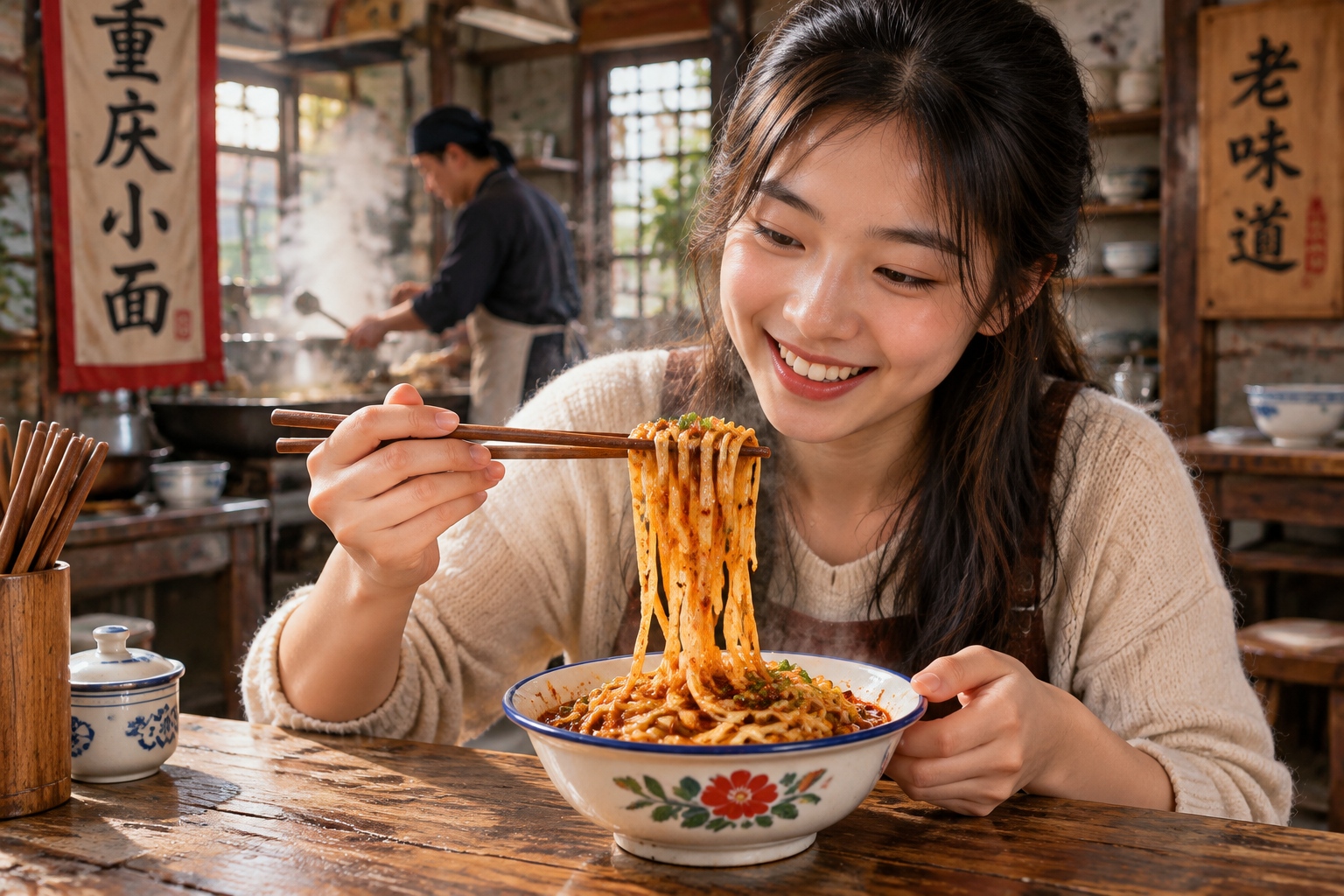
Traditional snack shops offer something algorithms can’t replicate: local stories. A bowl of dumplings might have been made by the same family for three generations. The dough is pulled by hand, not by machine. The broth is simmered overnight using recipes passed down orally.
For Gen Z in China, reconnecting with these flavors is a way to ground themselves. It’s less about ‘nostalgia’ in the Western sense of looking back at childhood, and more about finding stability in a rapidly changing society. These shops are anchors. They don’t change their prices every month. They don’t update their logos. In a world that feels unpredictable, eating something exactly as it was ten years ago provides a strange comfort.
The Economics of ‘Good Value’
We cannot ignore the economic reality behind this trend. China’s economy is slowing down, and for young people entering the job market, financial pressure is real. The era of extravagant spending on luxury goods or premium experiences is fading.
Traditional snacks are incredibly affordable. A hearty meal at these street stalls often costs less than $2–3 USD (15–20 RMB). It’s ‘good value’ in the purest sense: high satisfaction per yuan spent. Young people aren’t necessarily rejecting modernity; they are practicing smart consumption.
“I can have a full, delicious lunch for the price of one latte,” says Chen, a 24-year-old marketing assistant. “And I don’t feel guilty about it. It’s honest food.”
Community Without the Pressure
Beyond taste and price, these spaces serve as crucial social hubs. Modern cafes can be expensive to rent for hours, often with a ‘seat tax’ if you’re just chatting. Loud bars are too noisy for conversation.
The traditional snack shop is different. It’s low-pressure. You buy your food, find a seat (often sharing a table with strangers), and stay as long as you want. The noise level is high—the clatter of bowls, the shouting of orders—but it creates a ‘white noise’ that actually makes chatting easier.
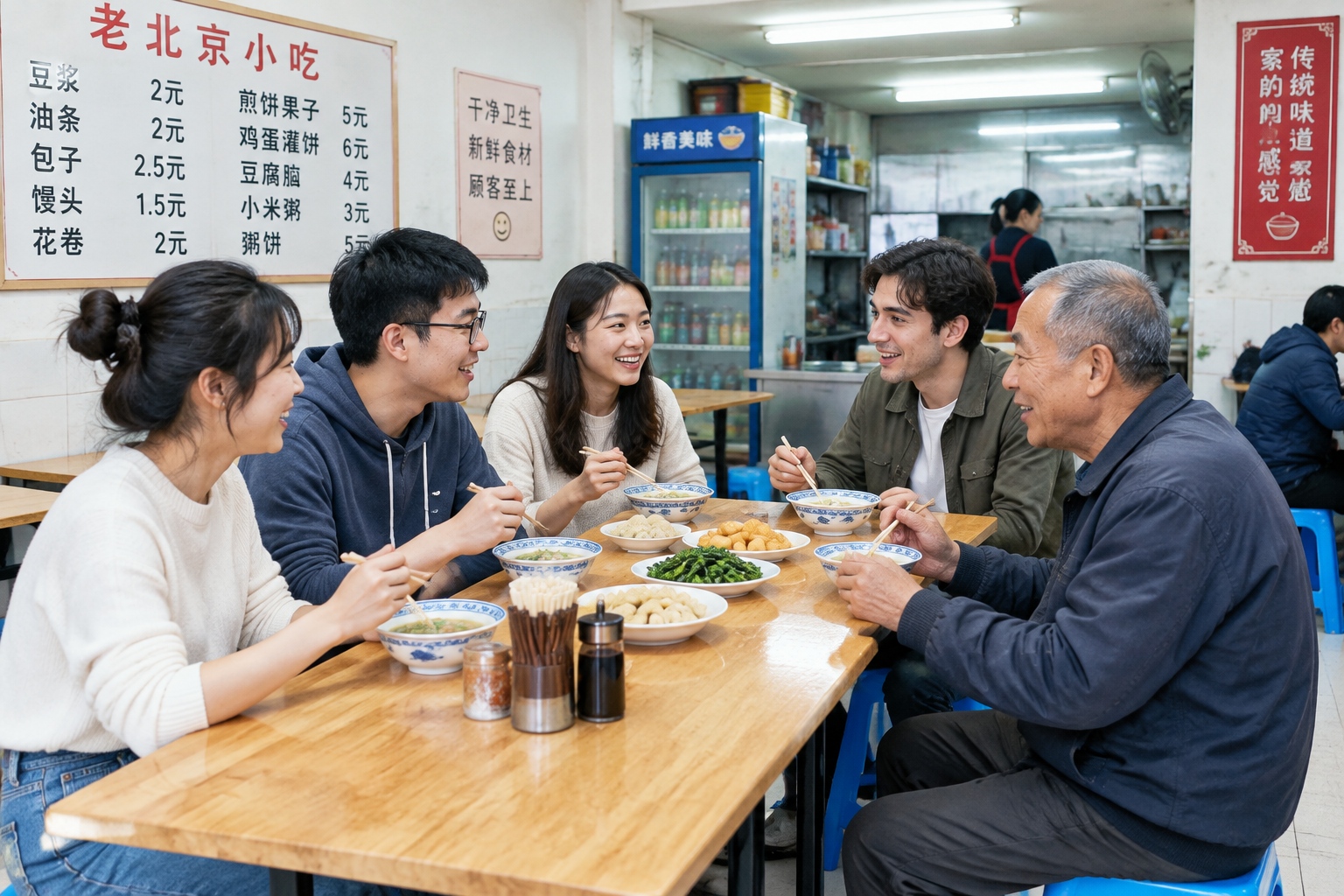
It’s a democratization of space. You see students studying next to grandfathers playing chess. You see colleagues taking a quick break together. It’s a place where social status matters less than the person sitting across from you.
Preservation Through Popularity
This revival is saving these businesses. In the past, many traditional snack makers struggled to find successors. Young people wanted office jobs, not 4 a.m. starts in hot kitchens.
But now, with high demand from young locals, owners are adapting without losing their soul. Some are improving hygiene standards. Others are joining delivery apps like Meituan or Ele.me, allowing customers to order traditional snacks for home consumption. A few even offer online tutorials on how to make the noodles at home.
This is not a frozen museum piece. It’s living heritage. The ‘red oil noodles’ might be served in slightly cleaner bowls now, and the shop might have better ventilation, but the core experience remains unchanged.
Conclusion
When you visit China next time, don’t just go to the famous tourist restaurants. Go to the alley at 7:30 a.m. Sit on the plastic stool. Eat with your hands if you have to. Ask the person next to you what they recommend.
You won’t just find good food. You’ll find the pulse of modern Chinese youth culture: grounded, pragmatic, and deeply connected to their roots.
Start the discussion at forum.chinacomes.com