

Beyond the Postcard View
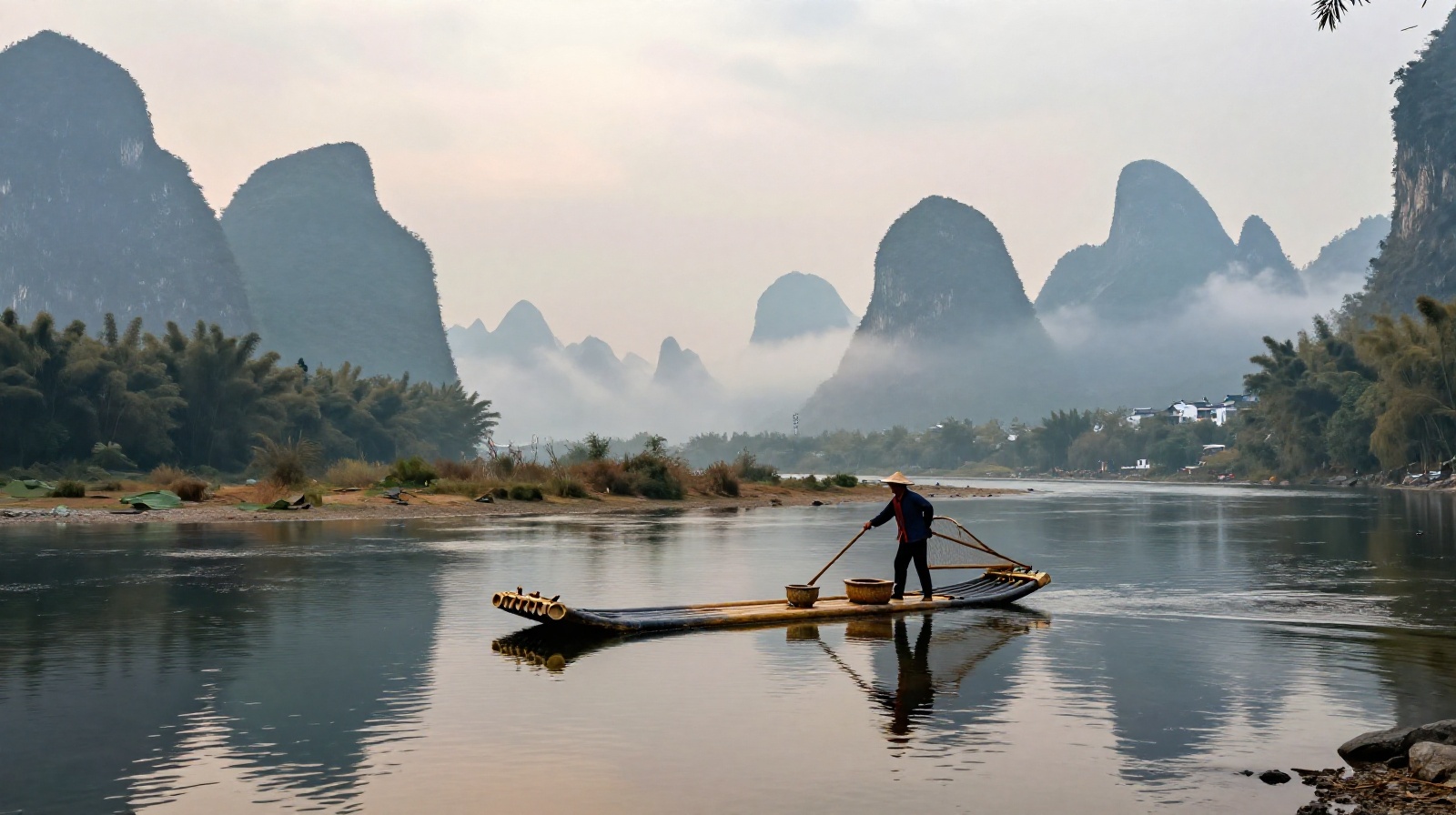
The air in Yangshuo is thick with humidity and the scent of damp bamboo. It’s 6:30 AM on a Tuesday, just as the mist begins to lift off the Yulong River. Unlike the main Li River, where tour buses line the banks and boats pack like sardines, this stretch is quiet. The only sound is the rhythmic creak of wooden oars cutting through still water.
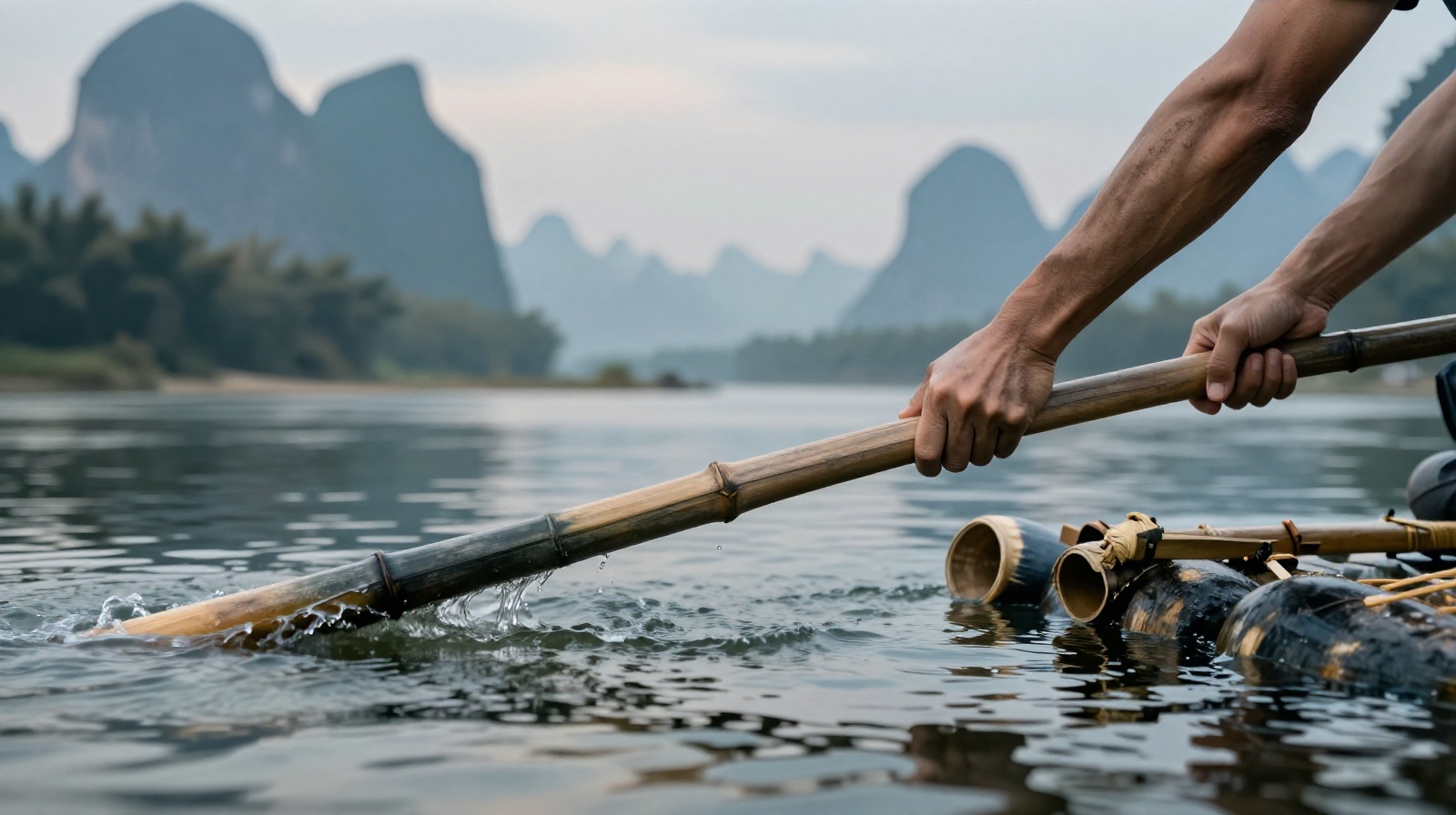
For centuries, Chinese artists have painted these limestone karst peaks as if they were floating islands of ink on rice paper. Standing here at dawn, I see why. The mountains don’t just look like paintings; the light hits them in a way that mimics the fading contrast of traditional brushwork. But this isn’t a static museum exhibit. It is a working river.
The Rhythm of Labor
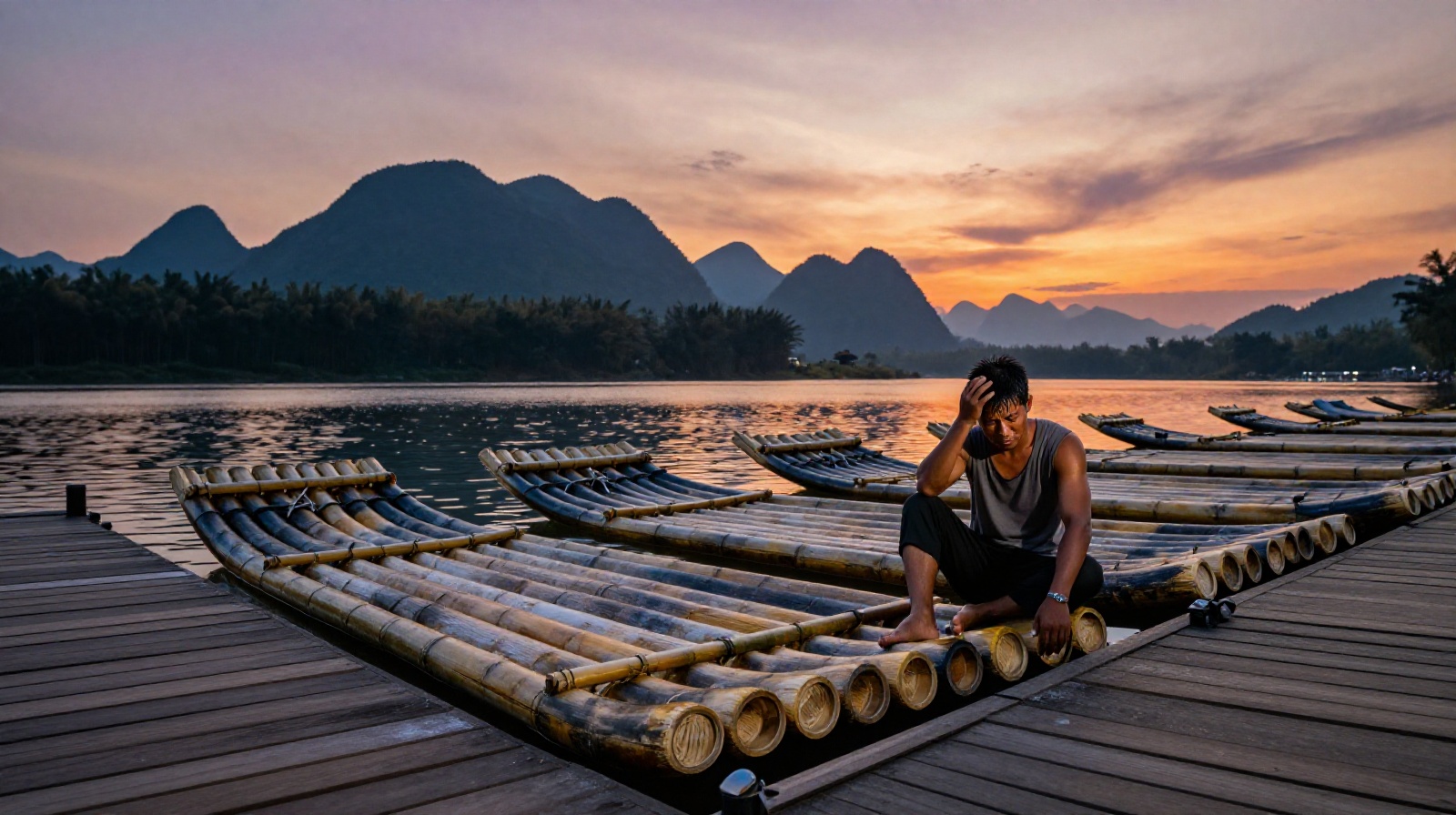
Lao Chen, 54, sits at the rear of his bamboo raft. He doesn’t speak much English, but his hands tell the story. With practiced ease, he pushes off from a muddy bank, the boat gliding silently into the current. His face is weathered by years of sun and wind, not just a model for a photo op.
“The water level changes every season,” Chen says through a translator. “In summer, it’s fast; in winter, slow. You have to feel the river with your feet.” He points to his bare legs, submerged up to the knees. This is not a leisurely cruise for tourists; it is daily work that requires deep knowledge of the water’s secrets.
Where the Crowds Don’t Go
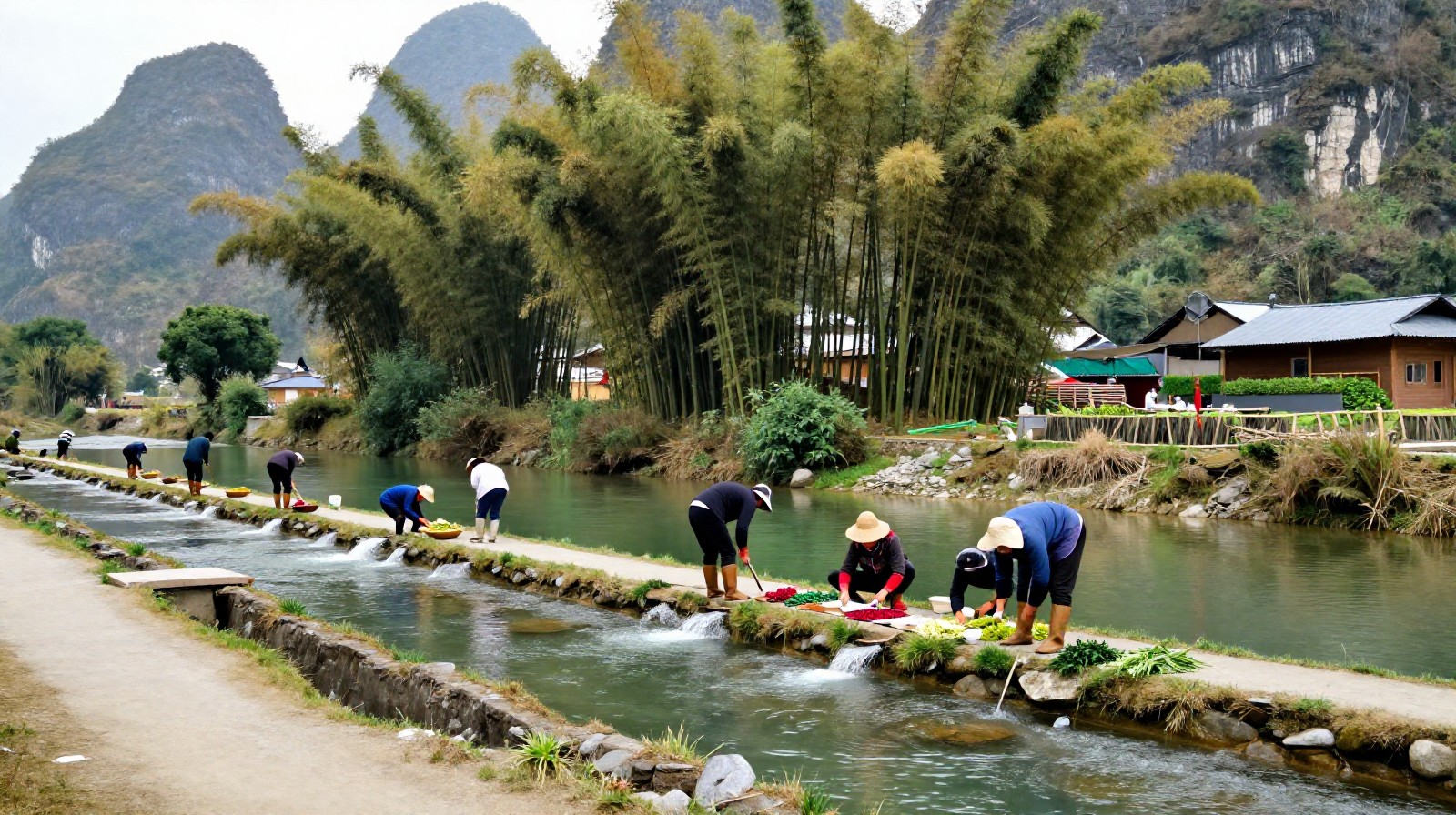
Mainstream tourism in Yangshuo often focuses on the Li River or the West Street, where souvenir shops sell identical t-shirts and plastic swords. But if you walk upstream from the main ferry docks toward the Xingping Ancient Town side of the Yulong River, the crowd thins.
Here, the landscape feels more intimate. You pass farmers mending irrigation ditches, their wooden boots splashing in shallow water. A few elderly women sit on low stools by the riverbank, sorting lotus roots. The contrast is stark: one side of the road might have a high-end resort with poolside bars, while 50 meters away, a family grills fish over an open fire using charcoal from the local woods.
The Sensory Experience
Drifting here feels different because you are forced to slow down. Without the roar of motorized boats, you hear the water lapping against the bamboo slats. You see the reflection of a heron in a reed bed break into ripples as a fish jumps below.
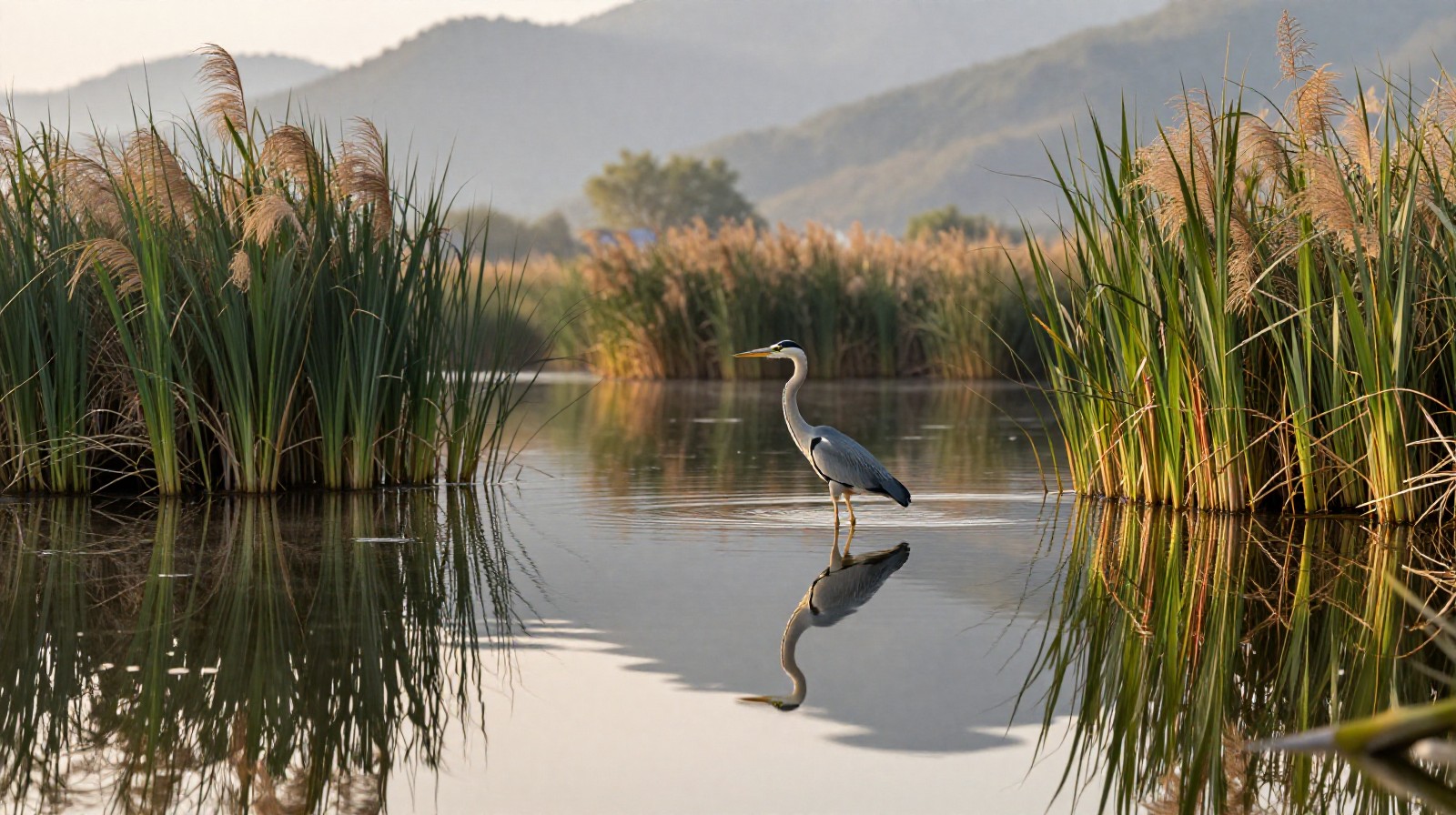
The light changes constantly. As the sun rises higher, the soft gray-blue mountains turn into sharp silhouettes against the bright sky. The water is so clear you can see stones at the bottom of the riverbed. It’s this clarity that defines the “ink painting” aesthetic—it relies on negative space and subtle gradations of light, not bright neon colors or crowded scenes.
Traveling with Purpose
To experience this authenticity, timing is everything. The best time to raft the Yulong River is between 6:00 AM and 9:00 AM. This avoids both the midday heat and the massive tour groups that arrive around 10:30 AM. If you go later in the day, the river transforms from a serene canvas into a busy thoroughfare.
Also, choose eco-friendly operators. Many modern rafts use electric motors to reduce noise and pollution, but traditional bamboo poles are still preferred by purists for their silence. When choosing your raft, look for those that explicitly state they follow local environmental guidelines, such as not littering or disturbing the wildlife.
A Living Landscape
Yangshuo is not just a backdrop for photography. It is a place where people live, work, and adapt to a changing environment. The limestone peaks are slowly being quarried for cement in some areas, a reminder that economic needs often clash with preservation.
Yet, as the sun sets and the mist returns, the river feels timeless. Lao Chen pulls his raft back to the dock, tired but satisfied. He wipes his brow and looks at the mountains one last time before heading home for dinner. In this quiet corner of China, the ancient art of ink painting has found its most real home: not on a wall, but in the water, under the sky, with the rhythm of human life.