
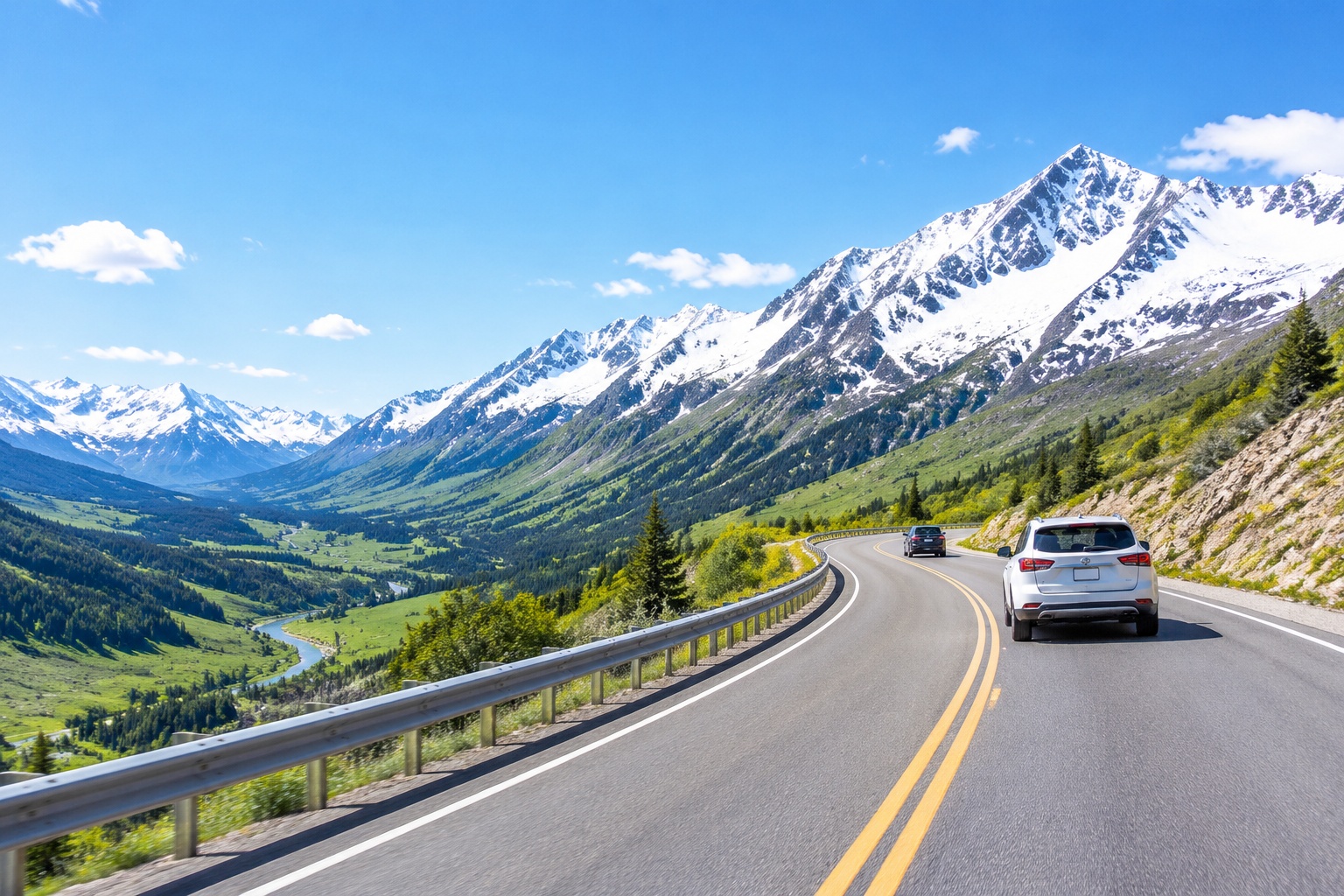

A Drive That Defies the Calendar
It starts in summer heat. You roll through a valley of tall, green poplar trees and smell fresh apricots on the roadside market. The temperature is a comfortable 30 degrees Celsius. Then, you drive north into the mountains. Suddenly, the sky turns gray. Snowflakes begin to dance around your windshield. Within an hour, you are wearing a heavy jacket in freezing air, watching snow-covered peaks that look like they belong to winter.
This isn’t a movie set or a magic trick. It is the Duku Highway (Duku Gonglu), connecting Dushanzi and Kuqa in Xinjiang, China. Locals call it one of the most beautiful roads on Earth because it collapses four seasons into a single drive. For travelers coming from abroad, this road offers a rare glimpse into how geography shapes daily life in western China.

Why This Road Matters
The Duku Highway is more than just a scenic route; it is a vital lifeline. Before its full reopening after long winter closures, crossing the Tianshan Mountains was difficult and dangerous. Today, thanks to advanced infrastructure, thousands of vehicles cross it every summer.
For locals, this road connects remote pastoral areas with major cities like Urumqi. It allows farmers to sell fresh produce in city markets before it spoils. For tourists, it offers a chance to see the raw power of nature without needing months of preparation. The road is a testament to China’s engineering capabilities, built through some of the most rugged terrain on the continent.
The Journey: From Green to White
Most travelers start their journey in Dushanzi during late June or early July, when the snow has just melted enough for cars to pass. The first few hours are a classic summer drive. You see blue lakes reflecting the sky and grasslands dotted with black-and-white yaks grazing peacefully.
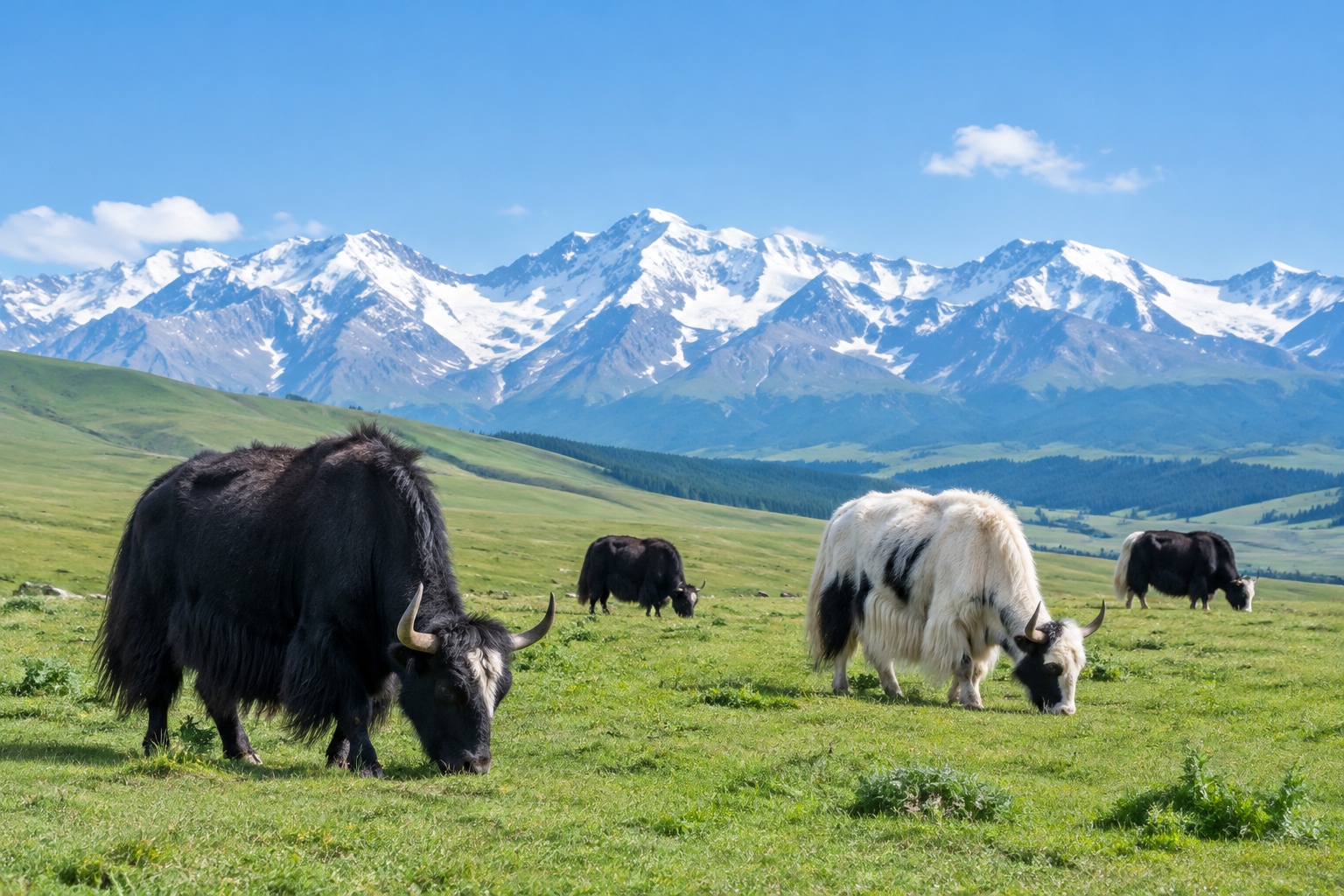
As you climb higher into the Tianshan range, the air gets thinner and cooler. The landscape shifts from lush green to rocky gray. Then comes the moment that surprises most first-time drivers: the pass. At 3,400 meters above sea level, you might encounter a sudden snowstorm even if it was sunny an hour ago.
I spoke with a bus driver named Ahmed on a morning trip. He told me, “One minute I am driving past blooming wildflowers, and the next, my wipers are clearing half a meter of fresh snow. It is like time travel.” He checks his tire pressure at every stop because the temperature difference between the bottom and top of the pass can be as much as 40 degrees Celsius.
Real People on the Road
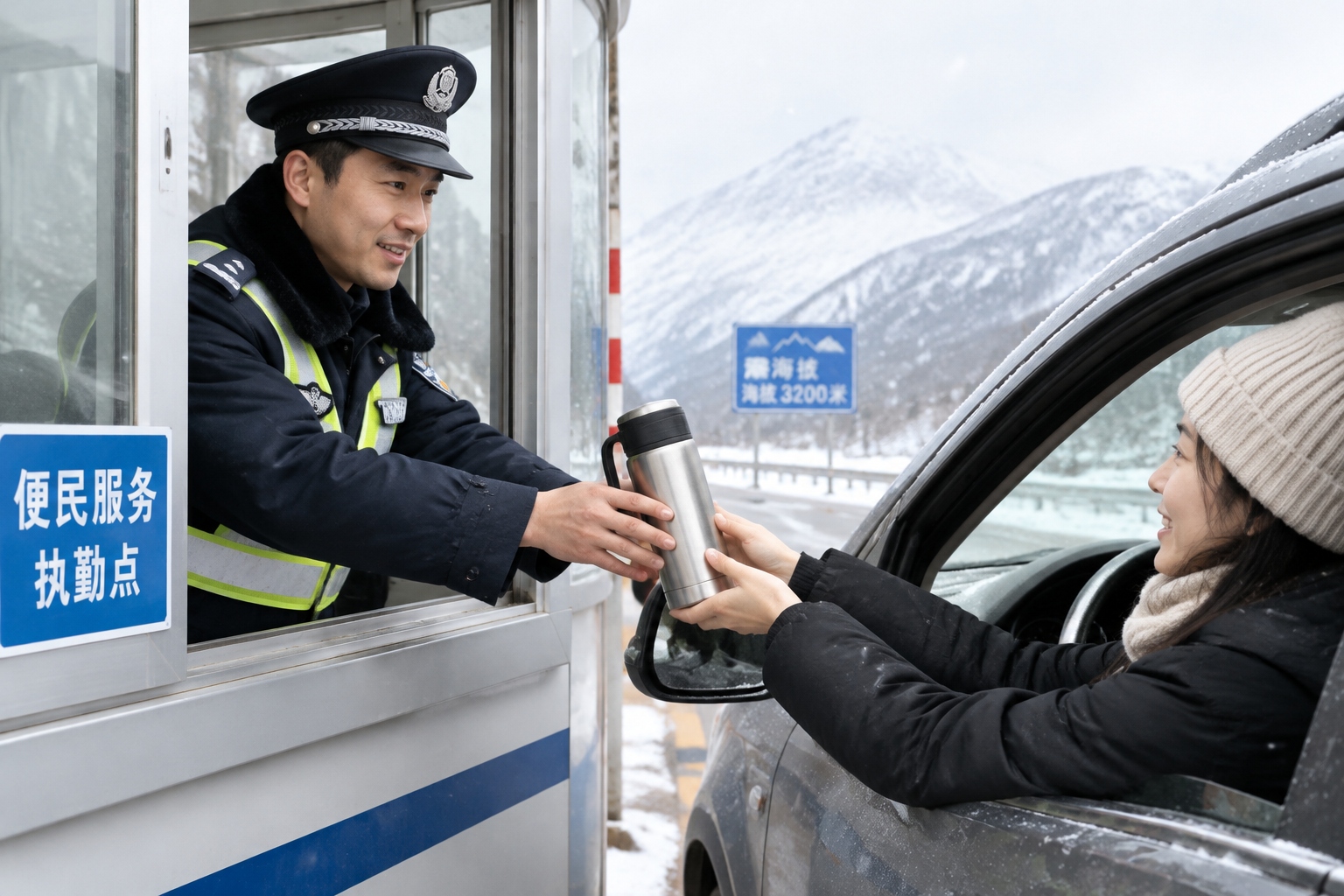
The road is not empty. You will meet locals who have traveled this route for decades. At a checkpoint, you might see an officer warming up in his small booth, handing out hot water to passing drivers. It’s a reminder that safety is taken very seriously here.
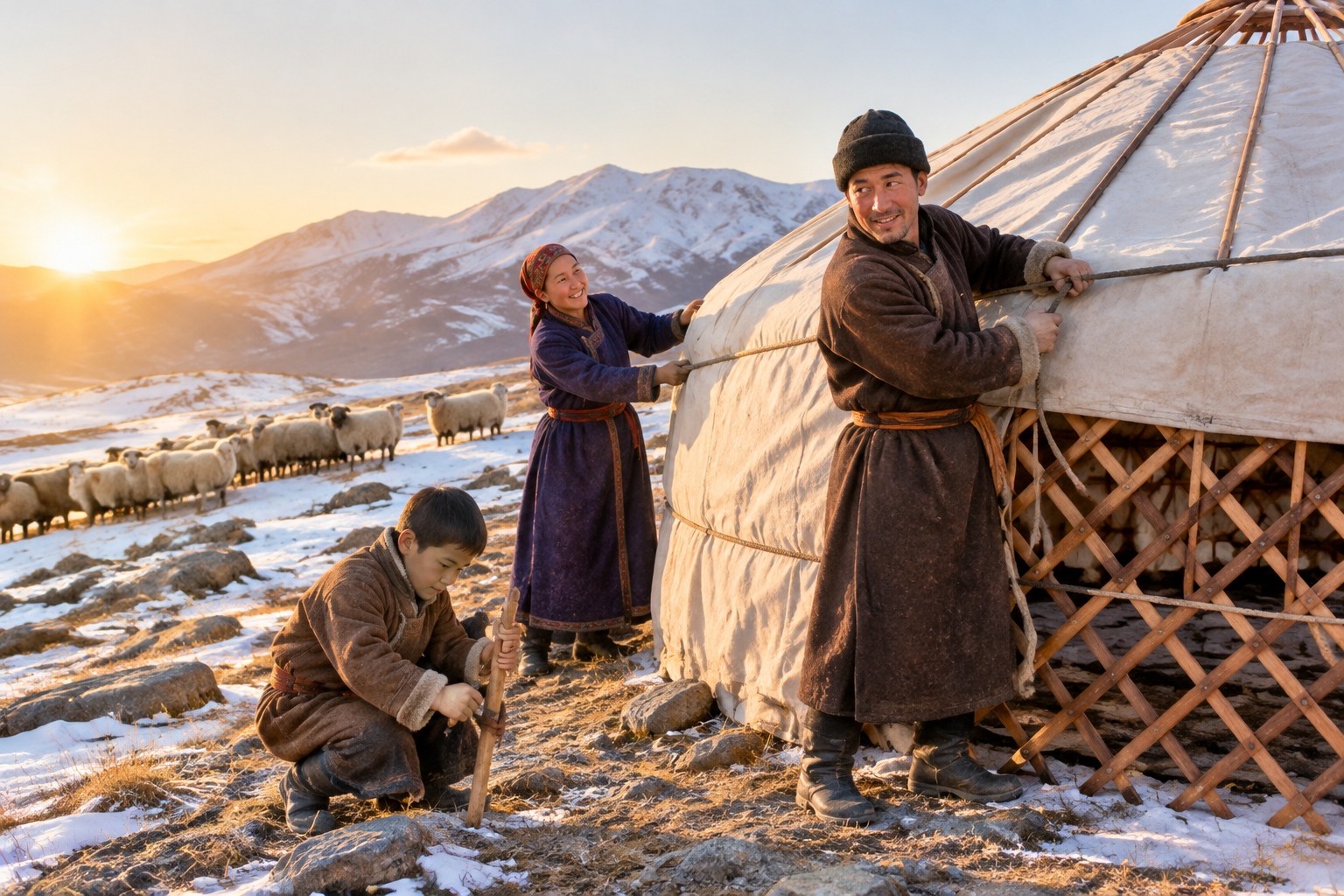
Further along, near the high passes, you might spot a nomad family setting up a temporary tent. They are not posing for photos; they are simply moving their livestock to higher pastures as the season changes. Their life moves in rhythm with the road and the weather.
Practical Tips for Travelers
If you want to drive this yourself, timing is everything. The Duku Highway usually opens only from late June to early October. Outside this window, heavy snow makes it impassable. Even during open season, storms can close the road unexpectedly.
For those without a car, public buses run regularly between major cities like Urumqi and Kuqa. They stop at key viewpoints so you can get out, stretch your legs, and take photos of the dramatic scenery. Just remember to bring layers. A T-shirt in the morning might be useless by noon when the temperature drops.
More Than Just a View
The Duku Highway teaches us that nature is still dominant here. Despite all the modern technology—wide asphalt, guardrails, and clear signage—the mountain decides when we can pass. It connects two very different worlds: the arid deserts of southern Xinjiang and the lush forests of the north.
Driving this road feels like witnessing a story that has been written in stone and ice for millions of years. It is a journey that leaves you with more than just photos; it leaves you with a deep sense of awe at the scale of the land and the resilience of the people who live here.
Start the discussion at forum.chinacomes.com